
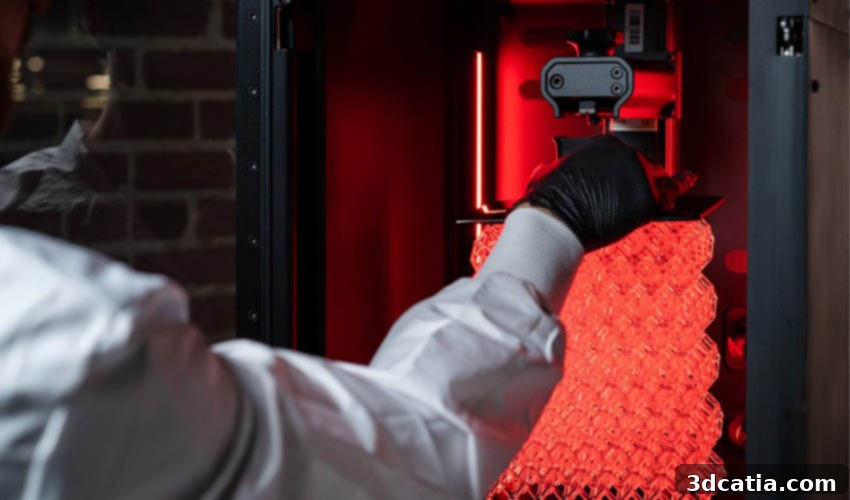
Stratasys Bolsters Additive Manufacturing Portfolio with Strategic Origin Inc. Acquisition
In a significant move set to reshape the landscape of industrial 3D printing, Stratasys, a global leader in additive manufacturing solutions, has officially announced its agreement to acquire Origin Inc., a pioneering 3D printing startup. This strategic transaction, valued at up to $100 million in total consideration, underscores Stratasys’ commitment to expanding its dominance in the rapidly growing segment of mass production parts. Origin Inc., a U.S.-based innovator, first introduced its groundbreaking Origin One 3D printer to the market in May 2019. This advanced system is distinguished by its open additive production platform, characterized by its reliance on open materials, an expandable software architecture, and modular hardware design. The integration of Origin’s cutting-edge technology into Stratasys’ expansive ecosystem is anticipated to significantly enhance its capabilities, particularly in high-volume manufacturing applications. The acquisition process is slated to conclude in January of 2021, marking a new chapter for both companies and the broader additive manufacturing industry.
Origin One: Pioneering Programmable Photopolymerization (P3) Technology
At the heart of the Origin One printer lies its proprietary Programmable PhotoPolymerization (P3) technology. This innovative approach builds upon the fundamental principles of photopolymerization, a process familiar to other well-established resin-based 3D printing technologies such as stereolithography (SLA) and digital light processing (DLP). However, P3 distinguishes itself by offering unparalleled control over the printing process, allowing for the precise manipulation of light, temperature, and other variables during resin curing. This level of programmability translates into superior material properties, enhanced part accuracy, and greater consistency, making it ideal for demanding industrial applications.
The Power of an Open Materials Ecosystem
A cornerstone of Origin’s success and a primary driver for Stratasys’ interest is the Origin One’s open platform architecture. Unlike many traditional 3D printing systems that lock users into proprietary materials, Origin has cultivated a robust network of leading material partners. This includes industry giants such as Henkel, BASF, and DSM, all of whom have collaborated closely with Origin to develop a diverse range of high-performance resins specifically optimized for the Origin One system. This collaborative approach fosters innovation, accelerates material development, and provides customers with unparalleled flexibility and choice in selecting the best materials for their specific application needs. François Minec, Managing Director at BASF 3D Printing Solutions GmbH, articulated the strategic importance of this partnership, stating, “We partnered and developed materials with Origin before Origin One was launched because we believed in their technology and vision for the future of photopolymers in additive manufacturing.” This quote highlights the foresight and shared vision that laid the groundwork for this acquisition, emphasizing the critical role of advanced materials in unlocking the full potential of additive manufacturing for industrial production.
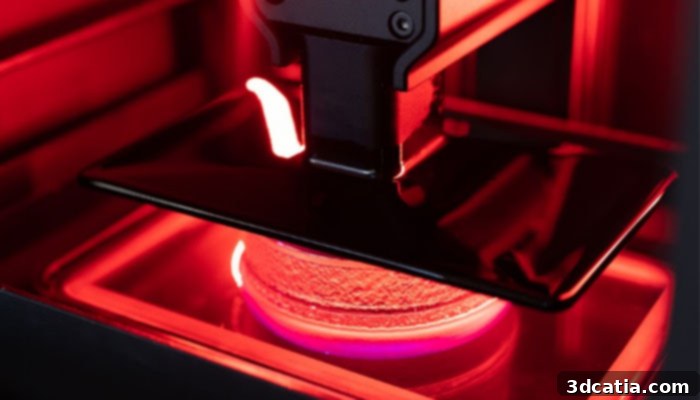
The Origin One 3D printer is based on P3 technology, enabling precise control over material properties.
Strategic Vision: Addressing Industry Challenges and Driving Growth
Origin’s astute identification of the limitations imposed by closed-loop material solutions in the 3D printing market positioned it as a compelling acquisition target. For too long, manufacturers have been constrained by systems that necessitate the use of exclusively branded or proprietary materials, often limiting innovation, increasing costs, and hindering the adoption of additive manufacturing for serious production. Origin’s commitment to an open materials platform, supported by its extensive network of partners, effectively addresses these issues, providing manufacturers with greater freedom, choice, and access to a wider array of specialized resins. This strategic alignment with Origin’s philosophy will significantly fortify Stratasys’s position in the high-growth polymers market and expand its penetration into critical production applications across various industries.
Expanding into Key Vertical Markets
The acquisition is particularly impactful for Stratasys’s ambitions in sectors such as dental, medical, and consumer goods. In the dental industry, for instance, Origin’s precision and material versatility can accelerate the production of clear aligner molds, dental models, surgical guides, and custom prosthetics, meeting the stringent requirements for biocompatibility and accuracy. For medical applications, the ability to produce patient-specific devices, anatomical models for surgical planning, and custom tooling with industrial-grade resins opens up vast opportunities for innovation and personalized healthcare solutions. In the consumer goods sector, Origin One’s capabilities enable rapid prototyping, mass customization, and the production of end-use parts with complex geometries and high-quality finishes, addressing the demand for personalized and on-demand manufacturing. These sectors are characterized by stringent quality demands and a clear need for advanced materials, areas where Origin’s P3 technology and open platform truly shine.
Stratasys anticipates that this acquisition will serve as a powerful engine for future growth, projecting an incremental annual revenue of up to $200 million within the next five years. This ambitious forecast reflects the strong market demand for industrial-grade resin-based additive manufacturing solutions. Furthermore, the talented Origin team will be fully integrated into Stratasys, where they will assume leadership roles in the continued development and innovation of their technology and product platform. The companies are working towards a comprehensive global launch of the combined offerings in mid-2021, promising to bring these advanced capabilities to a broader international audience.
Stratasys CEO’s Vision for a Digital Additive Value Chain
Yoav Zeif, CEO of Stratasys, underscored the strategic rationale behind the acquisition, stating, “Our customers are looking for additive manufacturing solutions that enable use of industrial-grade resins for mass production parts with process and quality control. The acquisition of Origin reflects another step in fulfilling our objective to lead in polymer additive manufacturing by offering comprehensive, best-in-class technologies and solutions to create a fully digital additive value chain.” Zeif’s statement highlights a critical shift in the industry: a move beyond prototyping to the production of high-performance, end-use parts. The demand for industrial-grade resins, coupled with robust process and quality control, is paramount for widespread adoption in manufacturing. Origin’s P3 technology, with its precision and material flexibility, perfectly aligns with this vision, enabling Stratasys to offer a more complete and compelling solution to its industrial clientele.
Expanding Technology Horizons
Further signaling Stratasys’ ambitious expansion plans, Yoav Zeif also revealed the company’s intention to enter the powder bed fusion (PBF) market. This move demonstrates Stratasys’ commitment to providing a truly comprehensive portfolio of additive manufacturing technologies. Currently, Stratasys boasts over 20 distinct solutions, primarily built upon its well-established Fused Deposition Modeling (FDM) and PolyJet technologies, with one machine also utilizing stereolithography (SLA). The addition of Origin’s P3 technology significantly broadens Stratasys’ capabilities in the photopolymerization space, offering a cutting-edge solution for resin-based production. This strategic diversification across different 3D printing methodologies positions Stratasys to address a wider array of industrial applications and material requirements, cementing its leadership in the evolving additive manufacturing landscape. The move into the polymer market, particularly with a focus on production-oriented resin-based applications, comes at a time of anticipated explosive growth in this segment, reflecting a proactive response to burgeoning market demands.
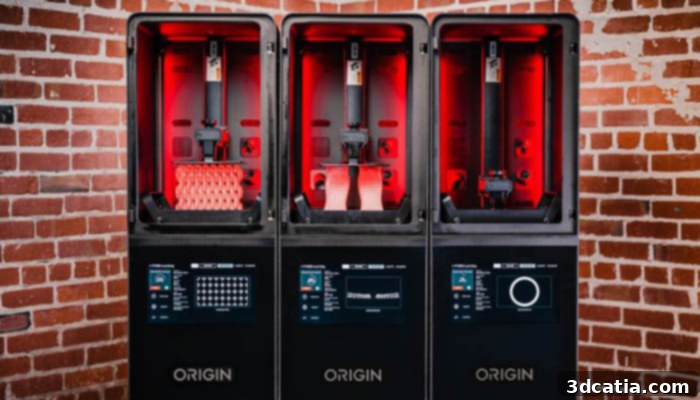
The Origin team will join Stratasys and lead the development of its technology and product platform, aiming for a full global launch in mid-2021.
Future Outlook: Capitalizing on the Resin Polymer Boom
The optimism surrounding the Origin acquisition is firmly rooted in compelling market trends. Stratasys itself projects that resin polymer-based 3D printing systems will experience a robust annual growth rate of 20% from 2020 to 2025. This significant expansion is driven by several factors, including advancements in material science, improvements in print speed and resolution, and the increasing demand for end-use parts across various industrial sectors. Resin-based technologies offer superior surface finish and fine detail, making them ideal for applications requiring high aesthetic quality and precision. Origin CEO and co-founder Christopher Prucha articulated the profound synergy created by this merger: “Stratasys is the best company for us to join to achieve our vision, giving us an unparalleled opportunity to significantly expand market reach and enable us to bring our P3 technology to a larger audience.” This sentiment underscores the mutual benefits of the acquisition, where Origin gains access to Stratasys’s extensive global sales and support network, while Stratasys acquires a leading-edge technology that directly addresses a high-growth market segment.
The combination of Stratasys’ global reach and established market presence with Origin’s innovative P3 technology and open material ecosystem creates a formidable force in the additive manufacturing industry. This strategic move not only enhances Stratasys’ polymer production capabilities but also reinforces its commitment to providing comprehensive, best-in-class solutions that meet the evolving demands of industrial customers worldwide. For more detailed information on this pivotal acquisition, you can find further insights HERE.
What are your thoughts on this significant acquisition and its potential impact on the future of additive manufacturing? We invite you to share your perspective in a comment below or join the conversation on our Facebook and Twitter pages! Don’t miss out on the latest developments in 3D printing; sign up for our free weekly Newsletter to have all the breaking news delivered directly to your inbox!