
Revolutionizing Multi-Material 3D Printing: MIT’s Speed-Modulated Ironing Unlocks Unprecedented Customization and Efficiency
Multi-material 3D printing technology represents a significant leap forward in additive manufacturing, allowing for the creation of intricate three-dimensional objects using a combination of different materials within a single, continuous printing process. This advanced technique opens up a vast realm of possibilities, enabling the production of highly customized devices and components that boast a rich variety of colors, textures, and even functional properties. From prototypes to end-use parts, the ability to integrate multiple material characteristics into one print streamlines complex designs and enhances product performance. However, despite its transformative potential, conventional multi-material 3D printing methods have historically faced inherent limitations. The process can often be prohibitively slow and costly, primarily because existing 3D printers typically rely on sequential operation. This involves repeatedly alternating between different nozzles, a time-consuming cycle where one material must be meticulously purged or retracted before another can be precisely applied. Such a method not only increases print duration but also generates material waste and adds to the overall complexity of the printing system.
In a groundbreaking effort to address these long-standing challenges, a collaborative team of visionary researchers from the Massachusetts Institute of Technology (MIT) and the Technical University of Delft in the Netherlands has unveiled a remarkably more efficient and innovative approach. Their newly developed method promises to deliver both significantly greater precision in material deposition and a substantial reduction in material waste, marking a pivotal advancement in the field of additive manufacturing. This novel technique leverages the unique properties of heat-reactive materials, fundamentally changing how multi-color, multi-shade, and multi-texture objects can be printed. By activating these special filaments through targeted thermal application, the researchers have made it possible to achieve diverse aesthetic and tactile effects in a single, streamlined printing phase, moving beyond the traditional constraints of material switching and offering a truly continuous production experience.
Pioneering Customization: Introducing Speed-Modulated Ironing for Enhanced Textures and Colors
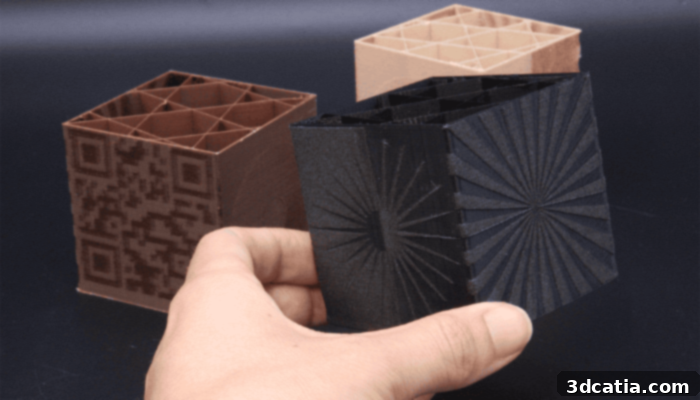
The researchers have christened their revolutionary method “speed-modulated ironing,” a descriptive term that encapsulates the core mechanism of their innovation. This sophisticated technique is specifically designed for application within the widely used Fused Deposition Modeling (FDM) 3D printing framework, making it accessible to a broad spectrum of existing industrial and desktop printers. At the heart of this process lies a meticulously engineered dual-nozzle 3D printer system. The first nozzle performs the foundational task of depositing a specialized heat-reactive filament onto the print bed, building the basic structure of the object layer by layer. Following this initial deposition, a second, critically important nozzle then passes over the freshly printed material. The primary role of this second nozzle is not to extrude more material but rather to precisely apply heat, thereby triggering a variety of desired effects. These effects can range from subtle alterations in opacity and nuanced color shifts to the creation of distinct surface textures.
The true ingenuity of speed-modulated ironing lies in its elegant control mechanism: by meticulously adjusting the travel speed of this second, heat-applying nozzle, the research team can precisely modulate the temperature experienced by the printed filament. This precise thermal control, in turn, directly influences the material’s reaction, allowing for an unprecedented degree of influence over the final aesthetic and tactile properties of the printed object. This includes fine-tuning the exact shade of a color, introducing subtle nuances within a single hue, or achieving specific levels of surface roughness and finish. This innovative approach paves the way for the effortless creation of highly artistic and visually dynamic effects, enabling designers and engineers to imbue printed objects with rich variations in color and sophisticated textured surfaces, all within a single manufacturing step. Mustafa Doga Dogan, a distinguished co-author of the seminal article detailing the “speed-modulated ironing” method, eloquently articulates the vision behind this breakthrough: “Today, we have desktop printers that use a smart combination of a few inks to generate a range of shades and textures. We want to be able to do the same thing with a 3D printer — use a limited set of materials to create a much more diverse set of characteristics for 3D-printed objects.” This statement underscores the ambition to empower 3D printers with a versatility akin to traditional 2D printing, where a minimal palette can yield an expansive array of visual outputs.
Revolutionary Heat Control: Advancing 3D Printing with Dual-Nozzle Precision
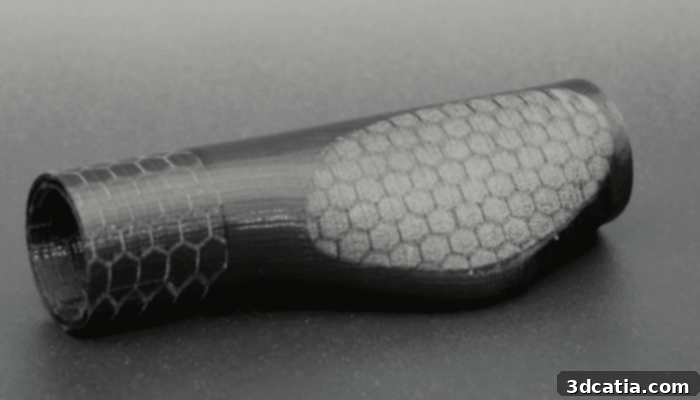
While the concept of utilizing heat-sensitive filaments in additive manufacturing is undeniably promising, most conventional techniques currently available face a critical drawback: they typically rely on a single nozzle to perform both the material extrusion and the subsequent heating processes. This integrated approach introduces significant inefficiencies and potential quality issues. For instance, before it can begin depositing material, the 3D printer must first heat this single nozzle to the precise temperature required for the specific material reaction. Subsequently, if different thermal effects are desired on the same layer or in quick succession, the nozzle must then cool down or reheat accordingly. This constant cycle of heating and cooling is inherently time-consuming, significantly prolonging print durations, especially for complex objects requiring varied thermal treatments. Furthermore, maintaining filaments at high temperatures for extended periods within the nozzle carries an increased risk of material degradation, leading to compromised structural integrity or inconsistent aesthetic outcomes. To ingeniously circumvent these long-standing difficulties, the MIT and TU Delft team’s innovative approach decouples these functions: a dedicated first nozzle handles the precise printing of the base material, while a second, empty nozzle is activated solely for the controlled application of heat.
This dual-nozzle system completely redefines heat control in 3D printing. Instead of the cumbersome necessity of constantly adjusting the nozzle’s temperature to trigger the desired material reaction, this groundbreaking method allows the second nozzle to maintain a consistent, optimal temperature throughout the printing process. The variability, and thus the control, comes from modifying its travel speed as it glides over the already-printed material. By altering the speed at which this heated nozzle traverses the surface, researchers can precisely control the amount of thermal energy transferred to the printed layer, effectively achieving different localized temperatures. Marwa AlAlwi, an insightful researcher at MIT, vividly illustrates this principle with a relatable analogy: “It is similar to what happens if you move your finger over a flame. If you move it quickly, you might not be burned, but if you drag it across the flame slowly, your finger will reach a higher temperature.” This intuitive explanation underscores how dwell time directly correlates with the amount of heat absorbed by the material. To ensure predictable and repeatable results, the team developed a sophisticated computational model that meticulously links a material’s specific temperature response to its reaction to heat. This model allows the system to determine the ideal nozzle speed required to achieve precise colors, subtle shades, or desired textures for each individual printed object segment. AlAlawi further emphasizes the intricate nature of this research, stating, “There are a lot of inputs that can affect the results we get. We are modeling something that is very complicated, but we also want to make sure the results are fine-grained.” This commitment to detailed modeling is crucial for translating theoretical principles into practical, high-resolution customization capabilities.
Unlocking Rapid Production: Superior Efficiency Over Traditional Methods
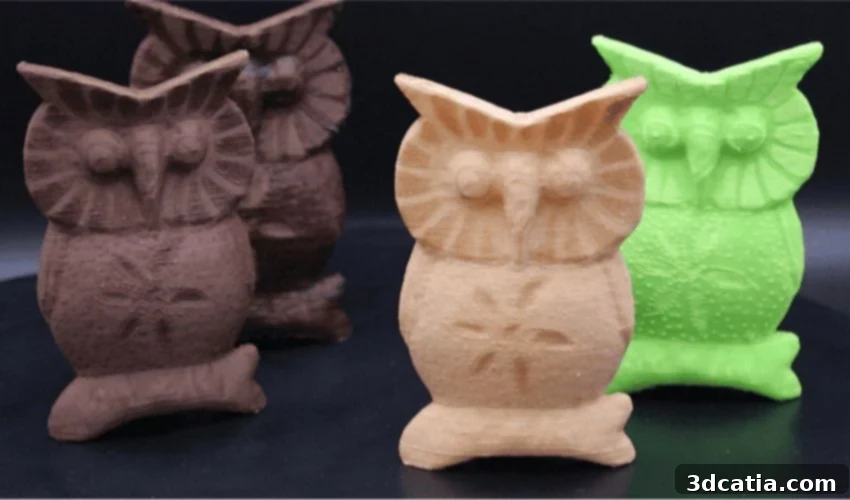
To thoroughly validate the efficacy and versatility of their novel “speed-modulated ironing” technique, the researchers conducted extensive evaluations using three distinct types of heat-reactive filaments, each engineered to demonstrate unique transformative properties under controlled thermal application. The first material tested was a specialized foaming polymer, a truly remarkable substance whose internal particles are designed to expand significantly when subjected to heat. This expansion mechanism allowed the team to precisely control the material’s density and microstructure, enabling the creation of a diverse range of visual effects, including varying shades, gradients of transparency, and intricate surface textures. By altering the speed of the heating nozzle, they could induce different levels of foaming, resulting in materials that ranged from highly opaque to beautifully translucent, with corresponding tactile differences.
Beyond synthetic polymers, the team also rigorously tested filaments incorporating natural fibers: one containing finely milled wood fibers and another enriched with cork fibers. Both these bio-composite filaments exhibit a fascinating property: they can be selectively carbonized through targeted heat application, leading to the production of various darker shades and even unique smoky textures. This allows for naturalistic aesthetic effects that are difficult to achieve with conventional colorants, expanding the palette of possibilities for designers. The practical implications of this technique were compellingly demonstrated through the manufacturing of complex objects, such as partially translucent water bottles. In this particular example, the researchers masterfully utilized the foaming polymer filament. By applying heat at a low speed, they induced significant foaming, resulting in dense, opaque areas within the bottle’s structure. Conversely, by increasing the speed of the heating nozzle, they applied less heat, leading to minimal foaming and consequently, highly translucent areas. This seamless integration of varying optical properties within a single print showcased the method’s remarkable control.
The efficiency gains offered by speed-modulated ironing are particularly striking when compared against conventional multi-material 3D printing methods. Creating objects with comparable complexity, involving multiple material characteristics or gradients, using traditional techniques often demands significantly longer production times, frequently extending into several hours or even an entire day for intricate designs. This prolonged printing cycle not only consumes substantially more energy but also generates greater material waste due to the necessary purging and switching between different nozzles. In stark contrast, the MIT and TU Delft technique drastically reduces both the print duration and the resource consumption. By minimizing nozzle changes and streamlining the material activation process, it offers a far more sustainable and economical pathway to highly customized and visually rich 3D printed objects. This improved efficiency makes advanced multi-material printing more viable for a wider range of applications, from rapid prototyping to on-demand manufacturing of personalized consumer products, medical devices, and even artistic creations.
The innovative “speed-modulated ironing” technique developed by researchers at MIT and the Technical University of Delft represents a monumental leap forward in the capabilities of multi-material 3D printing. By skillfully leveraging heat-reactive filaments and a sophisticated dual-nozzle system, this method promises unprecedented levels of customization, efficiency, and material versatility, fundamentally transforming how we envision and create three-dimensional objects. As this technology continues to evolve, it holds the potential to unlock a new era of additive manufacturing where complex, multi-functional designs are produced faster, more economically, and with greater environmental responsibility than ever before.
What are your thoughts on MIT’s new 3D printing technique and its potential impact on various industries? We invite you to share your insights in a comment below or join the discussion on our LinkedIn, Facebook, and Twitter pages! Don’t miss out on the latest advancements in additive manufacturing—be sure to sign up for our free weekly newsletter here to receive top 3D printing news directly in your inbox! You can also find all our comprehensive videos and demonstrations on our dedicated YouTube channel.
*All Photo Credits: MIT