
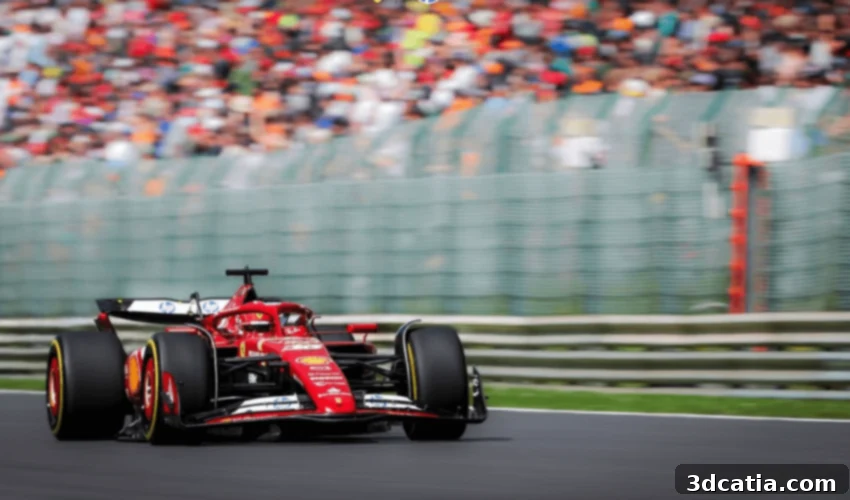
Revolutionizing the Grid: How 3D Printing Fuels Formula 1 Performance and Innovation
Formula 1 motor racing stands as the pinnacle of motorsport, a relentless arena where the pursuit of performance and speed is not just essential, but a fundamental driving force. Every fraction of a second is meticulously analyzed, every component scrutinized, and every design optimized in the quest for victory. Beyond the undeniable skill of the driver, the technical prowess and continuous optimization of the car play an equally critical role. In this high-stakes environment of perpetual improvement, 3D printing, also known as additive manufacturing, has emerged as a truly revolutionary technology. The cutting-edge F1 cars of recent years vividly illustrate this transformation, increasingly leveraging 3D printing to maximize their performance potential. Introduced to motorsport in the early 2000s, this innovative manufacturing method enables teams to create incredibly lightweight, high-performance parts that rigorously adhere to the strict and ever-evolving regulations set by the FIA (Fédération Internationale de l’Automobile).
As Formula 1 continues its rapid evolution, it eagerly adopts advanced rapid prototyping methods and embraces the production of highly complex parts, all made possible through the power of 3D printing. F1 teams are not merely experimenting with this technology; they are wholeheartedly integrating it into their core development processes. Over the past decades, strategic partnerships have been forged between leading racing teams and pioneering 3D printing companies, solidifying the technology’s place in the sport. But what are the tangible, concrete uses of 3D printing in Formula 1 today? What significant advantages and inherent challenges does this cutting-edge technology present within this demanding field? And, perhaps most excitingly, what promising future prospects does it offer for the pinnacle of motorsport? Fasten your seatbelts, because this article will take you on an in-depth exploration of 3D printing’s profound impact on Formula 1.

McLaren is one of the Formula 1 teams making extensive use of 3D printing for its single-seaters (photo credits: Stratasys).
Leading F1 Teams Embrace 3D Printing for Competitive Advantage
Motorsport is globally renowned for its culture of relentless innovation, with Formula 1 consistently standing at the very forefront of adopting and pushing new technologies. Indeed, 3D printing has unequivocally proven its immense value for Formula 1 cars, becoming an indispensable tool. Teams are increasingly forming close collaborations with leaders in additive manufacturing technology to significantly optimize their vehicles’ performance, seeking out every possible competitive edge on the track.
Among the most prominent examples of this trend is Red Bull Racing, the dominant Constructors’ Champion since 2022. This team has maintained a steadfast and highly productive partnership with Hexagon Manufacturing Intelligence for an impressive 18 years. This long-standing collaboration has empowered Red Bull Racing to thoroughly test and swiftly adopt innovative manufacturing technologies, all while meticulously ensuring the unparalleled safety and reliability demanded by their high-performance cars. The direct result? Gaining those crucial fractions of a second on the racetrack that often determine the outcome of a race. Specifically, Red Bull Racing extensively utilizes digital twins and advanced simulations. This sophisticated approach allows them to virtually design, meticulously analyze, and rigorously test their car components and entire vehicle assemblies in a digital environment before committing to the creation of expensive and time-consuming physical prototypes. This dramatically accelerates their design cycle and optimizes performance from the very earliest stages.
McLaren F1 Racing, another titan in the sport, leverages an impressive fleet of 20 Stratasys 3D printers, which collectively produce more than 9,000 parts annually. Their application of 3D printing extends far beyond mere prototyping, encompassing the creation of various functional components, jigs, fixtures, and aerodynamic testing parts. Stratasys’ FDM (Fused Deposition Modeling) technology, known for its robustness and material versatility, allows McLaren to rapidly iterate designs and produce end-use parts with engineering-grade thermoplastics. Meanwhile, Visa Cash App RB has strategically collaborated with ROBOZE, a specialist in high-performance thermoplastic 3D printing, to fundamentally rethink the design and production of critical components for their single-seaters. This partnership focuses on leveraging ROBOZE’s expertise in advanced materials like PEEK and carbon-filled composites to create lighter, stronger, and more aerodynamically efficient parts.
Last but certainly not least, the Alpine F1 team has benefited from the unwavering support of 3D Systems for over two decades. They have a substantial arsenal of both SLA (Stereolithography) and LPBF (Laser Powder Bed Fusion) machines at their disposal, enabling a wide range of applications from highly detailed aerodynamic models to robust metal components. Pat Warner, ADM Manager at Alpine, emphasizes the depth of this relationship, explaining, “3D Systems is our main partner for all our in-house equipment and materials, which we then outsource to various companies as required.” This highlights a hybrid approach, where core capabilities are maintained in-house, complemented by external specialists for scale or specific expertise. The use of 3D printing in Formula 1, while having been present in some form for a significant period, has indeed become increasingly widespread and integral to team operations. According to Pat Warner, the former Renault F1 Team, which Alpine evolved from, acquired its very first 3D printer as far back as 1998. However, the true importance and widespread adoption of 3D printing really gained momentum and took off significantly throughout the 2010s, marking a new era of digital manufacturing in F1.
Concrete Applications and Key 3D Printing Technologies in Formula 1
In terms of practical applications, 3D printing truly excels due to its unparalleled efficiency in rapid prototyping, a characteristic that is particularly beneficial and indeed critical for Formula 1 racing teams. The technology empowers engineers to quickly design, manufacture, and rigorously test new parts, thereby dramatically accelerating the entire innovation and development cycle. This iterative process allows teams to experiment with numerous design variations and immediately evaluate their performance impact. What’s more, 3D printing is no longer solely reserved for conceptual prototypes; it is now extensively used to produce high-performance, functional components that are directly integrated into the sophisticated racing vehicles, pushing the boundaries of what is possible on the track.
When examining the specific technologies employed, Fused Deposition Modeling (FDM) stands out as a widely adopted method for rapid prototyping and the production of robust samples in Formula 1 racing. The choice of polymers is crucial, with nylons frequently selected for their excellent balance of strength, flexibility, and lightweight properties. Beyond standard polymers, high-performance thermoplastics such as PEKK and PEEK are also commonly utilized. These advanced materials are highly favored for their exceptional resistance to extreme heat, a vital characteristic in an environment where temperatures can exceed 1,000 degrees Celsius, as is often the case for certain critical parts within a single-seater’s engine bay or exhaust system. Their superior strength-to-weight ratio also contributes significantly to overall vehicle performance.
A significant milestone was achieved in 2014 when McLaren broke new ground by introducing the first 3D-printed part directly integrated into its race cars: a valve cover for the engine, manufactured using reliable FDM technology. This initial success paved the way for more ambitious applications. Later, the team further expanded its use of 3D printing by producing a structural support designed to securely attach the hydraulic line to the MCL32 race car. This particular support, expertly designed using FDM technology and fabricated from carbon-fiber-reinforced nylon, showcased the speed and efficiency of additive manufacturing, being printed in an astonishingly short timeframe of just four hours. This rapid turnaround highlights how 3D printing can address immediate engineering needs and facilitate quick design iterations.
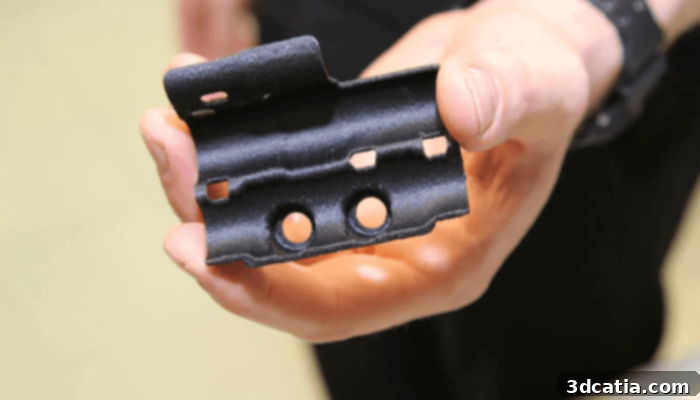
The 3D-printed hydraulic pipe support for the MCL32 single-seater using FDM technology (photo credits: Mclaren)
While FDM is a cornerstone, it is certainly not the sole 3D printing technology harnessed in Formula 1. Pat Warner from Alpine notes, “Stereolithography (SLA) is widely used to manufacture the visible elements of our wind tunnel at Alpine.” He elaborates further, stating, “Both the bodywork and many internal structures are produced using SLA and SLS technologies.” This indicates a comprehensive application of different additive manufacturing techniques depending on the specific requirements of the part. Unlike FDM technology, SLA is particularly adept at producing parts with exceptionally complex geometries and an extremely high level of surface detail and accuracy, often precisely meeting the stringent aerodynamic and structural requirements of F1 components. Pat Warner further emphasizes the incredible volume of work involved in wind tunnel testing, pointing out that it requires the manufacture of approximately 600 parts per week via additive manufacturing – a staggering output that only a dedicated team of five specialist engineers can manage. He emphatically adds, “Traditional manufacturing methods would not be able to meet this demand,” underscoring the indispensable role of 3D printing in F1’s rapid development cycles.
Beyond polymer-based methods, additive manufacturing technologies utilizing a powder bed, such as Selective Laser Sintering (SLS) for polymers and Laser Melting (often referred to as Direct Metal Laser Sintering or DMLS/SLM) for metals, are commonly employed throughout Formula 1. For instance, in 2017, Ferrari famously utilized DMLS technology to create a critical aerodynamic element for its car, demonstrating the capability to produce high-strength, complex metal parts. Unlike FDM or SLA methods, 3D printing using powder bed fusion offers several distinct advantages. These include the ability to produce more isotropic parts (meaning properties are consistent in all directions), and often without the need for supporting structures, which significantly reduces post-processing time and material waste. The advanced metal parts manufactured using these techniques frequently include high-performance exhausts, intricate engine components, and robust suspension elements, where extreme temperatures, structural integrity, and lightweighting are paramount considerations.
The Unparalleled Benefits of 3D Printing in Formula 1
Additive manufacturing offers a multitude of profound advantages over traditional manufacturing methods, particularly within the demanding realm of Formula 1, where the performance stakes are exceptionally high. In F1, one of the foremost priorities is the relentless pursuit of reducing vehicle weight. This weight reduction translates directly into a cascading series of performance improvements: faster acceleration off the line, increased top speed on straights, superior handling through corners, more efficient and responsive braking, significantly reduced fuel consumption, and ultimately, less stress on the tires, extending their optimal performance window. 3D printing emerges as an ideal solution for achieving these critical goals, enabling the precise manufacture of lighter-weight components with optimized geometries that are simply impossible to achieve with conventional techniques.
The speed of part production is another indispensable advantage, crucial for maintaining a competitive edge in Formula 1’s fast-paced development cycles. If a critical part breaks during a testing session or needs an urgent design modification on a race weekend, 3D printing offers an almost immediate solution. It empowers teams to design, produce, and install bespoke parts in record time, often within hours. This rapid response capability helps teams to swiftly solve unforeseen problems on the circuit, allowing cars to return to action faster, or to incorporate last-minute improvements for subsequent races, directly impacting their competitive standing.
Furthermore, 3D printing provides unparalleled design flexibility. Engineers are liberated from the traditional constraints of conventional manufacturing methods, such as molding or machining. This freedom allows them to experiment with highly complex geometries, intricate internal structures, and innovative material combinations. It becomes possible to create components with optimized internal lattices or honeycomb structures, which are designed to maximize strength while minimizing weight – designs that are fundamentally impossible to achieve using traditional subtractive manufacturing or molding processes. This ability to produce geometrically complex, performance-optimized parts unlocks new levels of aerodynamic efficiency and structural integrity for the single-seaters.
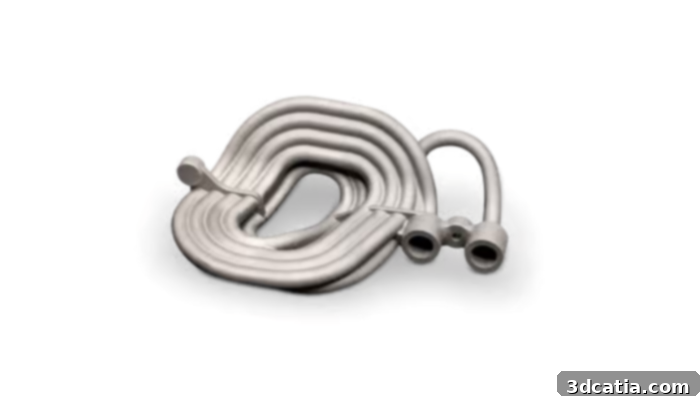
Additive manufacturing enabled the Alpine F1 Team to optimize the length of the shock absorber springs, while integrating all the necessary functionalities in a compact space (photo credits: 3D Systems)
Despite its myriad advantages, it is important to recognize that additive manufacturing does not entirely replace traditional manufacturing methods; rather, it profoundly complements them. Indeed, a strategic synergy between these two distinct techniques can significantly optimize the entire production process within an F1 team. For instance, critical, high-strength, or high-volume components can still be efficiently produced using conventional methods like CNC machining or injection molding. Concurrently, 3D printing can be judiciously employed for highly complex, customized, low-volume components, or for rapid prototyping iterations. This intelligent integration allows teams to fully leverage the specific strengths and efficiencies of each manufacturing technique, creating a highly agile and effective production ecosystem.
Taking plastic parts as an example, injection molding often remains the preferred method for large-scale production due to its technological maturity, cost-effectiveness at high volumes, and the vast variety of materials it offers. However, 3D printing holds a distinct and powerful advantage: it requires no expensive or time-consuming molds, making it exceptionally efficient for creating complex, one-off, or low-batch parts. Quite often, it is the mold itself, or intricate tooling and fixtures for traditional manufacturing processes, that is manufactured by 3D printing, enabling rapid tooling development before the final part is produced using conventional methods. This accelerates the overall product development lifecycle and reduces costs associated with traditional tooling.
As Pat Warner astutely points out, “Additive manufacturing does not replace injection molding or machining, but is an additional tool in the production arsenal. Each technology has its own role and works in harmony to produce the desired part.” This holistic perspective underscores that the most effective approach in Formula 1 involves a sophisticated integration of all available manufacturing technologies, each selected for its optimal application to deliver the best possible performance and efficiency.
Towards an Eco-Friendly Formula 1: 3D Printing and Sustainability
On the crucial environmental front, the increasing adoption of 3D printing is remarkably well-aligned with Formula 1’s ambitious and overarching goal of achieving a net-zero carbon footprint by 2030. This commitment extends beyond operational changes, with significant new sustainability requirements set to be implemented for single-seaters from 2026. McLaren vividly illustrates this burgeoning trend through its strategic partnership with Stratasys, actively utilizing recycled materials as filaments for their 3D printers. This initiative plays a vital role in reducing waste and promoting a more circular economy within the highly resource-intensive sport. However, integrating 3D printing fully into the core of Formula 1 is not without its significant challenges, particularly concerning regulatory frameworks. Pat Warner explains the complexities: “We have a very specific and strict list of materials authorized for use on the car, established by the FIA. Although we can propose the addition of new materials to this list, this requires the unanimous agreement of all members. As a result, our options are somewhat limited.” This regulatory hurdle highlights the intricate balance between fostering technological innovation and ensuring fairness, safety, and competitive parity across all F1 teams, making the adoption of truly novel, eco-friendly materials a complex and often slow process.
What are your thoughts on the transformative role of 3D printing in Formula 1? Let us know in a comment below or on ourLinkedIn,Facebook, andTwitter pages! Don’t forget to sign up for our free weeklyNewsletter here, bringing the latest 3D printing news straight to your inbox! You can also find all our videos on ourYouTube channel.
*Cover Photo Credits: Ferrari