
Exploring the Cutting Edge: Top 5 3D Printing Innovations Driving Future Manufacturing and Design
Welcome to our weekly dive into the dynamic world of additive manufacturing, where we showcase the most groundbreaking and inspiring advancements through our “Top 5 Videos” series. This week’s compilation is particularly exciting, featuring a diverse range of innovations from across the industry spectrum. From the research labs of MIT, pushing the boundaries of material science, to industrial giants like 3D Systems and popular desktop FDM 3D printer brands such as Ultimaker, these videos highlight how 3D printing is not just transforming manufacturing but also impacting fields as varied as healthcare, fashion, and construction. Each Sunday, we bring you fresh insights and captivating demonstrations, ensuring you stay at the forefront of this rapidly evolving technology. Join us as we explore the ingenuity and practical applications that continue to reshape our world, proving that the potential of 3D printing is truly limitless. Don’t miss out on next week’s ranking for more exciting updates!
1 – Color Changing 3D Prints: Unlocking Dynamic Designs with MIT Research
Imagine a future where your objects can change color on command, adapting to your mood, environment, or specific needs. This fascinating concept is closer than you think, thanks to pioneering researchers at MIT. Their latest innovation involves the creation of special, photochromic dyes that possess the remarkable ability to change color when exposed to specific wavelengths of UV light. When integrated into 3D printed parts, these materials open up a new realm of dynamic design possibilities. Users can project UV light onto the printed object, instantly altering its hue, and then revert it back to its original color, or transition to another, with a different light exposure. This technology has profound implications far beyond mere aesthetics. Consider future clothing lines where a single garment could offer multiple color options, eliminating the need for extensive wardrobes and fostering sustainable fashion. Beyond apparel, this could revolutionize interactive products, smart displays, security features, and even educational tools, allowing for real-time visual adjustments. It represents a significant leap in the field of smart materials and responsive design, demonstrating 3D printing’s capacity to create truly adaptive and personalized objects.
2 – 3D Printed Ears for Children with Microtia: A Medical Breakthrough in Bioprinting
In a truly heartwarming and medically transformative application of 3D printing, researchers are offering new hope to children born with Microtia. Microtia is a congenital condition characterized by the underdevelopment or complete absence of the outer ear, which can significantly impact a child’s hearing, appearance, and psychological well-being. This incredible medical advancement leverages advanced bioprinting techniques to create patient-specific ear structures. The process begins by taking healthy cells from the child’s existing ear tissue. These cells are then cultivated and meticulously arranged onto a biocompatible 3D printed scaffold, carefully designed to mimic the intricate shape and contours of a natural ear. Once grown into an ear-resembling shape, this bio-printed structure is then surgically grafted onto the child. The magic of this technique lies in the fact that the grafted ear continues to grow and develop naturally with the child, integrating seamlessly into their body over time. This breakthrough showcases the immense potential of 3D printing in regenerative medicine, allowing affected children to live happier, more confident, and more normal lives by restoring not just form, but function and self-esteem. It stands as a powerful testament to how additive manufacturing can directly improve human lives, paving the way for future organ and tissue regeneration.
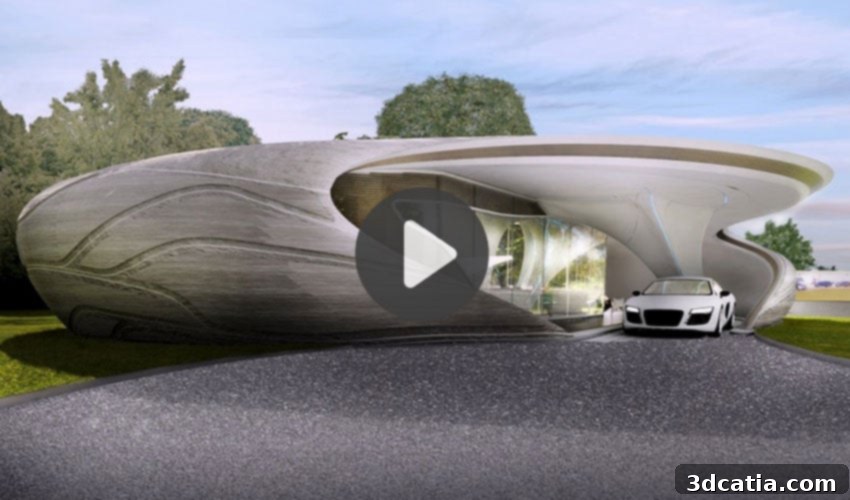
3 – WATG 3D Printed House: Revolutionizing Sustainable and Biophilic Architecture
The construction industry is undergoing a significant paradigm shift, with 3D printing emerging as a key driver of innovation, as we’ve highlighted in previous features on the 3D printed construction industry. One remarkable example comes from the architectural firm WATG, who are pushing the boundaries of what’s possible in residential design. Their ambitious project involves creating a 3D printed house specifically engineered to maximize natural light and foster a deeper connection with nature. WATG’s vision is rooted in the belief that ample sunlight can positively influence human disposition, enhancing happiness and overall well-being. By utilizing 3D printing, they gain unparalleled design freedom to create complex geometries and optimize structural forms that would be challenging, if not impossible, with traditional construction methods. This allows for innovative layouts and strategically placed openings that flood interiors with natural light, blurring the lines between indoor and outdoor spaces. Beyond aesthetics, 3D printing in construction offers numerous practical advantages: it significantly speeds up building times, reduces labor costs, minimizes material waste through precise extrusion, and enables on-demand production of components. This project by WATG is not just about building a house; it’s about creating an experience, demonstrating how advanced manufacturing can lead to more sustainable, efficient, and ultimately, more harmonious living environments.
4 – Casting Metal Parts from an Ultimaker 3D Printer: Bridging Plastic and Metal Manufacturing
While Ultimaker is renowned for its desktop FDM 3D printers primarily used with plastic filaments, this video elegantly demonstrates how their technology plays a crucial role in the production of high-quality metal parts. It highlights a clever indirect manufacturing approach: using Ultimaker 3D printers to create intricate patterns for investment casting. Investment casting, also known as lost-wax casting, is a precision metal forming process used to produce complex components with excellent surface finish and dimensional accuracy. In this modern adaptation, an Ultimaker printer is used to create a detailed polymer pattern, which serves as a disposable mold. This pattern is then coated with ceramic slurry, creating a robust shell. Once the shell hardens, the plastic pattern is melted out, leaving behind a cavity perfectly shaped for molten metal. The molten metal is poured into this ceramic mold, cooled, and then the ceramic shell is broken away to reveal the final metal part. This integration of FDM 3D printing significantly accelerates the investment casting process, making it ideal for rapid prototyping, low-volume production, and creating geometrically complex metal parts on-demand, at a fraction of the cost and time compared to traditional pattern making. It underscores the versatility of FDM technology and its ability to act as an enabler for other advanced manufacturing processes, bridging the gap between plastic prototyping and final metal component production.
5 – 3D Systems and Decker Shoes: Stepping Up Footwear Design with Additive Manufacturing
The fashion and footwear industries are continually seeking innovative ways to accelerate design cycles, enhance customization, and bring new products to market faster. This pursuit has led prominent footwear brand Decker Shoes to partner with 3D printing giant 3D Systems, taking their design and innovation process to an entirely new level. Utilizing 3D Systems’ advanced ProJet 660 ColorJet CJP 3D printer, Decker Shoes can now transform their digital designs into tangible, full-color physical prototypes with unprecedented speed and accuracy. This technology allows designers to visualize and evaluate shoe designs in intricate detail, complete with realistic color, texture, and complex geometries, long before committing to expensive manufacturing tooling. The ability to quickly iterate on designs, make adjustments based on physical feedback, and test various aesthetic and ergonomic elements in full color dramatically streamlines the product development pipeline. From conceptual models to functional prototypes, 3D printing facilitates a more agile design process, enabling designers to refine fit, form, and aesthetics with greater efficiency. This collaboration exemplifies how additive manufacturing empowers creative industries to push the boundaries of design, fostering innovation, reducing development costs, and ultimately delivering highly customized and aesthetically appealing products to consumers faster than ever before. It’s a clear demonstration of 3D printing’s transformative impact on consumer goods and mass customization.
This week’s “Top 5 Videos” has taken us on a journey through some of the most exciting and impactful applications of 3D printing technology. From dynamic color-changing materials developed at MIT and life-changing medical breakthroughs for children with Microtia, to sustainable architectural innovations by WATG and clever metal part production using Ultimaker printers, culminating in advanced footwear design by 3D Systems and Decker Shoes – each story underscores the versatility and transformative power of additive manufacturing. These examples are just a glimpse into the ongoing revolution that 3D printing is spearheading across various industries, continuously pushing the boundaries of what is possible. As technology evolves, we can expect even more incredible innovations that will shape our future in profound ways. We hope you found this week’s selection as inspiring as we did!
What are your thoughts on these incredible advancements? Let us know in a comment below or share your opinions on our Facebook and Twitter pages! Don’t forget to sign up for our free weekly Newsletter, with all the latest news in 3D printing delivered straight to your inbox, ensuring you never miss an update on the future of manufacturing.