
IKEA ThisAbles: Revolutionizing Accessibility with 3D Printed DIY Solutions for Inclusive Homes
In a landmark move towards truly inclusive design, furniture giant IKEA has unveiled an innovative initiative dubbed “ThisAbles.” This pioneering project leverages the power of 3D printing to create a series of downloadable, customizable objects designed to be easily fixed onto existing IKEA furniture, transforming everyday items into more accessible tools for people with disabilities. Launched initially in Israel, ThisAbles offers a range of practical, 3D printable extensions—from ergonomic cupboard handles and assistive sofa risers to protective window bumpers and enlarged lamp switches. These thoughtful additions are engineered to significantly enhance the daily lives and independence of countless individuals, embodying IKEA’s long-standing commitment to creating a better everyday life for the many people.
IKEA’s foray into 3D printing technology is not entirely new; the Swedish brand has previously explored additive manufacturing for various applications, including the creation of entire collections like the original OMEDELBAR coat racks, and even as a method to breathe new life into older furniture pieces. However, ThisAbles marks a significant shift in focus, utilizing 3D printing’s inherent flexibility and customization capabilities specifically for social good. This ambitious project demonstrates IKEA’s dedication to addressing specific user needs and showcasing how innovative manufacturing techniques can lead to groundbreaking solutions in assistive technology. By making these designs freely available, IKEA empowers users and the broader community to actively participate in shaping more accessible living environments.
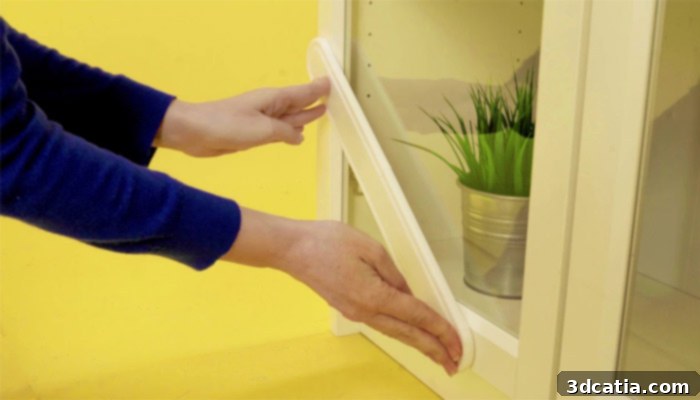
A 3D printed solution from ThisAbles to protect windows from wheelchair impacts, ensuring furniture longevity and user safety.
The Genesis of ThisAbles: A Collaborative Vision for Enhanced Accessibility
The “ThisAbles” initiative is the result of a powerful collaboration between IKEA Israel and the renowned Israeli association Milbat. Milbat is celebrated for its dedication to creating innovative devices and technological solutions that significantly improve the daily lives of people with disabilities. This partnership brought together IKEA’s expertise in home furnishing design and widespread distribution with Milbat’s profound understanding of the challenges faced by individuals with diverse needs. The synergy between these two organizations was crucial in developing truly practical and user-centric 3D printed accessibility aids.
The project’s core mission, as articulated by both partners, is to enhance the user-friendliness of standard IKEA products for individuals with various physical and sensory challenges. Through extensive research and direct engagement with the disabled community, Milbat helped identify common pain points and areas where simple modifications could make a substantial difference. The choice of 3D printing was intentional, offering an unprecedented level of customization, affordability, and rapid prototyping. This allowed the design team to iterate quickly and create a diverse range of extensions that could be easily adapted to specific needs and existing IKEA furniture pieces like the popular Billy bookshelf or the comfortable Karlstad sofa.
The CEO of IKEA Israel emphasized the brand’s foundational philosophy: “IKEA has promised to create a better life for as many people as possible, and we believe it is our duty to push this initiative to the maximum and allow people with disabilities to enjoy a wide range of products, furniture, and household items.” This statement underscores the ethical and social responsibility driving the “ThisAbles” project, positioning it not just as a product line, but as a commitment to foster a more inclusive society. By democratizing access to assistive technology through open-source 3D printable designs, IKEA and Milbat are setting a new standard for corporate social responsibility and inclusive product development.
Innovative 3D Printed Solutions for Everyday Living
Currently, the “ThisAbles” collection features an initial release of 13 innovative 3D printable models, each meticulously designed to address specific accessibility challenges. These assistive devices range from simple yet highly effective extensions to more complex adaptations, all aiming to enhance independence within the home. One of the most impactful designs includes extensions to raise sofa legs, making it considerably easier for individuals with mobility impairments to sit down and stand up, reducing strain and increasing comfort. These 3D printed sofa risers exemplify how a small modification can yield significant ergonomic benefits.
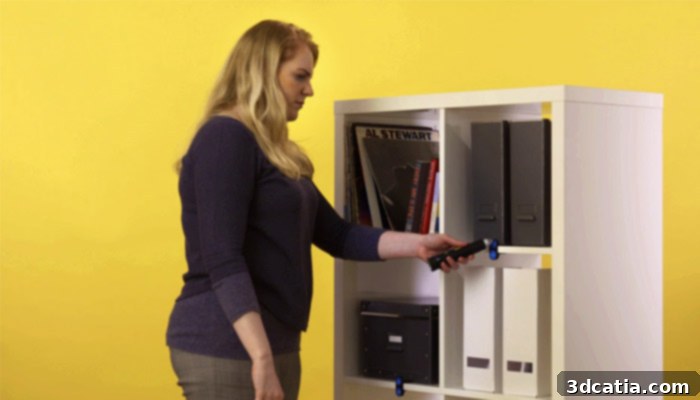
An innovative 3D printed device from ThisAbles for the visually impaired, enhancing tactile interaction with IKEA furniture.
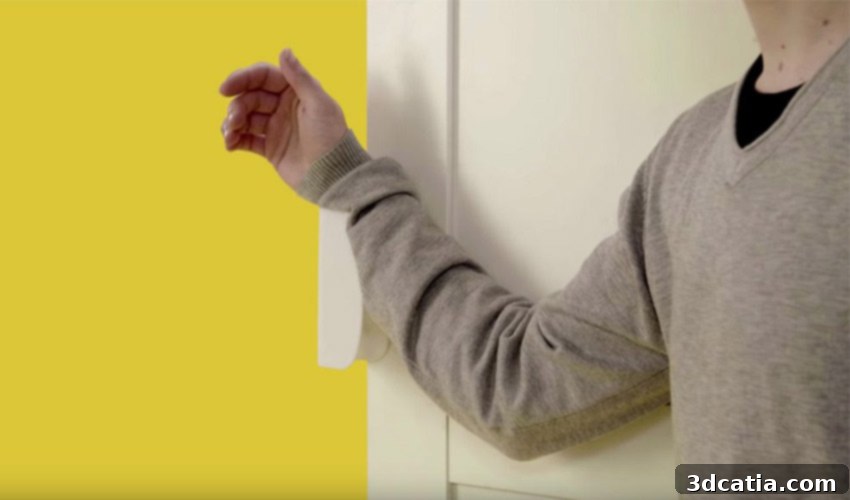
For those with limited dexterity or grip strength, the collection offers enlarged handles designed to easily attach to cupboard and drawer fronts. These 3D printed cupboard handles provide a wider, more stable surface, making it simpler to open and close storage units. Similarly, the project includes larger lamp switches, which are easier to locate and manipulate for individuals with visual impairments or fine motor control challenges. Another crucial innovation is the development of window bumpers, specifically designed to be placed on window frames to protect against impacts from wheelchairs. This not only preserves the furniture and dwelling but also provides peace of mind for users. The versatility of these 3D printed accessibility aids means they can be tailored to various IKEA products, integrating seamlessly into existing home environments.
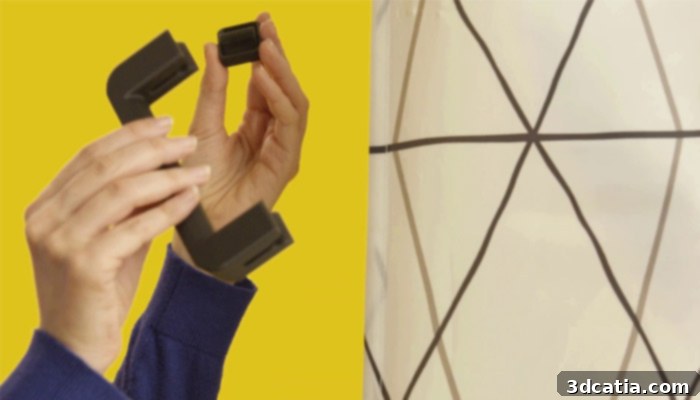
A convenient 3D printed shower curtain handle from IKEA’s ThisAbles, promoting easier use and greater independence.
The ingenuity of the ThisAbles project extends to other thoughtful items, such as a specialized shower curtain handle that facilitates easier maneuvering in bathrooms, enhancing safety and independence. Beyond the current 13 models, the potential for expansion is vast. One could imagine future iterations including 3D printed button aids for clothing, customized grips for utensils, holders for remote controls to prevent misplacement, or even tactile markers for navigating furniture. The modular nature of many IKEA products makes them an ideal canvas for such modifications, allowing users to personalize their living spaces for optimal comfort and functionality. Each of these DIY accessibility solutions demonstrates the practical impact of combining thoughtful design with accessible technology.
The Power of Open-Source and DIY Accessibility with 3D Printing
One of the most revolutionary aspects of the IKEA ThisAbles project is its commitment to open-source accessibility. All the various extensions are available online as free, downloadable 3D diagrams, transforming the traditional model of assistive technology provision. This innovative approach allows anyone with access to a desktop FDM (Fused Deposition Modeling) 3D printer to create these crucial aids in the comfort of their own home or at a local makerspace. This significantly reduces the cost barrier often associated with specialized assistive devices, making essential home modifications more affordable and accessible to a wider population.
The models are designed to be printed using common and relatively inexpensive materials like PLA (Polylactic Acid), a biodegradable and user-friendly filament. This choice further underscores the project’s dedication to making 3D printing for disability solutions as approachable as possible. Each downloadable model comes complete with a comprehensive 3D printing guide, step-by-step installation instructions, and a clear list of compatible IKEA furniture. This ensures that users, even those new to 3D printing, can successfully produce and integrate these enhancements into their homes with confidence. This empowerment of individuals to become active participants in customizing their living environments is a cornerstone of the ThisAbles philosophy.
The open-source nature of ThisAbles also fosters a sense of community and collaborative innovation. Users are encouraged to print, use, and even adapt these designs, potentially contributing to a growing library of customizable accessibility solutions. This aligns with the broader maker movement, where shared knowledge and DIY ethos drive progress. By providing the tools and designs, IKEA is not just offering products; it’s fostering a new ecosystem of personalized assistive technology. This model has the potential to inspire other companies to adopt similar strategies, making inclusive design a standard rather than an exception. The ability to instantly download and print a needed item transforms how people can respond to immediate accessibility challenges, making life incrementally easier and more independent for many.
You can download the 3D models and accompanying guides directly HERE.
Beyond ThisAbles: IKEA’s Broader Engagement with 3D Printing and Inclusive Design
While ThisAbles represents a significant leap in inclusive furniture design, it also fits into IKEA’s wider strategy of exploring and integrating advanced manufacturing technologies. The Swedish retail giant has been consistently investing in research and development involving 3D printing for various aspects of its business. Beyond experimental product lines like the OMEDELBAR collection, 3D printing has proven invaluable for rapid prototyping, allowing designers to quickly test new ideas and iterate on designs before committing to mass production. This efficiency reduces development cycles and costs, while also fostering innovation across their vast product portfolio.
Furthermore, IKEA has shown interest in customization options through 3D printing, recognizing the growing consumer demand for personalized products. While still in nascent stages for large-scale application, the potential to offer customers unique components or modifications for their furniture opens up new avenues for value creation. This approach also aligns with sustainability goals by potentially reducing waste through on-demand manufacturing and enabling repairs with custom-printed parts, extending the lifespan of products. The ThisAbles project, therefore, is not an isolated endeavor but a clear demonstration of how cutting-edge technology can be harnessed to achieve both commercial innovation and significant social impact, positioning IKEA as a leader in both spheres.
The Future of Inclusive Design and 3D Printing
The IKEA ThisAbles project stands as a powerful testament to the transformative potential of 3D printing in the realm of assistive technology and inclusive design. By offering practical, open-source solutions, IKEA and Milbat have not only addressed immediate accessibility needs but have also paved the way for a more collaborative and user-driven approach to product development. This initiative highlights that designing for disability is not a niche market but a fundamental aspect of creating truly universal products and services that benefit everyone.
The implications of ThisAbles extend far beyond IKEA’s product line. It serves as a compelling case study for other industries, demonstrating how accessible manufacturing technologies can empower individuals and foster greater independence. The ability to quickly design, share, and produce DIY home accessibility aids democratizes customization and makes sophisticated solutions available to a broader audience. As 3D printing technology continues to evolve and become even more affordable, we can anticipate a future where personalized assistive devices are commonplace, seamlessly integrated into our homes and daily routines. This pioneering effort by IKEA and Milbat is not just about furniture; it’s about building a more equitable and accessible world, one 3D printed part at a time.
What are your thoughts on IKEA’s innovative ThisAbles project and its impact on inclusive design? We invite you to share your insights in a comment below or join the conversation on our Facebook and Twitter pages! Don’t forget to sign up for our free weekly Newsletter to stay updated with all the latest news in 3D printing, delivered straight to your inbox!