

The Definitive Guide to the Best DIY 3D Printer Kits: Build Your Own Additive Manufacturing Machine
In the exciting world of 3D printing, convenience often takes center stage, with most FDM 3D printers now marketed as Plug & Play solutions. However, this wasn’t always the norm, and a vibrant community still embraces the spirit of hands-on assembly. The journey of accessible desktop 3D printing began with the revolutionary RepRap project, initiated by Adrian Bowyer in 2005. This open-source movement championed self-replicating machines and laid the foundation for today’s diverse market. Even now, the RepRap philosophy thrives, particularly among DIY 3D printer enthusiasts and through popular kit manufacturers like Prusa.
While we’ve previously explored the best cheap 3D printers available, there’s a unique satisfaction in building your own machine from the ground up. DIY 3D printer kits offer an unparalleled learning experience, deeper understanding of the technology, and often, significant cost savings. For those who relish the challenge and reward of creation, these kits represent an ideal entry point into additive manufacturing. From understanding the intricate mechanics to mastering the software, assembling a 3D printer kit provides invaluable insights into how these complex machines function. Furthermore, it empowers users with the knowledge to troubleshoot, maintain, and even customize their printers to an extent that pre-assembled models simply cannot match. Whether you’re a seasoned maker or a curious newcomer, a DIY kit can elevate your 3D printing journey. To help you navigate this exciting segment of the market, we’ve meticulously researched and compiled a list of the best DIY 3D printer kits available, ranking them from the most to the least expensive for your convenience and budget considerations.
Sintratec Kit: An Affordable SLS DIY 3D Printer Kit Revolutionizing Desktop Manufacturing
Hailing from Switzerland, the innovative startup Sintratec made waves with its Sintratec Kit, introducing one of the first truly low-cost 3D printers based on advanced Selective Laser Sintering (SLS) technology. Following a successful crowdfunding campaign on Indiegogo in 2014, the company now offers its pioneering machine as a kit. This is a remarkable achievement, as SLS is traditionally an industrial-grade technology associated with extremely high costs and complex machinery. The Sintratec Kit stands out as the *only* SLS 3D printer on this list, democratizing access to a technology usually reserved for large corporations.
With a price point of €4,999 ($5,610), the Sintratec Kit is a fraction of the cost of conventional SLS printers, which typically run upwards of €200,000. Despite its affordability, it’s capable of producing high-quality PA12 nylon parts, known for their excellent mechanical properties and durability. It offers a respectable maximum build volume of 110 x 110 x 110 mm, suitable for a wide range of functional prototypes and end-use parts. The startup estimates that assembling this sophisticated 3D printer takes approximately four days. While this might seem like a significant time investment, it is undoubtedly the trade-off for accessing such a powerful and versatile laser sintering technology at an unprecedentedly low price. For those looking to delve into professional-grade material properties and intricate designs without breaking the bank, the Sintratec Kit represents an extraordinary opportunity to build a truly advanced additive manufacturing system.
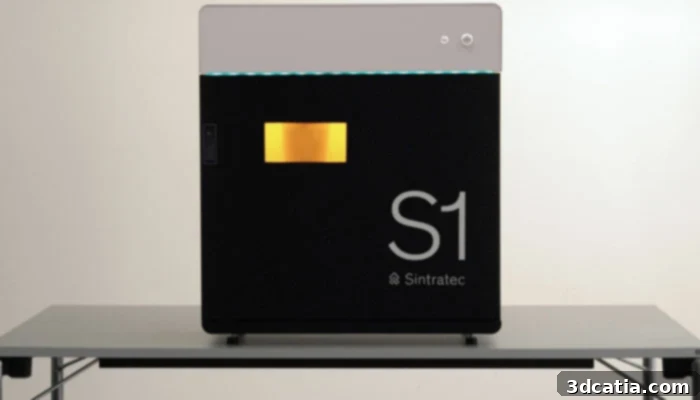
The Sintratec S1 DIY 3D printer kit is unique as the only SLS machine on our list, offering professional-grade capabilities to hobbyists and small businesses.
Moai: An Accessible SLA 3D Printer Kit for High-Detail Resin Printing
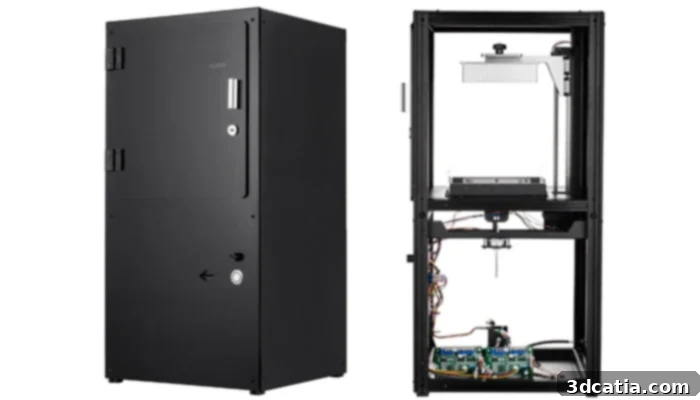
In 2016, Chinese manufacturer Peopoly successfully launched its Kickstarter campaign, introducing the world to its innovative SLA kit machine, aptly named Moai. This campaign garnered significant attention and success, quickly leading to worldwide distribution due to its highly attractive price point for a photopolymerization (SLA) machine. At approximately $1,295, the Moai made resin 3D printing much more accessible to a broader audience of hobbyists, designers, and small businesses who previously found the technology prohibitively expensive.
The Moai delivers impressive specifications for its price, offering a generous printing volume of 130 x 130 x 180 mm. It utilizes a precise 70-micron laser beam and supports a variable layer thickness ranging from an incredibly fine 10 microns up to 200 microns. This wide range allows users to prioritize either extremely fine detail for intricate models or faster print times for larger prototypes. A significant advantage of the Moai is its compatibility with any resin on the market, providing users with immense flexibility in material choice, whether they need standard, flexible, castable, or engineering-grade resins. Assembly of the Moai is relatively straightforward, estimated to take about four hours, making it an achievable project for most enthusiasts. For those who prefer immediate gratification, a pre-assembled version of the Moai is also available, offering an excellent balance of performance and convenience. The Moai excels in applications requiring smooth surface finishes, intricate geometries, and high accuracy, such as jewelry, dental models, miniatures, and detailed prototypes.
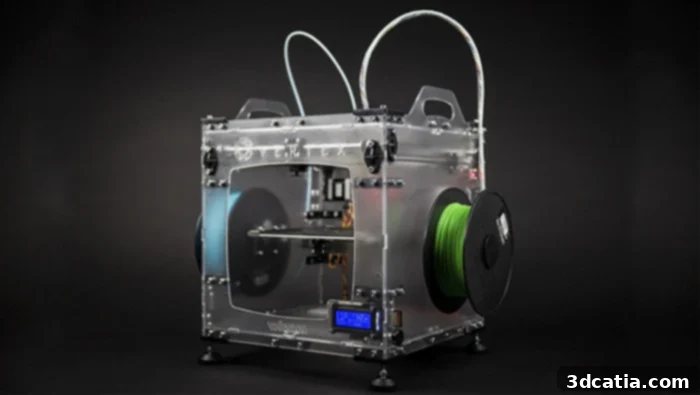
Vertex Kit: A Transparent and Reliable FDM DIY 3D Printer Kit
The Vertex 3D printer kit is a product of Velleman, a highly reputable company with a long history in the electronics sector, established in the 1970s. This heritage speaks volumes about the quality and reliability of the Vertex. What immediately sets the Vertex apart from many other DIY 3D printer kits is its unique transparent chassis, which not only gives it a sleek, modern aesthetic but also allows users to observe the printing process in action, adding to the educational and engaging experience of 3D printing. The kit also includes a durable glass print tray and offers an optional double extruder configuration, expanding its capabilities for multi-material or multi-color printing.
In terms of performance, the Vertex is a solid and dependable FDM machine. It boasts a generous build volume of up to 180 x 200 x 190 mm, providing ample space for a variety of projects. Users can achieve print quality with layer thicknesses ranging between 50 and 200 microns, striking a good balance between speed and detail. The single-extruder version of the Vertex Kit is available from a competitive price of €599 ($672), making it an attractive option for those seeking a well-engineered and aesthetically pleasing DIY 3D printer with the flexibility for future upgrades. Its robust design and reputable manufacturer make it a trustworthy choice for hobbyists and educators alike who appreciate transparency, both literally and figuratively, in their 3D printing endeavors.
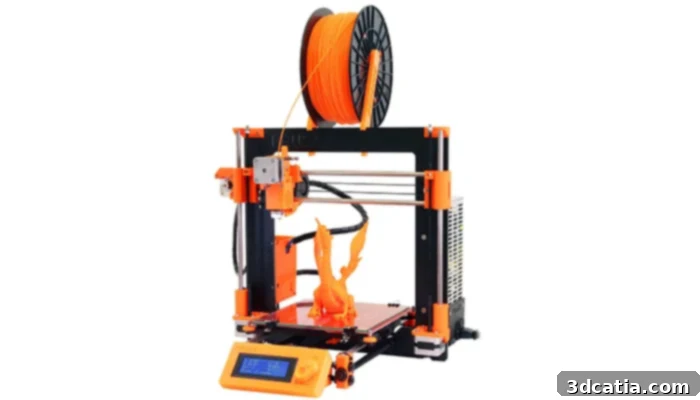
Prusa i3 MK3S & MINI+: The Well-Established & Community-Backed DIY 3D Printer Kits
When it comes to DIY 3D printer kits, the name Prusa resonates deeply within the additive manufacturing community. The Original Prusa i3 MK3S is the direct successor to the critically acclaimed and award-winning Original Prusa i3 MK2, embodying years of refinement and community feedback. This machine is renowned for its reliability, print quality, and open-source nature, which has fostered an enormous and supportive user base. The MK3S features a thoroughly rebuilt extruder, designed for enhanced performance and easier maintenance, significantly reducing common printing issues.
It integrates a plethora of smart sensors, including a filament sensor to detect when material runs out and power panic to resume prints after a power outage, enhancing overall print success rates and user convenience. A standout feature is the new magnetic MK52 heatbed, equipped with replaceable PEI spring steel print sheets. These sheets simplify print removal and offer excellent adhesion for a wide range of materials. With an impressive printing speed of 200 mm per second, this desktop 3D printer boasts a substantial 250 x 210 x 210mm printing tray, providing ample build volume for most projects. The MK3S is highly versatile, capable of printing almost all thermoplastics, including challenging materials like nylon and polycarbonates, alongside common ones like PLA, PETG, and ABS.
Prusa’s commitment to its community is evident through its official website, where comprehensive assembly instructions are meticulously documented and validated by its global user base, making the build process a guided and rewarding experience. The Original Prusa i3 MK3S kit is available from $749 (€769.00 including VAT), offering exceptional value for a high-performance FDM machine. For those seeking a more compact and even more budget-friendly option, the Original Prusa MINI+ kit starts at just $349.00 (€379.00 including VAT). Despite its “mini” designation, it offers a respectable build volume of 180 x 189 x 189 mm or 7 x 7 x 7 inches, making it only slightly smaller than its older sibling. The MINI+ retains many of the same high-quality features and the robust open-source ecosystem that Prusa is famous for, making it an excellent choice for beginners, educational settings, or anyone with space constraints who doesn’t want to compromise on print quality and reliability.
Micro Delta Rework: Speed and Precision in a DIY Delta 3D Printer
The MicroDelta Rework represents the updated iteration of the Micro Delta 3D printer, meticulously engineered by the Toulouse-based firm eMotion Tech. This DIY 3D printer kit distinguishes itself with a rigid structure incorporating two steel blocks, ensuring enhanced stability and precision during the printing process. Delta-style 3D printers like the MicroDelta Rework are known for their unique kinematic system, which often translates to faster print speeds compared to Cartesian counterparts, due to the lighter moving print head. According to the manufacturer, this kit can be fully assembled in approximately three hours, involving the careful construction of around 200 individual pieces. This relatively short assembly time makes it an appealing option for those who want a hands-on experience without an excessively long build process.
The MicroDelta Rework offers a circular print volume of 150 mm in diameter and 200 mm in height, providing ample space for vertical prints. It is available with or without a heating plate, giving users the flexibility to choose based on their material preferences; a heated bed is crucial for printing with materials like ABS to prevent warping. In terms of performance, it boasts a layer thickness capability ranging from 100 to 350 microns, allowing for versatility between quick drafts and more detailed models. Furthermore, it can achieve impressive print speeds of up to 200 mm/s, living up to the delta printer’s reputation for rapidity. Starting at an accessible price of €400, the MicroDelta Rework also offers the possibility of adding various features and upgrades, enabling users to customize and enhance their machine over time. This makes it an excellent platform for learning about delta kinematics and exploring high-speed 3D printing.
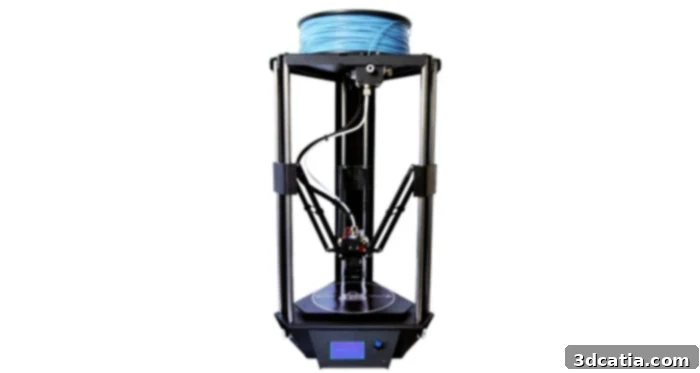
FLSUN QQ-S Pro: A High-Speed, Feature-Rich Delta DIY Printer
The FLSUN QQ-S Pro is a compelling partially DIY offering from the manufacturer FLSUN, known for its focus on delta 3D printers. While retailing at $329.00, which might not make it the absolute cheapest on the market, the printer more than compensates with an array of impressive features designed to enhance both performance and user experience. A key advantage is its ability to resume printing from an interrupted position, a crucial feature that saves time and material in case of power outages or accidental stops. It also boasts automatic leveling, simplifying the often-fiddly calibration process and ensuring consistent first layers.
The QQ-S Pro was engineered with speed as a primary objective, allowing it to print up to 1.5 times faster than many printers based on the traditional i3 structure. This speed is attributed to its “flexible three-axis linkage system,” a hallmark of delta printers, combined with a powerful 32-bit motherboard for efficient processing. Further contributing to its stability and print quality are a 24V power supply for consistent heating, a lattice hot bed for superior adhesion and easy print removal, and an all-metal side shell that provides a more stable structure and improved thermal management. With a substantial build volume of 255x255x365mm, it stands as one of the larger options among DIY printer kits, catering to projects requiring significant height. The printer offers a print accuracy of 0.1mm and a layer thickness range of 0.06-0.4mm, ensuring a balance of fine detail and rapid prototyping capabilities. An additional benefit for those hesitant about extensive assembly is that the QQ-S Pro comes mostly pre-assembled, meaning users can expect to have it up and running in under an hour, making it an excellent choice for those seeking high performance with minimal build time.
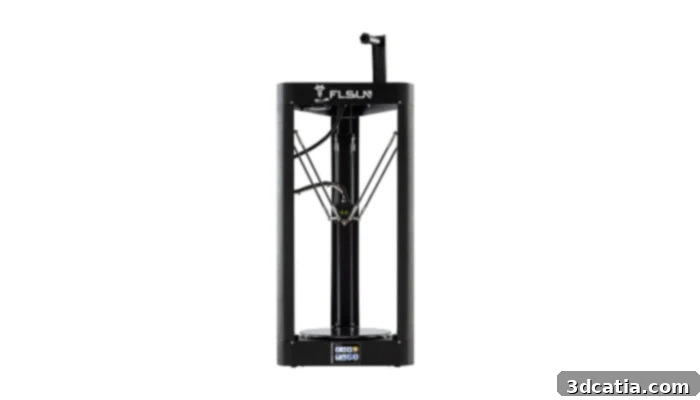
Disco Ultimate: Affordable Entry into DIY 3D Printing with Dagoma
Starting at an attractive price of €399, the Disco Ultimate from French manufacturer Dagoma positions itself as one of the most affordable DIY 3D printer kits on the market. It’s notably marketed as a highly accessible 3D printer, inviting beginners into the world of additive manufacturing with ease. The kit comes comprehensively equipped, including an SD card for storing print files, an inductive probe for precise automatic bed leveling, and several 3D printed components that you’ll assemble yourself, reinforcing the DIY spirit. One of its most appealing aspects is the quick assembly time; users can expect to have the Disco Ultimate fully operational in less than a day of work, making it perfect for weekend projects or impatient makers.
Despite its modest price point and emphasis on accessibility, the Disco Ultimate offers a surprisingly decent build volume of 200 x 200 x 200 mm, accommodating a good range of models. It also boasts competitive performance metrics, including a fine 50-micron layer thickness capability, which allows for smooth and detailed prints. The 50-micron XY positioning further contributes to its accuracy. Moreover, Dagoma engineered the Disco Ultimate to be up to 30% faster than its predecessor, the popular DiscoEasy 200, ensuring a more efficient printing experience. This combination of affordability, ease of assembly, and solid performance makes the Disco Ultimate an excellent entry-level DIY 3D printer kit for those eager to embark on their 3D printing journey without a significant financial or time commitment, proving that high-quality results don’t always require a premium price tag.
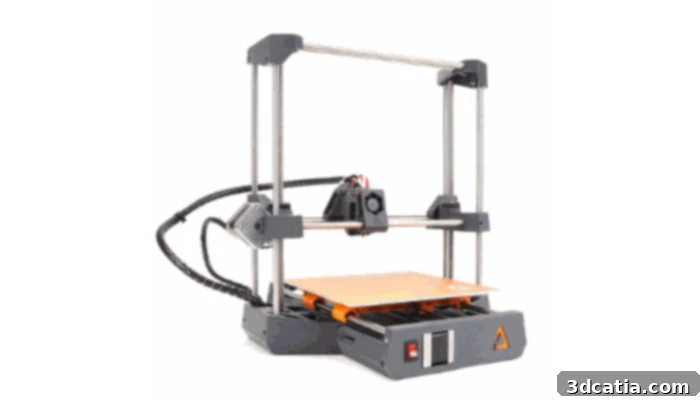
The Tronxy X5SA DIY 3D Printer Kit: Large Volume for Enthusiasts
The Tronxy X5SA 3D printer has been developed by the Chinese manufacturer of the same name and has quickly established itself as one of the most popular DIY 3D Printer Kits, especially for users seeking a larger build volume. Based on efficient FDM (Fused Deposition Modeling) technology, this desktop machine truly stands out with an impressive build volume of 330×330×400 mm (12.992×12.992×15.75 inches), providing ample space for printing substantial models or multiple parts simultaneously. Initially derived from the X3SA, the X5SA swiftly surpassed its predecessor in popularity, largely due to its enhanced features and capabilities.
Key among these features is the upgraded TITAN Extruder, which offers superior filament feeding and is compatible with a broad array of filaments. This versatility means users can experiment with diverse materials such as PLA, ABS, PETG, TPU (flexible filaments), Wood composites, and more, opening up a world of creative possibilities. The X5SA also includes an automatic filament detector, a highly convenient feature that alerts the user when the filament spool is running low or has run out. This prevents failed prints and saves considerable time and frustration for the user, especially during long print jobs. The manufacturer advises that this particular DIY machine is more suited for 3D printing enthusiasts who already possess some prior experience with 3D printing and assembly, given its slightly more complex build. However, for those willing to invest the time to learn and assemble the machine, the Tronxy X5SA offers a powerful and rewarding printing platform. It can be purchased starting from a very competitive price of $258.00, making large-format 3D printing accessible to a wider audience of dedicated makers.
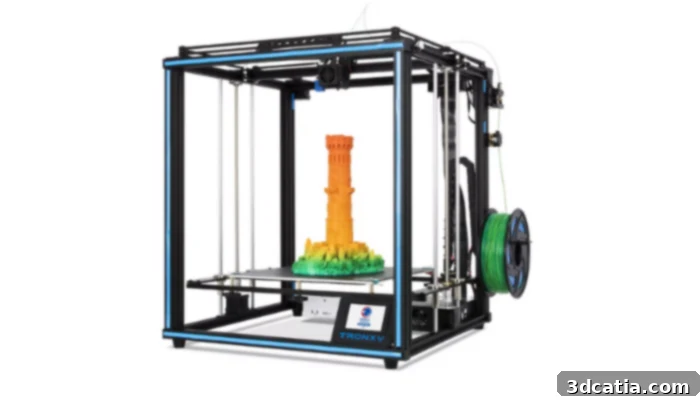
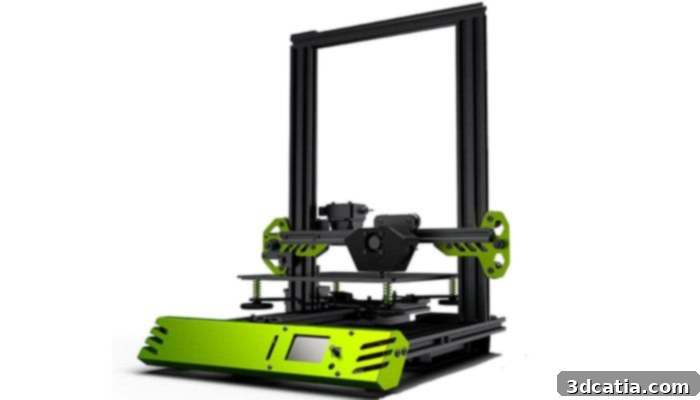
Tarantula Pro: A Robust and Upgraded RepRap-Inspired DIY Kit
The Tarantula Pro represents the latest iteration of the popular Tarantula 3D printer kit from TEVO, a China-based 3D printer manufacturer known for its affordable and capable machines. This printer kit is proudly based on the classic RepRap Prusa i3 3D printer design, a structure celebrated for its inherent simplicity, open-source nature, and robust reliability. This well-proven architecture ensures that the Tarantula Pro offers a stable and consistent printing experience for enthusiasts building it themselves. It provides a generous build volume of 235 x 235 x 250 mm, ample for most common 3D printing projects.
The Tarantula Pro boasts impressive material compatibility, capable of printing with a wide variety of filaments, including ABS, PLA, PVA (water-soluble support material), WOOD composites, and many others. This versatility allows users to explore different applications and material properties. Enhancing the user experience, the kit is equipped with an LCD screen, providing intuitive control over printing parameters and monitoring progress without needing a connected computer. In terms of print quality, TEVO claims that users can achieve layer resolutions ranging between a fine 0.05mm and a more rapid 0.35mm. The extruder has also been significantly upgraded to a volcano-style extruder, which is known for its ability to handle higher flow rates, allowing for faster printing without sacrificing print quality. Crucially, this kit also comes standard with a heated bed, an essential feature for printing with materials prone to warping, such as ABS, ensuring better adhesion and more successful prints. Retailing for $229, the Tarantula Pro offers a well-rounded and capable DIY 3D printing experience for its price.
Anycubic’s Diverse Range of DIY 3D Printer Kits
Founded in 2015, Chinese manufacturer Anycubic has rapidly ascended to become one of the most recognized and popular 3D printer brands globally, particularly celebrated for its accessible and high-performing DIY machines. Their extensive lineup of kit printers offers a variety of choices, catering to different needs, skill levels, and budgets. Among their numerous offerings, the i3 Mega S stands out as a particularly talked-about model. While it may not be the cheapest nor feature the largest build volume within Anycubic’s diverse Mega series, its exceptional reliability and robust feature set have cemented its status as a mid-range champion, making it immensely popular with users across the globe.
Starting at $219.00, the i3 Mega S provides a respectable build volume of 210x210x205mm. Anycubic’s Mega S is distinguished by its excellent print adhesion, ensuring prints stick reliably to the bed, and its high-quality, accurate printing capabilities with a fine layer resolution of 5 microns. Furthermore, it supports a wide variety of print materials, including TPU (flexible), PLA, ABS, HIPS, and Wood composites, allowing for diverse applications.
Beyond the i3 Mega S, Anycubic offers choices for virtually any requirement. The Mega Zero 2.0, for instance, provides a larger build volume (220x220x250mm) at an even cheaper starting price of $169.00. While it may offer fewer advanced features than the i3 Mega S, it is notably compatible with PETG, unlike its sibling, making it a great budget-friendly option for those prioritizing build size and specific material compatibility. For users seeking a more professional-grade experience with enhanced features and durability, the Mega Pro (210×210×205 mm³, starting at $309.00) and the larger Mega X (300 x 300 x 305mm and starting at $359.00) are excellent considerations. These models often incorporate features like advanced touchscreens, improved extruders, and more robust frames. Finally, for those demanding truly expansive build sizes, Anycubic delivers with the Chiron ($379.00, offering a massive 400x 400x 450 mm build area) and the Predator (370×370×455mm, starting at $519.00 but exclusively available in the EU). Anycubic’s commitment to providing a wide spectrum of reliable DIY 3D printer kits ensures that there’s a perfect machine for every aspiring maker, from absolute beginners to experienced enthusiasts seeking professional results.
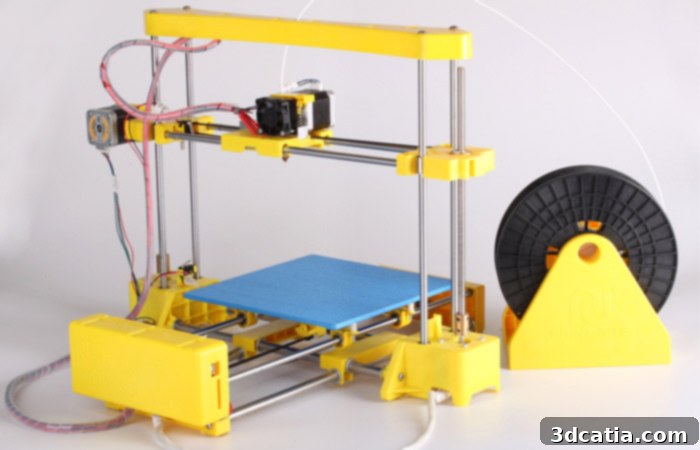
Colido DIY: The Rapid-Assembly, Beginner-Friendly 3D Printer Kit
The Colido DIY 3D printer kit hails from the Chinese manufacturer Colido, known for its focus on user-friendly and accessible 3D printing solutions. This FDM (Fused Deposition Modeling) technology 3D printer is designed for simplicity and quick setup, making it an ideal choice for absolute beginners or those who want to experience the joy of assembling a 3D printer without a steep learning curve. It features a print volume of 200 × 200 × 170 mm, which is a respectable size for most common household projects and educational purposes.
One of the standout features of the Colido DIY is its integrated fan, which plays a crucial role in improving print quality by rapidly cooling extruded filament, especially for intricate details and overhangs. According to the manufacturer, the assembly process for this machine is remarkably straightforward and exceptionally fast, estimated to take a mere 15 minutes. This makes it perhaps the quickest to assemble DIY kit on our list, eliminating much of the intimidation factor often associated with building a 3D printer. The machine comes bundled with a PLA coil, the only material it is specifically designed to print with, simplifying material selection for new users. Additionally, it includes a USB key and two explanatory videos to guide users through the assembly and first print steps. The Colido DIY is available from an incredibly accessible price point of €180 ($202), firmly establishing it as one of the most affordable and beginner-friendly DIY 3D printer kits on the market, perfect for dipping your toes into the world of 3D printing with minimal fuss.
Anet A8: The Iconic Budget-Friendly DIY 3D Printer Kit
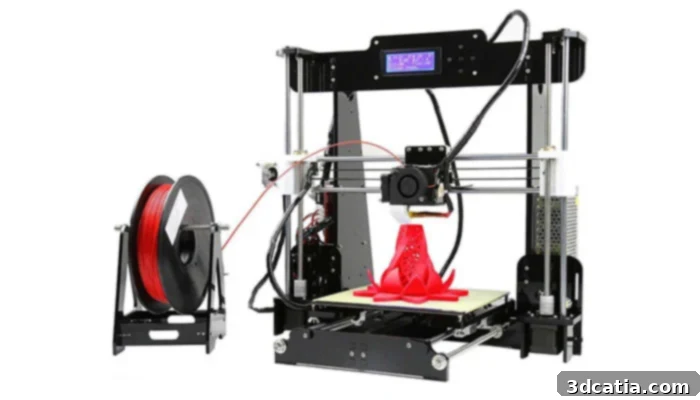
The Anet A8 has long been a household name in the DIY 3D printing community, developed by the Chinese manufacturer Anet. This 3D printer kit carved out its niche as one of the most accessible and budget-friendly FDM (Fused Deposition Modeling) machines available, making 3D printing a reality for countless hobbyists and students worldwide. The Anet A8 utilizes a Cartesian FDM head, a common and reliable mechanism, capable of printing with popular ABS and PLA filaments, along with a wide variety of other thermoplastics, offering good material versatility for its price.
It features a maximum build volume of 220 x 220 x 240 mm, which is quite generous for a printer in its class, allowing users to tackle a decent range of projects. A key inclusion is the heated print bed, capable of reaching temperatures up to 100ºC. This is crucial for printing with materials like ABS, which require consistent heat to prevent warping and ensure proper layer adhesion, thereby improving print success rates. For an enhanced user experience, the Anet A8 is equipped with an LCD screen, enabling straightforward navigation of settings and monitoring of print progress without the need for a tethered computer. Its starting price of around $180 solidified its position as one of the most attractive entry points into 3D printing. Over time, Anet has also responded to user feedback and technological advancements by launching the Anet A8 Plus, an upgraded version of its popular A8 printer, offering improvements in stability, features, and overall performance, while maintaining the spirit of affordability and DIY accessibility.
Voxelab Aquila DIY Printer Kit: Affordable Performance from Flashforge’s Subsidiary
Voxelab, a subsidiary of the renowned 3D printer developer Flashforge, has dedicated itself to providing comprehensive and cost-effective 3D printing solutions tailored for both beginners and advanced users. The Voxelab Aquila DIY FDM 3D Printer exemplifies this mission, delivering remarkable value at a highly competitive price point. Currently listed at only $179.00 on their website (a $20 discount from its regular price of $199.00), the Aquila stands out as one of the most budget-friendly DIY options on our list, without significantly compromising on features or build quality.
Adding to its appeal, the Aquila boasts a larger build volume of 220x220x250mm compared to many other machines in its price range, allowing for more substantial projects. While marketed as a DIY machine, Voxelab has streamlined the assembly process considerably; the manufacturer highlights that the machine comes almost entirely pre-assembled. Users primarily need to install several main accessories, significantly cutting down on the time required to get the printer operational, often within just a few minutes. The Aquila is versatile in material compatibility, supporting common filaments like PLA, ABS, and PETG. It also incorporates several notable features designed to enhance the printing experience: a flexible print bed for easy removal of finished parts, a colorful screen with a user-friendly UI (User Interface) for intuitive control, and filament auto-feeding for added convenience. This combination of affordability, substantial build volume, ease of assembly, and practical features makes the Voxelab Aquila an excellent choice for anyone looking for a high-value DIY FDM 3D printer.
Photo Credits: Voxelab
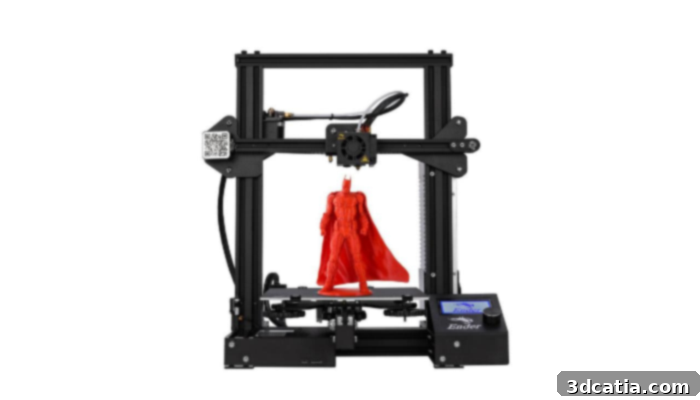
Creality Ender 3: The King of Affordable and Moddable DIY 3D Printer Kits
When discussing DIY 3D printer kits, it would be impossible, and frankly remiss, not to mention Creality, and particularly the iconic Ender 3 3D Printer. Since its introduction, the Ender 3 has revolutionized the entry-level FDM 3D printing market, making additive manufacturing incredibly accessible to the masses. With an astonishingly low starting price of $155.00, it stands as one of the most affordable and widely adopted kits on the market, celebrated for its perfect balance of price, performance, and community support. The Ender 3 is designed for relatively quick assembly; it comes with several major parts pre-assembled, meaning that most users can have it fully operational in approximately two hours, transforming a pile of components into a functional 3D printer.
Beyond its ease of assembly, the Ender 3 boasts several features that contribute to its popularity. Its upgraded extruder helps to significantly reduce the risk of plugging and ensures smoother filament feeding. The heated bed is highly efficient, capable of reaching 110℃ in about five minutes, which is crucial for printing with materials like ABS and ensuring good bed adhesion. Creality has also developed an entire ecosystem around the Ender 3, offering various versions to suit different needs and budgets. Customers can choose between the original Ender 3, the Ender 3X (which often includes valuable upgrades like a tempered glass print bed and extra nozzles), the Ender 3 Pro (featuring a more stable power supply and improved magnetic build plate), or the Ender 3 V2 (a significantly upgraded version with a silent motherboard, redesigned interface, and glass print bed). For those desiring a substantially larger print volume and not deterred by a higher cost, the Creality CR-10 is another immensely popular DIY machine available from Creality, offering a massive build area for ambitious projects. The Ender 3’s open-source nature and massive online community also mean an abundance of tutorials, modifications, and troubleshooting resources, making it an ideal platform for both learning and continuous improvement.
Startt: The Most Affordable DIY 3D Printer Kit for Absolute Beginners
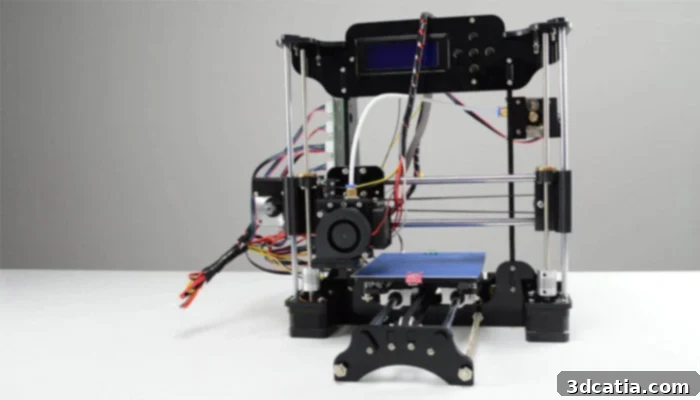
For those looking for the absolute entry point into the world of DIY 3D printing, the Startt DIY 3D printer kit offers an unbeatable proposition. This incredibly budget-friendly machine belongs to the English brand Startt, which manufactures its printers in China and distributes them through the British company iMakr. It is undoubtedly one of the cheapest machines on the market, making 3D printing accessible to almost anyone with a curious mind and a tight budget, as it can be purchased for as little as 100€ ($112).
Despite its minimalist price, this FDM technology printer provides a functional and educational experience. It features a compact printing volume of 120 × 140 × 130 mm, suitable for printing smaller models, learning the basics of 3D printing, or even serving as a secondary printer for quick, small jobs. The Startt printer is designed to work primarily with PLA filament, which is known for being easy to print, biodegradable, and ideal for beginners due to its low warping tendencies. A unique and valuable feature for its price point is the inclusion of interchangeable extruders, allowing users to switch between nozzle sizes of 0.3, 0.4, or 0.5 mm. This capability provides flexibility to achieve different print qualities, from finer details to faster, coarser prints, empowering users to experiment with various print resolutions. The Startt is the perfect choice for educational settings, young makers, or anyone who wants to explore 3D printing technology with the lowest possible initial investment and a hands-on building experience.
Building your own 3D printer from a kit is more than just acquiring a machine; it’s an immersive journey into understanding additive manufacturing from the inside out. It offers the satisfaction of creation, the knowledge for troubleshooting, and the potential for endless customization. We hope this comprehensive guide to the best DIY 3D printer kits has provided valuable insights, whether you’re seeking high-end SLS technology, detailed SLA resin printing, or an ultra-affordable FDM entry point. Each kit presents a unique opportunity to engage with this transformative technology on a deeper level.
Did we feature your favorite DIY 3D printer kit, or perhaps inspire you to embark on a new build project? Let us know your thoughts and experiences in a comment below, or share your creations and discussions on our Facebook and LinkedIn pages! Don’t forget to sign up for our free weekly Newsletter to stay updated with all the latest news, trends, and innovations in the rapidly evolving world of 3D printing, delivered straight to your inbox every week!