
The Ultimate Guide to Cobalt-Chromium 3D Printing: Properties, Applications, and Future Trends
Cobalt-chromium, often abbreviated as CoCr or cobalt-chrome, stands as a distinguished metal alloy that has profoundly impacted various industrial sectors, particularly within the realm of additive manufacturing. Renowned for its unparalleled combination of strength, durability, and resistance to harsh environments, CoCr is an ideal material for producing high-precision components that must withstand rigorous conditions. Its exceptional mechanical properties, coupled with its ability to be intricately shaped using advanced 3D printing techniques, have unlocked unprecedented possibilities in the design and fabrication of customized parts across critical industries such as medical, dental, aerospace, and automotive. This comprehensive guide will delve into the intrinsic properties of cobalt-chromium, explore its distinct advantages when utilized in 3D printing, and highlight the primary applications and leading manufacturers shaping the market for this high-performance material.
Characteristics of Cobalt-Chromium Material
As its name implies, cobalt-chromium alloy primarily comprises the metallic elements cobalt (Co) and chromium (Cr). Beyond these core constituents, it often incorporates smaller, carefully controlled proportions of other essential chemical elements, such as molybdenum (Mo), tungsten (W), and nickel (Ni). These additional elements are strategically introduced to further enhance the alloy’s mechanical performance, corrosion resistance, and overall structural integrity. Cobalt-chromium is typically a non-magnetic alloy, meticulously engineered through advanced metallurgical processes. These processes involve the precise fusion of cobalt and chromium with other alloying elements at extremely high temperatures. One of the most common methods for producing the bulk alloy is electric furnace melting, where these metals are melted in induction or electric arc furnaces under carefully controlled atmospheric conditions. In certain scenarios, after the liquid alloy has been successfully obtained, it can undergo a forging process, which involves heating and mechanically molding the material by applying significant pressure, further refining its grain structure and properties.
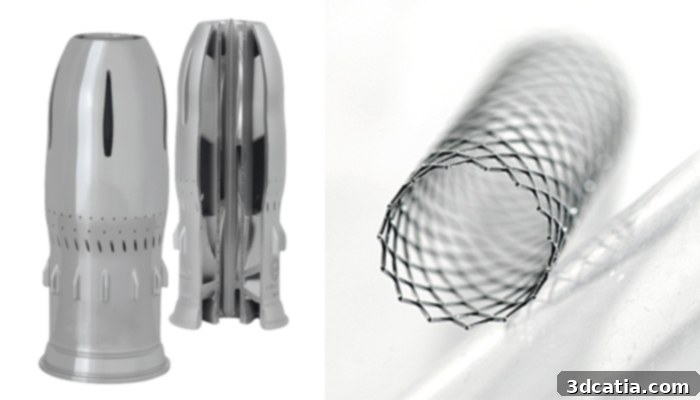
This material is characterized by its strength and durability, making it suitable for demanding applications.
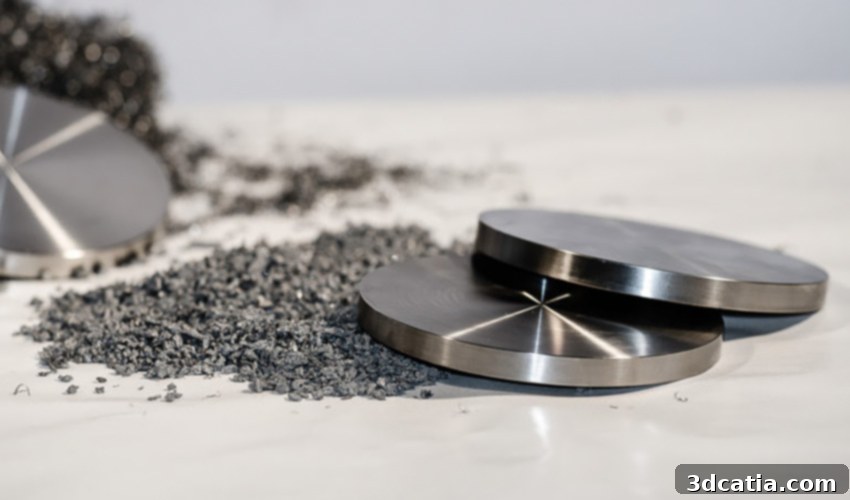
For applications in 3D printing, cobalt-chromium must be prepared in a finely controlled metal powder form. This transformation is typically achieved through processes like atomization or sputtering. In atomization, a molten stream of the CoCr alloy is disintegrated into fine particles by high-velocity gas (gas atomization) or liquid (water atomization). Sputtering involves bombarding a target material with energetic particles, causing atoms to be ejected and condensed into a powder. These powder-production techniques are critical as they enable the material to be used in powder bed-based additive manufacturing technologies. The ability to produce uniform, spherical, and contamination-free metal powder is paramount for achieving high-quality, complex parts with consistent properties in 3D printing. This granular form offers unparalleled flexibility in the design and manufacture of high-precision components, allowing for intricate geometries that are impossible to achieve with traditional manufacturing methods. Among cobalt-chrome’s most outstanding characteristics that make it highly desirable for advanced manufacturing are:
- Exceptional Corrosion Resistance: Cobalt-chromium exhibits outstanding resistance to corrosion, particularly in aggressive environments characterized by high chloride concentrations. This property is critically important in medical applications, where implants are in constant contact with body fluids, which are inherently corrosive. The formation of a stable, passive oxide layer, primarily due to the chromium content, protects the underlying material from degradation, ensuring long-term stability and safety. This resistance also extends to various industrial chemicals and high-temperature oxidizing atmospheres.
- High Hardness and Mechanical Strength: This alloy is celebrated for its remarkable hardness and superior mechanical strength, making it an ideal choice for components subjected to significant mechanical loads, wear, and abrasion. It possesses high tensile strength, excellent fatigue resistance, and good creep resistance at elevated temperatures. Its ability to maintain structural integrity and perform reliably even under extreme stress and at elevated temperatures is a significant advantage for demanding applications in aerospace, power generation, and specialized tooling. This robust mechanical profile directly translates to longer service life and enhanced reliability for manufactured parts.
- Superior Biocompatibility: Thanks to its inherent corrosion resistance and exceptional chemical stability, cobalt-chromium alloy boasts high biocompatibility. This means it generally does not induce adverse reactions, toxic responses, or allergic sensitivities within the human body, making it a preferred material for use in the medical sector. It is widely approved for long-term implantation in devices such as orthopedic implants, dental prostheses, and cardiovascular components, where direct contact with tissues and fluids is essential. Its inertness prevents the leaching of potentially harmful ions, ensuring patient safety and implant longevity.
- High Thermal Conductivity: In certain applications, CoCr’s high thermal conductivity is a crucial benefit. It enables the alloy to dissipate heat efficiently, which is vital for components that generate or are exposed to high temperatures, such as specific engine parts or heat exchangers. This property helps prevent localized overheating, reducing thermal stresses and extending the lifespan of the part.
- Excellent Thermal Stability: Cobalt-chromium alloys demonstrate high thermal stability, meaning they resist deformation and maintain their mechanical properties even when exposed to elevated temperatures over extended periods. This characteristic is particularly valuable for components operating in extremely hot conditions, such as those found in gas turbines, jet engines, and other high-temperature industrial processes. The material’s ability to resist creep (gradual deformation under constant stress at high temperatures) further underscores its suitability for such critical environments.
3D Printing Cobalt-Chromium: Technologies and Considerations
The versatility of cobalt-chromium alloy truly shines when integrated into additive manufacturing processes, particularly in its finely pulverized powder form, to create parts with highly complex and customized geometries. This high-performance material is primarily compatible with advanced metal 3D printing processes such as Laser Powder Bed Fusion (LPBF), often referred to as Selective Laser Melting (SLM), and Electron Beam Melting (EBM). In LPBF/SLM, a high-power laser precisely melts and fuses successive layers of CoCr powder, while EBM uses an electron beam in a vacuum environment. The melting point of cobalt-chromium alloys typically ranges between 1,200°C and 1,400°C, a precise value that varies depending on the specific composition and proportion of alloying elements. This elevated melting point is notably higher compared to many other metals commonly utilized in 3D printing, such as aluminum or various grades of stainless steel. Consequently, the 3D printing process for cobalt-chromium demands exceptionally high processing temperatures and necessitates precise control over the printing environment, along with the use of robust, high-quality additive manufacturing equipment capable of handling such demanding conditions.
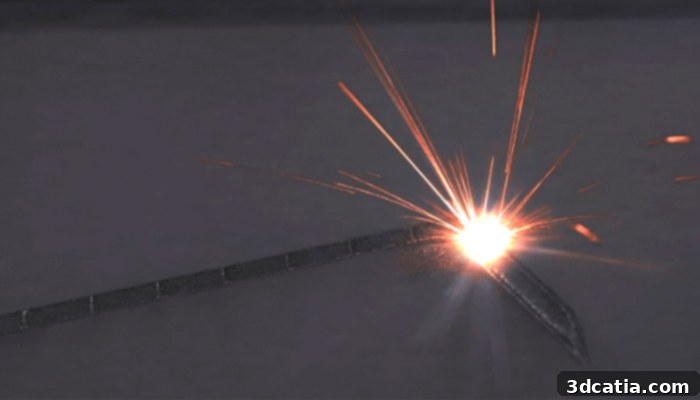
The cobalt-chromium alloy is compatible with powder bed technologies, such as LPBF and EBM (photo credits: Eplus3D).
The successful implementation of cobalt-chromium in 3D printing involves several specific technical considerations, primarily stemming from its unique physical and chemical properties. Due to the alloy’s high melting temperature, the laser or electron beam energy parameters must be meticulously calibrated and adjusted. This precision is crucial to ensure complete melting and fusion of the material, preventing issues like incomplete fusion or unwanted evaporation of alloying elements. Furthermore, because the alloy contains chromium, a highly reactive metal, additional stringent precautions are necessary to control the printing environment. The use of inert atmospheres, typically argon or nitrogen, within the build chamber is strongly recommended. This inert gas blanket prevents undesirable reactions with oxygen and other atmospheric contaminants, which could compromise the mechanical properties and corrosion resistance of the printed part. Another critical aspect to manage is powder fluidity. Cobalt-chromium powder often exhibits lower fluidity compared to other common metal powders, which can complicate the uniform distribution of the powder across the build plate during the manufacturing process. To mitigate this, finely tuned printing parameters, including recoating speed and powder spreading mechanisms, are essential to ensure even layer distribution, uniform melting, and ultimately, a high-quality surface finish for the produced parts. Proper support structures are also vital for CoCr parts, especially for complex geometries, as they help manage thermal stresses and prevent warpage during the high-temperature printing process.
Following the 3D printing of cobalt-chromium parts, a series of critical post-processing steps are indispensable to optimize their mechanical properties, surface finish, and overall performance. Firstly, controlled and slow cooling of the printed parts is crucial to prevent internal stresses, thermal cracking, or deformations that can arise from rapid temperature changes. Once cooled, the parts undergo meticulous cleaning, which primarily involves de-powdering to remove any unfused metal powder from internal channels and external surfaces. This stage also includes the removal of support structures, if applicable, often using specialized tools or wire EDM. In many cases, particularly for medical and aerospace applications where mechanical integrity is paramount, a subsequent heat treatment is applied. Annealing, for example, is commonly used to relieve residual stresses, homogenize the microstructure, and improve the alloy’s ductility and fatigue resistance. For critical applications requiring maximum density and enhanced fatigue life, Hot Isostatic Pressing (HIP) may be employed to eliminate any internal porosity that might remain after printing. Finally, surface finishing techniques are critical to achieve the desired aesthetic and functional properties. Techniques such as electrolytic polishing (electropolishing) are frequently used to achieve a smooth, bright, and passivated surface, which further enhances corrosion resistance and biocompatibility. Mechanical polishing, media blasting, or tumbling can also be applied to achieve specific surface roughness requirements or improve the overall surface quality of the cobalt-chromium components.
Main Applications and Manufacturers on the Market
Thanks to its exceptional combination of corrosion resistance, high hardness, superior mechanical strength, and outstanding biocompatibility, cobalt-chromium 3D printing has found extensive application across a multitude of high-stakes industries. It is predominantly utilized in the manufacturing of critical medical components, including a wide array of orthopedic implants such as hip and knee replacements, spinal implants, and craniofacial reconstruction plates. In the dental field, it is indispensable for fabricating highly customized dental prostheses, crowns, bridges, and partial denture frameworks. For these biomedical applications, parts not only require immense mechanical strength to withstand physiological loads but also must be perfectly compatible with the human body for long-term safety and functionality. Beyond healthcare, CoCr is also extensively employed in the aerospace and automotive industries for the production of components subjected to extreme temperature fluctuations, high stresses, and severe wear conditions. This includes intricate parts like turbine blades, combustion chamber components, lightweight structural brackets, and high-performance engine parts where material integrity at elevated temperatures is crucial for operational safety and efficiency.
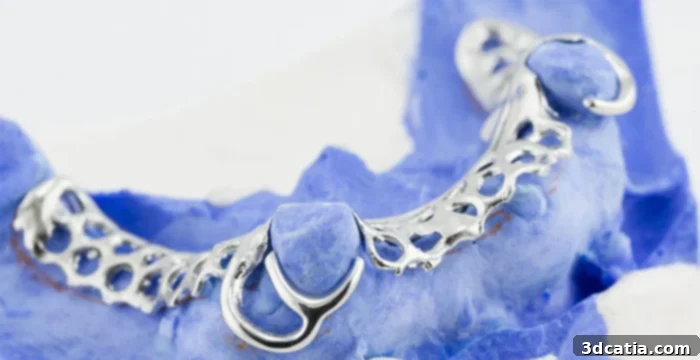
Cobalt chromium is widely used in medical and dental applications, benefiting from its biocompatibility and durability.
The additive manufacturing landscape for cobalt-chromium is supported by a robust ecosystem of companies offering both advanced 3D printing solutions and high-quality materials optimized for these processes. Colibrium Additive, a significant entity within GE Aerospace, stands as a leading manufacturer of specialized metal powders for 3D printing. They develop proprietary CoCr alloys that are meticulously optimized and fully compatible with their own state-of-the-art LPBF and EBM machines, ensuring seamless integration and superior part quality. Similarly, other prominent players in the additive manufacturing industry, such as EOS, Eplus3D, Renishaw, and 3D Systems, offer their own lines of cobalt-chromium powders. These powders are specifically engineered, rigorously tested, and certified for optimal performance within their respective metal 3D printing systems, ensuring reliability and consistent results for their customers. These manufacturers often provide comprehensive solutions, encompassing the printer, software, and material, to facilitate efficient and high-quality production of CoCr parts.
Furthermore, the market for cobalt-chromium metal powders is significantly bolstered by a number of specialized material suppliers dedicated to the additive manufacturing sector. These companies focus on producing high-purity, application-specific CoCr powders that meet stringent industry standards. Notable examples include Carpenter Additive, which offers its highly regarded PowderRange® of alloys, including specific CoCr formulations like CCM®-MC and CCM®. These powders are known for their controlled particle size distribution, spherical morphology, and consistent chemical composition, all of which are critical for reproducible 3D printing results. Another key player is Sandvik, with its standard Osprey® range of metal powders. Sandvik’s portfolio includes premium cobalt-chromium powder specifically developed and optimized for various additive manufacturing processes, ensuring excellent flowability and printability. These material suppliers play a crucial role in providing the raw materials that enable the wider adoption and success of cobalt-chromium 3D printing across diverse high-performance applications.
What are your thoughts on the transformative role of cobalt-chromium in 3D printing? We invite you to share your insights in a comment below or engage with us on our LinkedIn or Facebook pages! Additionally, don’t forget to subscribe to our free weekly Newsletter to receive the latest 3D printing news and innovations directly to your inbox. You can also explore all our informative videos and content on our YouTube channel.
*Cover Photo Credits: PiTch_ / David Doleac