
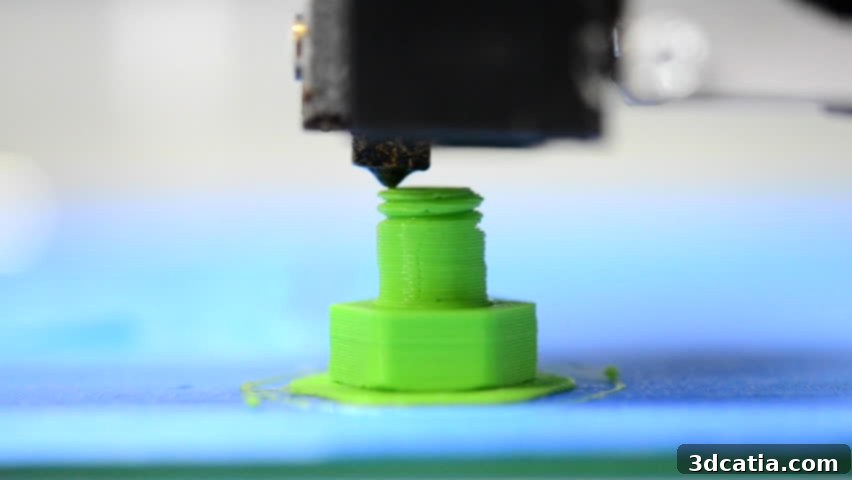
The Ultimate Guide to ABS in 3D Printing: Properties, Applications, and Expert Tips
Acrylonitrile Butadiene Styrene, commonly known as ABS, is a remarkable thermoplastic polymer that has established itself as a cornerstone material across numerous industrial applications. Renowned for its exceptional balance of rigidity, high impact resistance, especially at lower temperatures, and its ability to create lightweight yet durable parts, ABS holds a significant position in manufacturing. Beyond traditional industrial uses, ABS plastic has surged in popularity within the 3D printing market, standing alongside PLA as one of the most widely adopted materials in additive manufacturing. While most frequently encountered in Fused Filament Fabrication (FFF) 3D printing, its versatility extends to resin forms, enabling its use in vat polymerization methods as well. This comprehensive guide will delve deep into the world of ABS, exploring its fascinating production process, critical material properties, the intricacies of 3D printing with it, diverse applications, leading manufacturers, and pricing considerations. Our primary focus will be on ABS filaments, providing insights for hobbyists and professionals alike.
The Production and Characteristics of ABS
ABS made its debut as one of the pioneering plastics adapted for industrial 3D printers, with its application in additive manufacturing gaining traction around 1990. This thermoplastic polymer is precisely classified as a ‘terpolymer,’ meaning it is synthesized from three distinct monomers. The production of ABS typically involves the polymerization of acrylonitrile and styrene in the presence of polybutadiene. The standard composition usually comprises approximately 20% acrylonitrile, 25% butadiene, and 55% styrene, which is where its well-known acronym, ABS, originates. A key advantage of this terpolymer structure is the ability to manipulate these proportions to fine-tune the material’s properties. For instance, styrene is the component largely responsible for imparting rigidity and a characteristic sheen to the ABS plastic. Butadiene, on the other hand, is crucial for its high impact resistance and excellent performance even at very low temperatures. Acrylonitrile contributes to the material’s chemical resistance, heat stability, and overall toughness, making it incredibly versatile for demanding environments.
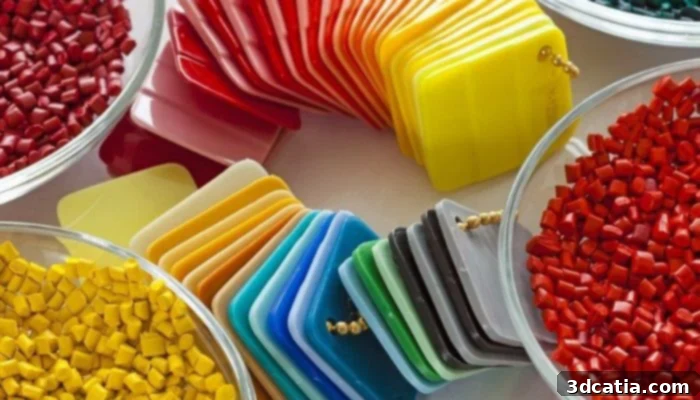
ABS is a popular plastic in industry thanks to its properties (photo credits: Adreco Plastics)
A significant aspect to consider when evaluating ABS is its origin: it is derived from petroleum. This stands in contrast to PLA, which is often promoted as a more environmentally friendly alternative due to its production from renewable resources like corn starch. Consequently, ABS has frequently been the subject of sustainability discussions within the additive manufacturing industry. However, it’s important to note that ABS is, in fact, recyclable. While its acceptance by municipal recycling centers may not be as widespread as other plastics, industrial recycling streams do exist for ABS. This recyclability offers a potential environmental benefit, especially when weighed against the true biodegradability of PLA. Although PLA is technically biodegradable, this process only occurs under very specific industrial composting conditions, leading to questions about its actual eco-friendliness in real-world disposal scenarios. Furthermore, recycled ABS can be processed into new products, extending its lifecycle and reducing the demand for virgin petroleum-based materials. Advancements in recycling technologies and increasing awareness are continually improving the sustainability profile of ABS.
In summary of its key properties, ABS boasts excellent rigidity, coupled with remarkable impact resistance, all while maintaining a relatively low weight and an accessible price point. These attributes have cemented its status as a consistently favored material in the FDM 3D printing market for many years, notably being one of the first filaments to be widely adopted in the sector alongside PLA. Beyond its mechanical strength, ABS is also highly resistant to various chemicals and elevated temperatures, making it an exceptionally robust choice for more demanding industrial applications. Its ability to withstand harsh conditions, from corrosive substances to significant heat fluctuations, makes it invaluable for functional parts, protective casings, and components exposed to challenging operational environments. This combination of physical durability, chemical inertness, and thermal stability ensures ABS remains a top contender for engineers and designers seeking reliable performance from their 3D printed parts.
3D Printing with ABS
The process of 3D printing with ABS requires a nuanced approach to achieve optimal results. While ABS is available in both filament and resin forms, our focus here will primarily be on its use in Fused Filament Fabrication (FFF), given its widespread adoption in this segment of the 3D printing market. ABS filaments are commonly supplied in diameters of 1.75 mm or 2.85 mm and come in an extensive array of colors, offering flexibility for various aesthetic and functional needs. Although it presents a slightly greater challenge to print successfully compared to materials like PLA, ABS remains an extremely popular material among 3D printing professionals. This preference stems from its superior mechanical properties, particularly its impressive resistance to impact and its thermal stability, with functional parts maintaining integrity within a broad temperature range of -20°C to 80°C. Finished ABS prints typically exhibit an opaque appearance with smooth, matte surfaces, and a unique advantage is their ability to be post-processed with acetone to achieve a glossy, polished finish, further enhancing their aesthetic appeal and surface quality.
When setting up your 3D printer for ABS, precise temperature control is paramount. ABS typically has a melting temperature of approximately 200°C, and as such, it is generally recommended to set the extrusion temperature for the nozzle between 230°C and 260°C. This higher temperature ensures proper filament flow and robust layer adhesion. Furthermore, the use of a heated print bed is not merely recommended but is mandatory, with temperatures typically ranging between 80°C and 130°C. The necessity for a heated bed arises from ABS’s characteristic behavior: it contracts significantly upon cooling, especially when exposed to ambient air. Without a sufficiently heated bed, the material is highly prone to shrinking, leading to issues such as warping (curling up from the print surface) and detachment from the build plate. For larger parts, where shrinkage forces are more pronounced, it is highly advisable to employ specialized adhesives like Kapton tape, ABS slurry (ABS dissolved in acetone), or an adhesive lacquer to ensure maximum bed adhesion and prevent print failures. Finally, utilizing a 3D printer equipped with a closed enclosure is strongly recommended for two primary reasons. Firstly, for user safety: ABS plastic can emit ultrafine particles and volatile organic compounds (VOCs) during printing, which may be harmful if inhaled. A closed enclosure helps contain these emissions, and proper ventilation should always be used. Secondly, and critically, temperature control within the print environment is vital when working with ABS. A heated chamber helps maintain a constant, elevated ambient temperature around the print, significantly reducing the temperature gradient between layers. This consistent thermal environment is instrumental in preventing common ABS printing issues such as warping, cracking, and delamination (the undesirable separation of print layers), ensuring successful and high-quality prints.
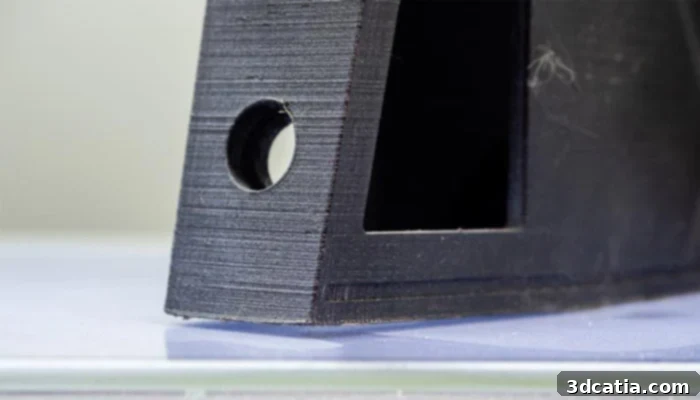
A heated build plate is necessary to avoid warping
While ABS might present a steeper learning curve compared to user-friendly materials like PLA and even PETG, another popular filament, it generally remains easier to print than many other technical and inexpensive thermoplastics. However, as previously highlighted, meticulous control over temperatures – specifically the print chamber, the heated bed, and even the overall room environment – is absolutely critical to mitigate common print failures. Any significant drafts or fluctuations in ambient temperature can exacerbate warping and layer adhesion problems. Another crucial consideration for successful ABS printing is proper material storage. ABS is a hygroscopic material, meaning it readily absorbs moisture from the air. Moist filament can lead to a host of printing issues, including bubbling, stringing, poor layer adhesion, and a noticeable degradation in print quality. To circumvent these problems, ABS filament must be kept dry, ideally stored in airtight containers with desiccant packets or within dedicated filament dry boxes. Properly managing filament moisture ensures consistent material extrusion and helps in achieving the superior surface finish and mechanical properties that ABS is known for.
When it comes to printing with supports, ABS pairs particularly well with HIPS (High Impact Polystyrene), a material sharing similar tray and extrusion temperature requirements. This compatibility makes printing complex geometries with intricate support structures relatively straightforward. A significant advantage of using HIPS as a support material is its solubility in D-Limonene, a natural solvent derived from the compound found in lemons. This allows for clean and efficient removal of support structures simply by immersing the printed part in D-Limonene, dissolving the HIPS without harming the ABS part. This method is particularly beneficial for designs with internal cavities or delicate features that would be difficult to clean manually. Alternatively, if a non-soluble support material is used, traditional mechanical removal methods such as cutting, sanding, or filing will be necessary, similar to how supports are removed for many other filament types. However, the soluble nature of HIPS truly streamlines post-processing for complex ABS prints.
One of the key advantages of printing with this thermoplastic polymer is that, overall, relatively little post-processing is inherently required for functional parts. This can lead to significant time savings, especially in the production of complex components for prototyping or end-use applications. Nevertheless, for those seeking enhanced aesthetics or specific surface finishes, a wide array of post-processing options are readily available for ABS. Beyond the support removal methods previously mentioned, ABS prints can be easily painted thanks to their typically matte finish, allowing for customization and integration into various color schemes. Compared to many other materials, ABS is also quite amenable to further processing; its inherent durability makes it suitable for sanding, which can smooth out layer lines and imperfections, and it can also undergo machining for precise dimensional adjustments or feature additions. Finally, a highly popular and effective post-processing method for ABS is acetone vapor smoothing. This technique involves exposing the printed part to acetone vapor, which gently dissolves and reflows the outer layer of the plastic, effectively eliminating layer lines and creating a remarkably glossy, uniform, and professional-looking finish. This method not only improves aesthetics but can also slightly enhance the mechanical properties by reducing surface imperfections that could act as stress concentrators.
3D Printing Applications With ABS
As we’ve highlighted, one of the primary appeals of ABS lies in its classification as a more technical and robust material. Consequently, its applications naturally lean towards industrial-grade uses and demanding environments. Beyond its extensive use in additive manufacturing, ABS has a long-standing history in traditional manufacturing processes, particularly in polymer injection molding, where it’s used to produce a vast range of consumer and industrial goods. When considering general household usages, ABS is ubiquitous; it can be found in numerous everyday items, including components for household appliances, durable boat hulls, decorative pieces requiring resilience, and, most famously, in children’s toys such as the iconic Lego bricks, where its durability and vibrant color retention are paramount.
In the realm of additive manufacturing, ABS offers a plethora of common uses due to its superior mechanical and thermal properties. It is extensively employed in rapid prototyping, allowing engineers to create functional prototypes and durable concept models that can withstand rigorous testing. Its resistance to physical stresses makes it an excellent choice for producing robust gears, custom tooling, jigs, and fixtures, which outperform many other common 3D printing polymer filaments in terms of longevity and performance. Furthermore, ABS’s chemical and heat resistance, combined with its notable electrical insulation properties, make it particularly attractive for manufacturing casings for electrical components and enclosures where protection from environmental factors and electrical conductivity is crucial. The automotive industry also benefits significantly from ABS, utilizing it for parts like dashboards, interior trims, and bumpers, where impact strength, heat resistance, and aesthetic quality are essential. Its excellent dimensional stability and resistance to deformation under sunlight or over time also make it a superb material for outdoor applications, ensuring parts maintain their form and function even when exposed to external elements, offering a reliable choice for long-term use in various demanding scenarios.
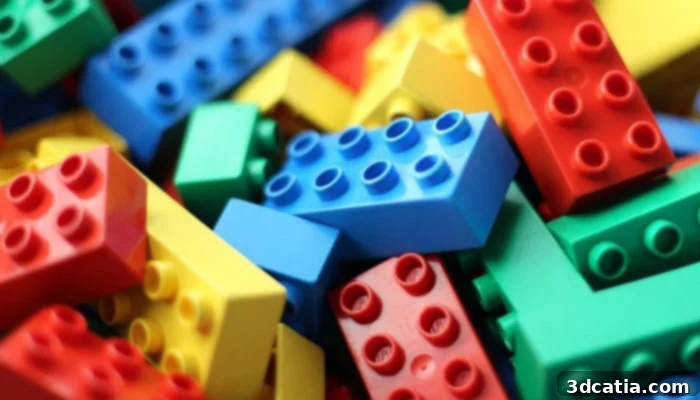
Legos are one of many products made using ABS
The Main Manufacturers and Price
As one of the most popular and versatile 3D printing filaments available, it is no surprise that a vast number of major 3D printing material manufacturers consistently offer ABS filaments in their product lineups. Among the most well-known and reputable suppliers are industry giants like Stratasys, the prominent Chinese manufacturer Esun, and other respected brands such as UltiMaker, FormFutura, and Innofil3D. Many other reputable filament producers like Hatchbox, Prusament, and MatterHackers also provide high-quality ABS options. ABS filament is readily available in a wide selection of colors, catering to diverse aesthetic and functional requirements for various projects. Pricing for standard ABS filaments typically ranges from approximately $15 to $50 or more per kilogram spool, with variations depending on the brand’s reputation, the quality and purity of the material, specific color options, and the spool size. Premium brands or those offering tighter dimensional tolerances might command higher prices, while bulk purchases can often lead to savings.
It is also important for users to be aware of specialized or ‘loaded’ ABS filaments, where various additives are incorporated to enhance or modify the material’s inherent properties. For instance, ABS based on carbon fibers or aramid fibers, more commonly known as Kevlar, are popular composite options. These embedded fibers serve several beneficial purposes: carbon fibers, for example, significantly reinforce the initial mechanical properties of the material, boosting its stiffness, strength, and impact resistance. Aramid fibers, on the other hand, are known for improving toughness and abrasion resistance. Both carbon and aramid additives can help to reduce the prevalent warping phenomenon often associated with pure ABS, thereby providing greater dimensional precision and stability during printing. However, these more technical and high-performance materials generally come at a higher price point compared to standard ABS. Furthermore, they often require different printing parameters, such as higher nozzle temperatures, modified bed temperatures, and potentially specialized, wear-resistant nozzles (like hardened steel or ruby nozzles) due to the abrasive nature of the reinforcing fibers. Understanding these variations allows users to select the most appropriate ABS variant for their specific application, balancing cost, performance, and printability.
What are your thoughts on the use of ABS in 3D printing? Have you had the experience of printing with it before, and if so, what were your successes or challenges? We invite you to share your insights and experiences in a comment below or join the conversation on our LinkedIn, Facebook, and Twitter pages! Don’t miss out on the latest advancements and news in the additive manufacturing world – sign up for our free weekly Newsletter here to receive direct updates to your inbox. You can also explore all our informative videos and tutorials on our YouTube channel for more in-depth content.