
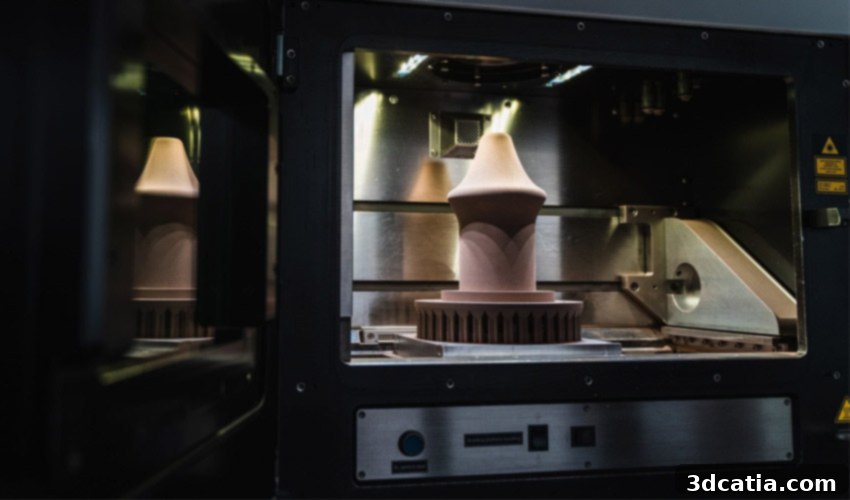
Pangea Aerospace and Aenium Pioneer the Future of Space: Advanced 3D Printed Aerospike Rocket Engines with GRCop-42
In a significant stride towards revolutionizing space propulsion, Spanish startup Pangea Aerospace and engineering innovator Aenium have joined forces. This powerful partnership aims to develop and industrialize groundbreaking advanced combustion devices, meticulously crafted from innovative materials using cutting-edge 3D printing technology. Their collaborative efforts have already yielded a remarkable achievement: a sophisticated 3D printed aerospike nozzle rocket engine, projected to deliver an impressive 15% increase in efficiency compared to conventional designs. This collaboration is not merely about creating a single engine; it signifies a commitment to accelerating the development of next-generation space solutions and deepening research into advanced 3D printing materials, particularly high-performance superalloys crucial for the extreme conditions of spaceflight.
Pangea Aerospace, a dynamic young company headquartered in Barcelona, is at the forefront of designing more efficient and modern rocket engines, specifically tailored to meet the escalating demands of the rapidly evolving aerospace industry. Their vision for sustainable and cost-effective space access has garnered substantial investor confidence, culminating in a successful funding round of 3 million euros. This financial backing has paved the way for their strategic alliance with Aenium, an esteemed engineering firm renowned for its profound expertise in additive manufacturing technologies and intricate materials science. The core objective of this synergistic partnership is to comprehensively advance the entire manufacturing ecosystem surrounding advanced combustion devices. By leveraging the transformative capabilities of 3D printing, they are actively addressing critical questions such as the stringent qualification processes for 3D printed parts and the complex challenges associated with their industrial-scale production.
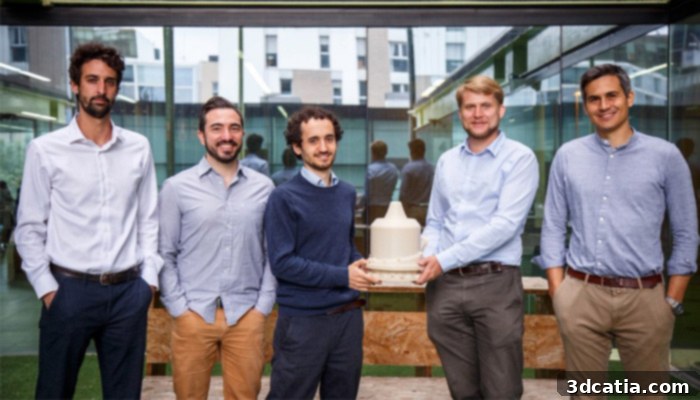
Pangea Aerospace teams have raised 3 million euros to fuel their innovative aerospace projects.
Revolutionizing Rocket Propulsion: The 3D Printed Aerospike Engine
The heart of this innovation lies in the aerospike engine design. Pangea Aerospace has successfully produced a preliminary 3D printed aerospike demonstrator, which underwent rigorous hot combustion tests. This demonstrator, aptly named DemoP, is engineered to operate on liquid oxygen and methane propellants. Its primary purpose has been to meticulously characterize various materials and advanced manufacturing processes, including the integral role of 3D printing and the use of methane as a sustainable fuel. This characterization is a critically important step in the aerospace sector, where precision and reliability are paramount.
Aenium’s contribution to this groundbreaking project includes the development of a highly advanced dual regenerative cooling system. This innovative cooling solution is essential for managing the extreme thermal loads generated within the aerospike nozzle. Both partners confidently assert that their 3D printed aerospike engine offers a significant 15% boost in efficiency, coupled with substantially faster production times and reduced manufacturing costs. This represents a monumental leap forward for the aerospace industry, which has historically been hesitant to widely adopt aerospike engines due to the inherent difficulties in effectively cooling their unique nozzle configurations. The ability to overcome these thermal challenges through sophisticated 3D printing techniques and advanced materials opens up unprecedented possibilities for future space missions.
Understanding the Aerospike Advantage
Aerospike engines offer a theoretical advantage over traditional bell nozzles due to their ability to maintain optimal efficiency across a wide range of atmospheric pressures, from sea level to the vacuum of space. Unlike bell nozzles, which are designed for a specific altitude, aerospikes effectively “adapt” their exhaust flow to the ambient pressure. This is achieved by creating an effective, fluid-based bell shape that changes with altitude, leading to improved performance throughout the entire ascent profile. The challenge, however, has always been the immense heat generated across the exposed “spike” surface, demanding incredibly robust and complex cooling systems that were difficult and expensive to fabricate using conventional methods. Additive manufacturing, or 3D printing, fundamentally changes this paradigm by enabling the creation of intricate internal cooling channels and regenerative cooling circuits within the nozzle itself, precisely where they are needed most. This precision manufacturing allows for unprecedented thermal management, making the aerospike’s theoretical advantages a practical reality.
GRCop-42: A Game-Changing Material for Extreme Environments
A key enabler of this additive manufacturing breakthrough is the introduction of GRCop-42 to the European market. This sophisticated copper-chromium-niobium alloy, originally developed by NASA, is specifically engineered for high-performance applications. Designed for laser powder bed fusion, GRCop-42 boasts a unique combination of exceptional thermal conductivity and remarkable high-temperature strength. These properties make it an ideal material for components exposed to extreme heat flux, such as the combustion chambers and nozzles of rocket engines. The ability to precisely print components with GRCop-42 means engineers can design intricate geometries with integrated cooling channels, maximizing heat transfer efficiency and component longevity.
Adrià Argemi, CEO of Pangea Aerospace, elaborated on the profound significance of this collaboration, stating, “The agreement with Aenium goes beyond shared exclusive capabilities on GRCop42 in Europe, a copper material specifically developed for rocket engines – Aenium also brings an unmatched expertise and R&D capability in processes and materials. GRCop42 based alloys are one of the key solutions that allow us to solve the thermal challenges of an aerospike nozzle rocket engines. We are now ready to offer this unique capability to all the European aerospace sector.” This statement underscores not only the material advantage but also the synergistic expertise that Aenium brings to the table, encompassing extensive research and development in both materials science and advanced manufacturing processes. The strategic availability of GRCop-42 in Europe through this partnership represents a competitive edge, enabling European aerospace companies to access cutting-edge materials for their own propulsion systems.
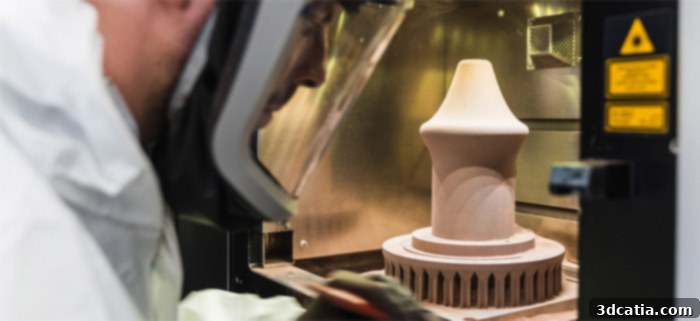
Photo Credits: Pangea Aerospace – Demonstrating the intricate design possibilities of 3D printing for rocket engines.
The Path Forward: Industrialization and Commercialization
The successful development of the DemoP demonstrator and the validation of GRCop-42 pave the way for Pangea Aerospace’s ambitious next steps. The company is currently engaged in the development of a significantly larger engine, with a clear objective of commercialization in the near future. This larger engine aims to scale up the proven efficiencies and design advantages demonstrated by the aerospike technology. The focus is on creating a propulsion system that is not only highly efficient but also robust and reliable enough for regular commercial use, including for satellite launches and future deep space missions.
Miguel Ampudia, Aenium’s CIO, highlighted the broader implications of this alliance, stating, “This alliance will propel the next generation of reusable rocket engines also bringing the opportunity to the EU market to improve their combustion devices with the most innovative material science and qualified industrial additive manufacturing.” His statement emphasizes the partnership’s dual impact: advancing the technology for reusable space vehicles, which is critical for reducing launch costs and environmental footprint, and simultaneously bolstering the entire European aerospace supply chain. By providing access to state-of-the-art material science and expertly qualified industrial additive manufacturing, Pangea and Aenium are empowering other European entities to enhance their own combustion device technologies, fostering a more innovative and competitive space sector across the continent. This collaborative spirit is vital for Europe to maintain its position at the forefront of global space exploration and commercialization.
Impact on Sustainable Space Exploration
The development of highly efficient, reusable rocket engines fueled by liquid oxygen and methane also aligns perfectly with the growing global emphasis on sustainable space exploration. Methane is considered a ‘green’ propellant because it produces fewer harmful emissions compared to traditional kerosene-based fuels. Furthermore, its potential for in-situ resource utilization (ISRU) on celestial bodies like Mars makes it a crucial component for future interplanetary missions. By making aerospike engines viable through 3D printing and advanced materials, Pangea Aerospace and Aenium are not just enhancing performance but are also contributing to a more environmentally conscious and economically sustainable future for humanity’s ventures into space. This innovation promises to lower the cost of accessing space, enabling more frequent launches and making space exploration more accessible to a wider array of scientific, commercial, and governmental endeavors.
What are your thoughts on this groundbreaking 3D Printed Aerospike Engine technology and its potential to transform the aerospace industry? We’d love to hear from you! Let us know in a comment below or join the conversation on ourFacebook,Twitter andLinkedIn pages! For the latest updates and breaking news in 3D printing, make sure to sign up for our free weeklyNewsletter here, delivered straight to your inbox!