

Australia’s 3D Printing Revolution: Growth, Key Applications, and Future Outlook for Additive Manufacturing
When the vast continent of Australia comes to mind, iconic images like the rugged Outback, its unique marsupial inhabitants, breathtaking landscapes, and world-class surfing often dominate thoughts. However, a new, cutting-edge industry is rapidly adding itself to this distinguished list: additive manufacturing. Over the past few years, Australia’s 3D printing sector has experienced remarkable growth, positioning itself as a significant player on the global stage. While it may still trail industrial giants such as the United States and China in overall market size, the trajectory of Additive Manufacturing (AM) in Australia points towards an exceptionally promising future.
To gain a comprehensive understanding of the current state and future potential of 3D printing in Australia, we engaged with two influential figures who offer distinct yet complementary perspectives on its development. Gönül Serbest, the Commissioner for Victoria to Europe, the Middle East, Türkiye, and Africa, operates from her base in Paris, dedicated to fostering the international expansion of Victorian businesses, particularly in advanced manufacturing. Concurrently, Dr. Yang Tian, the center manager, and Professor Aijun Huang, the director, provide invaluable insights from the Monash Centre for Additive Manufacturing (MCAM), a leading research and innovation hub.
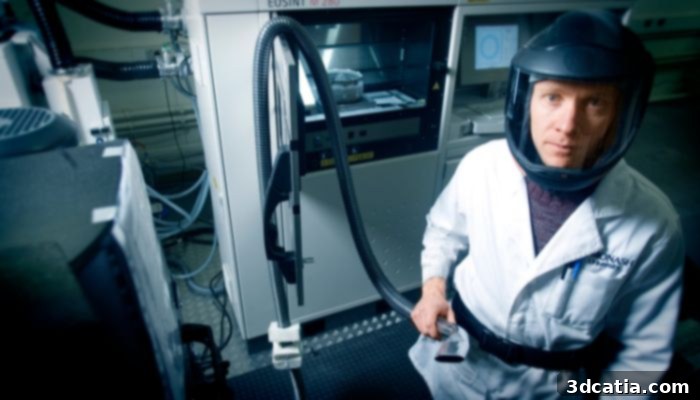
Tom Jarvis at MCAM with one of the institute’s solutions (photo credits: MCAM)
Our discussions with these experts covered a wide array of topics, including the current advancements in Australian 3D printing, notable applications stemming from the country, persistent obstacles that require overcoming, and the long-term outlook for the sector. Their insights shed light on Australia’s dynamic journey in embracing and innovating with additive manufacturing technologies.
The Dynamic State of 3D Printing in Australia: Market Growth and Innovation
To truly grasp the scale of 3D printing’s ascent in Australia, a glance at the economic figures is essential. Expert Market Research estimated the Australian 3D printing market to be valued at an impressive AUD 692.45 million in 2024, which translates to approximately USD 447.39 million. Furthermore, the market is projected to experience a robust compound annual growth rate (CAGR) of 18.7%. If this trajectory holds, Australia’s AM market could reach a staggering AUD 3.85 billion by 2034, underscoring a period of exponential expansion and significant investment.
Dr. Tian highlighted a pivotal catalyst for this rapid growth: the global pandemic. He explained, “The AM sector in Australia has seen significant growth, particularly in response to vulnerabilities in traditional supply chains highlighted by the COVID-19 pandemic.” The crisis underscored the imperative for localized, resilient manufacturing capabilities, propelling additive manufacturing into the spotlight as a viable solution.
Beyond the pandemic’s influence, other factors have consistently fueled this advancement. Australia has witnessed the emergence of numerous high-profile companies, particularly concentrated in the state of Victoria. Gönül Serbest attributes this concentration to Victoria’s established reputation as a “knowledge state,” a leader in research and innovation. She elaborates, “Victoria is home to some of Australia’s most innovative 3D printing companies, such as SPEE3D, Titomic, Conflux Technology and Additive Assurance. These companies are pioneering metal additive manufacturing, cold spray technologies, and quality assurance solutions that are being adopted globally.” This vibrant ecosystem fosters a culture of technological breakthrough and commercial success.
Indeed, Cold Spray AM has experienced a remarkable renaissance across the country, largely thanks to the groundbreaking efforts of companies like SPEE3D and Titomic. These two pioneers have not only established a formidable presence within Australia but have also garnered international acclaim. For instance, SPEE3D’s innovative cold spray solutions are being deployed in critical sectors across the United States, Japan, and the UK, notably making significant inroads into the defense industry. Similarly, Titomic has expanded its footprint, establishing a presence in both the USA and Europe, further solidifying Australia’s global impact in advanced manufacturing.

Cold Spray AM, including technologies from SPEE3D (pictured) and Titomic, are prominent in Australian 3D printing (photo credits: SPEE3D)
While Cold Spray 3D printing is undeniably a prominent and innovative technology within Australia, it is by no means the sole focus of the country’s additive manufacturing expertise. Serbest confirms this diversity, stating, “Australia has expertise across a wide range of additive manufacturing technologies, including metal 3D printing, cold spray deposition, and polymer-based processes.” This broad technological capability positions Australia to address diverse industrial needs and foster innovation across multiple materials and applications.
However, the rise of 3D printing in Australia cannot be solely attributed to the mature presence and innovative spirit of its additive manufacturing companies. A thriving research landscape, coupled with robust government support at both national and regional levels, plays an equally significant, if not more critical, role in driving this rapid expansion and integration of AM technologies.
Australian governments, both federal and state, have demonstrated a strong commitment to cultivating the additive manufacturing sector, often through synergistic efforts with academic research and industrial initiatives. A prime example is the Commonwealth Government’s recent pledge of $58 million towards the establishment of the Additive Manufacturing Cooperation Research Centre (AMCRC). This industry-led collaborative research funding organization is poised to be a cornerstone for advancing Australia’s AM capabilities. It forms a crucial part of a broader $271 million initiative designed to fundamentally reshape Australia’s manufacturing landscape, promoting a more advanced, resilient, and competitive industrial base.
The growing international recognition of Australia’s AM prowess was brilliantly showcased last year when the country was honored as the partner country for Formnext 2024, the world’s leading exhibition for additive manufacturing. Serbest underscored the significance of this milestone: “Being the Partner Country at Formnext 2024 was a major milestone, showcasing Australian capabilities on the global stage. Global Victoria had a dedicated stand featuring 12 Victorian companies and universities, highlighting our cutting-edge research and industry expertise. This marked the second year in a row that Victoria participated in Formnext, reinforcing our commitment to the global additive manufacturing sector. Victoria will again be present at this year’s edition of Formnext in November 2025, continuing to support our companies in building international partnerships and expanding their reach.” This consistent presence at such a prestigious event highlights Australia’s strategic intent to integrate its AM sector with global networks.
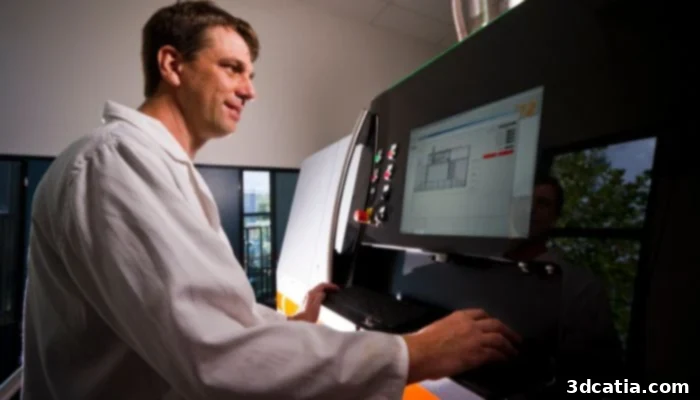
MCAM is a leading research center for additive manufacturing in Australia (photo credits: MCAM)
In the realm of research and development, Victoria stands out with a particularly high concentration of major universities that are increasingly integrating 3D printing into their academic and applied research programs. The Monash Centre for Additive Manufacturing (MCAM) exemplifies this, boasting an impressive array of metal 3D printers and specialized equipment, including the largest metal 3D printer in Australia. As an ISO9001 accredited research platform, MCAM is comprehensively equipped to offer extensive research services and unparalleled expertise, encompassing both powder bed fusion and direct energy deposition (DED) 3D printers, alongside sophisticated tools for pre- and post-printing processes. This comprehensive capability makes MCAM a pivotal hub for advanced AM research and commercialization.
Transformative Applications of Australian 3D Printing Across Key Sectors
Having explored the robust growth and foundational support for 3D printing in Australia, the natural next question is: how is this advanced technology being practically applied? According to Gönül Serbest and Dr. Yang Tian, the answer is resoundingly clear – in a multitude of innovative and impactful ways across various sectors.
Serbest specifically highlights, “The most significant adoption has been in sectors like aerospace, defence, medical devices, and renewable energy. Companies are leveraging additive manufacturing to create lightweight components, repair critical infrastructure, and develop patient-specific medical implants. Victoria’s strong industrial base and research ecosystem have been key to accelerating the adoption of these technologies.” This observation is consistently corroborated by news emanating from the nation. The defense sector, in particular, has emerged as a showcase for Australian expertise, with key players like SPEE3D demonstrating AM’s tangible benefits in military applications, from rapid part prototyping to on-demand field repairs.
Beyond Victoria, other states are also making significant investments in 3D printing technology. New South Wales (NSW), bordering Victoria to the south, announced in August 2024 that the Minns Labor Government would explore the use of 3D printing as a strategic tool to address the escalating housing and homelessness crisis. Recognizing the substantial benefits of 3D printing in terms of cost reduction and accelerated construction timelines – with projects potentially completing in as little as 16 weeks compared to the traditional 40 – the government aims to deploy 3D technologies for the rapid construction of social housing. This initiative marks a crucial step towards adopting AM for large-scale societal challenges.

The planned 3D printing housing project in Australia (photo credits: Contour3D)
Academia also serves as a fertile ground for critical 3D printing applications and advancements. Dr. Tian elaborated on MCAM’s extensive involvement in numerous high-impact AM projects. These encompass diverse areas such as aerospace, healthcare, railway infrastructure, and energy generation. Furthermore, MCAM is pioneering research into support-less 3D printing, the development of next-generation alloys, and the establishment of robust qualification pathways for AM parts. The latter three areas particularly underscore the depth of Australia’s strong academic tradition and its focus on fundamental research that underpins practical, industrial applications.
These research-driven applications are absolutely crucial for propelling 3D printing forward, not just within Australia but globally. For instance, the establishment of rigorous qualification procedures for AM parts in highly regulated industries like aerospace and healthcare is paramount for ensuring unwavering reliability and safety. Concurrently, the development of new titanium and nickel-based alloys specifically optimized for AM processes promises to unlock superior mechanical properties, leading to enhanced performance in a wide range of sectors, from high-stress components to medical implants.
Among the impressive roster of projects, Dr. Tian highlighted several groundbreaking initiatives at MCAM. These include the development of flight-certified AM parts, crucial for aerospace applications; innovative AM TiTA implants designed for advanced biomedical uses; AI-assisted topology optimization for medical implants, leading to lighter and stronger designs; on-demand AM for obsolete parts in the railway sector, ensuring operational continuity; 3D printed components for hydrogen-powered land-based turbine combustion engines, supporting clean energy transitions; as well as parts for carbon capture technologies, biomass pyrolysis, and rocket propulsion systems, pushing the boundaries of sustainable and space exploration applications. This extensive array of projects not only showcases the immense potential for additive manufacturing in Australia but also vividly illustrates the maturity of its 3D printing capabilities and its readiness to produce high-performance, end-use parts across a diverse spectrum of industries.
Navigating Challenges and Paving the Way Forward for Australian AM
Despite the undeniable and rapid growth witnessed in Australia’s 3D printing sector, it would be unrealistic to overlook the obstacles that still need to be addressed for the country to fully realize its additive manufacturing potential.
Dr. Tian frankly acknowledged these challenges, confirming, “Despite substantial R&D investments, Australia’s AM industry lags behind global leaders like the U.S., Germany, and China, generating only 10-20% of their revenue. The source of Australia’s weak performance stems from a combination of several factors: poor industry knowledge of AM technologies, the lack of AM qualification procedures and uncertainty about AM reliability.” These factors represent significant barriers, hindering broader adoption and market penetration, especially when compared to countries with deeply integrated AM ecosystems.
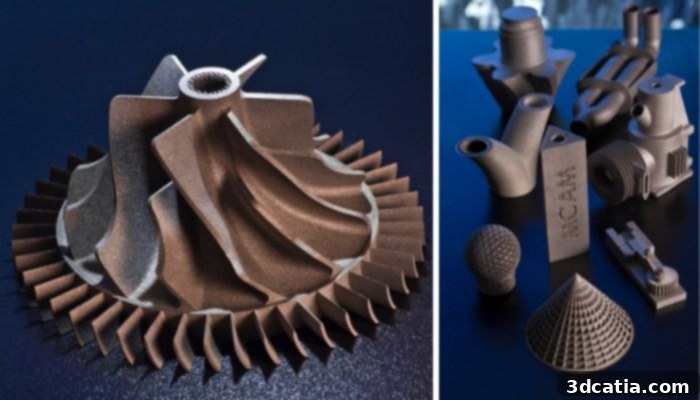
Parts made by MCAM. The research institution is leading the way in advancing 3D printing in Australia
Fortunately, Australia’s robust academic sector and institutions like MCAM are ideally positioned to address these very challenges. Dr. Tian emphasized Monash University’s pivotal role, noting that it has already made significant strides in advancing AM through groundbreaking research, intensive industry collaborations, and active commercialization efforts. Their dedicated work, alongside other prominent institutions such as Deakin University, RMIT, the University of Sydney, and the University of Wollongong, has collectively contributed immensely to the sustained growth and technological development of additive manufacturing across Australia.
Dr. Tian specifically points to several strategic solutions as the way forward for Australia. These include fostering closer partnerships with companies to develop highly tailored AM solutions that meet specific industrial needs, creating standardized pathways for AM part qualification to build trust and accelerate adoption, offering specialized industry-focused PhD programs and internships to cultivate a skilled workforce, and pioneering innovative new processes for cost reduction to lower barriers to entry for businesses. These are all critical areas where research institutions and government bodies must continue to collaborate and play a major, proactive role to overcome existing hurdles and solidify Australia’s position in the global AM landscape.
The Bright Future of 3D Printing in Australia: A Global Player in the Making
Considering the progress and strategic initiatives underway, the question naturally arises: what lies ahead for Australia in the realm of additive manufacturing? The consensus is clear – continued, accelerated growth is not merely an expectation but a certainty. While Australia may still be a developing force compared to established AM powerhouses like the United States and China, the country is rapidly and decisively establishing itself as an increasingly influential player on the global stage.
Dr. Tian confidently asserts, “The future of AM in Australia looks promising, with increasing government and industry support. As AM technologies become more cost-effective and relatable, their adoption is expected to increase, particularly among SMEs.” He further outlines key trends that will shape this future: “expansion into critical sectors such as defense, space and biomedical industries; development of cost-effective AM technologies to reduce barriers to entry; growth in hybrid and mobile AM solutions, allowing for flexible, on-demand manufacturing; and strong industry-academia collaborations, ensuring that research translates into commercial applications.” These trends collectively paint a picture of a dynamic and expanding AM ecosystem, poised for broader integration across the Australian economy.
Moreover, the strategic integration of additive manufacturing holds the potential to profoundly revolutionize and bolster other vital sectors within Australia. Dr. Tian articulates this broader impact, explaining, “Additive manufacturing has the potential to revolutionize Australia’s manufacturing sector, making it more resilient, flexible, and competitive on a global scale. With continued investment in research, collaboration, and education, Australia can position itself as a leader in advanced manufacturing, leveraging AM to create innovative products and solutions that meet the needs of a rapidly changing world.” This vision extends beyond mere technological adoption; it speaks to a fundamental transformation of Australia’s industrial capability, enhancing its global standing.

The Australian army uses 3D printing for automotive applications among other things
This optimistic outlook is not confined to academia and industry; it is a sentiment powerfully echoed by governmental bodies, particularly the Victorian government. Serbest encapsulates this shared vision in her concluding remarks: “The future of additive manufacturing in Australia is bright, with ongoing advancements in automation, artificial intelligence, and sustainable materials set to keep growing the industry. As companies continue to integrate additive manufacturing into mainstream production, we expect to see increased adoption in infrastructure, energy, and space technologies. Victoria will remain at the forefront, fostering collaboration between industry and research institutions to drive new breakthroughs and global competitiveness.” Australia is not just adopting 3D printing; it is actively shaping its future, aiming to be a global leader in this transformative technology.
What are your thoughts on the current state and future trajectory of 3D printing in Australia? We invite you to share your insights in a comment below or connect with us on our LinkedIn, Facebook, and Twitter pages! Don’t forget to sign up for our free weekly Newsletter here to receive the latest 3D printing news directly in your inbox. You can also explore all our informative videos on our dedicated YouTube channel.