
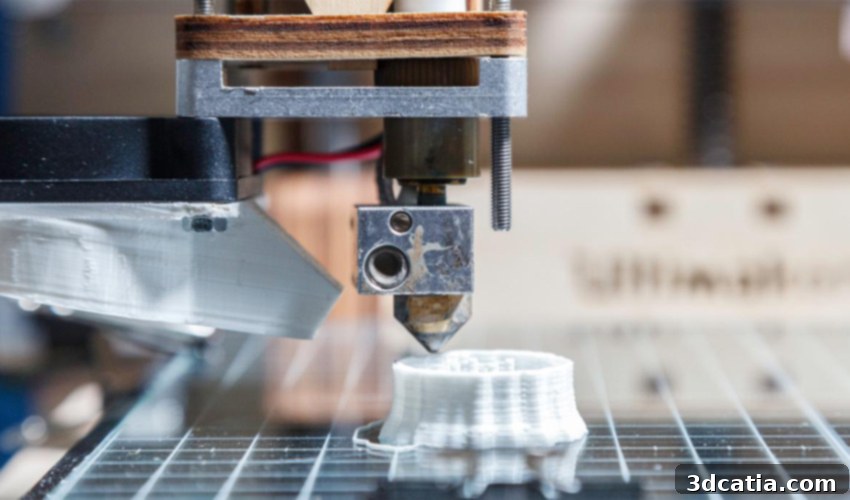
Global Additive Manufacturing Market Poised for Explosive Growth: Key Trends, Players, and Forecasts
The landscape of manufacturing is undergoing a profound transformation, largely driven by the rapid advancements in additive manufacturing, commonly known as 3D printing. A recent insightful study by Arizton – Advisory and Intelligence, a distinguished American consulting firm, sheds light on the global outlook and forecasts for this burgeoning industry. This comprehensive report, following in the footsteps of analyses like the Gartner Report, offers a panoramic view of the market, meticulously detailing the primary actors, fundamental growth drivers, dynamic shifts, and emerging trends. The findings are compelling: the additive manufacturing market is projected to reach an impressive $11 billion by 2022, exhibiting an exceptional compound annual growth rate (CAGR) of 27% from 2016 to 2022. This exponential growth underscores a pivotal shift in industrial production and innovation across various sectors.
The rapid expansion of additive manufacturing is not merely a theoretical projection; it is manifesting in tangible ways across diverse industries. We are witnessing its integration into previously untapped domains, such as maritime applications, where it facilitates on-demand production of spare parts and complex components for ships and offshore structures, reducing downtime and logistics costs. Similarly, the military sector is leveraging 3D printing for rapid prototyping, customized equipment, and localized manufacturing of critical parts in remote operational theaters, enhancing readiness and flexibility. Beyond industrial adoption, the growth trajectory has also catalyzed significant developments in education, leading to the proliferation of specialized university degrees for additive manufacturing. These academic programs are crucial for nurturing the next generation of engineers, designers, and innovators equipped to navigate and further advance this complex and evolving field. This convergence of industrial demand and educational investment paints a clear picture of an industry maturing and solidifying its role as a cornerstone of future manufacturing.
Key Players Dominating the Additive Manufacturing Landscape
The competitive landscape of the additive manufacturing market is currently shaped by a few dominant entities, with 3D Systems, Stratasys, and EOS GmbH standing out as unequivocal market leaders. These companies have solidified their positions through years of innovation, extensive patent portfolios, and a broad range of technologies and services. 3D Systems and Stratasys, for instance, are renowned for pioneering various 3D printing technologies, from stereolithography (SLA) to fused deposition modeling (FDM), offering comprehensive solutions for both prototyping and production. EOS GmbH, on the other hand, is a global leader in industrial 3D printing of metals and polymers, particularly through its selective laser sintering (SLS) and direct metal laser sintering (DMLS) technologies, critical for high-performance applications.
As the market continues its rapid ascent, Arizton predicts that large international actors will increasingly assert their authority, thereby intensifying competition. This heightened rivalry will particularly challenge regional sellers and smaller enterprises, who may find it progressively difficult to compete against the scale, R&D capabilities, and market reach of these global giants. The report forecasts a trend of consolidation, with larger players strategically acquiring smaller, innovative companies to expand their technological portfolios, market share, and intellectual property. This M&A activity is a natural evolution in a rapidly growing sector, allowing established firms to integrate specialized expertise and cutting-edge innovations.
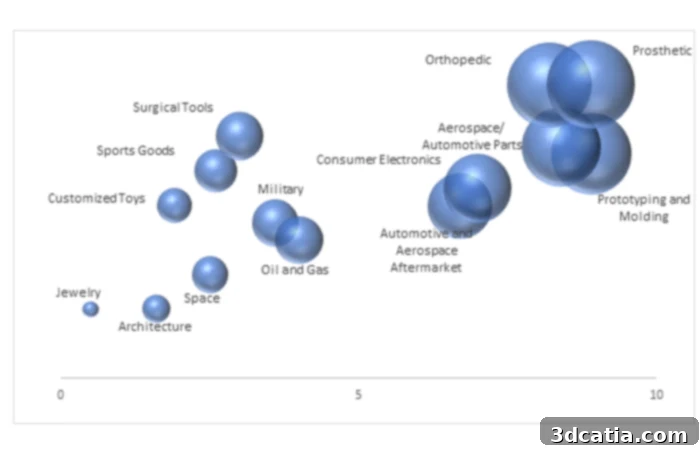
The impact of additive manufacturing by 2025 by sector
Competition within this dynamic market will primarily revolve around several critical features. Firstly, **quality** will remain paramount, encompassing factors like material properties, surface finish, dimensional accuracy, and overall consistency of printed parts. Companies that can consistently deliver high-quality, reliable components will gain a significant edge. Secondly, **technology** will be a key differentiator. The continuous development of new printing processes, materials, and software solutions that improve speed, efficiency, and part performance will be vital for market leadership. This includes innovations in multi-material printing, higher resolution capabilities, and advancements in post-processing automation. Thirdly, **services offered** will play an increasingly important role, moving beyond just selling machines to providing comprehensive solutions such as design consultation, training, maintenance, and on-demand printing services. Finally, **price** remains a crucial factor, especially as the industry moves towards mass production. Cost-effectiveness, both in terms of machine acquisition and operational expenses, will determine widespread adoption. This intense competition, fueled by relentless innovation, will drive the industry forward, pushing the boundaries of what additive manufacturing can achieve.
Beyond the market leaders, numerous other influential players contribute significantly to the additive manufacturing ecosystem. These include ARC Group Worldwide, Arcam (now part of GE Additive, specializing in EBM technology), Beijing Tiertime Technology (known for FDM printers), Carbon (pioneering Digital Light Synthesis, DLS), Laser Concept (also part of GE Additive, focused on DMLS), Cookson Precious Metals (innovating in precious metal 3D printing), EnvisionTEC (a leader in DLP and bioprinting), General Electric (a major end-user and technology developer), Gorge Group, Höganäs (a key supplier of metal powders), Koninklijke, Markforged (known for composite and metal FDM), Mcor Technologies (offering paper-based 3D printing), Nano Dimension (specializing in additively manufactured electronics), Optomec (focused on aerosol jet and LENS technology), Renishaw (a precision engineering and metal AM company), SLM Solutions Group (a specialist in selective laser melting), taulman3D (a materials innovator), The ExOne Company (a leader in binder jetting), Ultimaker (popular for desktop FDM printers), Voxeljet (offering large-format binder jetting), and XYZprinting (providing affordable desktop 3D printers). The report highlights the United States’ strong position, retaining an estimated 38% of the global market share, underscoring its role as a hub for innovation and adoption in additive manufacturing.
The Dynamic Forces Driving the 3D Printing Market
The sustained growth of the 3D printing market is propelled by a confluence of powerful dynamics and emerging trends. One of the most significant drivers is the increasing expansion of vertical applications. What began primarily as a prototyping tool has evolved into a versatile manufacturing method employed across a vast array of industries, from healthcare and automotive to aerospace and consumer goods. This diversification demonstrates the adaptability and value proposition of additive manufacturing in solving complex problems and creating innovative products tailored to specific sector requirements.
Another critical accelerator is the escalating demand for customization and mass production. Traditional manufacturing struggles with economical mass customization, but 3D printing inherently excels at it. This capability allows for the creation of unique, personalized products at scale, catering to evolving consumer preferences and specialized industrial needs. For example, in the medical field, customized implants and prosthetics are becoming standard. In consumer goods, personalized footwear or eyewear are becoming a reality. Furthermore, advances in printing speed and materials are enabling additive manufacturing to transition from purely prototyping to viable mass production for certain parts, particularly those requiring complex geometries or low-volume, high-value runs, disrupting traditional supply chains and inventory management.
Underpinning these trends are several key foundational elements. Firstly, **increasing investment in the industry** remains a vital catalyst. This includes significant venture capital funding flowing into additive manufacturing startups, substantial corporate R&D expenditures by established industrial players, and government grants aimed at fostering innovation and adoption. These investments target advancements in materials science, machine design, software development, and the exploration of new application areas. Secondly, **evolving buyer behavior on the internet** has democratized access to 3D printing technologies and services. Online platforms facilitate easier access to specialized print services, design files, and even direct purchase of machines and materials, empowering individuals and small businesses to leverage additive manufacturing without substantial upfront investment in equipment. This fosters a more agile and responsive market environment.
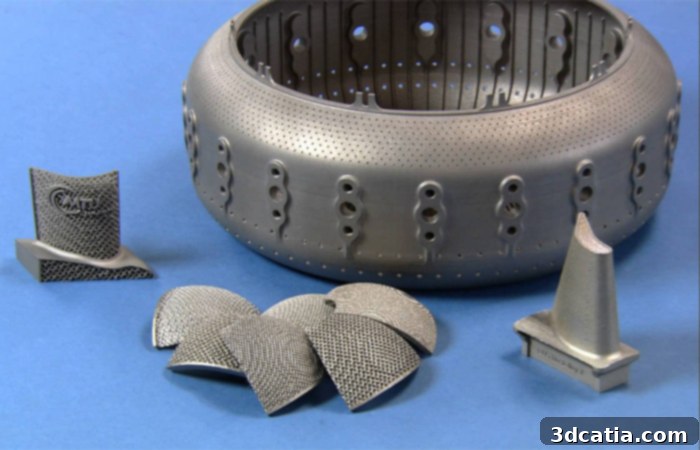
The aerospace industry has been increasing their use of additive manufacturing
Lastly, the **many inherent advantages of 3D printing compared to traditional manufacturing methods** serve as powerful drivers. These benefits include unparalleled design freedom, allowing for the creation of complex geometries and optimized structures that are impossible or prohibitively expensive with conventional techniques. This leads to lighter, stronger, and more efficient parts. Furthermore, additive manufacturing significantly reduces material waste, making it a more sustainable option. It also dramatically shortens product development cycles, from concept to prototype to final part, accelerating time-to-market. The ability to produce parts on-demand reduces the need for large inventories, mitigating storage costs and obsolescence risks. These combined advantages position additive manufacturing as a highly attractive alternative for modern industrial production, fostering innovation and efficiency across sectors.
The 3D Printer Market: A Cornerstone of Industrial Transformation
Within the broader additive manufacturing industry, the market for 3D printers themselves remains the most critical and dynamic sector. This segment is experiencing surging demand, particularly from the manufacturing sectors in highly industrialized nations such as the United States and Germany. These countries, known for their robust engineering and innovation ecosystems, are at the forefront of adopting advanced manufacturing technologies to maintain competitive advantage and drive industrial growth. Manufacturers in these regions are increasingly integrating 3D printers into their production lines for a range of applications, from rapid prototyping and tooling to the direct production of end-use parts, recognizing the efficiency, flexibility, and cost-saving potential.
The adoption of 3D printing within industrial machinery is witnessing an explosive growth rate, projected to reach an impressive 20.6% by 2022. This surge is driven by the ability of additive manufacturing to create highly customized jigs, fixtures, and specialized tools that improve manufacturing processes, increase efficiency, and reduce downtime. Furthermore, it enables the on-demand production of replacement parts for complex machinery, significantly cutting down on maintenance lead times and operational costs. The aerospace and defense sectors are expected to closely follow this trend, expanding their already substantial use of additive manufacturing. In aerospace, 3D printing facilitates the creation of lightweight, structurally optimized components, such as engine brackets, turbine blades, and interior parts, which contribute to fuel efficiency and performance. For defense, it allows for the rapid production of critical spare parts, customized equipment, and even drone components in the field, enhancing logistical resilience and operational readiness.
However, it is the medical sector that is experiencing the fastest growth within the 3D printing market, thanks to a continuous stream of numerous innovations. Additive manufacturing has revolutionized fields like orthopedics, enabling the creation of patient-specific implants and prosthetics that perfectly match individual anatomies, leading to better fit, comfort, and clinical outcomes. This includes custom joint replacements, spinal implants, and cranial plates. In dentistry, 3D printing is widely used for producing dental crowns, bridges, aligners, and surgical guides with unprecedented precision. Beyond these, advancements in bioprinting hold immense promise for the future, with ongoing research into creating living tissues and organs for transplantation, representing the cutting edge of medical innovation driven by additive manufacturing. The capacity for personalization, intricate detail, and rapid production makes 3D printing an indispensable tool for advancing healthcare and improving patient lives globally.
For those interested in delving deeper into these market insights, the full report can be accessed on Arizton’s official website. If you are inspired by the exciting developments in this field and are looking for career opportunities in additive manufacturing, explore the latest vacancies here. The additive manufacturing industry is a hub of innovation, constantly seeking talented individuals to drive its future.
What are your predictions for the additive manufacturing market by 2022 and beyond? Share your thoughts and insights in a comment below or connect with us on our Facebook and Twitter pages! Don’t miss out on the latest advancements and breaking news in 3D printing; sign up for our free weekly Newsletter, delivered straight to your inbox, to stay at the forefront of this transformative technology!