
TCT 3Sixty 2021 Review: Unveiling Key Innovations in Additive Manufacturing from Birmingham
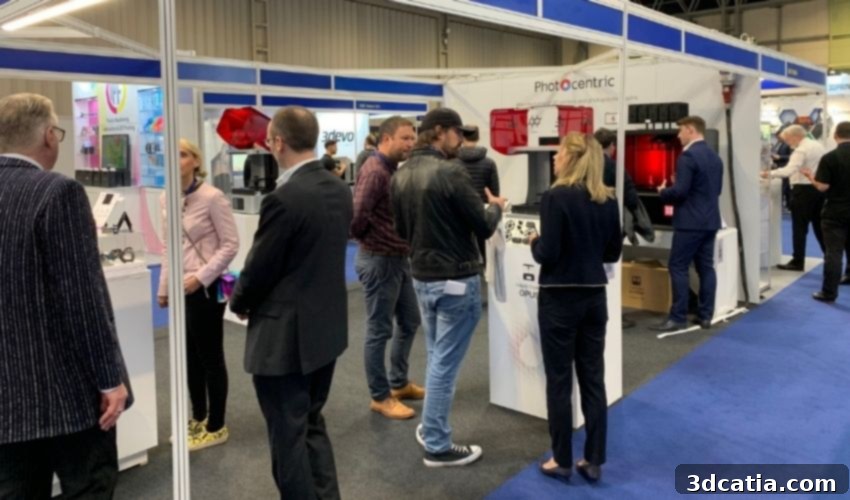
After a period of unprecedented disruption, the additive manufacturing industry is enthusiastically welcoming the return of in-person events. Following more than a year of virtual conferences and digital showcases, the physical interaction, networking opportunities, and tangible experience of new technologies are proving invaluable once again. Hot on the heels of its successful counterpart, TCT + Rapid, the highly anticipated TCT 3Sixty 2021 event recently brought together industry leaders, innovators, and enthusiasts in Birmingham, England. Running from Tuesday, September 28th, through Thursday, September 30th, TCT 3Sixty marked a significant milestone as one of the first major additive manufacturing gatherings to take place in the United Kingdom since the onset of the global health crisis.
For many attendees and exhibitors, this event offered a crucial opportunity to reconnect, showcase advancements, and explore the evolving landscape of 3D printing without the need for international travel, which had limited participation in earlier conferences held in the United States. Despite stringent health and safety protocols implemented to ensure attendee well-being, the atmosphere was one of palpable excitement and renewed optimism. Visitors had the chance to engage in a diverse range of activities, including insightful presentations from industry experts, dynamic panel discussions addressing pressing challenges and future trends, and extensive tours of exhibitor booths brimming with groundbreaking solutions.
Crucially, TCT 3Sixty served as a prime platform for numerous companies to unveil their latest products, announce strategic partnerships, and share significant updates that promise to shape the future of additive manufacturing. This article delves into some of the most impactful announcements made at the event, offering a comprehensive look at the innovations set to drive the industry forward.
DyeMansion: Expanding Post-Processing Horizons in the UK
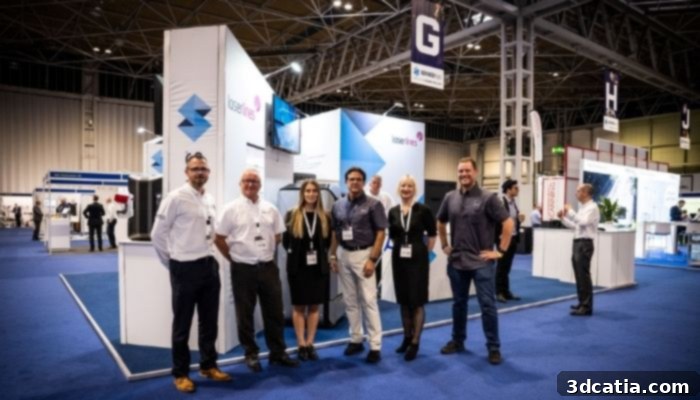
DyeMansion, a global leader renowned for its advanced post-processing solutions in industrial additive manufacturing, has consistently leveraged major industry conferences as a strategic avenue for unveiling significant partnerships and introducing cutting-edge products. TCT 3Sixty 2021 proved to be no exception, as the German innovator announced two pivotal collaborations aimed at strengthening its presence and service offerings within the United Kingdom market.
At the forefront of these announcements was the designation of Laser Lines as DyeMansion’s newest authorized reseller in the UK. This partnership is expected to significantly enhance the accessibility of DyeMansion’s comprehensive range of finishing technologies, including their renowned blasting, surfacing, and coloring systems, to a broader base of British additive manufacturing users. By establishing a robust local distribution network, DyeMansion is ensuring that companies in the UK can more easily integrate high-quality post-processing into their production workflows, thereby elevating the aesthetic and functional properties of their 3D printed parts.
Furthermore, existing production partner DMC (Digital Manufacturing Centre) revealed an expansion of its post-processing capabilities, incorporating DyeMansion’s latest solutions into its service portfolio. This move by DMC underscores the growing demand for professional, repeatable, and scalable post-processing, which is crucial for moving 3D printing from prototyping to end-part production. The integration of DyeMansion’s systems enables DMC to offer enhanced surface quality, consistent coloring, and improved mechanical properties for parts produced via various additive manufacturing technologies, fulfilling critical industry requirements for a superior final product.
These new British partnerships arrive at a particularly dynamic period for DyeMansion, whose strategic alliance with Stratasys continues to flourish, fostering more integrated end-to-end additive manufacturing solutions. Coupled with their continuous release of innovative hardware and software solutions, DyeMansion is not just selling machines; they are cultivating an ecosystem that makes industrial 3D printing more efficient, reliable, and aesthetically pleasing. The emphasis on localized support and expanded service offerings signifies a maturation of the additive manufacturing market, where comprehensive solutions extending beyond the print itself are becoming paramount for widespread adoption.
E3D Online: Revolutionizing FDM with RapidChange Revo
E3D Online, a name synonymous with high-performance extrusion systems for FDM 3D printers, unveiled a truly innovative solution at TCT 3Sixty: the RapidChange Revo FDM 3D printer range. As its name explicitly suggests, the core differentiator of this latest offering from E3D Online lies in its groundbreaking capability for rapid nozzle changes – a feature designed to address one of the most persistent frustrations encountered by FDM users worldwide.
Traditionally, swapping out nozzles on an FDM 3D printer can be a delicate, time-consuming, and often messy process. It typically involves heating the hotend, carefully unscrewing a potentially hot and plastic-laden nozzle, and then meticulously screwing in a new one, all while being cautious not to damage delicate components or overtighten. This complexity often deters users from switching between different nozzle sizes or material types as frequently as their projects might demand, thereby limiting the versatility and efficiency of their 3D printing operations.
E3D Online’s RapidChange Revo directly confronts this challenge by fundamentally redesigning the nozzle system. The official statement from E3D highlights the simplicity and practicality: “If your nozzle becomes blocked or jammed, simply swap out for a new one. Each nozzle change refreshes the area that’s been in contact with molten plastic, so you can get back to 3D printing with minimal machine downtime. Because the nozzle and HeatBreak are integrated into a single unit, there’s zero chance of plastic leaking.” This integrated design, where the nozzle and HeatBreak form a single, sealed unit, is a game-changer. It not only streamlines the swapping process but also virtually eliminates the risk of frustrating and print-ruining plastic leaks, a common issue with traditional threaded nozzle systems.
The implications of the RapidChange Revo are far-reaching. For hobbyists, it means greater freedom to experiment with different layer heights and detail levels without fear of complex maintenance. For professional users and educational institutions, it translates into significantly reduced machine downtime, increased productivity, and the ability to adapt quickly to diverse project requirements, from fine detailed prototypes to robust functional parts. Attendees at TCT 3Sixty were given the exclusive opportunity to witness this revolutionary solution firsthand, observing demonstrations that underscored its ease of use and potential to enhance the FDM 3D printing experience for a wide range of applications.
Photocentric: Enhancing Design-to-Print Workflow with New Additive Software
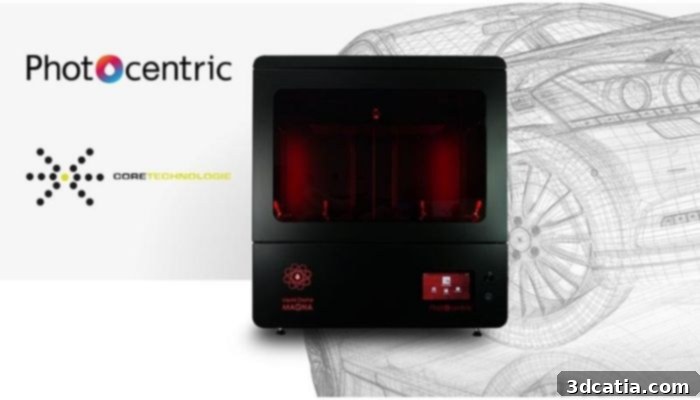
Photocentric, a proud British innovator distinguished for its pioneering work in photopolymer resins and its integral role in developing LCD screen technology for 3D printing, took the opportunity at TCT 3Sixty 2021 to preview its groundbreaking Photocentric Additive software. This new software suite represents a significant step for the company, moving beyond hardware and materials to offer a more comprehensive solution for its user base.
Developed in close collaboration with CoreTechnologie, a specialist in 3D CAD software solutions, Photocentric Additive is engineered to streamline and enhance the entire design-to-print workflow for additive manufacturing. The software promises to empower users with unparalleled creative control and efficiency, particularly in the realm of surface aesthetics and part preparation. According to Photocentric, the software will enable users to “upload and apply custom logos, textures (or choose from 5,000 pre-defined textures) and customer-ready finishes at speed.” This feature set is particularly exciting for industries requiring high levels of product customization and unique surface treatments, such as consumer goods, medical devices, and bespoke manufacturing.
Beyond aesthetic enhancements, Photocentric Additive is also designed to tackle critical pre-printing tasks. It will facilitate the accurate orientation of parts on the build plate, automatically generate and optimize print supports, and efficiently slice all common CAD formats and STL models. This integrated approach ensures that users can transition seamlessly from initial design concept to a print-ready file, reducing potential errors and optimizing print success rates. The ability to handle diverse CAD formats further broadens its applicability, making it a versatile tool for professionals across various sectors.
The collaboration with CoreTechnologie highlights a growing trend in the additive manufacturing industry: the recognition that robust, user-friendly software is as vital as advanced hardware and materials. By offering an intuitive platform that simplifies complex design and preparation processes, Photocentric and CoreTechnologie aim to democratize access to advanced 3D printing capabilities and accelerate the adoption of additive manufacturing for a wider array of applications. Attendees at their stand were treated to live demonstrations, showcasing the software’s intuitive interface and its potential to transform how designers and engineers prepare their projects for production.
Wematter: Expanding SLS Material Versatility with Aurora TPU
Swedish additive manufacturing company Wematter utilized the TCT 3Sixty event to make a significant announcement regarding its materials portfolio, unveiling Aurora TPU – a new thermoplastic polyurethane powder specifically engineered for its Gravity 2021 SLS 3D printer. This introduction marks a crucial step in expanding the capabilities and application range of Wematter’s selective laser sintering (SLS) technology, catering to the growing demand for flexible and durable 3D printed components.
Aurora TPU is characterized by its rubber-like elasticity and exceptional durability, properties that make it highly suitable for a diverse array of demanding applications across various industries. Wematter highlighted its utility in sectors such as medical technology and healthcare, where biocompatibility and flexibility are paramount for devices like prosthetics, orthotics, or custom anatomical models. In the automotive industry, Aurora TPU can be leveraged for prototyping flexible components, gaskets, or interior elements. Furthermore, its attributes make it ideal for sporting goods, offering cushioning and impact absorption, and for consumer products requiring robust yet pliant parts, such as grips, seals, or flexible enclosures.
This latest addition underscores Wematter’s strategic commitment to continuously expanding its materials ecosystem for the Gravity SLS 3D printer. The company’s philosophy is to provide a comprehensive range of powders, allowing users to produce parts with properties spanning the entire spectrum from extremely hard, fiber-reinforced components to remarkably soft and flexible items, thanks to the introduction of this advanced TPU. This broad material compatibility is essential for the industrial adoption of SLS technology, as it enables manufacturers to address a wider range of functional requirements with a single printing platform.
The availability of Aurora TPU empowers engineers and designers to innovate with greater freedom, knowing that they can produce highly functional parts with diverse mechanical properties. This development not only enhances Wematter’s competitive edge but also contributes to the overall advancement of the SLS market by proving the versatility and adaptability of powder bed fusion technologies. While TCT 3Sixty 2021 has concluded, the impact of such material innovations will resonate throughout the industry, driving new applications and pushing the boundaries of what’s possible with additive manufacturing. For those interested in delving deeper into the exhibited technologies or planning for future events, more information can always be found on the TCT 3Sixty official website HERE.
TCT 3Sixty 2021 successfully underscored the resilience and dynamic growth of the additive manufacturing sector. As one of the first major in-person events in the UK post-pandemic, it provided an invaluable platform for showcasing cutting-edge advancements across hardware, software, materials, and post-processing solutions. From DyeMansion’s strategic UK partnerships fortifying post-processing capabilities to E3D Online’s revolutionary RapidChange Revo hotend simplifying FDM operations, and from Photocentric’s intuitive additive software streamlining design workflows to Wematter’s flexible Aurora TPU expanding SLS applications, the event was a vibrant hub of innovation.
The announcements made at TCT 3Sixty not only highlight the continuous technological evolution within 3D printing but also point towards a future where additive manufacturing becomes increasingly accessible, efficient, and versatile for industrial-scale production. The enthusiasm and engagement observed throughout the event serve as a strong indicator of the industry’s robust health and its readiness to accelerate into a new era of digital manufacturing.
Were you among the attendees at TCT 3Sixty 2021? We’d love to hear your thoughts on the event and the innovations showcased. Share your experiences and insights by leaving a comment below, or connect with us on our Facebook and Twitter pages. To stay consistently updated with all the latest developments in 3D printing, don’t forget to sign up for our free weekly newsletter, delivering essential industry news directly to your inbox!
*Thumbnail Photo Credits: Photocentric