
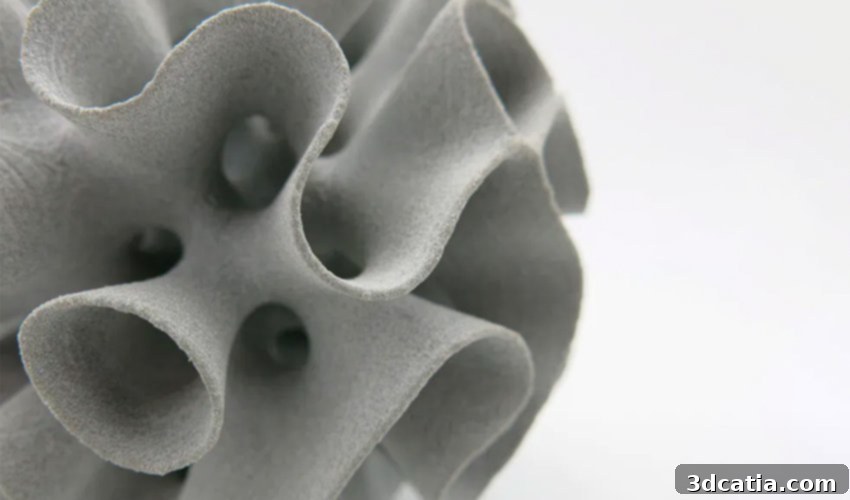
The Ultimate Guide to Nylon 3D Printing Sustainability: Exploring PA6, PA11, and PA12
Nylon, a widely recognized synthetic polymer, forms an essential part of the polyamide (PA) family. In the realm of additive manufacturing, its versatility allows it to be utilized in various forms: as filament (specifically PA6) for Fused Deposition Modeling (FDM) technology, and as powder (such as PA11 and PA12) for advanced processes like Selective Laser Sintering (SLS) and HP’s MultiJet Fusion (MJF). Despite its extensive adoption and proven capabilities in the 3D printing industry, nylon has frequently become a focal point of discussion, particularly concerning its sustainability. This debate stems from multiple factors, including the chemical composition of certain polyamides, the extent to which the material can be recycled and reused, and the environmental impact of gas emissions generated during its manufacturing cycle. Furthermore, a commitment to environmental stewardship is no longer optional but a critical imperative that all modern companies must integrate into their operations, a theme we will delve into further.
When focusing specifically on nylon 3D printing, it becomes evident that the environmental impact can vary significantly based on the polyamide type, its original source, and its overall composition. To gain a comprehensive understanding of nylon’s role within the additive manufacturing sector and its associated carbon footprint, this article will meticulously analyze the distinct characteristics and properties of nylon, both in its filament and powder forms. We will address key questions such as: What are the nuances of printing with PA6 filaments? How do PA11 and PA12 differentiate themselves in terms of composition and performance? What is the current standing of the 3D printing industry regarding nylon usage and sustainability practices? And are there truly viable, more sustainable alternatives emerging? By providing thorough answers to these inquiries, we aim to shed light on the sustainability profile of this crucial material and outline potential future pathways for the manufacturing industry to become more environmentally responsible.
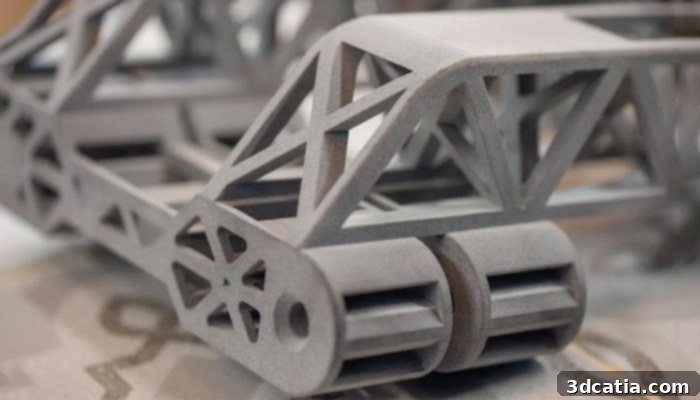
Photo Credits: FICEP S3
PA6: A Demanding Yet High-Performance 3D Printing Filament
PA6 filament, a popular semi-crystalline thermoplastic polymer, ranks among the most widely utilized polyamides globally. Boasting a melting point of approximately 220°C, PA6 finds extensive application across diverse industries due to its exceptional performance-to-cost ratio. While historically prevalent in traditional industrial manufacturing techniques, it has progressively gained substantial traction within the 3D printing sector. This growth is primarily attributable to its impressive mechanical properties, which enable the creation of high-performance parts capable of withstanding significant stress and wear. However, it’s important to acknowledge that PA6 presents a more considerable challenge to 3D print compared to more common plastics like PLA or ABS. Its demanding operating temperature range, typically between 250-270°C, necessitates a meticulously controlled working environment to mitigate issues such as part shrinkage and warping, which are common concerns with semi-crystalline materials.
The unique origin of PA6 further distinguishes it from other polyamide types. It is formed through a process known as ring-opening polymerization, a specific synthetic route employed for numerous polymers. This makes PA6 a fascinating case study in the broader comparison between condensation polymers (where the entire monomer molecule is incorporated into the polymer chain, often with the loss of a small molecule like water) and addition polymers (where a portion of the monomer molecule is lost as it integrates into the polymer). When assessing the environmental impact of Polyamide 6 and exploring avenues for greater sustainability, two critical factors must be rigorously considered. First, the specific production processes employed to synthesize the material play a pivotal role in its overall footprint. Second, the nature and source of the raw materials involved in this chemical conversion process are equally significant. Both these aspects collectively determine the carbon footprint associated with this particular polyamide, influencing its long-term environmental viability.
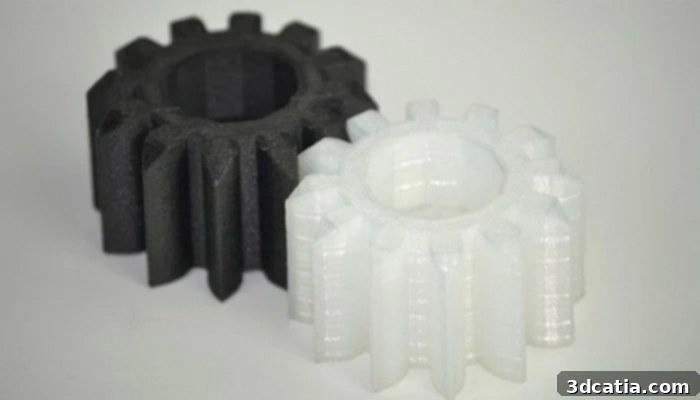
PA6 is a demanding 3D printing filament (photo credits: Sharebot)
Composition and Environmental Impact of PA11 and PA12
From a chemical perspective, Polyamides 11 and 12 exhibit remarkable similarities, differing fundamentally by only a single carbon atom within their polymer main chains. However, this seemingly minor structural variation profoundly impacts how the polymer molecules organize themselves to form the final material, leading to distinct properties and applications. Beyond this molecular distinction, the primary differences between polyamide powders used for 3D printing often lie in their provenance and subsequent environmental implications.
On one hand, PA11 is a semi-crystalline polymer primarily derived from a “green” feedstock. Its synthesis process is chemically closer to that of PA6 than PA12, emphasizing its bio-based nature. This particular type of nylon is produced from renewable raw materials, predominantly vegetable derivatives, with castor oil being a prime example. This reliance on biological sources positions PA11 as a more environmentally conscious choice. In terms of its applications, Polyamide 11 is highly valued in scenarios demanding excellent chemical resistance, significant flexibility, low permeability, and robust dimensional stability. This makes it an ideal material for functional prototypes and components that will be exposed to aggressive environments or require resilient performance under challenging conditions.
Conversely, PA12 is a fine synthetic powder that is typically derived from petroleum, making it a fossil-based plastic. Its fundamental characteristics are dictated by the inherent chemical structure of the polyamide itself, which can be further enhanced by the strategic incorporation of various additives or reinforcing fibers. Key properties of PA12 include superior resistance to a wide array of chemical agents, exceptional resilience to environmental conditions, high impact strength, and notably low water absorption. It also offers excellent processability during manufacturing and demonstrates good resistance to abrasion and sliding. Owing to these outstanding mechanical properties, PA12 is extensively utilized in highly advanced industries, such as automotive and aeronautics, where precision, durability, and performance under extreme conditions are paramount.
When discussing the differences between these two polyamides, particularly their connection to sustainable sources, Sculpteo provides valuable insight, specifically regarding its own PA11 HP material. The company explicitly states: “Our PA11 HP is based on 100% renewable biomass sources. The Castor seed is extracted from the castor plant to make oil. The oil is then converted into the monomer (11-aminoundecanoic acid), which is finally polymerized into the Polyamide 11. This PA11 material is a sustainable alternative to PA12, offering interesting properties for your components requiring skin contact.” This statement clearly underscores that, from a sustainability perspective, Nylon 11 is often considered the preferred bioplastic option. However, it’s crucial to acknowledge that the suitability of the final 3D printed parts for their intended applications must always remain a primary consideration, ensuring that environmental benefits do not compromise functional requirements.
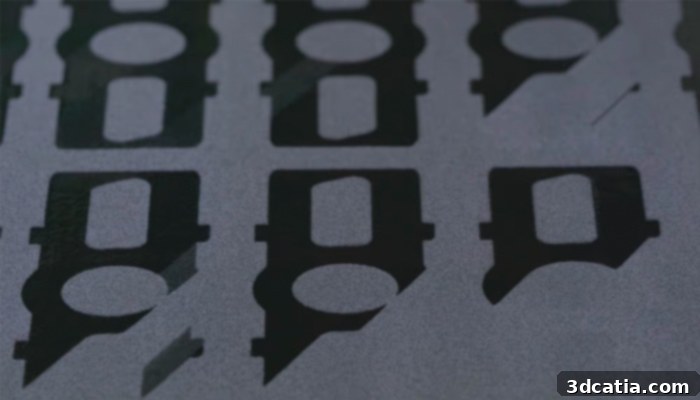
Photo Credits: Formlabs
Given the distinct properties of both polyamides, bioplastics might initially appear to be a universally superior alternative to conventional plastics. This perception is often driven by the fact that they are partially derived from renewable resources and can be biodegradable. However, Nuno Neves, head of design at FICEP S3, offers a more nuanced perspective: “To determine whether bioplastic is better for our environment when compared to conventional plastic, we must consider several factors across the entire lifecycle of conventional plastics versus bioplastics, including production, greenhouse gas emissions and recycling opportunities. Something we at FICEP S3 do with every material we use and every product we design. We make decisions based on data and the scientific reality of a given situation, beyond wanting to jump on an eco-friendly bandwagon.” This emphasizes that a truly sustainable choice requires a holistic lifecycle assessment rather than simply labeling a material “bio.” With this balanced view, let us further examine nylon’s application in 3D printing and its intricate relationship with sustainability.
Nylon, 3D Printing, and the Sustainability Imperative
Like many other synthetic plastics, nylon is not inherently biodegradable; it does not naturally degrade and decompose in the environment in the same manner as natural resources such as paper, wood, or glass, which oxidize and break down over time. Therefore, the most widely adopted and effective method to address the complex disposal challenge of plastics on our planet is recycling, which involves their transformation and repurposing. However, a significant consideration, particularly for bioplastics like PA11, is the difficulty in their recycling process. Most municipal recycling facilities are not equipped with the specialized infrastructure and processes required for the transformation of these unique materials. Consequently, many bioplastics often end up in landfills, where, deprived of oxygen, they undergo anaerobic decomposition. This process tragically triggers the release of methane into the atmosphere—a potent greenhouse gas that is approximately 23 times more powerful than CO2, potentially contributing to greater atmospheric warming than traditional plastics if not managed correctly.
When examining the two primary additive manufacturing technologies that utilize nylon, a notable sustainability advantage emerges in nylon SLS 3D printing. Upon completion of the manufacturing process, the printed parts are embedded within a bed of unsintered powder. This surrounding powder serves a dual purpose: it acts as a self-supporting medium for the printed components and, crucially, a significant portion of it can be reused. In SLS technology, up to an impressive 70% of this unsintered powder can be reclaimed and reintegrated into subsequent print jobs. This high degree of material reusability represents a major sustainability benefit and a significant advantage over the FDM method, where the dedicated support materials printed during the process are typically not designed for conversion or reuse, often becoming waste. This inherent efficiency in material usage positions SLS as a more resource-conscious choice for nylon part production.
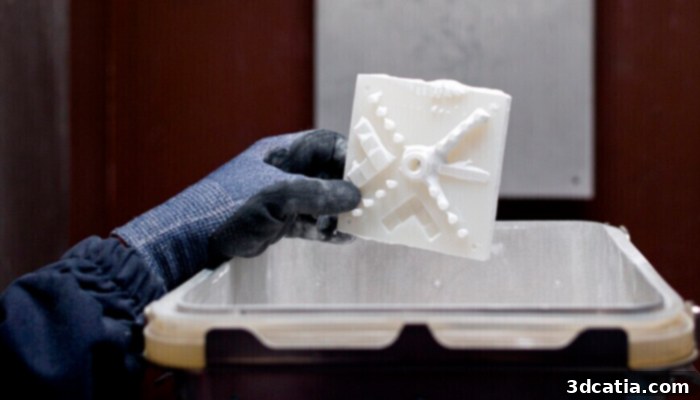
In SLS technology, up to 70% of the unsintered powder can be reused (photo credits: Arkema)
To effectively assess, manage, and ultimately mitigate the environmental footprint of corporations, the concept of Corporate Social Responsibility (CSR) has become paramount. CSR encapsulates the ethical obligation that every organization holds towards the environment and broader society. This critical aspect is increasingly integrated into the operational fabric of all key players within the 3D printing industry. In fact, a growing number of companies in this sector are actively engaged in the research, development, and implementation of innovative bio-based solutions. Their concerted efforts are aimed at significantly reducing their environmental impact, signaling a strong industry-wide shift towards more sustainable practices and products.
Arkema stands out as one of the most prominent chemical manufacturers in the industry, offering a comprehensive portfolio of materials specifically tailored for additive manufacturing, including various types of nylon. The company possesses unparalleled expertise and proprietary know-how in castor plant chemistry. This specialized knowledge enables Arkema to develop a diverse range of high-performance, long-chain biodegradable polyamides directly from the castor plant, exemplifyed by their renowned Rilsan® polyamide 11 range. Jean-Luc-Dubois, Director of Catalysis, Process and Biomass Conversion at Arkema, affirms this commitment, stating, “Our bio-based processes demonstrate that you can use renewable feedstocks to manufacture technical and cost-competitive products that meet real market demand.” This underscores the feasibility of combining environmental responsibility with commercial viability in the advanced materials sector.
Future Outlook for Nylon in Terms of Sustainability
It is an undeniable fact that all materials employed within the manufacturing industry inherently exert some degree of impact on the environment, whether through the release of greenhouse gases during production or through the challenges associated with the end-of-life recycling of components. While a direct, widely viable replacement for petroleum-based polyamides has not yet fully emerged, significant and highly promising research is currently underway into bio-based polyamide building blocks. As global oil prices continue to experience volatility and public awareness regarding the urgent climate crisis intensifies, it is highly probable that a greater number of innovative alternatives to current nylon components will be developed and commercialized, driving the industry towards greener solutions.
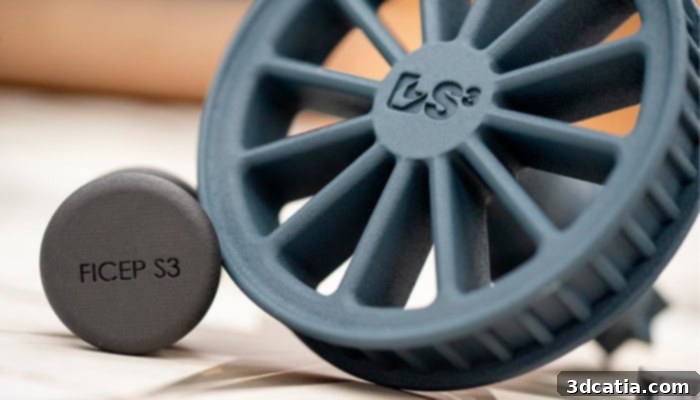
The additive manufacturing industry has a promising future in terms of sustainability (photo credits: FICEP S3)
Moreover, focusing on the 3D printing process itself, the technology is intrinsically known for its ability to significantly reduce manufacturing lead times and minimize material waste. Regarding the specific application of Polyamide 11, the Arkema team emphatically states on its website: “More and more companies are demanding clean and sustainable materials. PA11 is a 100% bio-based polymer and selecting it fits perfectly with this green strategy to help achieve corporate social responsibility goals.” However, offering a more contrasted yet pragmatic viewpoint on the global usage of nylon, Nuno Neves of FICEP S3 wisely observes: “The solution is not to stop manufacturing and using petroleum-based plastics, but to use them in a smarter way, recycle them correctly, and stop thinking that everything ‘bio’ is synonymous with good, which is rarely that simple.” His perspective highlights the complexity and the need for a comprehensive, responsible approach rather than simplistic solutions.
By contrasting these two important perspectives, it becomes clear that while the additive manufacturing industry is undoubtedly making positive strides in its approach to nylon usage and sustainability, there remains a considerable journey ahead. The challenge, as Neves articulates, is to ensure that the “bio” label truly translates into positive environmental impact and that the industry moves towards genuinely more sustainable manufacturing practices with a significantly reduced ecological footprint. This ongoing evolution will require continued innovation, rigorous lifecycle assessments, and a collective commitment to responsible material choices and waste management.
What are your thoughts on the integration of nylon in 3D printing and its broader implications for sustainability? We welcome your insights and encourage you to share your comments below or engage with us on our Linkedin, Facebook, and Twitter pages! Don’t miss out on the latest advancements in 3D printing; sign up for our free weekly Newsletter here, delivered directly to your inbox. You can also explore all our informative videos on our dedicated YouTube channel.
*Cover Photo Credits: Sculpteo