
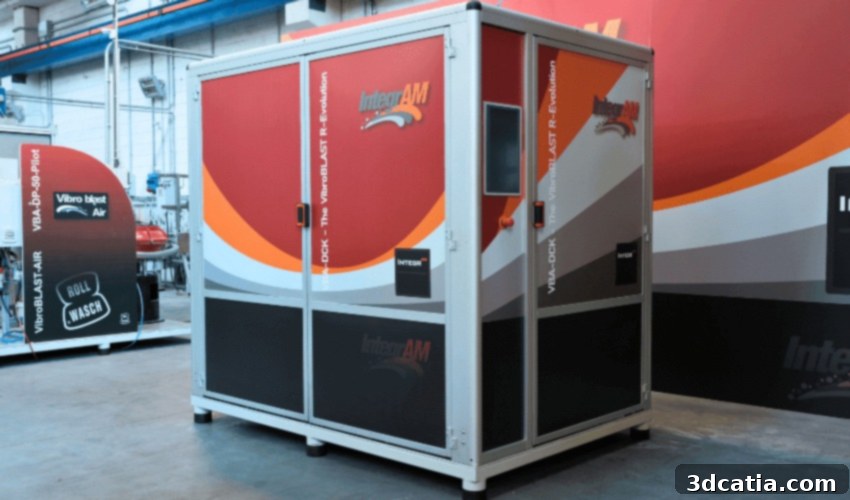
Automating Additive Manufacturing Post-Processing: Spengler’s DCK 01 Revolutionizes Efficiency and Safety
The landscape of the 3D printing industry is undergoing rapid transformation, steadily advancing towards widespread mass production. This evolution brings with it an escalating need to optimize every stage of the manufacturing process, from initial design to final part completion. Post-processing, often overlooked, represents a critical juncture where significant improvements in efficiency, quality, and safety can be realized. Recent analyses, such as the comprehensive report from PostProcess Technologies, underscore a clear trend: additive manufacturing users are increasingly prioritizing process automation and placing a strong emphasis on enhancing workplace safety. Traditionally, post-processing activities, particularly for powder-based additive manufacturing, are frequently carried out manually and in isolated steps. This fragmented approach leads to repetitive, labor-intensive, and often unappealing tasks for operators. For companies, it means valuable human resources are tied up in low-value activities, diverting talent from more strategic and innovative endeavors.
Addressing these pressing industry challenges, Spengler emerges as an innovative leader specializing in additive manufacturing post-processing solutions. Founded by Stefano Rebecchi and Alessandro Facchini, who bring over a decade of hands-on experience in 3D printing, Spengler was established to bridge critical gaps within this vital market segment. As an integral part of the Franco-Italian IntegrAM group, the company now offers an extensive portfolio of services and cutting-edge solutions designed for the modern additive manufacturing ecosystem. These offerings range from the bespoke design of customized Selective Laser Sintering (SLS) printing systems and expert consultancy in materials development to advanced automatic post-processing systems specifically engineered for polymer 3D printing and sophisticated surface finishing techniques for metal parts. Among its impressive suite of solutions, the DCK 01 system stands out as a particularly compelling innovation.
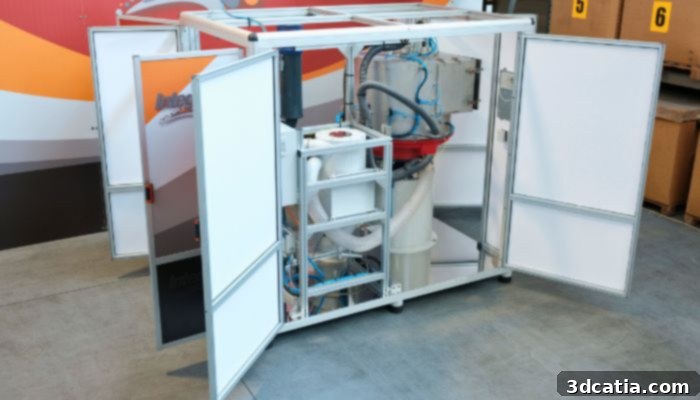
The systems offered by Spengler are produced in Italy in collaboration with IntegrAM Group partners.
The DCK 01 represents a groundbreaking advancement as a fully automated, all-in-one post-processing system meticulously engineered for Powder Bed Fusion (PBF) additive technologies. Unlike fragmented setups, this ingenious solution integrates various individual modules developed by Spengler, seamlessly combining them into a cohesive and highly efficient unit. Spengler proudly asserts that the DCK 01 is currently the only automated solution on the market capable of offering a comprehensive suite of post-processing functions within a single system: decaking, cleaning, sophisticated surface finishing, and thorough depowdering. This integrated approach not only streamlines operations but also minimizes manual intervention, a critical factor in enhancing both efficiency and safety. But what exactly are the technical capabilities that define this state-of-the-art post-processing solution? And how precisely is it poised to address the most urgent needs and evolving demands of today’s dynamic additive manufacturing industry?
Spengler’s DCK 01: Unlocking Unprecedented Efficiency and Safety in Additive Manufacturing
A panoramic view of the additive manufacturing market unequivocally reveals that organizations prioritizing automation and workplace safety are gaining a significant competitive edge. The paradigm of Industry 4.0, characterized by its digital, rapid, and inherently efficient nature, demands not only increasingly stringent production standards but also intelligent management of valuable human talent and an unwavering commitment to elevated workplace safety protocols. In this context, the imperative for automated and safer post-processing solutions has become more pronounced than ever.
The DCK 01 system was meticulously developed as a direct response to these burgeoning requirements. Its strategic design enables it to deliver unparalleled post-processing automation, significantly boosting operational efficiency, and crucially, enhancing safety standards within 3D printing facilities. This customer-centric orientation is rooted in direct, real-world observations of the persistent difficulties encountered by companies that routinely utilize PBF technologies. Stefano Rebecchi, co-founder of Spengler, elucidates the company’s motivation: “We embarked on our journey by developing SLS printers, which provided us with intimate knowledge of the daily challenges associated with working with powder. This profound understanding directly inspired us to develop the DCK 01 system in close collaboration with our esteemed partners within the Italian IntegrAM Group.” This foundational experience underscores Spengler’s commitment to creating solutions that truly address the practical needs of the industry, born from a deep understanding of powder-based additive manufacturing processes.
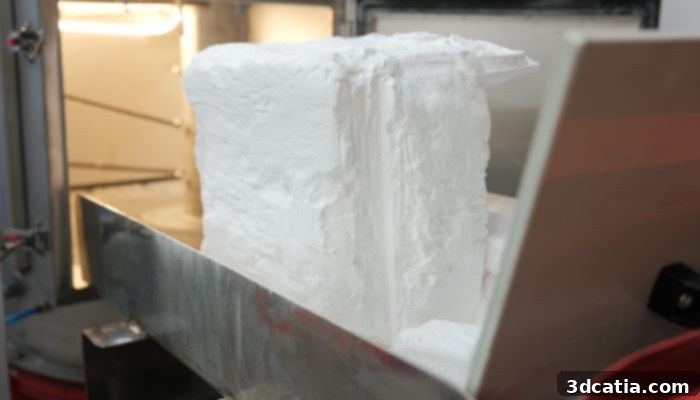
After printing, the powder cake is fed into the machine without coming into contact with the operator.
Among the most prevalent powders utilized in additive manufacturing are polyamides, commonly known as nylons, with PA11 and PA12 being particularly widespread. While nylon is generally not considered toxic to humans, direct and prolonged contact during manual decaking or depowdering operations can lead to skin and eye irritation for operators. Furthermore, the inhalation of fine particulate matter, regardless of its explicit toxicity, poses long-term respiratory health risks. While comprehensive epidemiological studies on the specific health impacts of various 3D printing powders are still evolving, recent academic research, such as that published in the Journal of Safety, Health and Ergonomics, titled “Behavior and Impact of Polyamide Nylon to the Indoor Air Quality during SLS Powder Handling Process,” is increasingly highlighting the critical necessity for superior health and safety protections for technicians working with these materials. The presence of fine powder can also create an explosive atmosphere, requiring stringent ATEX compliance for equipment handling such materials.
In this crucial context, the DCK 01 system stands as a pivotal advancement. It is meticulously designed to substantially reduce direct operator contact time with powders, thereby mitigating health risks and ensuring a safer working environment. Beyond safety, the system guarantees significantly greater productivity through faster, more consistent, and automated processes. By automating these traditionally manual and time-consuming tasks, the DCK 01 liberates personnel to focus on higher-value-added activities such as design optimization, quality control, or process innovation, contributing to a more efficient and rewarding utilization of human capital within the manufacturing workflow. This strategic allocation of talent not only enhances output but also fosters a more engaging and productive work environment, aligning perfectly with the principles of modern industrial operations.
Key Features and Transformative Benefits of the DCK 01 System
Having explored the overarching benefits of the DCK 01 system, it’s essential to delve into which specific users are ideally positioned to reap its advantages. The IntegrAM DCK 01 system is specifically engineered to efficiently process parts produced by medium-sized PBF printers operating within high-production environments. This makes it an indispensable tool for a diverse range of users, including those who operate SLS or Multi Jet Fusion (MJF) 3D printers. Whether managing a single system or multiple machines, organizations seeking to dramatically optimize their workflow and streamline production—such as dedicated print departments, service bureaus, research and development facilities, or Original Equipment Manufacturers (OEMs)—will find the DCK 01 to be a transformative asset.
From a technical perspective, the DCK 01 boasts a compact footprint of 200 x 115 x 210 cm, allowing for seamless integration into existing production layouts without demanding excessive space. Its impressive processing capability enables it to handle a complete powder cake with a volume of 30 to 40 liters in less than an hour. This rapid throughput translates into the ability to process multiple cakes per day, generating substantial time savings—up to 3 hours per print when compared to arduous manual methods. Such significant time reduction across multiple print cycles can dramatically accelerate production schedules and enhance overall operational capacity. Furthermore, the system’s inherent flexibility is a key differentiator, allowing it to process larger powder cakes and facilitating easy adaptation to meet highly specific customer requirements or unique material handling needs, ensuring a versatile solution for varied production demands.
The DCK 01’s comprehensive functionality is what truly sets it apart. Its integrated process begins with a gentle “decaking” phase, meticulously designed to carefully extract finished parts from the surrounding powder cake without causing damage or requiring forceful manual intervention. This is followed by self-regulated recovery of unused powder, maximizing material efficiency and minimizing waste—a crucial factor for cost-effective additive manufacturing. Subsequently, a thorough depowdering phase prepares the parts, leading into an automatic cleaning process. This cleaning is achieved through a patented vibratory sandblasting technique, which not only effectively removes residual powder but also ensures a consistent and high-quality surface finish. The system further incorporates an ecological, chemical-free surface finishing process, eliminating the need for harsh chemicals and contributing to a greener, safer operation. Operators benefit from highly customizable machining programs, easily controlled via an intuitive touch-screen interface and a robust PLC (Programmable Logic Controller), allowing for precise adaptation to different part geometries, materials, and desired finishes. Crucially for safety, an integrated ATEX-certified extraction solution effectively manages powder particulates, preventing accumulation and maintaining a safe atmosphere. For enhanced automation and material handling, optional modules such as an integrated two-cycle mixing and screening system and an automated powder conveying system can be seamlessly added, further optimizing the end-to-end workflow.
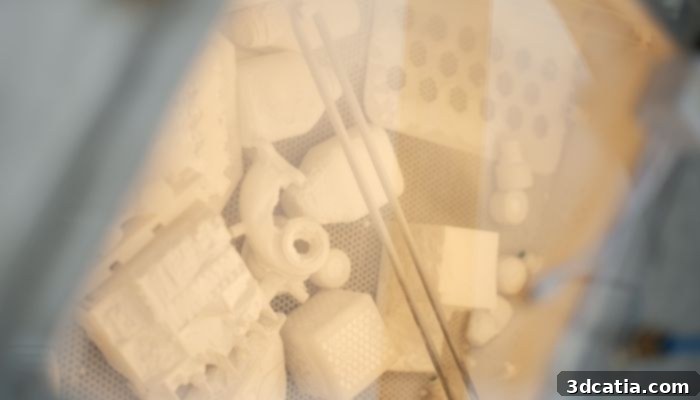
Pieces are gently removed from the cake before automatic cleaning begins.
From an economic standpoint, the DCK 01 system offers a compelling value proposition. By optimizing both time and resources—significantly reducing labor costs, improving material recovery, and accelerating throughput—it enables a remarkably swift return on investment (ROI). Depending on the specific production volume and operational intensity, companies can expect the investment to pay for itself within a short timeframe, typically ranging from 7 to 15 months. This rapid ROI directly contributes to increased revenues in the short term, making it an attractive investment for businesses aiming to scale their additive manufacturing operations. Furthermore, Spengler has strategically positioned this advanced post-processing solution on the market with an exceptionally competitive and attractive price tag, typically less than €100,000, making advanced automation accessible to a wider range of businesses. This combination of efficiency, safety, and favorable economics solidifies the DCK 01’s position as a game-changer in industrial 3D printing post-processing.
Beyond the immediate success of the DCK 01, Spengler is actively innovating, with other exciting developments on the horizon. The dedicated team is currently engaged in the development of a small-format, high-temperature SLS printer specifically designed for processing PEEK (Polyether Ether Ketone). PEEK is a high-performance thermoplastic known for its exceptional mechanical properties, chemical resistance, and biocompatibility, making it ideal for demanding applications in aerospace, medical, and automotive sectors. A high-temperature SLS printer capable of processing PEEK would unlock new possibilities for manufacturing complex, high-performance parts with superior material characteristics. This promising new machine is anticipated to be officially unveiled by the end of the year, showcasing Spengler’s ongoing commitment to pushing the boundaries of additive manufacturing technology. We eagerly anticipate more details on this upcoming innovation! For comprehensive information regarding the DCK 01 automated post-processing system and its capabilities, please click HERE.
What are your thoughts on Spengler’s innovative automated post-processing solution? Does the DCK 01 address critical challenges you face in additive manufacturing? We invite you to share your insights and experiences in a comment below or connect with us on our official LinkedIn, Facebook, and Twitter pages! Don’t miss out on the latest advancements and industry news; remember to sign up for our free weekly newsletter here, delivering the freshest 3D printing news directly to your inbox! Additionally, you can explore all our engaging video content on our dedicated YouTube channel.
*All Photo Credits: Spengler/IntegrAM