

Empowering the Next Generation: The SPE Foundation’s ‘Print the Future’ Campaign Revolutionizes 3D Printing Education
It’s a universally acknowledged truth: children are the bedrock of our future. The quality of the tools and knowledge we impart to today’s students directly influences their development and, by extension, the trajectory of humanity itself. This profound impact underscores the vital importance of education, particularly in rapidly evolving manufacturing fields such as 3D printing, also known as additive manufacturing. For far too long, industries have grappled with significant barriers to entry, largely due to a critical shortage of adequately educated technicians and skilled practitioners. This issue isn’t unique to 3D printing; it’s a pervasive challenge echoing across numerous technical sectors. In our ongoing effort to highlight initiatives addressing these crucial educational gaps, we recently had the opportunity to connect with the SPE Foundation. This esteemed organization is at the forefront of tackling such workforce development issues, and we delved into their extensive work, with a particular focus on their inspiring new initiative: the “Print the Future” campaign. This transformative campaign offers a direct pathway to contribute to the future of STEM education, and you can support it directly HERE.
Unveiling the SPE Foundation and the “Print the Future” Campaign
The SPE Foundation, established in 1977, was founded on a clear and compelling mission: to champion and support robust workforce development within the dynamic plastics industry. This enduring commitment is realized through strategic investments in high-quality educational programs, competitive grants, and impactful scholarships that place a strong emphasis on core disciplines like science, engineering, and sustainability. Beyond direct funding, the foundation is also dedicated to fostering an inclusive environment, actively working to create equitable opportunities for students across the globe, ensuring that talent knows no geographical or socioeconomic boundaries. Their work is pivotal in shaping not just individual careers but the future landscape of an essential global industry.
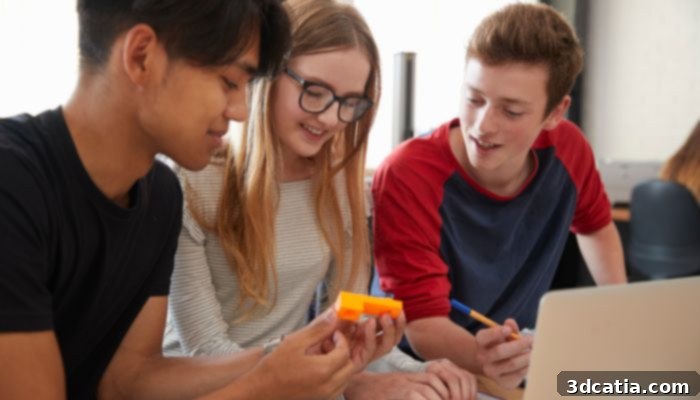
Students worldwide benefit from programs from the SPE Foundation (photo credits: SPE Foundation)
A cornerstone of the SPE Foundation’s innovative approach is its highly successful 3D Printer Grant program. This initiative directly addresses the need for advanced manufacturing skills by placing cutting-edge technology directly into the hands of young learners. In a testament to its growing impact, the year 2024 saw the awarding of an impressive twenty-one 3D printers to middle and high schools throughout the United States and Canada. This significant distribution directly benefited over 3,100 students, opening new avenues for learning and exploration. This represents a remarkable milestone, more than tripling the number of 3D printers donated in 2023, and the surge in interest continues unabated. Grant applications have been steadily accumulating, vividly demonstrating the immense enthusiasm schools hold for integrating this transformative technology into their curricula. However, this burgeoning demand presents a critical challenge: the current budget, despite the foundation’s best efforts, simply cannot keep pace with the overwhelming interest and need.
To strategically address this escalating need and bridge the gap between enthusiasm and resources, the SPE Foundation is proudly launching the “Print the Future” campaign. This pivotal initiative is set to officially kick off on December 3rd, coinciding with Giving Tuesday, the widely recognized National Day of Philanthropy that follows Thanksgiving in the U.S. The ambitious yet achievable goal of this campaign is to raise $30,000. These crucial funds will be directly allocated to financing additional 3D printers and facilitating essential PlastiVan® visits for a minimum of twelve schools. The “Print the Future” campaign is meticulously designed to provide students with invaluable, tangible, hands-on experience in the critical fields of engineering and design. Furthermore, it aims to introduce them to a diverse array of foundational topics, including the intricate world of chemistry, the fascinating history of materials, the complexities of processing, and the paramount importance of sustainability in modern industry. Through these initiatives, the foundation seeks to cultivate not just knowledge but also practical skills that will be indispensable for the next generation of innovators.
Why 3D Printing is Key to Engaging Students in Plastics
The SPE Foundation’s strategic decision to leverage 3D printing as a primary method for engaging students in the plastics industry is rooted in the technology’s inherent appeal and dynamic nature. 3D printing stands out as an incredibly exciting and accessible plastics technology, distinguished by its vast, vibrant, and actively collaborative online community. This digital ecosystem provides an endless wellspring of inspiration and practical support. Students are inherently drawn to the boundless creative possibilities that 3D printing offers, allowing them to transform abstract ideas into tangible objects. They can delve as deeply as they wish into the “tech” aspects of 3D printing, exploring everything from software to material science. The digital realm is rich with resources, including a wealth of information available in online forums, comprehensive tutorials on YouTube, and an abundance of dedicated websites where they can effortlessly find and download free 3D models, providing an immediate entry point into the world of digital fabrication.
For students already engaged in classes such as CAD (Computer-Aided Design) or 3D modeling, or even those simply eager to expand their knowledge, the ability to create their own designs and bring them to life through printing is a powerful motivator. This direct connection between digital design and physical output fosters a deeper understanding of engineering principles. At its fundamental core, plastics manufacturing is a captivating blend of art and science—the intricate processes of melting, moving, and ultimately making plastic materials into functional forms. 3D printing embodies all these essential actions in a streamlined and highly accessible manner, and notably, at a relatively low cost compared to traditional manufacturing methods. This affordability makes it an ideal educational tool, allowing more schools and students to experience the full spectrum of plastics processing firsthand, from concept to finished product, thereby nurturing a generation of creative problem-solvers and future industry leaders.
Selecting the Right Tools: The Flashforge 5M Series
When it comes to equipping educational institutions with the best possible tools, the SPE Foundation’s choice of the Flashforge 5M series of printers for its 3D Printer Grant Program is both deliberate and well-considered. The criteria for selection were stringent, focusing on factors that would maximize educational impact and ensure long-term reliability in a demanding classroom environment. The Flashforge 5M printers stand out due to their exceptional speed, proven reliability, and robust, well-engineered construction – all offered at a highly reasonable cost, making them an ideal investment for schools. The foundation’s extensive track record with these machines in various field settings has been nothing short of excellent, consistently delivering on performance and durability.
A significant advantage of the Flashforge 5M series, particularly the fully enclosed models, is their capability to print with a wide array of materials. This versatility is crucial for enriching the educational experience. By enabling students to experiment with different plastic materials, such as PLA, ABS, PETG, and more specialized filaments, the printers allow for a far greater exploration of material properties and applications. This hands-on experimentation is invaluable, as it teaches students about the diverse characteristics of various plastics – their strength, flexibility, thermal properties, and aesthetic qualities. Such practical knowledge is fundamental for understanding real-world engineering and design challenges, preparing students not just for academic success but also for future careers in the ever-evolving plastics and manufacturing sectors. The ability to work with a broad spectrum of materials broadens their horizons and deepens their appreciation for the science behind additive manufacturing.
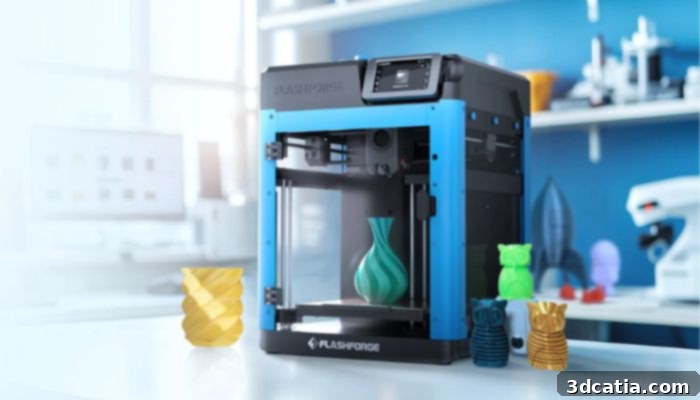
The 5M Adventurer 3D printer (photo credits: Flashforge)
Transformative Learning: Real-World Applications in Education
The impact of the SPE Foundation’s granted 3D printers is evident in the innovative ways they are being implemented across classrooms and STEM clubs throughout the United States and Canada. These printers aren’t just tools; they are catalysts for creativity, problem-solving, and deeper learning. Students are actively utilizing them for engaging class projects, scientific experiments, and even for bringing their imaginative “fun objects” to life, fostering a sense of accomplishment and pride.
Consider a teacher who integrated a 3D printer into their geometry lessons. Instead of abstract drawings, students were tasked with designing and printing basic 3D shapes. This hands-on approach allowed them to physically manipulate and analyze cubes, pyramids, and spheres, leading to a much more profound and intuitive understanding of geometric principles, volume, and spatial relationships. In another inspiring instance, a teacher at a Montessori Farm School harnessed the power of 3D printing to help students solve real-world problems directly impacting their working farm. This could involve designing and printing custom parts for irrigation systems, creating ergonomic handles for tools, or even prototyping innovative solutions for animal care, connecting classroom learning directly to practical, immediate needs.
A particularly advanced application of these printers can be seen in the Detroit area, where students are participating in the SPE Junior Researcher program. This highly collaborative initiative pairs students with industry companies and experienced mentors, challenging them to undertake complex projects and solve genuine industry problems. Here, students are actively engaged in printing and rigorously testing various robot grippers using different filament types. This process involves a systematic comparison of the mechanical properties and processing parameters between prime (virgin) and recycled filaments. This kind of work not only provides invaluable experience in material science and mechanical engineering but also instills an understanding of sustainability and circular economy principles within manufacturing. These projects exemplify the flexibility of 3D printers in supporting a vast spectrum of learning opportunities, from foundational concepts to advanced research. Ultimately, the SPE Foundation’s overarching goal is for students to engage meaningfully with plastics, to understand their versatility and importance, and to emerge with a positive appreciation for this unique and wondrous material, feeling empowered to innovate within the industry.
A Call to Action: Investing in Tomorrow’s Plastics Workforce
The “Print the Future” campaign transcends a simple fundraising effort; it is a critical investment in the human capital that will drive the plastics industry forward. By equipping students today with invaluable hands-on experience and foundational knowledge, the SPE Foundation is directly empowering the plastics workforce of tomorrow. These students will be the engineers, designers, scientists, and innovators who will solve future challenges, develop sustainable solutions, and continue to push the boundaries of what is possible with plastics and additive manufacturing.
We urge everyone to join us in supporting this vital mission. This Giving Tuesday, December 3rd, offers a perfect opportunity to contribute to a cause that promises long-term societal benefits by expanding access to transformative 3D printing technology for students across the country. Your contribution, no matter the size, will directly help bridge the skills gap, foster innovation, and inspire the next generation of leaders in manufacturing and STEM fields. You can discover more about the campaign’s goals, learn about its impact, or contribute directly to this inspiring initiative by visiting HERE.
What are your thoughts on this impactful 3D printer grant program and its potential to shape future innovators? We encourage you to share your insights in a comment below or connect with us on our social media channels: LinkedIn, Facebook, and Twitter! Don’t miss out on the latest advancements and breaking news in the world of 3D printing; remember to sign up for our free weekly Newsletter here, delivered straight to your inbox! Additionally, explore our extensive library of insightful videos on our YouTube channel for more content.
*Cover Photo Credits: SPE Foundation