
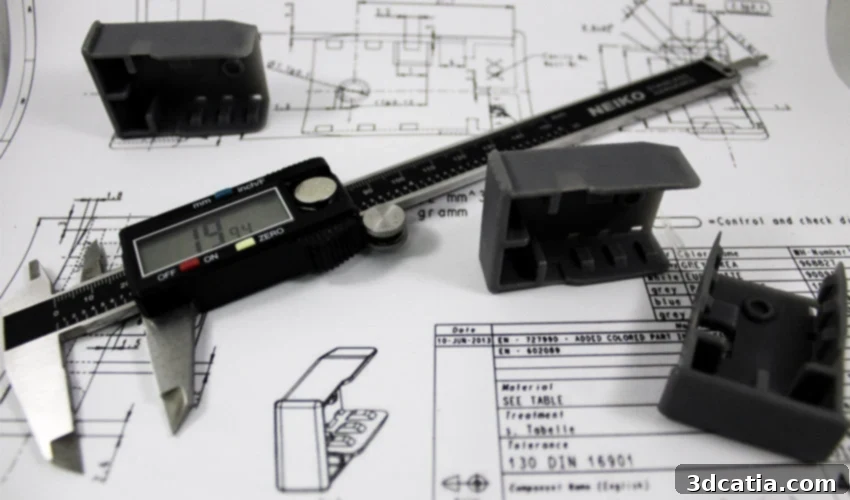
Spare Parts 3D: Revolutionizing Industrial Supply Chains with Global 3D Printing and Digital Inventory Solutions
Over the past two years, Spare Parts 3D has emerged as a trailblazer in the 3D printing industry for spare parts. The company has dedicated itself to developing advanced 3D software aimed at digitalizing spare part inventories and establishing a qualified, extensive production network spanning over 70 countries worldwide. This innovative approach has quickly built a strong reputation for the company. We recently had the opportunity to speak with its visionary founder, Paul Guillaumot, who shared insights into the genesis of his company and his profound vision for the industry’s transformative potential. At the core of Spare Parts 3D’s success is its commitment to customization, providing tailor-made parts to both original equipment manufacturers (OEMs) and end-customers, thereby enabling a truly distributed and responsive production model.
Paul Guillaumot on Founding Spare Parts 3D and His Vision for 3D Printing
I am an engineer by training, having graduated from ‘Arts et Métiers’, a prestigious French engineering school. My professional journey began in consulting, working for a major American firm, Oliver Wyman. This experience provided a robust foundation in strategic analysis and problem-solving. Following that, I joined four collaborators in their entrepreneurial venture, establishing the consulting firm Theano Advisors. I was their very first employee, and it was a remarkably fulfilling experience to witness and contribute to its growth. By the time I departed two years later, the team had expanded significantly to 40 consultants, a testament to our collective effort and success.
After three intense years in consulting, I felt a strong desire to transition to something more tangible and operational. My academic background had introduced me to the intricacies of 3D printing technologies, and I had consistently followed their rapid development with keen interest. I held a firm conviction in their immense capacity to revolutionize traditional production methods. This belief stemmed from the unparalleled flexibility 3D printing offers and, crucially, its potential to enable highly decentralized manufacturing. This decentralization promised a paradigm shift, moving away from centralized factories to a more agile, on-demand, and localized production system.
Beyond my professional interests, I also grew up in an entrepreneurial family, which instilled in me a lifelong ambition to create my own company. This confluence of my passion for additive manufacturing and my entrepreneurial spirit led me to establish Spare Parts 3D. My goal was to leverage the power of 3D printing to solve real-world industrial challenges, particularly in the often-problematic realm of spare parts management and supply.
How Spare Parts 3D Delivers Innovative Solutions for Industrial Components
At its core, Spare Parts 3D positions itself not just as a 3D printing company, but as a comprehensive solution provider for spare parts management. We cater to a diverse clientele, including companies already utilizing 3D printers, as well as manufacturers who require on-demand supply of critical components. Our overarching mission is to ensure that our clients receive the parts they need, precisely when and where they need them, optimizing their operational efficiency and minimizing downtime.
Our service offerings are strategically structured into three distinct, yet interconnected, pillars: consulting, engineering, and production. This holistic approach allows us to guide our clients through every stage of integrating additive manufacturing into their spare parts strategy.
The **consulting** phase is designed to address two fundamental questions: “Which of my existing parts can be effectively produced using 3D printing technologies?” and “What will be the projected financial impact and return on investment (ROI) associated with implementing 3D printing solutions for my spare parts?” During this crucial preliminary stage, we meticulously analyze a company’s entire catalogue of parts. This in-depth analysis provides clients with a macro-level view, identifying suitable technologies for various part types and forecasting potential cost savings. Furthermore, we conduct concrete, detailed case studies to thoroughly justify the technical feasibility and economic advantages that our proposed solutions offer, ensuring data-driven decision-making for our clients.
Following the consulting phase, the **engineering** phase focuses on the critical task of constructing a digital inventory. This involves a comprehensive process, beginning with the gathering of design and supply chain data for identified parts. We then meticulously define and implement the necessary processes, methodologies, and specialized tools to digitalize the physical inventory effectively. A key component of this phase is the rigorous qualification of parts for additive manufacturing, ensuring that each digital model is ready for reliable and consistent production. This meticulous preparation is vital for a seamless transition to the manufacturing stage.
The final pillar is **production**. For this service, Spare Parts 3D leverages a highly specialized and geographically diverse network of production partners located across the globe. This extensive network enables us to produce parts for our clients with unparalleled reach and speed. Our partners utilize a standardized range of technologies, machines, and materials, all of which have undergone our stringent qualification process to ensure consistent quality. We take full responsibility for the quality of all products delivered to our clients. Our robust internal processes guarantee the repeatability and consistency of production, irrespective of location or time. In essence, this model represents an “uberization” of production tools, where we effectively tap into and manage a global pool of qualified manufacturing capacity to meet our clients’ demands efficiently and effectively.
Addressing the Capabilities and Limitations of 3D Printing for Spare Parts
While 3D printing offers immense potential, it’s crucial to acknowledge that it currently comes with various technical limitations. Therefore, no, it is not yet possible for us to 3D print *any* spare part today. The universe of spare parts is incredibly vast and complex; it encompasses everything from intricate electronic circuit boards and complete engine assemblies to highly complex multi-component structures, exceptionally large parts, or components made from very specific, specialized materials. Naturally, the types of parts found in catalogues vary dramatically across different industries and product categories. For instance, in the home appliance industry, a sector where we possess considerable expertise, we estimate that we are currently capable of 3D printing approximately 10% of all possible spare parts. This percentage is determined by a careful assessment of the technical feasibility and the specific material and performance specifications set by the manufacturer. Within this achievable scope, we regularly produce items such as control buttons, various types of locking hooks, washing machine wheels, and even certain electrical box components, among many other functional parts.
The Versatility of Additive Manufacturing Technologies at Spare Parts 3D
To effectively address the diverse needs of our clients and maximize the range of parts we can produce, Spare Parts 3D utilizes an extensive array of additive manufacturing technologies. We employ nearly all available technologies for both plastic and metal production. The sheer multitude and variety of part types encountered in industrial applications necessitate this broad technological scope. To cover the largest possible number of manufacturable components, relying on a single or a few technologies simply isn’t sufficient.
To illustrate this point with the examples I provided earlier: simple control buttons are typically realized using Stereolithography (SLA) due to its precision and smooth surface finish. Components like washing machine wheels, requiring good mechanical properties and durability, are often produced with Multi Jet Fusion (MJF). Meanwhile, electrical boxes, which often need good insulation properties and robust construction, are manufactured using Fused Deposition Modeling (FDM). Each of these technologies possesses unique strengths and therefore has its preferred sector of application and material compatibility. This tailored approach ensures that each part is produced with the most suitable technology for its specific requirements.
The necessity of employing such a vast number of different additive manufacturing technologies to solve the complex problem of spare parts often serves as a compelling sales argument for our clients. Many companies initially consider the option of acquiring 3D printers and producing parts in-house. However, they soon realize that to cover a significant portion of their spare parts catalogue, they would need to invest in a diverse suite of machines, not just one. Furthermore, developing the specialized expertise required to operate and maintain these various technologies effectively can be a considerable challenge. More often than not, the volume of demand for any single type of part or machine within their organization would be insufficient to justify such a substantial capital investment and the ongoing operational costs. Our service model, therefore, offers a cost-effective and efficient alternative, providing access to a wide range of technologies and expert knowledge without the overhead.
Key Partnerships and Future Endeavors for Spare Parts 3D
Spare Parts 3D has established robust partnerships across various critical industries. In the home appliances sector, we proudly collaborate with industry giants such as Whirlpool, Electrolux, and Vestel, helping them optimize their spare parts supply chains and enhance customer service. However, the challenge of managing spare parts is universal, extending far beyond household goods. This realization has driven our expansion into other vital fields. Consequently, we are actively working with major players like CMA-CGM and MacGregor in the maritime and energy sectors, where reliable spare parts are absolutely critical for operational continuity and safety. Additionally, we support Agilent and Cohu by providing specialized spare parts for their advanced machinery in the medical and electronics fields, ensuring the seamless functioning of complex and sensitive equipment.
Looking ahead, we have several ambitious projects on the horizon, particularly within the maritime and energy domains. These initiatives involve close collaboration with classification associations – key bodies responsible for setting safety and quality standards in these industries. Our goal is to collectively develop and establish new standards for 3D printed spare parts, thereby facilitating the broader adoption of additive manufacturing technologies and ensuring the qualification of these parts for critical applications. This collaborative effort is essential for building trust and enabling the widespread, safe integration of 3D printing into these highly regulated sectors.
Transforming the Supply Chain with Digital Inventory and Distributed Manufacturing
When addressing the potential impact of 3D technologies on the broader supply chain, I typically exercise caution. The spare parts supply chain, while significant, represents a comparatively smaller segment of the overall global logistics network. Therefore, I am careful not to present a generalized global response that might overstate its immediate, large-scale impact across all industries.
However, specifically within the realm of spare parts, the transformative effects of adopting a digital inventory are undeniably profound and far-reaching. Imagine a future with no more physical warehouses overflowing with aging and obsolete parts. Instead, a digital catalogue allows for local, on-demand production, drastically reducing the need for extensive, cross-border transportation and eliminating cumbersome customs issues. This paradigm shift offers significant advantages: minimized inventory holding costs, reduced lead times, increased supply chain resilience against disruptions, and a substantial decrease in the environmental footprint associated with logistics. It is abundantly clear that the potential impact on traditional logistics and warehousing companies is substantial, and for many, potentially quite unsettling given the disruptive nature of these innovations.
As our technical capacity to produce an ever-larger variety and volume of parts through 3D printing continues to advance, we anticipate a corresponding decrease in the cost of production for these new pieces. This economic viability will further accelerate the adoption of additive manufacturing for a wider range of components. Consequently, as 3D printing becomes more efficient and cost-effective, its influence and transformative impact on the global supply chain for spare parts – and eventually, beyond – will only continue to grow significantly, ushering in an era of truly agile and responsive manufacturing.
A Final Message: Join the Spare Parts 3D Team
Spare Parts 3D is a dynamic and continuously growing company, and as such, we are consistently looking for talented individuals to join our team across a variety of sectors and departments. If you are passionate about additive manufacturing, innovation, and transforming industrial supply chains, we encourage you to explore career opportunities with us. All our current job openings are conveniently listed on our website at spare-parts-3d.com. Please do not hesitate to review them and apply if you find a position that aligns with your skills and aspirations.
We value your insights and feedback! Please let us know what you think about this article by leaving a comment below or by engaging with us on our Facebook and Twitter pages. To stay completely up-to-date with all the latest news, trends, and developments in the fascinating world of 3D printing, remember to sign up for our free weekly Newsletter, delivered directly to your inbox!