
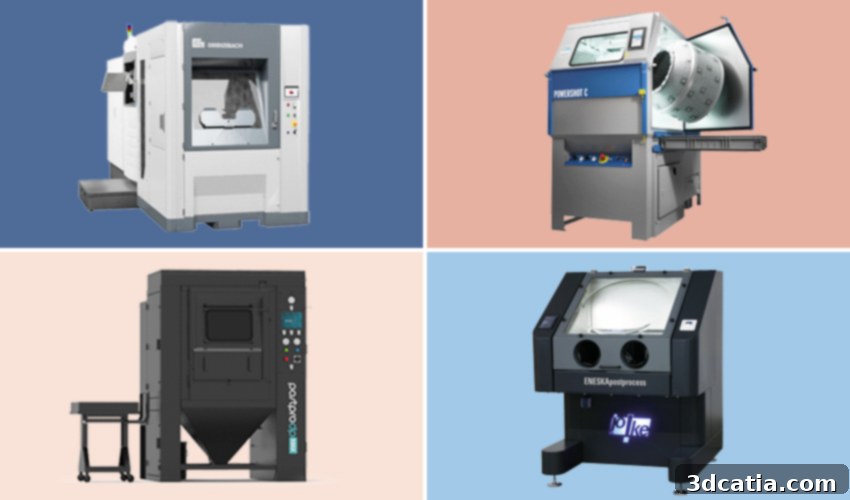
Automated Depowdering Systems: Essential Post-Processing for High-Quality 3D Printed Parts
Post-processing after 3D printing is an absolutely critical phase that significantly impacts the quality, performance, and overall durability of manufactured parts. This crucial stage, which follows the completion of the additive manufacturing process, encompasses a variety of essential operations. These include cleaning, precise surface treatment, and the meticulous removal of support structures. Its importance is universal, applying to all types of 3D printing technologies and part sizes, from intricate small components to large industrial elements. For powder-based additive manufacturing processes, such as Selective Laser Sintering (SLS), Multi Jet Fusion (MJF), and Binder Jetting, depowdering is the foundational first step. This process is vital for thoroughly cleaning parts of residual, unfused powder, preparing them for subsequent post-processing steps like surface finishing, dyeing, or coating.
While manual handling can be suitable for very small parts or extremely limited production runs, it often yields inconsistent results, is time-consuming, and can pose health risks due to powder exposure. The inefficiencies associated with manual depowdering—including labor intensity, potential for part damage, and difficulties in reaching complex internal geometries—underscore the growing need for more advanced solutions. This is precisely why a rising number of manufacturers are choosing to invest in automated depowdering systems. These advanced systems offer significant advantages, dramatically saving time, improving process efficiency, ensuring consistent part quality, and enhancing operator safety. In this comprehensive guide, we will explore a range of cutting-edge automated solutions designed for depowdering both polymer and metal 3D printed parts, highlighting their features and benefits in optimizing the post-processing workflow.
Automated Depowdering Solutions for Polymer Parts
Depowdering polymer parts, especially those produced with SLS or MJF technologies, is essential for achieving a clean, ready-to-use product. Automated systems in this category focus on efficiency, consistency, and material recovery, offering solutions that range from compact units to industrial-scale machines. These innovations streamline the post-processing workflow, significantly reducing labor and improving throughput.
Solukon SFP770
The Solukon SFP770, engineered by Solukon Maschinenbau in Augsburg, Germany, represents a highly efficient and indispensable system for the automatic removal of powder from polymer parts produced via Selective Laser Sintering (SLS). Functioning as a dual-purpose unpacking and cleaning station, the SFP770 is meticulously designed to optimize the post-processing workflow for polymer components. Its core compatibility with the EOS P 770 printer makes it a seamless addition to high-volume production environments. Furthermore, its adaptability extends to other popular platforms like the FORMIGA P 110 and EOS P 500 through the use of specific adapters, ensuring broad utility across various SLS setups.
The cleaning process within the SFP770 is structured in an intelligent two-stage approach. The first stage involves fully automatic deconditioning, a process designed to rapidly loosen and dislodge excess powder, thereby significantly speeding up the overall processing time. This initial phase prepares the parts for the second stage: the actual, thorough cleaning. Safety is a paramount concern in powder-handling environments, and the SFP770 addresses this comprehensively. It is equipped with robust explosion protection, constructed from high-grade stainless steel with no intrinsic ignition sources, and features ATEX-compliant components. This rigorous design ensures safe operation, particularly when handling fine polymer powders that can be combustible. Additional safety measures include integrated suction and spray monitoring, which continuously safeguard against potential hazards. Beyond safety, the SFP770 offers several practical and advanced functions, such as direct connectivity to an external cleaning system for enhanced integration and an ionized blasting device for superior surface cleanliness. For instances requiring targeted attention, a manual blasting device is also readily available, providing flexibility for specific cleaning needs. The SFP770 is a testament to Solukon’s commitment to delivering reliable, safe, and highly efficient automated depowdering solutions for polymer additive manufacturing.
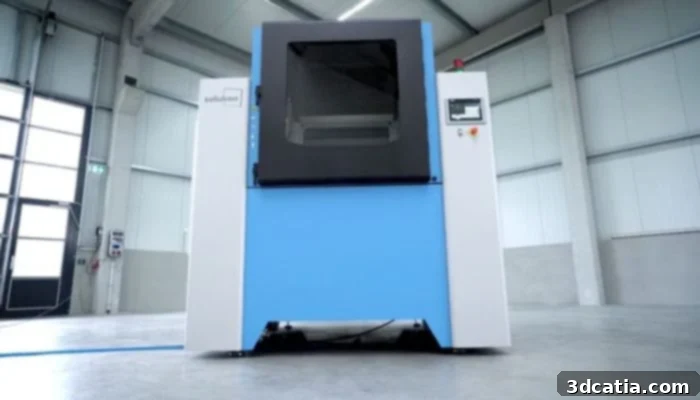
(Photo Credits: Solukon)
Pulvermeister Typ 5
Unveiled to critical acclaim at Formnext 2022 in Frankfurt, the PULVERMEISTER Typ 5 stands as the pinnacle of finishing systems from the esteemed German company PULVERMEISTER. Representing a significant leap forward from its predecessor, the Typ 4, this innovative system not only retains all the proven features of the previous model but also introduces advanced surface treatment capabilities, enabling parts to be prepared for sale in a single, streamlined operation. The core innovation of the Typ 5 lies in its patented process, which ingeniously utilizes abrasive media manufactured from the exact same material as the parts being treated, and often, with the same 3D printer. This “material-identical” approach ensures unparalleled compatibility and prevents contamination, critical for high-quality finishes.
Further enhancing its ecological and economic credentials, the Typ 5 incorporates a sophisticated, contamination-free recycling process. Through the use of a specialized separation filter, spent shot particles are efficiently filtered from the blasting stream and meticulously reintroduced into the blasting circuit. This closed-loop system is a game-changer, guaranteeing a consistently high-quality finish while simultaneously championing environmental responsibility and delivering substantial cost savings by minimizing material waste. The PULVERMEISTER Typ 5 is an exemplary solution for companies seeking to achieve superior surface finishes on polymer 3D printed parts, combining cutting-edge technology with sustainable practices for optimized post-processing.
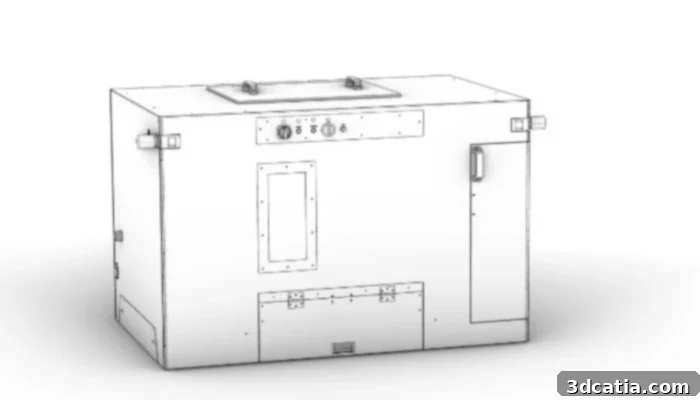
(Photo Credits: PULVERMEISTER)
AM Technologies PostPro DP MAX
The PostPro DP MAX is a formidable industrial-grade depowdering system developed by Additive Manufacturing Technologies (AMT), a leading innovator in post-processing solutions for 3D printed parts. As a prominent member of AMT’s extensive portfolio of depowdering systems—which also includes the DP Studio, DPX, and DP Pro—the PostPro DP MAX distinguishes itself with its exceptional post-processing volume. Boasting a substantial capacity of 63 liters, it is designed for maximum throughput in high-production environments. This system orchestrates a fully automated depowdering process, meticulously engineered to optimize efficiency and minimize manual intervention, thereby significantly accelerating the journey from raw print to finished part.
The PostPro DP MAX demonstrates broad compatibility with a range of advanced plastic powder technologies, including Selective Laser Sintering (SLS), Multi Jet Fusion (MJF), and Selective Absorption Fusion (SAF). This versatility makes it an invaluable asset for diverse additive manufacturing operations. Furthermore, safety and regulatory compliance are integral to its design, as evidenced by its CE and ATEX certifications. These certifications are crucial, particularly in industrial settings where consumable media and the fine dust generated during depowdering may present combustible hazards. By guaranteeing safety and efficiency in such demanding environments, the PostPro DP MAX stands out as a robust and reliable solution for automated depowdering of polymer components, enabling manufacturers to achieve consistent quality and higher output.
Avia Tools DP1000
The Avia Tools DP1000 is an exceptionally advanced and versatile depowdering system, expertly engineered to accommodate a wide spectrum of 3D printed parts, from robust industrial components to intricate, delicate geometries. Its impressive working volume of 62” x 63” x 99” allows it to handle parts weighing up to 1 metric ton and standing as tall as 1.5 meters, making it ideal for large-scale additive manufacturing applications. The DP1000 is packed with cutting-edge features designed to enhance usability and performance, including an optional atmospherically controlled cabin, which is particularly beneficial for handling sensitive materials, and motorized CNC capabilities that ensure precise and repeatable operations.
At the heart of the DP1000’s cleaning prowess lies its innovative cleaning mechanism, which leverages percussive manipulation combined with full 360-degree axis rotation. This dynamic approach guarantees thorough and consistent powder removal, even from the most complex internal channels and intricate geometries, such as those found in advanced rocket end nozzles. For reactive metal powders, the system includes inert gas processing, mitigating risks associated with oxidation or combustion. Users can also program repeatable cleaning cycles, ensuring consistent quality and streamlining workflow. Loading large parts is made effortless through its unique roof access, an additional optional feature, complemented by a conveniently built-in side door for standard access. With a substantial working envelope measuring 480 x 480 x 1000mm, the Avia Tools DP1000 offers an unparalleled and versatile solution for businesses aiming to significantly enhance their automated depowdering process for both polymer and metal parts, pushing the boundaries of what is possible in post-processing.
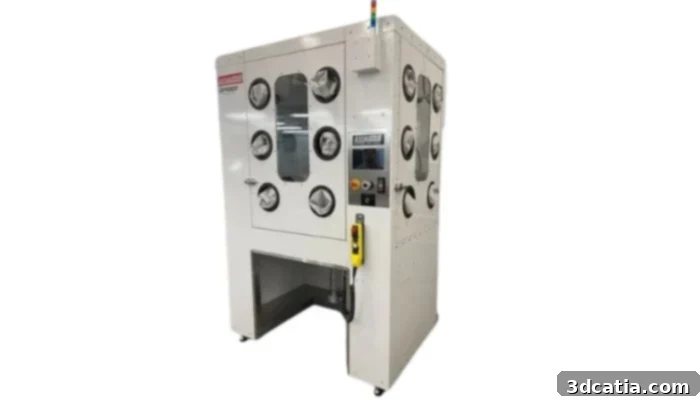
(Photo Credits: Avia Tools)
DyeMansion Powershot C
Germany-based DyeMansion has established itself as a global leader in providing comprehensive post-processing solutions for additive polymer manufacturing. Renowned for its integrated approach, the company offers an extensive range of machines covering everything from sophisticated surface finishing to meticulous part cleaning and vibrant coloring. Among its impressive lineup, the Powershot C stands out as an exceptionally efficient and user-friendly solution specifically engineered for cleaning plastic powders, primarily from SLS and MJF processes.
The Powershot C features an advanced automatic cleaning system, designed for straightforward operation with manual loading. The depowdering process is remarkably simple and intuitive: parts are securely loaded into the machine’s dedicated basket, the desired cleaning program is selected, and within a remarkably short timeframe—typically between 3 to 10 minutes—the parts emerge thoroughly cleaned and ready for the next stage. With compact yet efficient dimensions of 1700 mm x 1310 mm x 2030 mm, this machine is capable of processing a significant volume of up to 26 liters in just a few minutes, making it highly productive for various batch sizes. The versatility of the Powershot C is evident in its widespread adoption across diverse sectors, including the stringent medical industry, the fast-paced consumer goods market, general manufacturing, and critical mobility and transport applications. This broad applicability underscores its reliability and effectiveness as a comprehensive and adaptable solution for cleaning polymer 3D printed parts.
Spengler Vibroblast
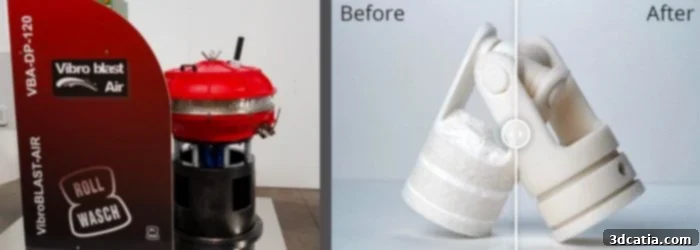
Spengler, an innovative and rapidly emerging company within the IntegrAM group, is dedicated to delivering cutting-edge solutions for the complex post-processing challenges in 3D printing. Among its notable offerings is the VibroBLAST Air machine, a highly efficient automatic 2-in-1 tool that excels in both part depowdering (dewinding) and preliminary surface pre-finishing. The VibroBLAST Air is specifically engineered to process plastic parts produced through common powder-bed fusion technologies such as Selective Laser Sintering (SLS) and HP Multi Jet Fusion (MJF), ensuring optimal results for these widely used methods.
What truly distinguishes this solution, according to Spengler, is its remarkable ability to treat parts with exceptional delicacy. This precision ensures that the machine meticulously removes residual powder and performs pre-finishing without compromising the intrinsic quality or altering the critical surface properties of the 3D printed components. Such gentle yet effective processing is vital for maintaining the structural integrity and aesthetic appeal of complex polymer parts. Furthermore, the VibroBLAST Air plays a central role in the DCK 01 automated all-in-one solution. This integrated system offers a complete post-processing workflow that not only includes depowdering and surface finishing but also incorporates advanced powder screening, recovery, and mixing functionalities. This holistic approach makes the Spengler VibroBLAST Air a cornerstone for efficient, high-quality, and sustainable post-processing in polymer additive manufacturing.
(Photo Credits: Spengler)
Automated Depowdering Solutions for Metal Parts
Depowdering metal parts produced by additive manufacturing presents unique challenges due to the properties of metal powders, which can be reactive, heavy, and have different flow characteristics than polymers. Automated systems for metal depowdering are designed with robust construction, inert gas capabilities, and advanced vibration or blasting techniques to ensure safe, thorough, and efficient removal of metallic residual powder, crucial for the final part integrity and functionality.
Solukon SFM-AT350/-E
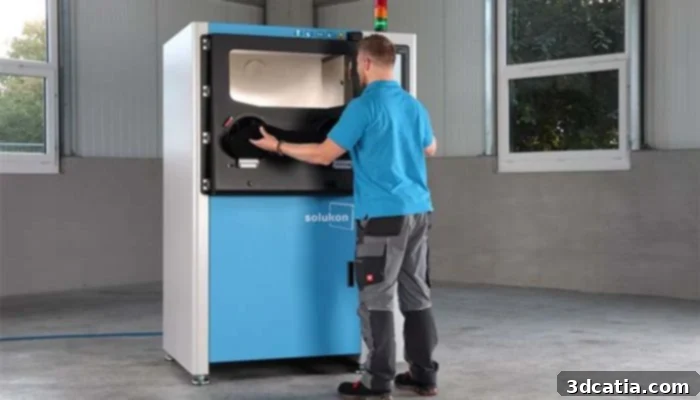
The SFM-AT350 systems from Solukon, a renowned German machine manufacturer, have become a cornerstone in the industry for the precise and efficient depowdering of metal parts produced through various additive manufacturing processes. These sophisticated machines are equipped with a versatile turntable, providing exceptional flexibility of movement to effectively dislodge unfused powder from complex geometries. Beyond their automated capabilities, the systems thoughtfully allow for manual depowdering when specific attention to detail or unique part features require it, offering a hybrid approach to post-processing. A dedicated material lock system is integrated to meticulously collect the removed metal powder, facilitating its recovery and safe handling.
Since October 2023, Solukon has further advanced its technology, making the SFM-AT350 depowdering system available in two distinct variants with different excitation modes. The SFM-AT350 utilizes a pneumatic excitation mode, while the SFM-AT350-E features a piezoelectric mode. Both variants are engineered to deliver gentle, yet highly effective, self-regulating depowdering, ensuring that delicate part features are preserved while achieving thorough powder removal. A key differentiator for these new versions is their compatibility with Solukon’s proprietary SPR-Pathfinder software. This intelligent software calculates an individualized and optimized movement pattern for each specific component, guaranteeing comprehensive and consistent cleaning, even for the most intricate internal structures. Solukon has also recently enhanced the cleaning capacity of its machines, enabling them to handle medium-sized parts weighing up to 100 kg and dimensions up to 400 x 400 x 400 mm or 500 x 280 x 400 mm, significantly expanding their utility. These updated systems are now fully compatible with leading industrial metal 3D printers such as the EOS M400 and Nikon SLM 500. With a machine weight of 650 kg and requiring a footprint of 2,300 x 2,300 x 2,300 mm, the Solukon SFM-AT350/-E series offers a robust, flexible, and intelligent solution for advanced metal additive manufacturing post-processing.
(Photo Credits: Solukon)
Addiblast MARS03
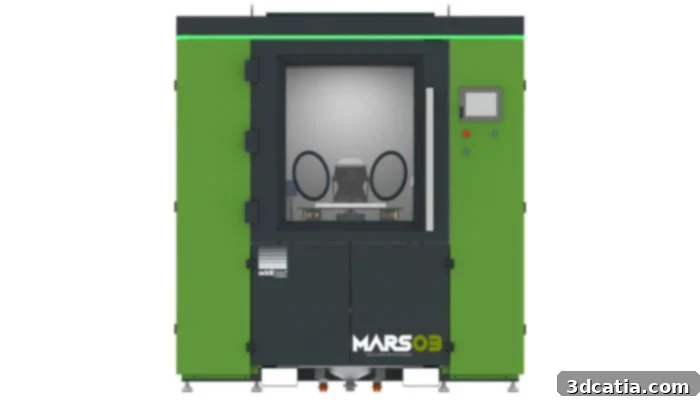
Addiblast, a pioneering Slovenian company, proudly introduces the MARS03 machine, a highly specialized and robust solution meticulously designed for the rigorous depowdering of complex metal parts, particularly those featuring intricate internal channels that are often challenging to clean. Boasting a substantial capacity of 200 kg and a generous working area measuring 850 mm x 900 mm x 1000 mm, the MARS03 is built for industrial-scale operations. It features an advanced automatic cleaning system that ensures consistent and efficient powder removal, further complemented by integrated resistant gloves for operators to perform precise manual work or inspection when necessary, blending automation with human oversight.
The desoldering process within the MARS03 occurs inside a fully sealed chamber, a critical design feature that enhances safety by containing reactive metal powders and preventing operator exposure. Within this controlled environment, parts undergo a thorough cleaning regimen primarily through vibration on a rotating table, which effectively dislodges residual powder from all surfaces, including hidden internal geometries. A standout feature of the MARS03 is its seamless integration of three crucial post-processing steps: precise desoldering, efficient recycling of remaining powder for reuse, and initial surface treatment of the printed parts. Weighing a formidable 1800 kg, this system is an ideal and indispensable choice for post-processing high-value components in demanding sectors such as aerospace, medical device manufacturing, automotive, and industrial foundry applications, where superior part quality and safety are paramount.
(Photo Credits: Addiblast)
Volkmann DPS Metal
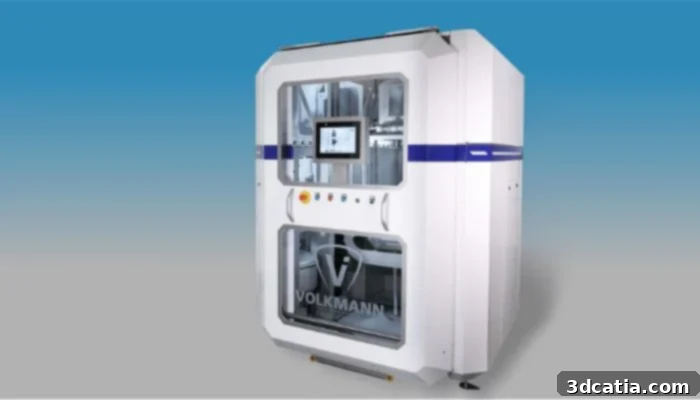
German company Volkmann is a recognized specialist in the intricate fields of powder handling and material transport, consistently striving to develop innovative solutions that automate and simplify these complex tasks across various industries. A dedicated branch of the company is focused exclusively on additive manufacturing, where it has successfully designed and implemented several highly effective post-processing systems, including advanced depowdering solutions. Among these, the DPS Metal 1 model garners particular attention, as its name clearly indicates its specialized design for handling delicate and often reactive metal powders used in 3D printing.
The operational workflow of the DPS Metal 1 is designed for maximal efficiency and safety. An operator can directly and securely place their printing plate, complete with the freshly printed metal parts, into the machine. The system then autonomously executes a precise turnover of the plate, allowing for optimal powder dislodgement. Utilizing either compressed air or inert gas, the machine expertly removes excess, unfused powder from all surfaces and intricate features of the part. Following this initial removal, the DPS Metal 1 proceeds to a comprehensive depowdering and cleaning of the entire component. This entire operation takes place within a fully enclosed chamber, ensuring meticulous cleaning while simultaneously preventing any powder exposure to the surrounding environment and operators. The Volkmann DPS Metal 1 therefore offers a complete, automated, and safe solution for the depowdering of metal additive manufacturing parts, significantly enhancing productivity and workplace safety.
(Photo Credits: Volkmann)
Grenzebach Dual Setup Station
The Grenzebach Dual Setup Station represents a paradigm shift in the post-processing of 3D metal prints, offering a fully automated and highly efficient solution for depowdering. Its primary objective is to guarantee a consistently safe process for valuable printed products while dramatically streamlining the overall additive manufacturing workflow. By automating the arduous and time-consuming task of powder removal, this innovative station effectively mitigates a significant bottleneck in industrial 3D printing: the prolonged downtime typically associated with cooling, unpacking, and manual setup of build plates.
This intelligent automation profoundly optimizes the utilization of metal powder additive manufacturing systems, leading to a substantial increase in overall productivity. By minimizing manual labor requirements, the Grenzebach Dual Setup Station not only reduces operational costs but also significantly lowers the unit costs per manufactured part, making metal 3D printing more economically viable for high-volume production. Furthermore, a key design principle of this system is the minimization of risks to employees. By automating contact with powder and hot objects, it drastically reduces operator exposure to potentially hazardous dust and high temperatures. This significantly decreases the need for costly personal protective equipment (PPE) and complex technical protection measures, fostering a safer and more efficient working environment. The Grenzebach Dual Setup Station stands as a testament to intelligent automation, delivering enhanced safety, efficiency, and cost-effectiveness in metal 3D printing post-processing.
Joke ENESKApostprocess
The Joke ENESKApostprocess is a highly specialized and versatile post-processing solution meticulously tailored for the comprehensive finishing of a wide array of 3D prints, encompassing both polymer and metal components. This robust machine is expertly designed to perform multiple critical tasks with precision and efficiency. It effectively cleans powder residues from intricate geometries, facilitates the safe and clean removal of substrate plates and support structures, achieves superior surface smoothening, and executes various other essential processing operations required to bring a 3D printed part to its final, desired state.
Boasting a generous working area measuring 940 x 790 x 250-600 mm, the ENESKApostprocess can accommodate a variety of part sizes. Central to its cleaning efficiency is the integrated compressed air gun, which is highly effective in eliminating even the most stubborn dust from challenging corners and internal channels, eradicating the need for operators to wear cumbersome protective clothing during active cleaning. Safety and operator well-being are paramount in its design; the ENESKApostprocess is fully enclosed, a critical feature engineered to mitigate all health risks associated with fine dust exposure. It incorporates highly efficient suction and advanced filtration systems, ensuring that no dust escapes into the surrounding environment during operation. As an additional layer of safety, prior to allowing access to the unit, an extra 10-second suction phase is automatically activated, ensuring the chamber is completely free of airborne particles. Only after this safety protocol is completed does the glass dome unlock, facilitating the safe and easy removal of the perfectly finished part. The Joke ENESKApostprocess therefore offers a comprehensive, safe, and efficient solution for high-quality 3D print finishing.
Automated depowdering systems represent a crucial advancement in the additive manufacturing workflow, transforming what was once a labor-intensive and often hazardous task into a streamlined, safe, and highly efficient process. From enhancing part quality and consistency to significantly reducing operational costs and improving worker safety, the benefits of these intelligent solutions are undeniable. Whether processing delicate polymer components or robust metal parts with complex internal structures, the innovations highlighted above demonstrate the commitment of manufacturers to push the boundaries of post-processing technology, enabling the full potential of 3D printing for industrial applications.
What do you think of these automated depowdering systems and their impact on the future of additive manufacturing? We invite you to share your insights and experiences in a comment below or engage with us on our LinkedIn, Facebook, and Twitter pages! Don’t forget to sign up for our free weekly newsletter here to receive the latest 3D printing news, industry trends, and technological breakthroughs straight to your inbox! You can also find all our informative videos and demonstrations on our YouTube channel.