
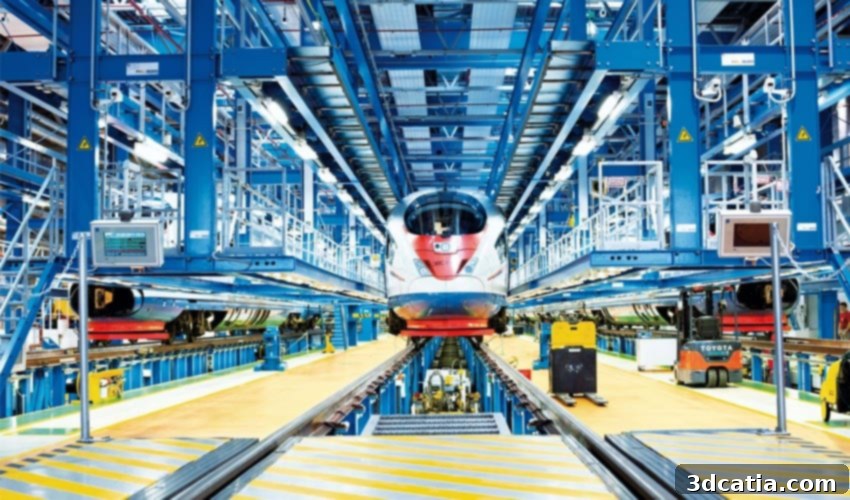
Siemens Mobility and Stratasys Revolutionize Railway Maintenance with Advanced 3D Printing
In a significant leap towards modernizing railway infrastructure and maintenance, Siemens Mobility Services is strengthening its strategic collaboration with leading additive manufacturing solutions provider Stratasys. This partnership is marked by a substantial investment in new Fused Deposition Modeling (FDM) machines, specifically earmarked for critical maintenance operations within Russia. These state-of-the-art 3D printers are set to play a pivotal role in ensuring the optimal functioning of Velara trains operated by the Russian railway company, RZD.
According to Stratasys, two advanced Fortus 450mc printers have already been strategically installed in key locations: Saint Petersburg and Moscow. This deployment empowers the Russian railway enterprise with unprecedented agility in the production of high-quality components and their subsequent maintenance. This move not only addresses immediate operational needs but also positions RZD at the forefront of adopting innovative manufacturing techniques to enhance efficiency and reliability across its extensive network.
Transforming Railway Maintenance: The Power of Additive Manufacturing
Maintaining the seamless operation of a vast train fleet presents a myriad of challenges, primarily due to the sheer volume and complexity of parts required. When a critical spare part fails, conventional solutions often fall short. The original model may be obsolete, or the cost and lead time associated with producing small batches using traditional manufacturing methods can be prohibitively expensive and time-consuming. This frequently leads to extended downtime, impacting service schedules and incurring significant financial losses.
Additive manufacturing, commonly known as 3D printing, offers a transformative solution to these persistent limitations. By enabling the creation of parts on demand directly from a digital 3D model, it eliminates the need for costly tooling, extensive warehousing, and lengthy procurement cycles. This technology ensures that users no longer need to order thousands of parts to achieve a break-even point, making small-batch and single-part production economically viable. These fundamental advantages are critically important in the demanding railway sector, where reliability, speed, and cost-efficiency are paramount.
The railway industry has already begun to embrace Stratasys’ innovative solutions, with this latest collaboration being a testament to their proven efficacy. For instance, Angel Trains previously integrated 3D printed parts into some of its trains, demonstrating the technology’s readiness for railway applications. Stratasys has invested heavily in developing specialized materials that not only meet the rigorous performance demands of train components but also adhere to the stringent regulatory certifications required for interior parts in public transport, such as flame retardancy and smoke emission standards. This commitment to compliance ensures that 3D printed spare parts are safe, reliable, and fully integrated into the railway ecosystem.
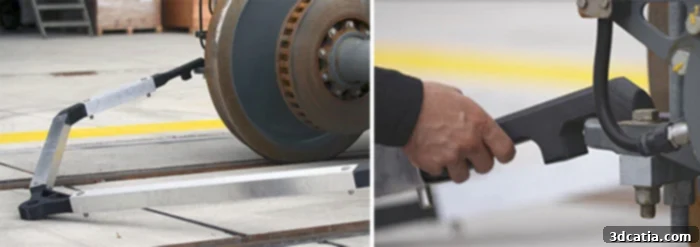
Siemens Mobility had already used Stratasys machines to print spare parts | Credits: Siemens Mobility
3D Printing for Spare Parts: A Strategic Advantage for the Railway Industry
This particular collaboration focuses on the Russian market, where Siemens Mobility is contracted to design 13 additional trains for RZD. Beyond manufacturing, Siemens Mobility will also provide comprehensive maintenance and servicing for these trains for the next three decades, adding to the 16 existing trains already in service. The installation of the two Stratasys Fortus 450mc machines directly addresses this long-term commitment, empowering RZD to locally produce spare parts and significantly optimize its maintenance operations.
This initiative is a core component of Siemens Mobility’s ambitious “Easy Sparovation Part” project in Russia. The project’s central aim is to create a comprehensive digital inventory of custom train parts. This digital library allows for the rapid, on-demand replacement of components using 3D printing whenever necessary. The “Sparovation” concept, a portmanteau of “spare parts” and “innovation,” encapsulates the project’s philosophy of leveraging cutting-edge technology to streamline traditional maintenance processes. This innovative project has already demonstrated considerable success and yielded impressive results in other regions, including England and Germany, proving its viability and effectiveness in diverse operational environments.
Alexey Fedoseev, Customer Service Manager of Siemens Mobility Russia, emphasized the profound impact of this technological adoption: “Stratasys’ FDM 3D printers give us the opportunity to produce parts in-house in a cost-effective manner, partially eliminating the need for warehousing or tools for a selected range of items. We have already seen the success of Siemens Mobility’s Easy Sparovation Part business in Germany, where this technology has enabled us to achieve time savings per part of up to 95% compared to traditional manufacturing methods.”
This statement highlights several critical benefits. Producing parts in-house not only reduces reliance on external suppliers but also significantly cuts down on logistical complexities and costs associated with shipping and inventory management. The dramatic reduction in lead times, with savings of up to 95%, translates directly into increased train availability, reduced operational disruptions, and enhanced passenger satisfaction. The Fortus 450mc, known for its industrial-grade performance and ability to print with engineering-grade thermoplastics, is ideally suited for creating robust, functional parts that can withstand the demanding conditions of railway operation.
Strategic Benefits and Future Outlook for Rail Operations
The implementation of Stratasys FDM technology for RZD’s Velara trains offers multifaceted strategic advantages. Beyond immediate cost and time savings, it fosters greater supply chain resilience. In an era where global supply chains can be unpredictable, localized, on-demand production capabilities provide a critical buffer against potential disruptions. It also enhances the overall sustainability of maintenance operations by reducing waste associated with overproduction and optimizing material usage through precise, digital manufacturing processes.
The “Easy Sparovation Part” project in Russia is more than just a maintenance strategy; it represents a commitment to digital transformation within the railway sector. By building a digital inventory, Siemens Mobility and RZD are creating a flexible, future-proof system that can adapt to evolving train designs and maintenance requirements. This digital approach allows for continuous improvement, rapid prototyping of updated components, and the ability to quickly address unforeseen issues with customized solutions.
The Fortus 450mc printers are designed for demanding industrial applications, offering high precision, repeatability, and a wide range of thermoplastic materials suitable for various railway components. These materials can include tough, durable plastics for interior panels, housings, and fixtures, as well as specialized compounds that meet stringent fire safety and environmental standards. The ability to print complex geometries that might be impossible or too costly with traditional manufacturing techniques further expands the scope of repair and customization for train parts.
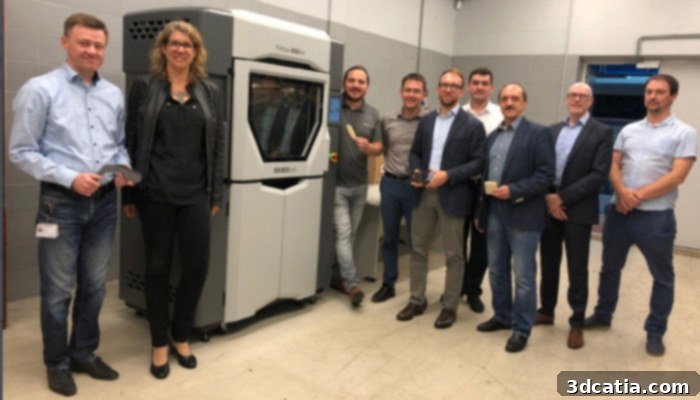
Stratasys and Siemens Mobility teams in front of the Fortus 450mc at the Siemens Mobility Depot in Russia | Credits: Siemens Mobility
This collaboration between Siemens Mobility and Stratasys serves as a powerful model for other railway operators globally, demonstrating how advanced additive manufacturing can profoundly impact operational efficiency, cost management, and service delivery. As railway networks continue to expand and age, the ability to rapidly produce high-quality, certified spare parts on demand will become an increasingly vital competitive advantage and a cornerstone of sustainable transportation infrastructure.
For more in-depth information regarding this innovative project and the broader impact of additive manufacturing in the transportation sector, you can visit Stratasys’ official website. We invite you to share your thoughts on this transformative partnership in the comments section below or engage with us on our social media platforms, including Facebook and Twitter. Don’t forget to sign up for our free weekly Newsletter to receive all the latest news and updates in the exciting world of 3D printing directly in your inbox!