
Revolutionizing 3D Printing: Oregon State University’s Shape-Changing LCEs Pave the Way for Smart Materials in Medicine, Robotics, and Energy
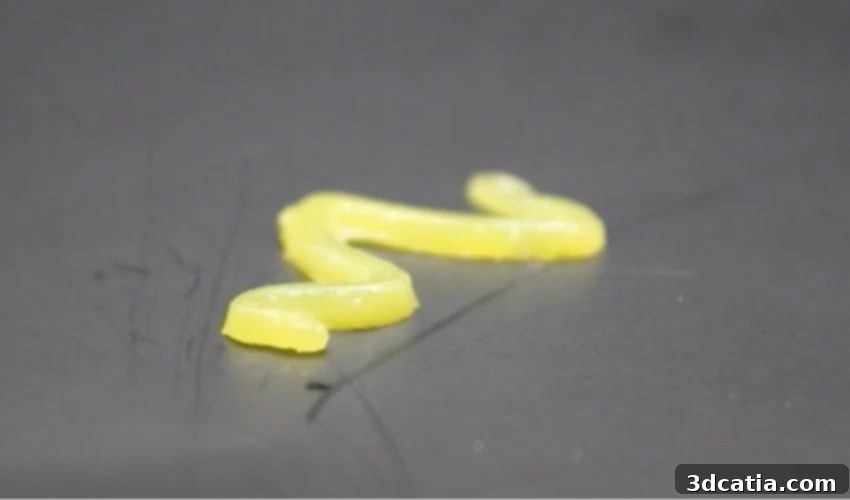
A groundbreaking advancement in material science has emerged from Oregon State University, where a team of innovative researchers, spearheaded by Devin Roach, has unveiled a revolutionary technique for 3D printing materials with an astonishing ability to autonomously change shape. This innovative development centers around a class of materials known as liquid crystalline elastomers (LCEs), which are not only printed but also inherently programmed to mimic the sophisticated movements of biological muscles. Once fabricated, these intelligent materials exhibit controlled transformations, opening up unprecedented opportunities across pivotal sectors such as advanced medicine, agile robotics, and sustainable energy systems. The implications of this research are vast, promising a paradigm shift in how we conceive and interact with engineered materials, moving towards a future of truly responsive and adaptable technologies.
Liquid crystalline elastomers stand apart from conventional polymers due to their unique molecular architecture. At their core, LCEs combine the ordered structure typical of liquid crystals with the elastic properties of elastomers. This synergistic combination endows them with the remarkable capacity to respond to external stimuli – most notably heat – by undergoing predictable and significant shape changes. This intrinsic responsiveness is what grants LCEs their “programmable” nature; engineers can design their molecular orientation during the printing process to achieve desired movements or deformations upon activation. This characteristic behaviour creates a fertile ground for the development of novel devices capable of converting thermal energy directly into mechanical energy, a concept that holds immense promise for the next generation of energy harvesting and storage solutions. Imagine devices that can efficiently capture ambient heat and convert it into usable mechanical work without complex machinery or excessive energy loss.
The potential of LCEs in advancing energy systems is particularly exciting. For instance, a device crafted from these smart materials could be engineered to absorb solar energy, transforming it into stored mechanical energy that can be released on demand. This could lead to more efficient, self-regulating solar panels that dynamically adjust their orientation, or compact energy accumulators that are entirely soft and adaptive. Beyond energy, LCEs are poised to redefine the field of soft robotics. Traditional robots are often rigid, heavy, and limited in their ability to interact gently with their environment. In contrast, LCEs can be utilized to fabricate highly flexible and compliant machines, often referred to as ‘soft robots.’ These machines are inherently safer for human interaction due to their deformable nature and possess the dexterity required to navigate and explore environments that are hazardous, confined, or entirely inaccessible to conventional, rigid robotic systems or even human explorers. Their ability to deform and manipulate objects gently opens new avenues for exploration, medical procedures, and delicate handling tasks.
Devin Roach eloquently describes LCEs as functioning like “soft motors,” a descriptor that perfectly encapsulates their suitability for an array of applications, particularly in the realm of implantable medical devices. Unlike traditional, rigid motors that can cause discomfort or tissue damage, the inherent softness and biocompatibility of LCEs make them exceptionally compatible with the delicate structures of the human body. This opens up transformative possibilities for next-generation medical treatments. Consider, for example, the creation of dynamic stents. These aren’t static implants; instead, they could be designed to adapt actively to changes within blood vessels or other bodily conduits, ensuring optimal function and potentially even controlled drug release in precise locations. Such programmable stents could revolutionize cardiovascular care by offering responsive therapeutic interventions tailored to the patient’s immediate physiological needs.
Furthermore, the therapeutic potential extends to areas like treating incontinence through innovative urethral implants. These LCE-based implants could be engineered to gently contract or expand in response to physiological cues, providing discreet and effective treatment options that minimize discomfort and improve patient quality of life. Roach emphasizes this unique advantage: “Since they’re soft, unlike regular motors, they work great with our inherently soft bodies. So they can be used as implantable medical devices.” This highlights a critical benefit: the ability to integrate advanced functionality directly within the body using materials that mimic natural tissue properties, leading to more natural and less invasive medical interventions. The potential for personalized medicine, where implants are custom-tailored in shape and function for individual patients, also becomes a tangible reality with LCE technology, promising a future of highly individualized and effective healthcare solutions.
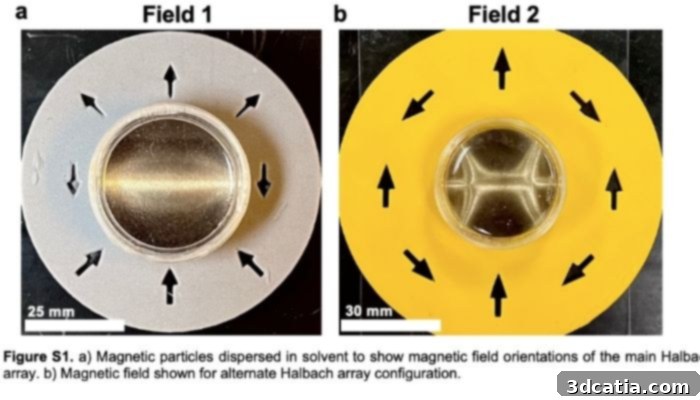
Bringing LCE technology to fruition involved surmounting considerable technical hurdles that have historically plagued the development of these advanced materials. Roach and his dedicated team at Oregon State University did not work in isolation; their success is a testament to significant collaborative efforts with leading institutions. Key partnerships included esteemed researchers from Harvard University, the University of Colorado, and the renowned Sandia and Lawrence Livermore national laboratories. Through this interdisciplinary collaboration, they collectively devised an ingenious methodology to precisely align the liquid crystalline molecules within these elastomers. This crucial step is achieved by applying a magnetic field during the 3D printing process, specifically utilizing digital light processing (DLP) technology. This precise control over molecular orientation is what unlocks the predictable and intricate shape-changing capabilities of the LCEs.
DLP 3D printing, a highly precise additive manufacturing technique, works by selectively curing photopolymer resin layer by layer using a digital light projector. By integrating a magnetic field into this process, the team can control the orientation of the LCE molecules as each microscopic layer solidifies. This molecular alignment is paramount because it dictates the specific direction and magnitude of the shape change when the material is subsequently activated by a stimulus like heat. This sophisticated method allows for the fabrication of complex, multi-layered structures with unprecedented precision, enabling intricate movements and transformations. The ability to program specific regions of an object to respond differently to stimuli, creating sophisticated geometries that can dynamically alter their form and function in response to specific environmental cues, represents a monumental leap forward in the engineering of smart materials.
Beyond medical implants and soft robotics, the Oregon State University team has also diligently explored another vital application of LCEs: mechanical damping. This refers to the process of efficiently dissipating energy to reduce unwanted vibrations and oscillations in various systems. Effective mechanical damping is absolutely crucial for ensuring the longevity, safety, and performance of critical infrastructure and machinery across numerous industries. Systems ranging from massive bridges and high-speed automobiles to towering buildings are all susceptible to vibrations that can lead to structural fatigue, noise pollution, and diminished operational efficiency. Current damping solutions often involve heavy, passive components or complex active systems that add significant weight and complexity.
Leveraging another advanced 3D printing method, direct ink writing, the researchers have successfully fabricated innovative devices from LCEs specifically designed for superior energy dissipation. Direct ink writing is an extrusion-based additive manufacturing technique where a viscous “ink” is precisely deposited through a nozzle to build structures layer by layer. This method is particularly well-suited for creating intricate geometries and multi-material constructs, allowing the team to tailor the LCE damping devices for optimal performance. The inherent ability of LCEs to change shape and internal structure upon external stimuli means they can actively absorb and dissipate vibrational energy, offering a dynamic and highly efficient alternative to static damping materials. This versatility in addressing fundamental engineering challenges across multiple industries—from enhancing ride comfort in vehicles to bolstering seismic resistance in buildings—underscores the broad impact and adaptability of LCE technology, potentially making structures safer and more durable.
The foundational work conducted by Devin Roach and his esteemed colleagues at Oregon State University represents more than just a scientific breakthrough; it marks a significant stride towards a future where intelligent, programmable materials are not just conceptual but integral to advanced technological solutions. Their research has received substantial backing from prominent organizations, including the National Science Foundation and the U.S. Air Force Office of Scientific Research, affirming the strategic importance and high potential of LCE development. These funding bodies recognize the transformative power of materials that can inherently sense, respond, and adapt to their environment, predicting their crucial role in everything from next-generation aerospace components to self-healing structures and adaptive military technologies that can change their properties on demand.
The implications extend far beyond the immediate applications discussed. This research lays the groundwork for an entirely new paradigm in engineering and manufacturing, where materials are designed not just for their static properties but for their dynamic behaviors and inherent intelligence. This shift will enable groundbreaking innovations in personalized healthcare, where devices conform and respond to individual physiologies with unprecedented precision; in advanced manufacturing, leading to self-assembling or self-repairing products that reduce waste and extend lifespan; and in environmental sensing, with materials that can actively filter pollutants or harvest energy from subtle environmental changes. The ability to precisely control the shape-shifting characteristics of LCEs through advanced 3D printing techniques positions them at the forefront of the smart materials revolution, promising a future where engineered objects are far more interactive, adaptable, and efficient than ever before.
What are your thoughts on these innovative “soft motors” and the future of shape-changing 3D printed materials? We invite you to share your insights in a comment below or join the conversation on our Linkedin, Facebook, and Twitter pages! For the very latest updates in the world of 3D printing, don’t forget to sign up for our free weekly Newsletter here, delivered straight to your inbox. You can also explore all our cutting-edge videos and demonstrations on our YouTube channel.
*All Photo Credits: Oregon State University