

Selective Laser Sintering (SLS) 3D Printing: The Ultimate Guide to Technology, Materials, and Applications
The landscape of 3D printing technologies is vast and ever-evolving, offering diverse solutions for countless industries and applications. Among these innovative methods, Selective Laser Sintering (SLS) stands out as a powerful and versatile additive manufacturing process. Known for its ability to produce highly functional, durable parts with complex geometries, SLS has transformed from a rapid prototyping tool into a critical technology for end-use production. But how exactly does this sophisticated technology operate? What range of materials can it utilize? And what makes it so impactful in today’s manufacturing world? This comprehensive guide will delve into the intricacies of SLS, exploring its mechanics, material capabilities, historical evolution, and its prominent role in modern industry.
The pioneering work for selective laser sintering, or SLS technologies, commenced in the 1980s. Dr. Carl Deckard and Dr. Joe Beaman at the University of Texas at Austin (USA) laid the fundamental groundwork for what would become powder bed fusion technologies. Their research aimed to overcome limitations of conventional manufacturing by enabling the creation of intricate parts directly from digital designs. These groundbreaking technologies harness the precision of a laser to fuse powdered materials, initially demonstrating capabilities across various substances, from polymers to metals. Specifically, when we refer to SLS, we are primarily discussing plastic polymers, predominantly nylon. However, the scope of materials has significantly expanded in recent years, pushing the boundaries of what SLS can achieve.
Indeed, Dr. Deckard and Dr. Beaman secured the foundational patent for Selective Laser Sintering, a testament to their innovative contributions. Their involvement further extended to the establishment of DTM Corporation, a key player in early additive manufacturing, which was later acquired by 3D Systems in 2001. This acquisition significantly consolidated SLS technology under a major industry leader. Since then, the sector has seen the emergence of numerous companies specializing in powder bed fusion techniques, such as Farsoon Technologies, which has carved out a niche specifically in SLS. It’s also noteworthy that a similar process to SLS was actually conceived and patented earlier, in 1979, by R.F. Housholder, though his invention never reached commercialization, highlighting the importance of the practical development and market introduction by Deckard and Beaman.
How Selective Laser Sintering (SLS) Works: The Core Process
Selective Laser Sintering distinguishes itself by enabling the creation of fully functional, robust objects without the need for intricate support structures or an intermediate binder. This inherent advantage simplifies post-processing and expands design freedom significantly. The journey from a digital concept to a physical part begins with precise design and meticulous execution.
The Design and Preparation Phase
Before any physical printing commences, the desired object is meticulously designed using sophisticated CAD (Computer-Aided Design) software. Popular choices include industry standards like CATIA, SolidWorks, ProEngineer, and Fusion 360, among others. These powerful tools allow engineers and designers to craft highly complex geometries, functional prototypes, and end-use parts with exceptional accuracy. Once the digital model is finalized, it is typically converted into a standardized numerical format, most commonly an STL (Stereolithography) file, or increasingly, 3MF (3D Manufacturing Format). This file then contains the geometric data, defining the object’s surfaces as a mesh of triangles, which the SLS printer interprets to build the part layer by layer.
The Layer-by-Layer Manufacturing Process
The heart of SLS technology lies in its iterative, layer-by-layer manufacturing process, which relies on a powerful CO2 laser to selectively fuse powdered polymer particles. Here’s a detailed breakdown of the steps:
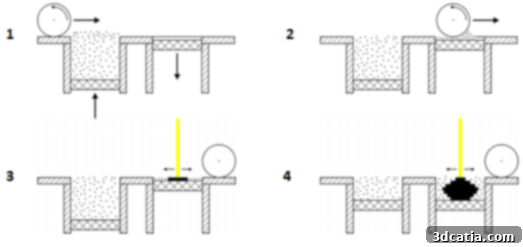
- Heating the Build Chamber: To initiate the process and prepare the 3D SLS printer, the powder hopper and the entire construction area are pre-heated to a temperature just below the melting point of the polymer powder. This crucial step minimizes thermal shock and warping, ensuring consistent material behavior during the sintering phase.
- Powder Deposition: A fresh, precisely controlled layer of polymer powder is then spread across the build platform, typically by a recoater blade or roller. The thickness of this layer is usually between 0.08 mm and 0.15 mm, depending on the material and desired resolution.
- Laser Sintering: A powerful CO2 laser then selectively scans the cross-section of the component, as defined by the CAD model. The laser’s energy heats the powdered polymer particles to their sintering temperature, causing them to fuse together without fully melting. This process solidifies the selected areas, forming a dense, strong layer of the part. The laser accurately traces the contours and fills the interior of the part’s current cross-section, ensuring the part is solidly constructed.
- Platform Lowering and Repetition: Once a layer is complete, the build platform precisely moves downward by one layer thickness. A new layer of fresh powder is then deposited on top, and the laser repeats the sintering process for the next cross-section. This cycle continues until the entire part or batch of parts is fully constructed within the powder bed.
Post-Processing: From Powder Bed to Finished Part
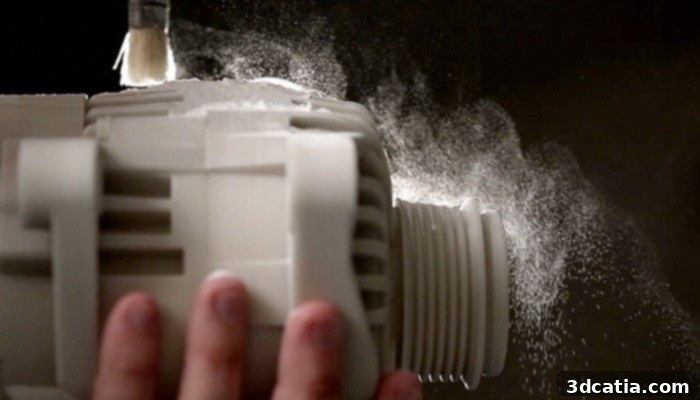
After the printing phase is complete, the parts remain fully encased within the unsintered powder bed. This powder acts as a natural support structure, allowing for the creation of incredibly complex geometries and nested parts without external supports. However, before the parts can be handled, the entire powder container and its contents must undergo a controlled cooling process. This cooling phase is critical to prevent warping and internal stresses, and to allow the material to crystallize properly. It can often be the longest step in the entire process, sometimes taking up to 12 hours or more, depending on the material and part size.
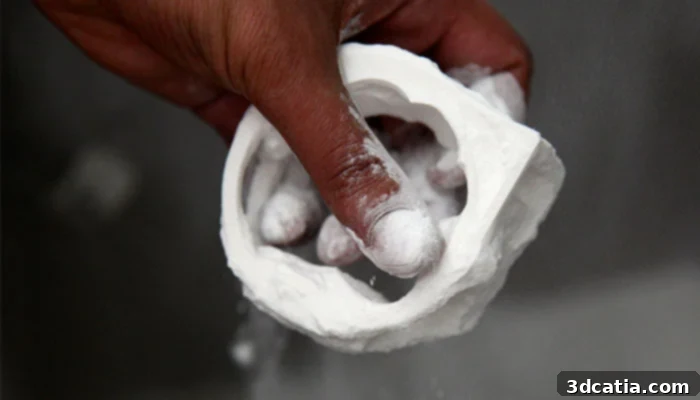
Subsequently, the parts are carefully excavated from the powder bed. The excess, unsintered powder is then removed, typically using compressed air, brushes, or other specialized cleaning media. A significant advantage of SLS is that up to 50-70% of the unused powder can often be collected, sieved, and mixed with fresh powder for subsequent builds, making the process highly material-efficient. After cleaning, the parts are ready for immediate use or further post-processing, such as dyeing, surface finishing (e.g., tumbling, media blasting), or coating, to achieve desired aesthetic or functional properties.
Advantages and Disadvantages of SLS 3D Printing
SLS technology offers a unique set of benefits that make it highly attractive for various industrial applications:
- No Support Structures: The surrounding unsintered powder acts as a natural support, allowing for highly complex, internal geometries and nested parts without the need for additional support materials. This significantly reduces post-processing time and material waste.
- Excellent Mechanical Properties: SLS parts are typically strong, durable, and possess isotropic mechanical properties, meaning their strength is consistent in all directions. This makes them suitable for functional prototypes and end-use parts.
- Material Efficiency: A high percentage of the unused powder can be recycled and reused, leading to less waste and lower material costs over time compared to some other additive manufacturing methods.
- Design Freedom: The absence of support structures provides unparalleled design freedom, allowing for intricate designs, interlocking parts, and hollow structures that would be challenging or impossible with traditional manufacturing.
- Batch Production: Multiple parts can be “nested” and printed simultaneously within a single build volume, optimizing machine usage and enhancing production efficiency.
However, SLS also comes with certain considerations:
- Surface Finish: Parts produced with SLS typically have a slightly rough, granular surface finish due to the nature of the sintering process. While often acceptable for functional parts, aesthetic applications may require additional post-processing.
- Material Cost: High-performance SLS powders can be more expensive than filaments or resins used in other 3D printing technologies.
- Machine Cost: Industrial SLS printers represent a significant capital investment, though desktop and benchtop versions are becoming more accessible.
- Cooling Time: The extended cooling period can add significant time to the overall production cycle, potentially impacting lead times for urgent projects.
Selective Laser Sintering Materials: From Prototyping to Production
While powder bed fusion technologies, in general, allow for manufacturing with a broad spectrum of materials, the SLS technique historically refers specifically to plastic polymers. The versatility of SLS comes from the diverse range of these polymers, each offering unique mechanical and thermal properties tailored for specific applications. The most ubiquitous material in SLS is polyamide PA 12, more commonly known as Nylon 12. Valued for its excellent balance of strength, flexibility, chemical resistance, and biocompatibility, Nylon 12 is a workhorse material, ideal for functional prototypes, jigs and fixtures, and even complex end-use components.
Beyond Nylon 12, the technology is capable of working with an expanding array of polymers, including Polypropylene (known for its ductility and resistance to chemicals), PA 11 (a bio-based polyamide offering enhanced toughness and impact resistance), Alumide (a blend of PA 12 powder and fine aluminum particles, providing stiffness and a metallic appearance), Carbonmide (PA 12 reinforced with carbon fibers for increased strength and rigidity), and PEBA (a flexible, rubber-like material perfect for athletic footwear or medical devices). Additionally, high-performance thermoplastics like PEEK (Polyether Ether Ketone) are increasingly being used, especially in demanding applications requiring exceptional temperature and chemical resistance, along with high strength-to-weight ratios.
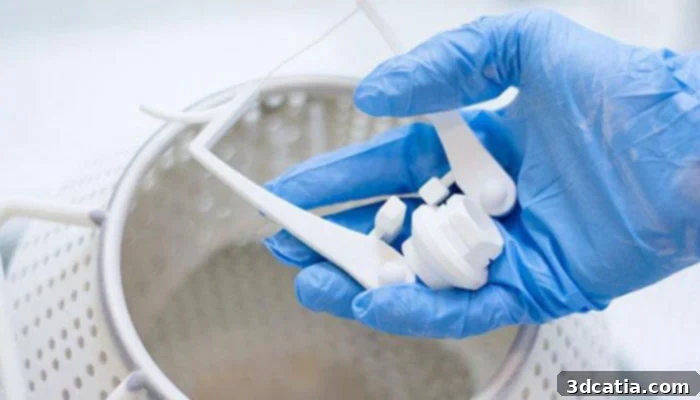
Furthermore, the material properties of SLS parts can be significantly enhanced through the incorporation of various additives. For instance, adding carbon fibers dramatically improves tensile strength and stiffness, making parts lighter yet stronger. Glass fibers increase rigidity and heat deflection temperature, while aluminum powders can impart a metallic look and feel, as well as improved thermal conductivity. These composite materials open up new possibilities for custom applications, allowing engineers to fine-tune the mechanical behavior of parts for specific performance requirements.
Historically, the primary application of SLS technology was focused on rapid prototyping due to its ability to quickly produce functional models for design validation. However, driven by continuous advancements in material science—leading to more resistant and high-performance polymers—and the decreasing prices of 3D SLS printers, this paradigm is rapidly shifting. Today, SLS is increasingly recognized and utilized for the direct manufacturing of final, end-use parts across numerous industries, signaling its maturity as a production technology rather than just a prototyping tool.
Key Players and Future Developments in SLS
SLS technology finds extensive application across a multitude of fields, from industrial design, automotive, and aerospace sectors to medical devices and engineering industries. For many years, the professional and industrial SLS 3D printer market was dominated by a few key manufacturers, notably 3D Systems and EOS GmbH. These companies focused on developing robust, high-throughput machines tailored for demanding industrial environments and complex production tasks.
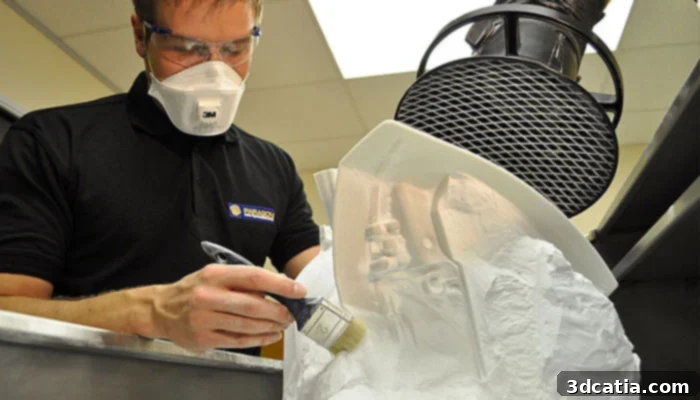
Photo Credits: Paragon Rapid Technologies Limited
EOS GmbH, in particular, was a pioneer in including SLS machines capable of processing high-performance thermoplastics such as PEEK, opening doors for SLS in highly specialized applications requiring extreme durability and heat resistance. A significant turning point for the industry occurred around 2014 when several core patents related to SLS technology expired. This event dramatically lowered the barriers to entry for new manufacturers, fostering an explosion of innovation and competition.
Following the patent expiration, a wave of new players emerged, introducing more accessible and often more affordable SLS systems. This includes innovative startups like Natural Robots with its VIT machine, which aimed to bring SLS capabilities to a broader market, and well-established brands like Formlabs, known for its resin-based printers, which introduced its groundbreaking Fuse 1. The Fuse 1, in particular, represented a significant step towards democratizing SLS technology, making industrial-quality SLS printing accessible to small-to-medium businesses and even advanced prosumers. This ongoing trend is actively bringing these powerful additive manufacturing technologies closer to a wider range of companies across various sectors, fueling further adoption and application development.
Future Trends in SLS Technology
The future of SLS printing looks promising, with several key trends shaping its evolution:
- Increased Accessibility: Continued development of more compact, user-friendly, and cost-effective SLS machines will further democratize the technology, moving it beyond large industrial players.
- Expanded Material Portfolio: Research and development will continue to yield new polymer powders, including more bio-compatible, sustainable, and high-performance options, alongside advancements in multi-material SLS.
- Enhanced Automation and Workflow: Integration with robotics, AI-driven process optimization, and improved post-processing automation will streamline the SLS workflow, reducing manual labor and increasing efficiency.
- Improved Surface Finish: Ongoing innovations in laser scanning strategies and post-processing techniques aim to produce SLS parts with smoother surface finishes directly from the printer, reducing the need for extensive secondary operations.
- Hybrid Systems: Exploration of hybrid manufacturing systems combining SLS with other technologies or traditional manufacturing processes to leverage the strengths of each.
Applications of Selective Laser Sintering
The unique capabilities of SLS make it invaluable across diverse industries:
- Automotive Industry: From functional prototypes for engine components to custom interior parts, air ducts, and complex jigs and fixtures on the production line, SLS offers robust solutions for automotive design and manufacturing.
- Aerospace Industry: Lightweight, high-strength parts capable of withstanding extreme conditions are critical in aerospace. SLS is used for air ducts, drone components, and complex assemblies where weight reduction and material performance are paramount.
- Medical and Dental: Biocompatible nylon materials are ideal for creating custom prosthetics, orthotics, surgical guides, and anatomical models. Its ability to create complex internal structures is particularly beneficial for patient-specific devices.
- Consumer Goods: SLS enables the production of durable and aesthetically pleasing consumer products, including eyewear, sports equipment components, and customized electronic enclosures.
- Jigs, Fixtures, and Tooling: Manufacturers leverage SLS to quickly produce custom manufacturing aids, saving significant time and cost compared to traditional machining methods. These tools are lightweight yet strong enough for demanding industrial use.
- Robotics and Automation: The ability to produce complex, lightweight components quickly makes SLS ideal for creating custom parts for robotics, such as grippers, structural elements, and sensor housings.
Did you find this comprehensive guide to Selective Laser Sintering interesting and informative? We’d love to hear your thoughts! Let us know in a comment below or connect with us on our Facebook and Twitter pages! Don’t forget to sign up for our free weekly Newsletter to receive all the latest news and insights in the world of 3D printing directly to your inbox!
Cover Photo Credits: EOS