
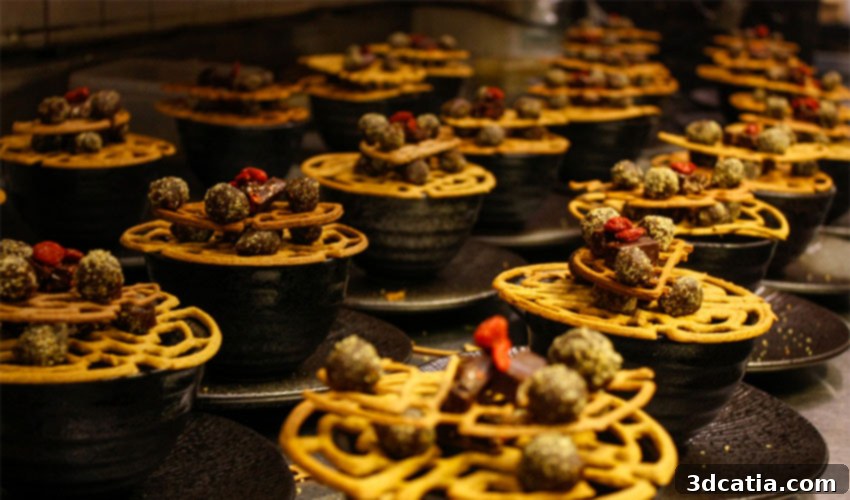
Upprinting Food: Pioneering Sustainable 3D Printed Dishes from Food Waste for a Circular Future
In a world grappling with escalating environmental concerns and the pressing issue of food waste, innovative solutions are more critical than ever. Emerging from the Netherlands, Upprinting Food stands at the forefront of this movement, a pioneering startup dedicated to transforming discarded food into visually appealing and delicious 3D printed dishes. This visionary enterprise, co-founded by Elzelinde van Doleweerd and Vita Broeken, is built on the core principle of a circular economy, meticulously giving a valuable second life to food that, despite being perfectly edible, would otherwise be relegated to waste bins. Their unique approach not only addresses food scarcity and sustainability but also introduces a novel culinary experience, creating durable, nutritious, and uniquely designed food items through advanced 3D technologies. To delve deeper into the innovative projects and the inspiring vision driving this young company, we had the distinct pleasure of speaking with Vita Broeken, co-founder of Upprinting Food, who generously shared her insights on building a more sustainable world through the creative application of additive manufacturing.
3DN: How did you discover 3D printing technologies, and what initially captivated your interest in this field?
My initial encounter with 3D printing technologies occurred during my studies in industrial design. Our curriculum was structured to introduce us to a wide array of manufacturing techniques, both traditional and cutting-edge. It quickly became apparent that 3D printing, or additive manufacturing as it’s often referred to, was a game-changer. Many of my peers and I rapidly adopted 3D printers for the swift creation of prototypes, allowing us to iterate designs with unprecedented speed and efficiency. The ability to transform a digital concept into a tangible object almost instantaneously was incredibly powerful and, I must admit, we were bitten pretty quickly by the potential of this technology. We saw how it could revolutionize product development, offering unparalleled flexibility and customization options. This early exposure sparked a deep curiosity about how these technologies could be applied beyond conventional prototyping, particularly in areas where custom, complex structures were desirable, setting the stage for future exploration into food-related applications.
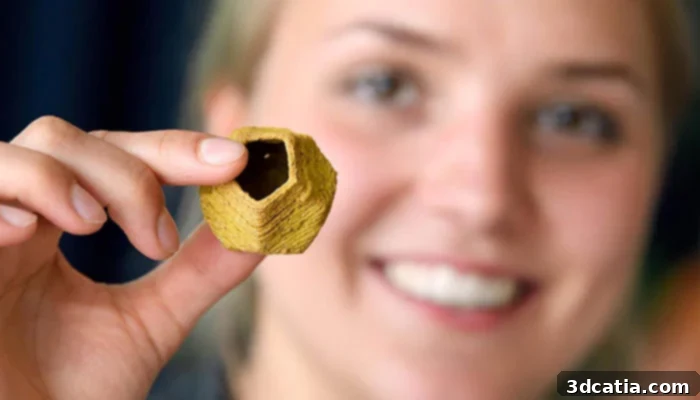
3DN: What was the genesis of Upprinting Food? Could you elaborate on how this innovative idea came to fruition?
The concept for Upprinting Food truly began to take shape during my partner Elzelinde’s final year project. She possesses a unique and powerful combination of expertise, holding a degree in industrial design, similar to myself, but also specializing in food technology from the prestigious University of Wageningen. This dual background was absolutely crucial. For her graduation project, Elzelinde brilliantly merged her profound knowledge and unwavering passion for both food and sustainability. Her goal was to devise a creative and effective method to address the pervasive problem of food waste, particularly through innovative culinary approaches. It was a project that deeply resonated with my own aspirations; I was keenly focused on tackling food waste myself, and the opportunity to integrate this passion with the transformative capabilities of 3D printing presented itself as a perfect synergy. The idea was incredibly well-received right from the start. We were honored to be invited to present Upprinting Food at prominent international events such as the Beijing Design Week and the Dutch Design Week in the Netherlands. The overwhelming positive feedback and the clear demonstration of market interest and public engagement solidified our conviction. It was at this juncture that we made the definitive decision to formalize our efforts, transitioning from a compelling academic project into a fully-fledged company dedicated to sustainable 3D printed food solutions.
3DN: Can you explain in detail the fascinating process you use to prepare and process various food materials and waste for 3D printing?
Our process begins with the critical first step of sourcing our raw materials, which are entirely comprised of food items destined for disposal. When we organize an event or embark on a new production cycle, our team makes direct visits to local supermarkets and bakeries. There, we collect perfectly edible products that can no longer be sold through conventional retail channels. This often includes items like surplus bread that was baked on-site but didn’t sell, or fruits and vegetables that are considered ‘too ripe,’ slightly damaged, or simply aesthetically imperfect according to retail standards, even though their nutritional value and taste remain perfectly intact. These are good products that would otherwise contribute to the significant global problem of food waste. Once collected, the transformation process begins. For items like bread, we undertake a complete dehydration process. This is crucial for several reasons: it extends the shelf life of the bread, concentrates its flavors, and prepares it for milling. After dehydration, the dried bread is ground into a fine, flour-like powder. Simultaneously, we prepare the fruits and vegetables. These are thoroughly washed, any truly unusable parts are removed, and then they are crushed or blended into a purée. The next innovative step involves combining these prepared components. The fruit and vegetable purée is carefully mixed with the bread powder. This combination creates a homogeneous, viscous mixture – essentially, a specialized food purée. This purée forms the base material ready for extrusion in our 3D printer. To enhance the flavor profiles and culinary appeal, we then incorporate various herbs, spices, or other natural seasonings, meticulously chosen to complement the specific ingredients and the desired recipe. This results in a versatile and flavorful purée that is not only sustainable but also highly customizable, allowing us to create a diverse range of gourmet 3D printed dishes.
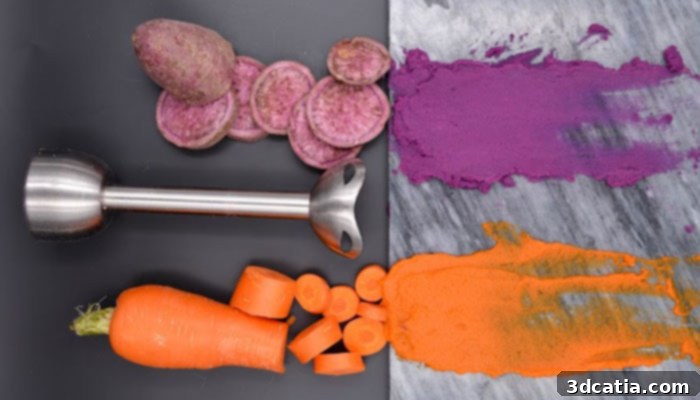
Different ingredients are mixed to obtain the purée which will be extruded | Credits: Upprinting Food
3DN: Could you explain the specific 3D technology Upprinting Food utilizes and detail its operational mechanics for food printing?
At Upprinting Food, we leverage a specialized form of extrusion technology, conceptually similar to the widely recognized Fused Deposition Modeling (FDM) technology, but uniquely adapted for food materials. Instead of using a heated nozzle to melt and extrude plastic filament, we replace the standard FDM extruder with a syringe mechanism fitted with a precision nozzle. This syringe is meticulously filled with the food purée we create from residual food – a blend of dehydrated bread powder and crushed fruits and vegetables. The operational mechanics are relatively straightforward yet highly effective. A carefully calibrated motor applies controlled pressure to the plunger of the syringe. This consistent pressure forces the food purée through the fine aperture of the nozzle, extruding it in precise layers onto a build platform. The 3D printer’s sophisticated software translates digital designs, created using computer-aided design (CAD) software, into a series of printable instructions. These instructions guide the movement of the print head, allowing us to deposit the purée layer by layer, building up complex and intricate three-dimensional shapes. The beauty of this approach lies in its ability to create aesthetically pleasing and architecturally unique designs that would be impossible to achieve through conventional cooking methods. This technology not only offers unparalleled design freedom, enabling the creation of bespoke culinary forms, but also ensures precise portion control and minimal waste during the printing process itself, further enhancing our sustainable mission.
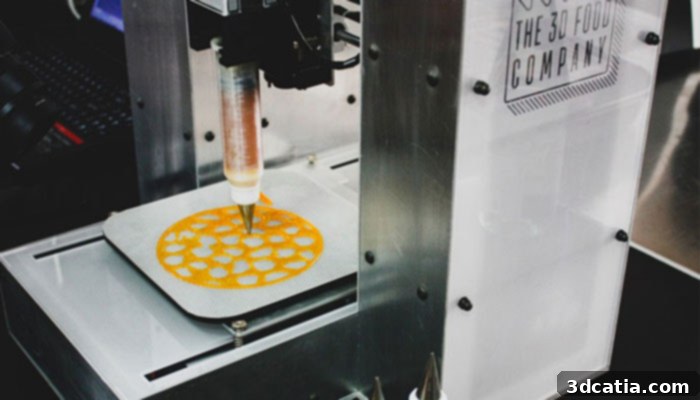
The 3D printer used in the project | Credits: Upprinting Food
3DN: From your perspective, what significant role does additive manufacturing play in advancing the development of sustainable projects across various industries?
In my opinion, additive manufacturing, more commonly known as 3D printing, plays an absolutely pivotal and transformative role in the advancement of sustainable projects across a multitude of industries. Its fundamental strength lies in its ability to transform materials that might otherwise be considered “less valuable” or even waste into “unique and invaluable products.” This capability is at the very heart of circular economy principles. Instead of a linear ‘take-make-dispose’ model, 3D printing enables us to rethink material life cycles, turning waste streams into valuable resources. The 3D printer itself is more than just a tool; it’s a technology of the future that unlocks possibilities previously unattainable. It empowers us to create objects with intricate geometries and customized features that would be impossible or prohibitively expensive to produce using traditional manufacturing techniques. This isn’t just about making complex shapes; it’s about making them efficiently, with minimal material waste during the production process. The very nature of additive manufacturing means building objects layer by layer, only using the material that is absolutely necessary, which significantly reduces material consumption compared to subtractive methods that cut away from a larger block. Beyond material efficiency, 3D printing fosters localized production, reducing the need for extensive global supply chains and associated carbon emissions. It facilitates on-demand manufacturing, minimizing overproduction and inventory waste. This technology represents an extraordinary avenue for innovation, allowing us to creatively transform a vast array of materials—be it food waste, recycled plastics, metals, or even organic compounds—into entirely new, functional, and often beautiful creations. It shifts our perspective from viewing waste as an end-of-life product to seeing it as a potential beginning for something new and sustainable, driving forward a greener, more resource-efficient future.
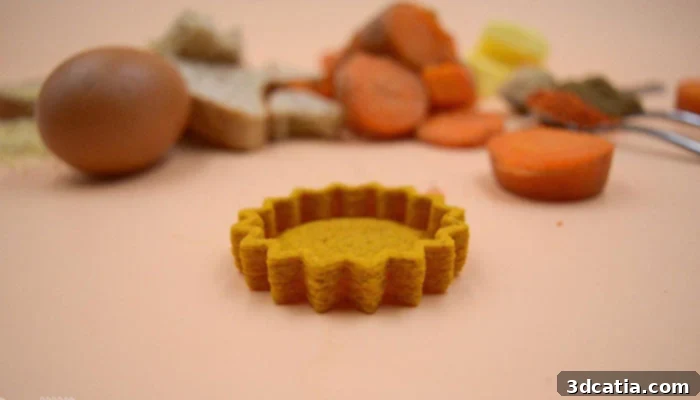
Photo Credits: Upprinting Food
3DN: Do you have any final thoughts or words of encouragement for our readers regarding sustainable practices and the future of food?
Absolutely! My primary message to all your readers is a resounding one: Don’t throw away the food! Food waste is a global crisis with immense environmental and economic implications, and each of us has a role to play in mitigating it. We encourage everyone to be more mindful of the food they buy, prepare, and consume, seeking creative ways to utilize leftovers and imperfect produce. Furthermore, I urge everyone to take a serious and imaginative look at the incredible potential of 3D printing technology. With its truly infinite possibilities, it’s not just a tool for industrial manufacturing; it’s a powerful enabler for innovation in areas like sustainable food production, personalized nutrition, and even artistic culinary expression. Technologies like 3D printing are democratizing creation, allowing us to envision and realize solutions that were once confined to the realm of science fiction. We believe in a future where food is valued, waste is minimized, and sustainability is integrated into every step of the supply chain. We invite you to explore more about our mission, our innovative projects, and how we are turning discarded food into delectable and visually stunning dishes on our official website. Find more information on Upprinting Food HERE. By embracing new technologies and adopting more conscious habits, we can collectively build a more sustainable and flavorful future for everyone. Thank you for your interest and support in our journey!
What are your thoughts on Upprinting Food’s groundbreaking work in sustainable 3D printed food? We’d love to hear your opinions and insights! Share your comments below or engage with us on our social media platforms – you can find us on Facebook and Twitter. And if you’re keen to stay updated with the very latest news, innovations, and developments in the world of 3D printing, don’t forget to sign up for our free weekly Newsletter here, delivering the most relevant stories straight to your inbox!