
Revolutionizing Industries: Latest Innovations and Growth in Additive Manufacturing
This week, our #3DExpress series dives into the most impactful developments shaping the additive manufacturing landscape. From pioneering ventures in high-stakes sectors like motorsports to groundbreaking material innovations and strategic market expansions, the 3D printing industry continues to demonstrate remarkable dynamism. We’ll explore ADDiTEC’s ambitious entry into automotive racing, EOS’s significant new copper-nickel alloy, and Phrozen’s debut FDM printer. Furthermore, we’ll examine Lithoz’s strategic expansion into the Japanese market for ceramic 3D printing and Materialise’s robust financial performance in a challenging year. These stories collectively highlight the continuous evolution and growing maturity of additive manufacturing across diverse applications and global markets.
ADDiTEC Accelerates into Motorsports with ADDiTEC Racing
ADDiTEC, a recognized leader in advanced additive manufacturing solutions, is making significant strides in expanding its market reach, particularly within the demanding automotive sector. The company, renowned for its innovative Liquid Metal Jetting (LMJ) technology and the robust Laser Directed Energy Deposition (LDED) process, has a proven track record of producing high-performance components for a diverse array of industries. This week marks a pivotal moment as ADDiTEC officially announced its strategic foray into the exhilarating world of motorsports, establishing a dedicated division named ADDiTEC Racing.
This move is more than just an expansion; it’s a strategic showcase of additive manufacturing’s capabilities under extreme conditions. Motorsports, with its relentless pursuit of marginal gains, lightweighting, and rapid iteration cycles, presents an ideal environment to demonstrate the unparalleled advantages of 3D printing. By integrating its cutting-edge technologies directly into the competitive racing arena, ADDiTEC aims to validate and accelerate the adoption of its solutions across the broader automotive industry.
Brian Matthews, CEO of ADDiTEC, underscored the company’s vision, stating, “We believe that ADDiTEC Racing will not only showcase our technological prowess but also serve as a catalyst for accelerating our presence in the automotive sector. By competing at the highest level of motorsports and demonstrating the capabilities of our Additive Manufacturing solutions, we aim to raise awareness and drive adoption of our technology within the industry.” This initiative will involve live demonstrations of 3D-printed automotive parts during upcoming races, providing tangible proof of concept. The inaugural event for ADDiTEC Racing is scheduled for Saturday, February 24th, at the iconic Homestead Miami Speedway, promising an exciting start to this innovative venture. This strategic partnership highlights how additive manufacturing can revolutionize design, production, and performance in high-stakes environments, offering customized, high-strength, and often lighter components critical for competitive advantage in racing.
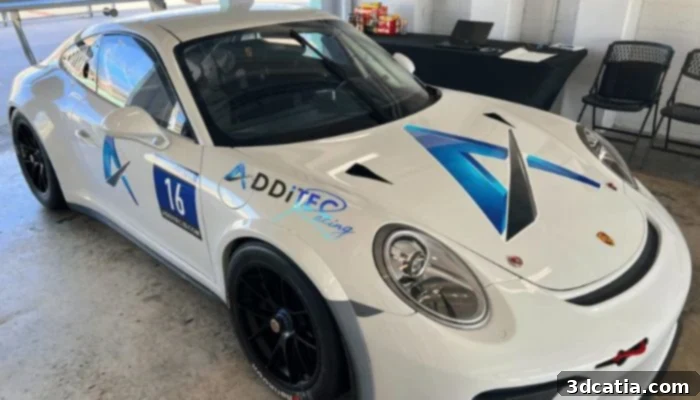
Photo Credits: ADDiTEC
EOS Unveils High-Performance Copper-Nickel Alloy for Submarine Industry
Leading industrial 3D printing technology provider EOS has announced a significant material breakthrough with the introduction of its new Copper Alloy CuNi30. Developed in close collaboration with industry partners Phillips Federal and Austal USA, this cupronickel alloy is specifically engineered for critical applications within the demanding submarine industrial base. Designed for use with the Laser Beam Powder Bed Fusion (LBPF) process, this material innovation addresses long-standing challenges in manufacturing complex, high-performance components for naval applications.
The Copper Alloy CuNi30 stands out for its exceptional mechanical properties, which are crucial for the integrity and longevity of submarine components. It boasts an impressive tensile strength of 510 MPa and an elongation capacity exceeding 20%, indicating its robustness and ductility. Beyond its structural integrity, the alloy exhibits superior resistance to corrosion in harsh saltwater environments, a non-negotiable requirement for naval operations. Furthermore, it rigorously complies with the stringent UNS96400 specifications outlined in ASTM B369-09, ensuring its suitability for high-standard defense applications.
This innovative material development from EOS is poised to revolutionize the supply chain for the submarine industry. Traditional manufacturing methods, particularly casting, often encounter significant supply problems, leading to delays and inefficiencies. By enabling the additive manufacturing of these critical components, Copper Alloy CuNi30 offers a viable solution to enhance supply chain resilience, accelerate production timelines, and reduce dependence on conventional, often bottlenecked, fabrication processes. The material’s attractive price/performance ratio is expected to facilitate its rapid integration into production workflows, offering a more efficient and cost-effective alternative for critical defense manufacturing. This advancement underscores the growing role of additive manufacturing in providing robust solutions for specialized and high-stakes sectors.
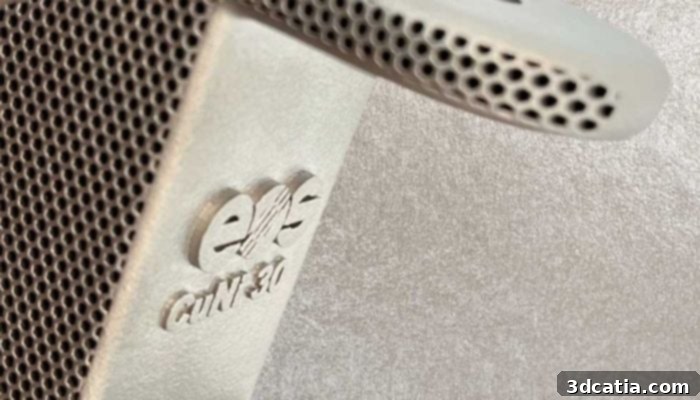
Photo Credits: EOS
Lithoz Establishes Japanese Technology Network for Advanced Ceramic 3D Printing
Lithoz, the Austrian pioneer in high-performance ceramic additive manufacturing, has announced a significant strategic initiative to expand the global reach of its proprietary Lithography-based Ceramic Manufacturing (LCM) technology. Recognizing the immense potential of the Asian market, particularly Japan, Lithoz has established a dedicated Japanese technology network aimed at accelerating the adoption and advancement of high-performance ceramic 3D printing in the region.
This newly formed network comprises three prominent Japanese companies: AS ONE, Mitsui Kinzoku, and Yugōkuen Ceramics. Each partner brings unique strengths and market insights, creating a robust collaborative ecosystem. Their collective efforts, powered by Lithoz’s cutting-edge LCM technology, will focus on fostering innovation, developing new applications, and providing localized support for ceramic additive manufacturing solutions across diverse industrial sectors in Japan, including medical, aerospace, and electronics.
The primary objective of this strategic alliance is multi-faceted. Firstly, it aims to vigorously promote and advance the capabilities of 3D printing with high-performance ceramics throughout Japan, educating the market on the benefits of producing intricate and durable ceramic parts. Secondly, the network is designed to significantly strengthen and support the burgeoning local 3D printing community. By enabling its Japanese partners to invest in and utilize a comprehensive portfolio of ceramic printing technologies, Lithoz is not only expanding its own footprint but also empowering local businesses to innovate and grow, ultimately contributing to a more resilient and technologically advanced manufacturing landscape in Japan. This strategic move underscores Lithoz’s commitment to global leadership in ceramic additive manufacturing and its foresight in tapping into key growth markets.
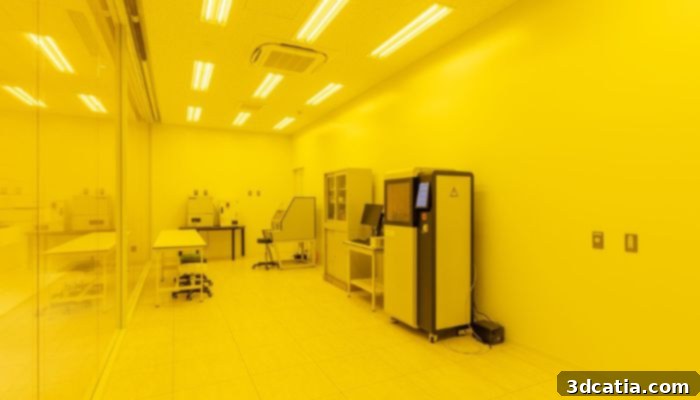
Photo Credits: Lithoz
Materialise Reports Strong 10.4% Growth in Challenging 2023 Fiscal Year
The year 2023 presented a complex and often challenging economic environment for many players within the additive manufacturing sector, with fluctuating market demands and geopolitical uncertainties impacting growth trajectories. Despite these headwinds, Materialise, a global leader in medical and industrial 3D printing software and services, has demonstrated remarkable resilience and strategic strength, concluding its financial year with impressive results that underscore its robust business model and diversified operations.
This week, Materialise unveiled its comprehensive financial report for the fiscal year 2023, revealing total sales reaching a significant 256.1 million euros. This figure represents a substantial 10.4% increase compared to the previous year, a testament to the company’s ability to not only navigate but thrive in a demanding market. The fourth quarter alone contributed 65.3 million euros to this total, marking a solid 4.1% growth over the same period in 2022 and indicating sustained momentum as the year closed.
A deeper dive into the figures highlights the key drivers of Materialise’s success. Its Materialise Medical segment proved to be a powerhouse, generating 101.4 million euros and significantly contributing to the overall positive performance. This segment’s strong showing reflects the increasing integration of 3D printing solutions in healthcare, from personalized implants and surgical guides to advanced anatomical models. Furthermore, the Materialise Software segment also posted healthy growth, increasing its sales by 1.7% year-on-year to 44.4 million euros. This growth in software revenue is particularly important as it signifies the expanding adoption of Materialise’s essential tools for design, data preparation, and manufacturing process optimization across the broader additive manufacturing ecosystem. These results collectively reinforce Materialise’s position as a stable and growing force, showcasing the enduring value of its integrated approach to 3D printing innovation.
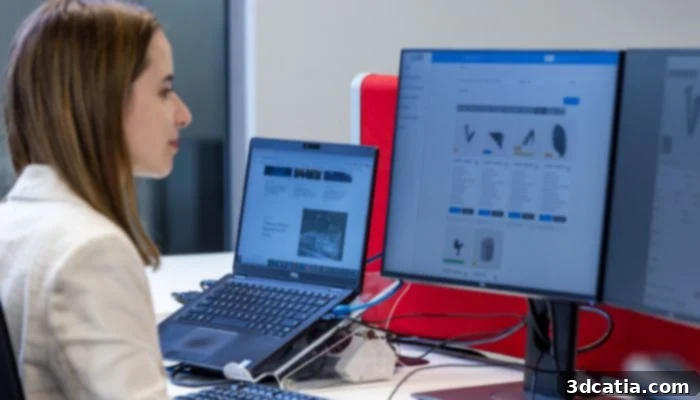
Photo Credits: Materialise
Phrozen Enters FDM Market with High-Speed, Multicolor Arco 3D Printer
Phrozen, a well-established Taiwanese 3D printing company predominantly known for its high-quality resin (SLA/LCD) printers, has made a significant leap into new territory with the launch of its first-ever FDM (Fused Deposition Modeling) printer, the Phrozen Arco. This strategic expansion signals Phrozen’s intent to diversify its product portfolio and cater to a broader spectrum of 3D printing enthusiasts and professionals. The Phrozen Arco is designed to challenge existing desktop FDM printers by combining remarkable speed with advanced multicolor capabilities, setting a new benchmark in its class.
The Phrozen Arco immediately impresses with its extraordinary maximum print speed of 600 mm/s, positioning it among the fastest desktop FDM machines currently available. Such high speeds are typically associated with a compromise on print quality, but Phrozen addresses this with a patented direct extruder system. This innovative extruder ensures not only rapid material deposition but also maintains exceptional accuracy and reliability, crucial for producing intricate and dimensionally precise parts. This balance of speed and precision makes the Arco a compelling option for both rapid prototyping and final-part production.
Beyond sheer performance, creativity and user-friendliness are at the core of the Phrozen Arco’s design. The printer comes equipped with the revolutionary Chroma kit, a feature that unlocks a new dimension of design possibilities by allowing users to print with up to 16 different colors simultaneously. This automatic filament changeover system streamlines the multi-color printing process, making complex, vibrant designs more accessible than ever before. With a generous build volume of 300 x 300 x 300 mm, the Arco offers ample space for larger projects. Furthermore, the integration of Pentashield technology effectively minimizes operational noise, enhancing the overall user experience. These combined features make the Phrozen Arco an ideal choice for creative DIYers looking to bring their imaginative concepts to life, as well as for professionals seeking an efficient and versatile tool for rapid prototyping and functional part creation. Phrozen’s entry into the FDM market with such a feature-rich printer suggests a promising future for accessible, high-performance additive manufacturing.
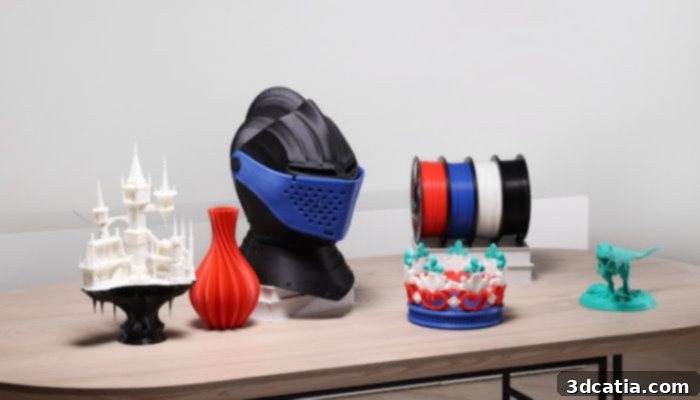
Photo Credits: Phrozen
The additive manufacturing sector continues to be a hotbed of innovation, with companies pushing boundaries in materials, applications, and market strategies. Whether it’s the high-octane world of motorsports, the critical demands of the defense industry, the precision of ceramic printing, or the accessibility of desktop FDM, 3D printing is consistently demonstrating its transformative potential. We are eager to hear your thoughts on these significant developments.
Which of these groundbreaking stories resonated most with you this week? What are your impressions of ADDiTEC’s bold venture into leveraging 3D printing for automotive excellence in motorsports? Share your insights and perspectives by leaving a comment below or engaging with us on our social media platforms. Join the conversation on LinkedIn, Facebook, and Twitter to discuss the future of additive manufacturing. And to ensure you never miss out on the latest advancements, be sure to sign up for our free weekly newsletter here, delivering the most crucial 3D printing news directly to your inbox. For more in-depth visual content, explore all our videos on our dedicated YouTube channel.