
Enhancing Athletic Performance and Injury Prevention: The Rise of 3D Printed Compression Sleeves like Safe Landing Garment (SLG)
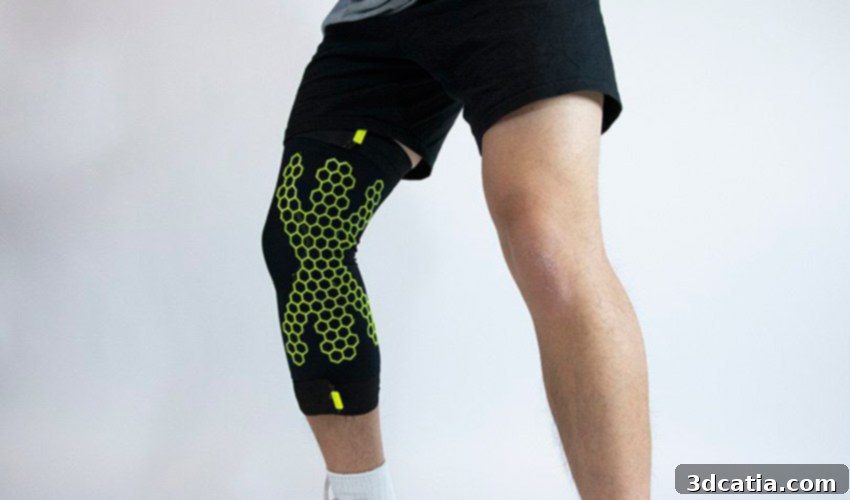
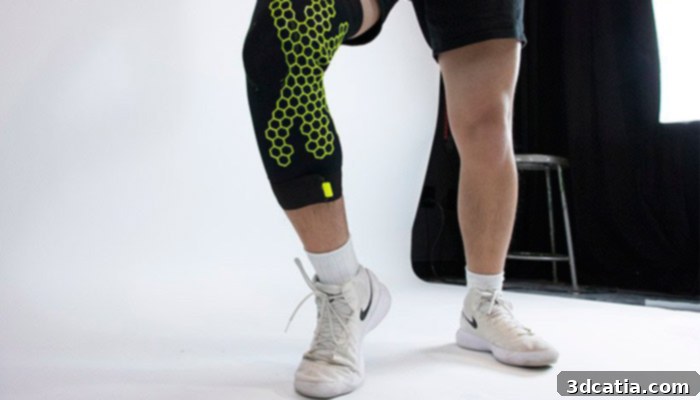
In the dynamic world of sports, where every millisecond and every movement counts, innovation plays a pivotal role in pushing the boundaries of human performance and ensuring athlete safety. One such groundbreaking innovation comes from designer Hubert Chen, who has conceptualized and developed a revolutionary compression sleeve known as the Safe Landing Garment (SLG). This advanced accessory is meticulously designed to be worn around an athlete’s knee, offering unparalleled support, facilitating safer landings, and significantly mitigating the risk of debilitating injuries. What truly sets the SLG apart is its ingenious integration of advanced 3D printing technologies. This allows each sleeve to be precisely tailored to the individual athlete’s unique morphology, specific biomechanical needs, and performance goals, thereby elevating both their comfort and their on-field capabilities. By leveraging the power of additive manufacturing, Chen’s SLG represents a significant leap forward in personalized sports equipment, promising a future where athletic gear is not just protective, but truly performance-enhancing.
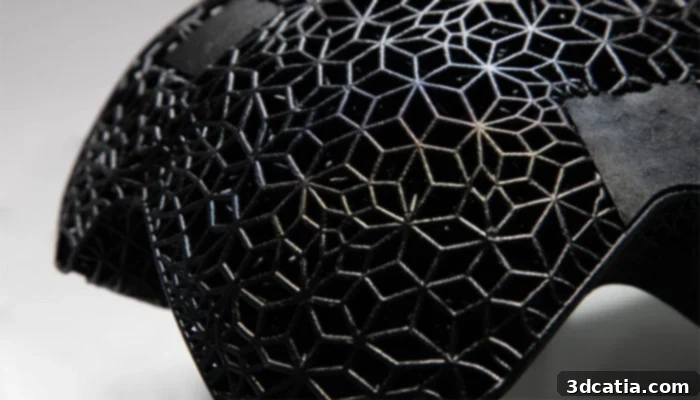
The pervasive influence of 3D printing, also known as additive manufacturing, extends far beyond its initial industrial applications, now permeating nearly every sector of human activity. From high-tech aerospace and medical fields to the nuances of daily life in homes and offices, its versatility is reshaping production and design paradigms. Critically, 3D printing has made an indelible mark on the sports industry, revolutionizing how athletic equipment and accessories are conceived, manufactured, and utilized. Its core strength lies in its ability to facilitate unparalleled customization, allowing for the creation of gear that perfectly matches an athlete’s physical characteristics, movement patterns, and performance demands. This level of personalization translates directly into enhanced performance, improved comfort, and a significant edge for athletes across all levels, from amateur enthusiasts to elite professionals. We’ve witnessed numerous examples of this transformative power; remember the discussion surrounding Riddell’s customized helmet liners? These were initially developed for select NFL players during the 2018 season and later made commercially available on a limited basis in 2019. Riddell utilized Carbon L1 Digital Light Synthesis Technology, employing a highly damping elastomer material to form intricate lattice structures, thereby offering superior impact protection and a bespoke fit. This pioneering approach to helmet design underscores the immense potential of 3D printing in creating safer, more effective protective equipment in sports. Beyond helmets, 3D printing is also making strides in personalized footwear, custom prosthetics for para-athletes, and even lightweight components for racing bicycles, proving its capability to tailor solutions for diverse athletic needs.
Despite significant advancements in training methodologies and protective gear, a disheartening number of athletes continue to suffer debilitating injuries, often as a direct consequence of inadequate landing techniques or pre-existing weaknesses in their ligaments and joints. The mechanics of landing after a jump are particularly strenuous, with athletes potentially experiencing impact forces equivalent to up to seven times their own body weight. Such immense forces, repeatedly absorbed by the knees, ankles, and hips, place incredible stress on the musculoskeletal system. While conventional knee pads and braces exist to mitigate some of this impact, they often present a “one-size-fits-all” solution that fundamentally fails to address the unique biomechanical requirements of each individual. Every athlete possesses distinct anatomical structures, movement patterns, and specific points of vulnerability. Relying on generic, off-the-shelf protective gear can, ironically, increase the risk of injury rather than prevent it. Ill-fitting pads might restrict natural movement, shift awkwardly during dynamic actions, or fail to provide targeted support where it’s most needed. This can lead to improper force distribution, ultimately increasing the likelihood of ligamentous tears, sprains, and chronic joint issues. It was this critical gap in personalized protection that motivated Hubert Chen to conceptualize and develop the Safe Landing Garment (SLG) – a solution designed from the ground up to offer truly bespoke support and protection, tailored to the athlete, not a general mold.
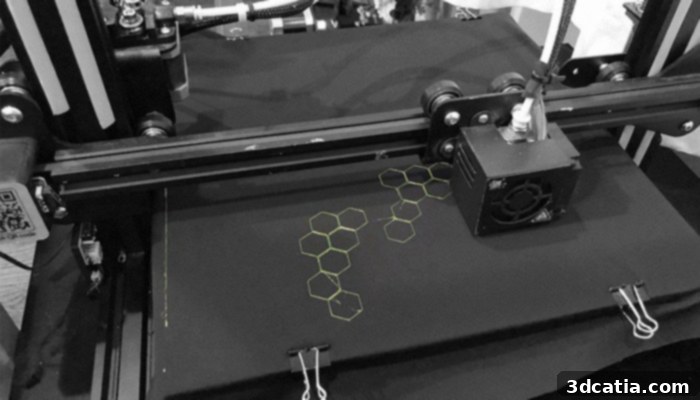
Printing of customisable hexagonal shapes for optimal shock absorption
To ensure the Safe Landing Garment was not merely an accessory but a scientifically sound protective device, Hubert Chen embarked on an intensive research and development journey. This involved extensive consultations with leading specialists in human anatomy, sports medicine, and biomechanics, particularly those focused on landing mechanisms and impact force distribution. This collaborative approach allowed him to understand the intricate dynamics of joint movement, muscle engagement, and stress points during athletic maneuvers. For the fabrication of these highly specialized compression sleeves, Chen harnessed the power of Fused Deposition Modeling (FDM) 3D printing technology. FDM was chosen for its versatility, cost-effectiveness, and ability to work with a wide range of flexible materials. Through FDM, he was able to print bespoke, multi-sized hexagonal patterns using a flexible thermoplastic polyurethane (TPU). TPU is an ideal material for this application due to its exceptional elasticity, durability, and superior shock-absorbing properties, which are crucial for attenuating impact forces. These precisely printed hexagonal structures, designed to deform and absorb energy upon impact, were then meticulously sewn onto a specialized compression fabric tape, forming the core functional element of the SLG. The ingenious design allows athletes not only to benefit from advanced protection but also to personalize their gear further by choosing specific patterns and colors, enabling them to maintain their individual style while engaging in high-intensity activities. While the detailed specifics of the printing and assembly process beyond this are proprietary, it is abundantly clear that achieving such a degree of customization, precise structural integration, and material property optimization would be exceedingly challenging, if not impossible, without the groundbreaking capabilities offered by modern 3D printing technologies. This method ensures that each SLG is not just a generic product, but a truly bespoke piece of performance gear, designed to protect and enhance the unique capabilities of its wearer.
The implementation of the Safe Landing Garment brings a multitude of benefits to athletes across various disciplines. Primarily, the personalized fit and targeted support significantly reduce the risk of common sports injuries, particularly those affecting the knee during high-impact landings. By precisely distributing impact forces and providing reinforced stability to vulnerable ligaments, the SLG helps prevent tears, sprains, and long-term joint degradation. Beyond injury prevention, the ergonomic design and customized compression enhance proprioception – an athlete’s sense of body position and movement – leading to improved balance, coordination, and overall athletic control. This translates directly into optimized performance, as athletes can execute movements with greater confidence and efficiency. The use of flexible TPU and breathable fabric ensures maximum comfort, allowing for an unrestricted range of motion, which is critical during competitive sports. Furthermore, the aesthetic customization options, where athletes can choose patterns and colors, add a psychological advantage, boosting morale and individual expression. The broader implications of 3D printing in sports extend beyond single products like the SLG. This technology empowers designers and engineers to rapidly prototype, iterate, and mass-customize equipment at scales previously unimaginable. From running shoes with perfectly contoured midsoles to protective padding that precisely molds to an athlete’s body, additive manufacturing is creating a new paradigm for athletic gear. It promises a future where equipment evolves with the athlete, adapting to changing needs, improving performance metrics, and pushing the boundaries of what is possible in sports. The SLG is a shining example of how combining innovative design with cutting-edge manufacturing can lead to truly transformative solutions in athletic protection and performance enhancement.
Looking ahead, the Safe Landing Garment by Hubert Chen is more than just an innovative product; it is a testament to the transformative potential of 3D printing in sports medicine and athletic performance. This technology opens doors for future developments, including the integration of smart sensors within the compression sleeve. Such sensors could provide real-time biomechanical feedback to athletes and coaches, monitoring landing forces, joint angles, and muscle activation. This data could then be used for even more refined customization of future garments, targeted training adjustments, and immediate injury risk assessment. Imagine a future where an athlete’s gear communicates with them, guiding their movements for optimal safety and performance. Moreover, the iterative design capabilities of 3D printing mean that as our understanding of sports biomechanics evolves, so too can the SLG and similar products. New materials with enhanced damping or elastic properties can be rapidly integrated, and structural patterns can be optimized through computational design and machine learning algorithms. This continuous improvement cycle, inherent to additive manufacturing, ensures that athletic protection will become increasingly sophisticated and personalized. The success of projects like the SLG will undoubtedly inspire further investment and research into 3D printed solutions for various other athletic challenges, from concussion prevention in contact sports to rehabilitation aids that accelerate recovery. Ultimately, Hubert Chen’s Safe Landing Garment stands as a beacon, highlighting how personalized, scientifically-backed, and technologically advanced solutions can revolutionize athlete safety, prolong careers, and elevate sports performance to unprecedented levels, paving the way for a healthier and more competitive athletic landscape.
We’re eager to hear your thoughts on this innovative application of 3D printing in sports! Please share your insights and comments on our Facebook and Twitter pages. To stay completely up-to-date with all the latest advancements, breakthroughs, and news in the rapidly evolving world of 3D printing, don’t forget to sign up for our free weekly Newsletter. Get all the essential updates delivered directly to your inbox, ensuring you never miss out on the next big innovation in additive manufacturing!