
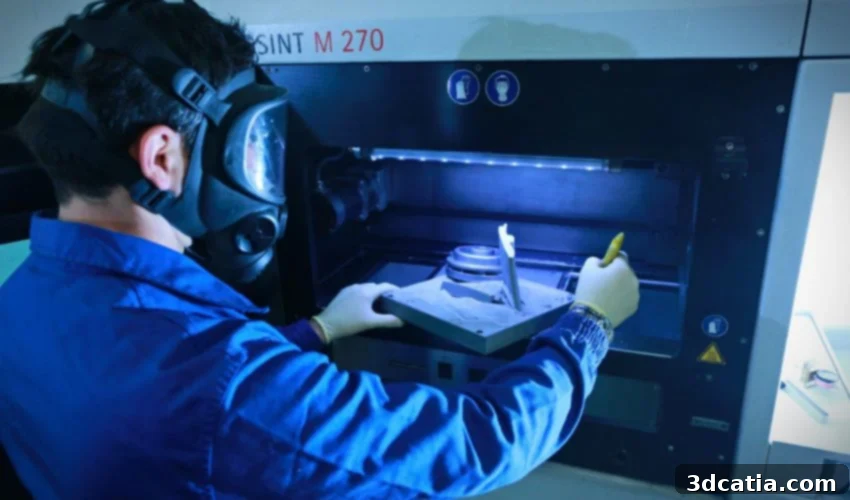
The Essential Guide to 3D Printing Safety: Protecting Yourself and Your Environment
As additive manufacturing continues to revolutionize industries and inspire innovation, an increasing number of companies are recognizing its immense benefits and actively integrating 3D printing into their future workflows. This widespread adoption is driven by significant advantages such as time and cost savings, unparalleled design freedom, and the ability to produce everything from rapid prototypes to highly complex, customized components. Beyond industrial applications, 3D printing has also captured the imagination of private individuals, with hobbyists and enthusiasts experimenting with diverse designs and materials from the comfort of their homes. While the prospect of acquiring a 3D printer and bringing imaginative creations to life is undoubtedly enticing, the reality of operating these machines often presents unforeseen challenges. Despite manufacturers frequently marketing 3D printers as “user-friendly,” even seasoned operators can encounter unexpected issues. Therefore, understanding and implementing proper safety precautions is paramount, not only for your well-being but also for the safety of those around you.
Irrespective of the material—be it filament, resin, or powder—or the process, such as those employing lasers or UV light, adhering to correct operational procedures is crucial to mitigate potential health hazards. When engaging in 3D printing, it is especially vital to maintain a constant awareness of the safety measures available to protect yourself and others. This comprehensive guide will illuminate the various potential risks associated with operating a 3D printer and detail the proactive steps you can take to foster a safe 3D printing environment and safeguard your health effectively.
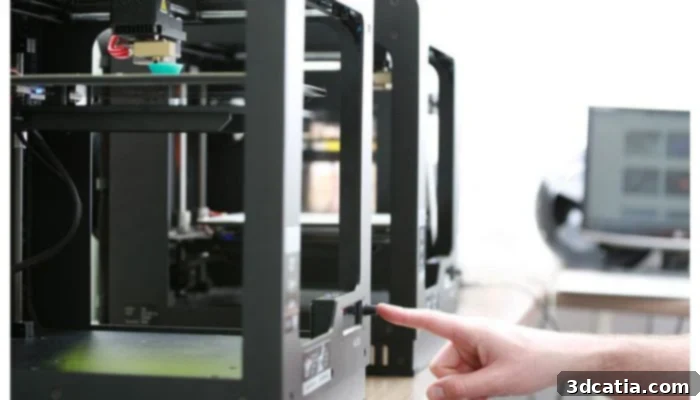
Prioritizing Safety Before You Print
Before embarking on your 3D printing journey, there are several foundational steps you can take to establish a secure setup. These initial precautions begin even before you purchase your machine and extend to preparing for your very first print. When selecting a 3D printer, examining its safety certifications is a wise first measure. In Europe, the familiar CE mark signifies that the printer adheres to the stringent requirements of applicable EU directives, authorizing its sale within member states. Similarly, the UKCA marking serves a comparable purpose in the United Kingdom, while in the United States, the UL certification (though voluntary rather than mandatory) indicates that a product has met specific safety and sustainability standards. While these markings do not guarantee absolute safety in every scenario, they strongly suggest that the 3D printers conform to certain essential safety and quality benchmarks, providing a crucial starting point for responsible usage.
Applying the STOP Principle to 3D Printing Safety
To systematically address potential hazards in 3D printing, it is highly beneficial to understand and apply the general safety rules encapsulated by the STOP principle. This established framework outlines a hierarchical sequence of protective measures, offering comprehensive guidance for both industrial employers and private individuals in selecting and prioritizing safety actions. Each letter in STOP represents a distinct category of protective intervention, ensuring a thorough approach to risk management.
The “S” in STOP stands for **Substitution**, emphasizing the critical importance of choosing less hazardous processes and materials whenever possible. This is arguably the most effective protective measure and should always be considered first. It dictates that any identified hazard should ideally be replaced by an inherently safer alternative, thereby minimizing the safety risk from the very outset of any operation. For instance, opting for less toxic filaments or resins when available falls under this principle.
The “T” denotes **Technical protective measures**, which involve implementing engineering controls to reduce exposure to hazards. This category encompasses three primary strategies crucial for 3D printing environments: the consideration of closed systems (such as printers with enclosed build chambers to contain emissions), the integration of efficient extraction systems to remove airborne contaminants, and ensuring robust room ventilation to dilute any remaining pollutants and introduce fresh air. These measures aim to control the hazard at its source or along its path to the user.
Following technical controls are the **Organizational measures**, represented by the “O.” These interventions should be implemented when substitution or technical solutions alone cannot fully achieve the desired level of protection. Organizational measures focus on modifying work practices and procedures. Examples in a 3D printing context include establishing clear rules for the shortest possible duration of stay near operating printers to reduce exposure, implementing a schedule for maintenance and cleaning, creating detailed operating and implementation instructions for safe machine use, and establishing designated printing zones.
Finally, “P” stands for **Personal protective measures**, which are the last line of defense in the STOP hierarchy. These measures become essential if previous interventions do not offer sufficient protection or are used by private individuals for irregular and occasional exposure. Personal protective equipment (PPE) includes items like safety glasses, gloves, and respiratory masks. However, the specific type of PPE required can vary significantly depending on the 3D printing process and materials being used. In the subsequent sections, we will delve into the potential risks associated with various processes and materials, detailing which specific technical, organizational, and personal measures you should adopt for each.
Ensuring Safety During the 3D Printing Process
The diverse array of 3D printing processes and the materials they utilize each present unique risks that demand careful consideration and awareness. In the following sections, we will highlight potential dangers and outline appropriate safety measures for 3D printing with filaments, liquid resins, powders, and other general hazards.
Safety Considerations When Using Filaments (FDM/FFF)
According to the Hubs Report 2023, fused deposition modeling (FDM), also known as fused filament fabrication (FFF), remains the most prevalent 3D printing process, with its machines increasingly found in households and offices. While 3D printing with filaments may seem innocuous at first glance, it is crucial to recognize and address the potential health risks associated with this widely adopted technology.
A seminal study conducted by the UL Research Institute, and published in their “Guide to the safe use of 3D printing for universities, UL 200B,” meticulously examined the emissions generated during FDM/FFF 3D printing. The researchers conclusively found that during the material extrusion process, small particles—specifically ultrafine particles (UFPs)—and volatile organic compounds (VOCs) are emitted. These UFPs and VOCs can behave like a gas, and when inhaled, they can penetrate deep into the lungs, potentially entering the bloodstream. This exposure can lead to irritation of the eyes, nose, and throat, and over prolonged periods or in poorly ventilated spaces, it can pose a significant risk to human health, especially for individuals operating the printer in close proximity without adequate ventilation.
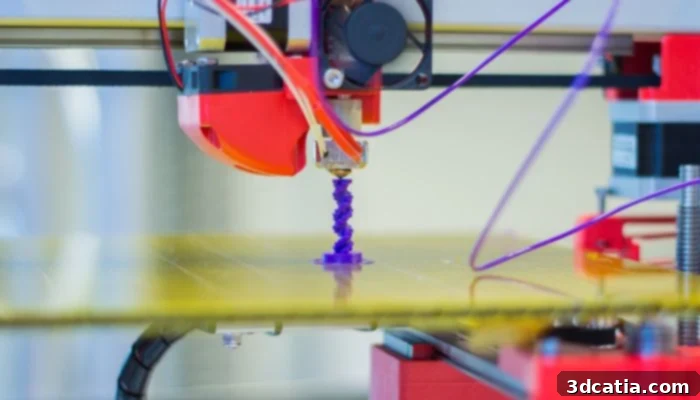
The release of harmful substances varies considerably depending on the specific filament material used. For instance, acrylonitrile butadiene styrene (ABS) has been identified as releasing more toxic chemicals compared to polylactide (PLA). This difference is largely due to ABS being derived from petroleum, while PLA is considered a more natural material, partly manufactured from corn starch. Consequently, PLA is often promoted as a safer, more eco-friendly option.
However, even though PLA is generally regarded as safer, it commonly contains additives that can release toxic chemicals such as styrene and chloromethyl during printing. These substances have the potential to irritate the respiratory tract, mucous membranes, and eyes, and direct inhalation can lead to headaches and difficulty concentrating. Nevertheless, other materials like ABS, acrylic ester styrene acrylonitrile (ASA), and high impact polystyrene (HIPS)—frequently employed for support structures—were found to be among the most harmful in terms of emissions.
Given these findings, ensuring adequate protection is paramount when 3D printing with filaments of any type. Ideally, an operational FDM printer should not be located in enclosed spaces where individuals spend extended periods, such as offices, living rooms, or bedrooms. When purchasing an FDM printer, it is highly advisable to opt for a model equipped with a fully enclosed printing chamber, as this significantly aids in containing emissions. Many manufacturers are now proactively integrating features like HEPA (high-efficiency particulate air) air purifiers into their printers, which are highly effective at filtering out ultrafine particles. Printers equipped with these integrated filtration systems, especially when combined with robust room ventilation, typically offer substantial protection. Despite these technical measures, it is prudent to minimize the time spent in the immediate vicinity of a working FDM printer. If prolonged presence is unavoidable, wearing an FFP2 or FFP3 mask is strongly recommended to provide additional respiratory protection against airborne particles.
Implementing Safe 3D Printing Processes with Liquid Resins
Safety measures are not exclusively critical for filament-based additive manufacturing; similar precautions must be observed for resin 3D printing. This includes processes such as stereolithography (SLA), digital light processing (DLP), masked stereolithography (MSLA), and material jetting. Commercially available photopolymer resins typically consist of complex mixtures of acrylic, epoxy, and vinyl ether resins. Direct skin contact with these liquid resins can cause allergic reactions and irritation, which may become more severe with repeated exposure over time.
Furthermore, the vapors released when synthetic resin is printed or handled can lead to severe headaches, nausea, and dizziness. Reactions affecting the eyes and mucous membranes are also common. Consequently, conscious and cautious handling of these materials is absolutely essential. It is important to note that synthetic resin is primarily toxic in its liquid, uncured state. Once a component has been fully hardened or cured, it can generally be handled without significant problems. When working with liquid resin, strict adherence to the following protective measures is vital to ensure safe handling of the material.
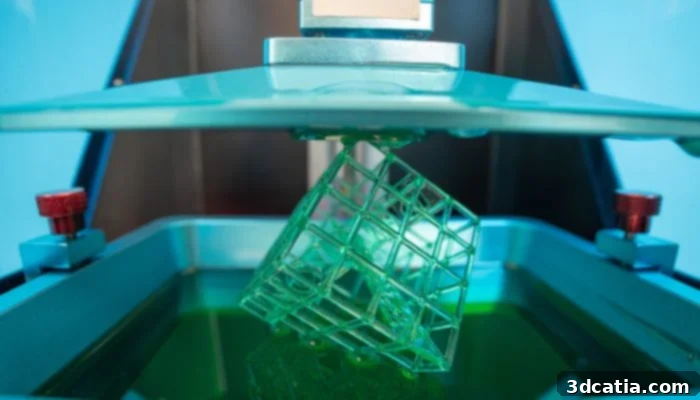
Resins are toxic in a liquid state and should not come into contact with the skin
To prevent direct contact, ensure comprehensive skin protection by wearing appropriate gloves and protective clothing. For hand protection, we highly recommend using nitrile or vinyl gloves, as these materials offer superior chemical resistance compared to conventional latex gloves, providing a more effective barrier against resins. Your arms, legs, and torso should also be fully covered; wearing a protective gown or a disposable coverall is often advisable. To shield your eyes from splashes and harmful UV light, chemical-resistant safety goggles are indispensable, ideally those equipped with integrated UV filter protection.
To prevent the inhalation of potentially hazardous resin vapors, it is crucial to use an FFP2 or FFP3 mask, which provides effective respiratory protection. Resin 3D printing processes rely on photopolymerization, where the liquid resin is cured using a light source, typically UV light. Certain UV lamps used in these processes can release ozone, a gaseous hazardous substance. Even at low concentrations, ozone can cause irritation to the eyes, nose, lungs, and throat. It is therefore essential to consult the manufacturer’s safety data sheets or directly inquire about the potential for ozone release from your specific equipment. If ozone emission is a concern, installing an effective extraction system with a suitable filter or ensuring robust and continuous room ventilation is paramount.
Enhancing Safety in 3D Printing with Powders
Moving on, let’s address significant health risks associated with powder-based additive manufacturing processes, such as Selective Laser Sintering (SLS), Direct Metal Laser Sintering (DMLS), Directed Energy Deposition (DED), or Binder Jetting. These processes utilize powdered materials, including fine metal and plastic powders, which inherently generate particulate hazardous substances, or dusts. The level of risk when working with these powders is directly correlated with the size of the particles. Larger powder particles are generally caught and prevented from entering the lower respiratory tract by the body’s natural protective mechanisms in the throat and upper airways. However, smaller, finer particles can bypass these defenses, penetrating deeper into the lungs and potentially depositing themselves in the delicate alveoli. In severe cases, these fine dust particles can even enter the bloodstream, leading to systemic health issues. For protection against such fine particles, wearing a respirator mask of filter class P2 or P3 is strongly advised, as these masks are designed to effectively capture minute airborne particulates.
Beyond personal protective equipment, meticulous attention must be paid to maintaining consistent and effective room ventilation. Equally important is the proper extraction of the workplace to prevent the accumulation of airborne powder. According to established safety directives, residual powder should be removed and cleaned “using damp or wet methods or with suitable vacuum cleaners or dust extractors.” This specified approach is crucial for preventing powder deposits from becoming airborne again, which could expose workers to inhalation hazards or even create a risk of dust explosions with certain materials.
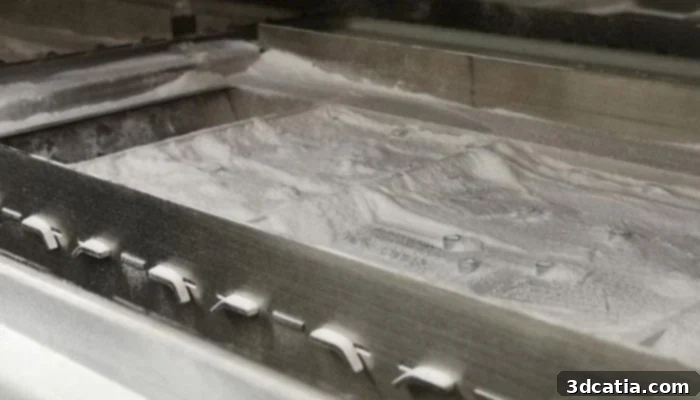
Photo Credits: Additive Manufacturing Germany GmbH & Co. KG.
Additional Risks to Consider for Comprehensive 3D Printing Safety
In addition to the material- and process-specific risks discussed, several general dangers inherent to 3D printing warrant careful attention. As previously highlighted, 3D printers should always be operated in environments with excellent ventilation, ideally in rooms where individuals do not spend prolonged periods. It is also imperative to recognize that many 3D printers, particularly FDM/FFF machines, operate at extremely high temperatures—often around 200 degrees Celsius or even higher for nozzles and heated beds. These high temperatures pose significant risks of severe burns and can even create fire hazards if not properly managed.
Consequently, it is absolutely critical to avoid touching the nozzle, the heated print bed, or the printer’s internal components during operation and for a considerable period immediately after it has finished. These parts can retain hazardous temperatures for an extended time. Furthermore, never reach into the print chamber while the machine is operating, as the rapid and often unpredictable movements of the extruder and other moving parts can lead to severe crushing and trapping injuries to fingers and hands. To prevent entanglement with moving parts, individuals with long hair should always tie it back securely, and loose clothing, dangling jewelry, or scarves should be strictly avoided. Another critical safety practice is to never leave a 3D printer running unattended for extended periods. While some advanced manufacturers integrate cameras into their machines to allow users to monitor the printing process remotely, this feature should complement, not replace, diligent supervision. Constant vigilance helps in promptly identifying and addressing any dangerous situations, such as filament jams, overheating, or unexpected malfunctions, before they escalate.
Post-Printing Safety: Handling and Disposal
Having explored the potential dangers associated with various 3D printing processes and materials, along with the protective measures necessary before and during printing, we now turn our attention to the crucial final step: the safe disposal of 3D printing materials after production.
Ensuring Safe Disposal of 3D Printing Materials
As previously mentioned, liquid resins are toxic and must under no circumstances come into direct contact with the skin. This inherent toxicity mandates stringent precautions even during the disposal phase. Any leftover liquid resin from a print can often be safely reused by carefully pouring it back into its original bottle, minimizing waste. However, resin that cannot be reused, along with misprinted objects, cleaning cloths, paper towels, and used gloves that have been contaminated with uncured resin during the printing process, can generally be disposed of with regular household waste. The critical caveat here is that the synthetic resin must be fully cured using UV light before disposal. Uncured liquid resin retains its toxic properties, posing a continued risk of releasing harmful substances, and is also extremely detrimental to the environment if it enters waterways or soil.
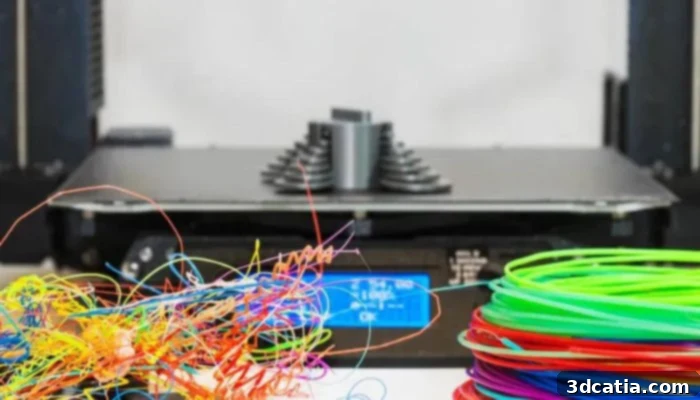
Filament can be recycled using special machines (photo credits: WEVOLVER)
Disposing of filaments, failed prints, and excess material from FFF/FDM printing made from conventional plastics such as ABS, PLA, ASA, or PET(G) is generally a simpler process. When not in use, these plastic waste materials can be safely cooled and disposed of in designated recycling bins, such as a yellow bag or container for plastics, where applicable by local regulations. Nevertheless, the most environmentally responsible approach is to collect these materials separately for specialized recycling. This can be achieved either by processing them yourself using suitable filament recycling equipment or by engaging specialized recycling companies that can transform these waste plastics back into usable filament or other products, thereby reducing waste and promoting a circular economy within 3D printing.
By understanding and implementing these comprehensive safety measures—from selecting the right equipment and preparing your workspace to operating your printer responsibly and disposing of materials correctly—you can significantly mitigate the inherent risks of additive manufacturing. This holistic approach ensures not only your personal safety but also contributes to a safer environment for everyone involved in the exciting world of 3D printing. Embracing safe practices before, during, and after the printing process is key to unlocking the full potential of 3D printing technology responsibly.
What do you think of these protective measures for safe 3D printing? Let us know in a comment below or on our LinkedIn, Facebook, and Twitter pages! Don’t forget to sign up for our free weekly newsletter here for the latest 3D printing news straight to your inbox! You can also find all our videos on our YouTube channel.