
Revolutionizing Luxury Automotive: Rolls-Royce Drives Innovation with Advanced 3D Printing for the Ghost Model
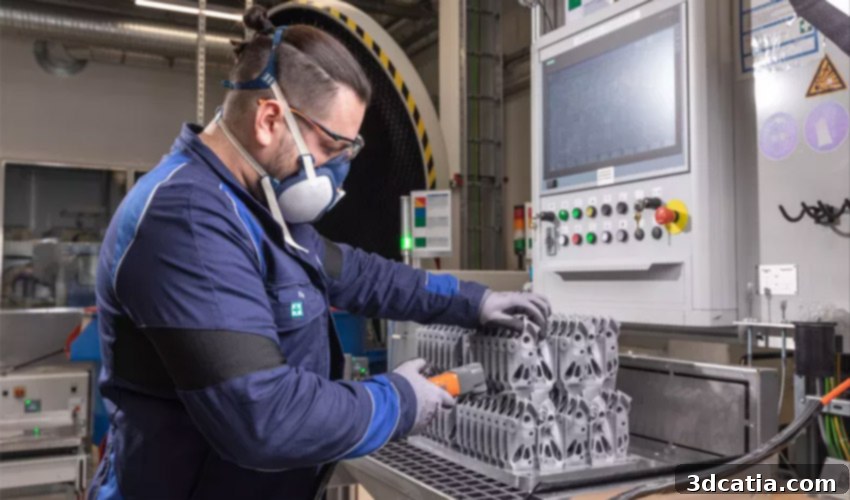
The prestigious British manufacturer Rolls-Royce, a distinguished subsidiary of the BMW Group, has been at the forefront of automotive innovation since the beginning of the year, strategically integrating 3D printing technology into the production of its iconic Rolls-Royce Ghost model. This pioneering move involves the additive manufacturing of both plastic and metal components, which are produced across various locations within the global BMW production network. These intricately crafted parts are then meticulously assembled at Rolls-Royce’s renowned Goodwood facility in England, signifying a new era in luxury vehicle manufacturing.
This isn’t merely a small-scale pilot; Rolls-Royce has announced ambitious plans to install several hundred thousand 3D printed parts into the Rolls-Royce Ghost over its comprehensive life cycle. This extensive adoption is built upon the robust foundation of experience gained from the BMW Group’s state-of-the-art Additive Manufacturing Campus. The overarching strategic vision of the BMW Group is to harness the transformative power of 3D printing technologies to achieve series production across its vehicle lines, with Rolls-Royce leading the charge in this grand technological adventure. This marks a significant pivot towards digital manufacturing processes, promising greater flexibility, efficiency, and design freedom in high-end automotive production.
The BMW Group’s commitment to industrializing additive manufacturing was powerfully demonstrated last June with the grand opening of its Additive Manufacturing Campus in Oberschleissheim, situated north of Munich. This cutting-edge facility serves as a central hub, consolidating over 50 diverse solutions for both plastic and metal 3D printing. The group’s primary objective is to industrialize these advanced manufacturing processes, integrating automation to streamline operations and continuously innovate in design and material science. Daniel Schäfer, Head of Production Integration and Pilot Plant Integration at the BMW Group, articulated the profound impact of these advancements: “Processes such as additive manufacturing help us to shorten development cycles and thus get our vehicles into production faster. 3D printing also helps us to reduce component production times while maintaining exceptionally high quality standards.” These compelling advantages were swiftly embraced by Rolls-Royce, the group’s English subsidiary, enabling them to rapidly adopt 3D printing and now design and produce end-use parts in significantly higher volumes. While true mass production is still a long-term goal for the entire automotive sector, these developments represent monumental steps forward, setting an encouraging precedent for the future of manufacturing.
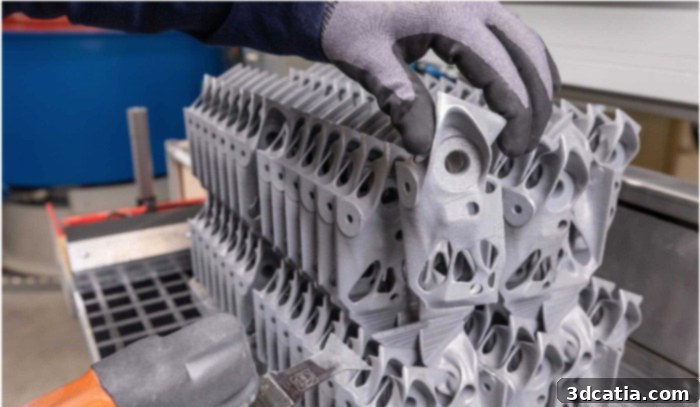
Rolls-Royce has produced metal 3D printed parts for the Ghost model | Photo Credits: BMW
Advanced Additive Manufacturing: Rolls-Royce Leverages Plastic and Metal Technologies for Enhanced Performance
Rolls-Royce made headlines last October by formally introducing 3D printed components into its highly anticipated Extended Ghost model. These innovative parts, produced using state-of-the-art additive manufacturing techniques, are strategically integrated into both the passenger cell and the underbody of the vehicle. Chosen for their superior functionality and exceptional rigidity, these components play a critical role in enhancing the vehicle’s structural integrity, safety, and overall performance. For the interior, Rolls-Royce has opted for advanced plastic components, leveraging sophisticated technologies such as Selective Laser Sintering (SLS) and Multi Jet Fusion. Both SLS and Multi Jet Fusion are renowned for their ability to produce complex geometries with excellent mechanical properties, making them ideal for high-performance automotive interiors where precision and durability are paramount.
Conversely, for critical metal parts, Powder Bed Fusion (PBF) technology was the preferred choice. PBF, a family of additive manufacturing processes that includes Direct Metal Laser Sintering (DMLS), enables the creation of robust, lightweight metal components with intricate internal structures that would be impossible or prohibitively expensive to produce with traditional manufacturing methods. These advanced metal parts are meticulously manufactured at the BMW Group’s dedicated plant in Landshut, Germany. Following their production, these components are then integrated with remarkable efficiency and precision, almost fully automatically, into the broader Ghost production process, underscoring the seamless integration of additive manufacturing into a high-volume assembly line.
A distinctive feature of each 3D printed metal part within the Rolls-Royce Ghost is the inclusion of a unique QR code and individual identification numbers. This level of granular traceability is a significant advantage over traditional manufacturing processes, where customizing each individual part with such detailed specifics would likely be an insurmountable challenge or excessively costly. These unique identifiers provide unparalleled benefits in terms of quality control, supply chain management, and even anti-counterfeiting measures, ensuring authenticity and precision for every component. Furthermore, the iconic British brand logo is meticulously integrated onto every single component, serving as a testament to the brand’s unwavering commitment to luxury, quality, and meticulous attention to detail, even on parts that may not be immediately visible to the end-user.
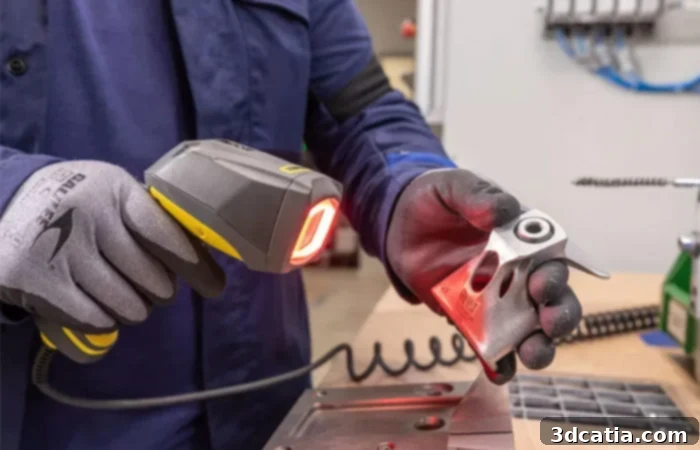
Each metal 3D printed part comes with a identification number and QR code | Photo Credits: BMW
On the design front, the engineering teams at both BMW and Rolls-Royce harnessed the power of generative design and topology optimization. These advanced computational design methods allowed them to systematically analyze and optimize the structure of each component, pushing the boundaries of traditional engineering to create lighter, stronger, and significantly more efficient parts. Generative design involves using AI algorithms to generate numerous design options that meet specific performance criteria, while topology optimization refines these designs by removing material from areas that contribute minimally to structural integrity, thereby reducing weight without compromising strength. The teams elaborate on their rigorous methodology: “In the early stages of the development of the new Rolls-Royce Ghost, engineers meticulously analyzed hundreds of components and thoroughly tested the extent to which production using additive manufacturing processes was feasible. The primary focus was on identifying compelling advantages in terms of weight reduction and geometric complexity compared to conventional manufacturing processes, alongside assessing the economic benefits.“
This meticulous analytical approach was crucial. “By selecting suitable components for series production via 3D printing, the experts defined precise criteria and requirements for the 3D printed components and translated them into ‘machine language’ with the invaluable help of data specialists. This rigorous process marked the genesis of a new artificial intelligence system that fundamentally enables the BMW Group to identify potential 3D printed components in future vehicles much faster and earlier in the development cycle.” This innovative AI-driven approach significantly accelerates the design and validation phases, allowing for rapid iteration and optimization, ultimately leading to superior vehicle performance, enhanced fuel efficiency through lightweighting, and unprecedented design possibilities that cater to the bespoke nature of Rolls-Royce vehicles.
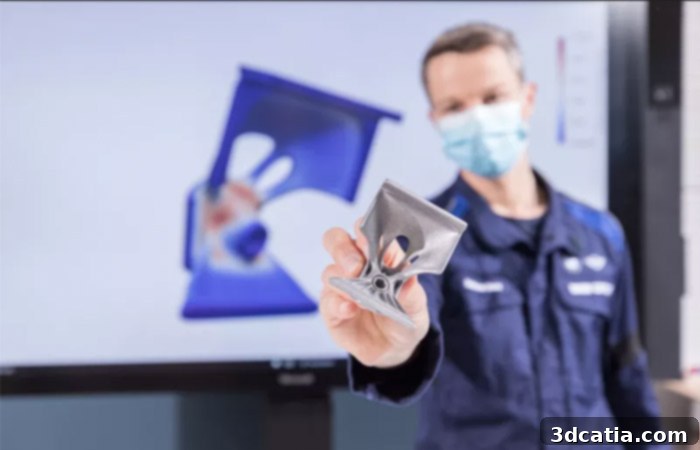
The group uses generative design and topology optimization methods | Photo Credits: BMW
The ultimate objective for the BMW Group is to industrialize this sophisticated production process as extensively as possible, encompassing every stage from initial design conceptualization to final manufacturing. This strategic initiative aims to gradually and systematically increase the number of 3D printed parts integrated into their vehicles. The establishment and operational success of the dedicated Additive Manufacturing Campus in Germany is undoubtedly a game-changer, promising to profoundly transform the landscape of automotive production within the group. This proactive embrace of additive manufacturing positions Rolls-Royce and the BMW Group at the cutting edge of technological advancement in the automotive industry, paving the way for more customized, efficient, and sustainably produced luxury vehicles. This commitment not only highlights a dedication to innovation but also sets a benchmark for how traditional manufacturers can adapt and thrive in an increasingly digital and personalized market.
What are your thoughts on Rolls-Royce’s groundbreaking integration of additive manufacturing into their luxury vehicles? Do you believe this signifies a major shift in the automotive industry, or are there still significant hurdles to overcome before widespread adoption? We invite you to share your insights and opinions in a comment below or join the conversation on our Facebook and Twitter pages! For those eager to stay abreast of the latest developments and innovations in 3D printing, don’t forget to sign up for our free weekly Newsletter, delivering all the essential news straight to your inbox.