
Revolutionizing Construction: HS HITECH Pioneers Modular Glass Structures with HP Multi Jet Fusion 3D Printing
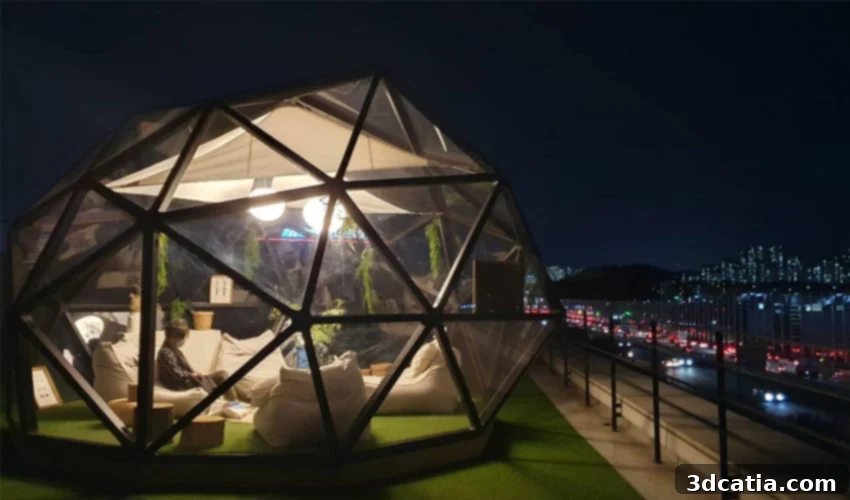
The additive manufacturing landscape is continuously evolving, pushing boundaries across various industries. One significant innovation comes from HS HITECH, a leading 3D printing service that is profoundly impacting the construction sector. Through the strategic utilization of additive manufacturing, HS HITECH specializes in creating highly modular structures, featuring intricate, customized structural elements known as Blobee. These advanced components are instrumental in developing sophisticated glass substructures, allowing architects and designers to overcome long-standing limitations in shape and geometry. At the heart of this groundbreaking capability lies HP’s state-of-the-art Multi Jet Fusion (MJF) technology. This powerful combination enables the Korean company to achieve high-volume production with unprecedented speed and efficiency, dramatically reducing both lead times and manufacturing costs. This marks a pivotal moment, showcasing 3D printing’s immense potential for innovative applications in modern construction, moving beyond traditional methods and opening new avenues for architectural expression.
The Power of HP Multi Jet Fusion in Advanced Manufacturing
HP’s journey into the additive manufacturing market began several years ago, and since then, their Multi Jet Fusion technology has consistently proven its transformative capabilities. This innovative process leverages a unique combination of powdered material and a binding agent, enabling designers and industry professionals across diverse sectors to significantly accelerate their product development and production cycles. Multi Jet Fusion is celebrated for its exceptional speed, its capacity to produce parts with generous volumes, and, critically, its ability to deliver high-quality, functional components. Its versatility has led to widespread adoption in fields as varied as medical device manufacturing and the automotive industry. Now, its impact is increasingly felt within the construction sector, offering solutions that complement or even surpass conventional building methods.
While the construction industry is more accustomed to witnessing innovations driven by concrete 3D printing – which typically focuses on creating large-scale walls and foundational elements – the application of polymer additive manufacturing presents a distinct and compelling advantage. For projects requiring intricate details, complex geometries, or lightweight yet robust components, polymer 3D printing excels. It offers unparalleled design freedom, allowing for the realization of shapes and forms that are simply impossible or prohibitively expensive to achieve with traditional techniques. This makes polymer-based solutions, like those employed by HS HITECH, particularly valuable for supporting highly original and ambitious architectural projects that demand custom, non-standard elements. This is where HP MJF truly shines, offering the precision and material properties required for advanced architectural components.
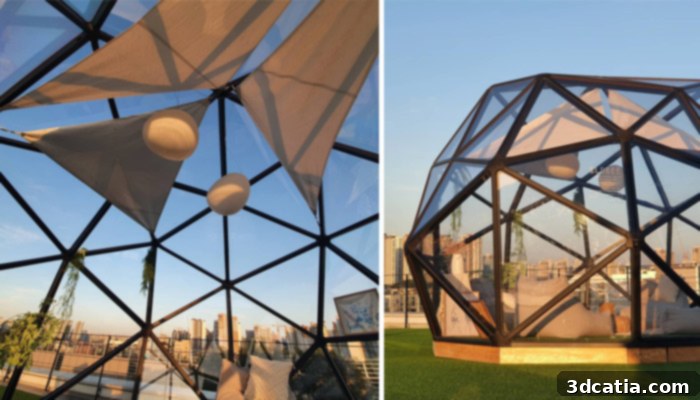
Thanks to HP Multi Jet Fusion technology, the Korean company can imagine more complex joints and thus atypical structures, pushing the boundaries of architectural design.
HS HITECH’s Blobee: Solving Complex Architectural Challenges
The innovative spirit of HS HITECH is perfectly embodied in their creation, Blobee. This system comprises bespoke modular structures crafted from glass, interconnected by specialized 3D printed joints. These meticulously designed joints are the linchpin, enabling the seamless and secure connection of various glass panes, resulting in structurally sound and visually stunning constructions. The versatility of Blobee structures is remarkable, allowing them to be configured for a wide array of applications – from dynamic and collaborative workspaces and inviting coffee shops to serene and tranquil resting areas. Each Blobee joint is a testament to the power of custom fabrication, engineered to meet the unique demands of each project.
Recognizing the need to continually push the envelope in construction 3D printing, HS HITECH has invested significantly in developing a dedicated 3D printing laboratory focused on the construction sector. This facility serves as a hub for characterizing and optimizing manufacturing processes, enabling the company to delve deeper into the intricacies of material science and design for additive manufacturing. This commitment to research and development is crucial, as it allows HS HITECH to overcome inherent limitations faced by conventional manufacturing methods. Traditional techniques often fall short when it comes to realizing atypical architectures, complex façades, and uniquely designed interiors, primarily due to their inability to produce parts with highly customized and complex geometries efficiently.
Overcoming Geometric Constraints in Architectural Design
Seung Gyu Yu, the esteemed Head of HS HITECH’s printing laboratory, eloquently articulates the challenges that Blobee and HP MJF technology are designed to address. He explains, “For example, if we imagine that there are triangles with different angles at the same vertex, the structures supporting them are not in the same plane or phase. Several efforts are then required to bring these parts together and we have based our entire joining system on these geometry issues.” This highlights a critical hurdle in conventional construction: when design calls for complex, non-planar connections – such as those found in geodesic domes, free-form façades, or organic architectural shapes – traditional fabrication processes struggle immensely. Machining custom parts for each unique angle and intersection is time-consuming, wasteful, and often financially unfeasible. HS HITECH’s innovative approach, powered by HP Multi Jet Fusion, directly confronts these geometric complexities, allowing for the precise and efficient production of bespoke joints that perfectly align, regardless of their individual angles or spatial orientations. This capability fundamentally liberates designers from the constraints of standardized components, fostering an environment where truly unique and structurally sound architectural visions can be brought to life.
The Transformative Impact of 3D Printing on Design and Production
The implementation of HP Multi Jet Fusion technology has allowed HS HITECH to tackle these significant architectural challenges with unparalleled speed and efficacy. This advanced additive manufacturing process dramatically reduces both prototyping and final manufacturing times, streamlining what was once a laborious and expensive design-to-build cycle. The inherent nature of 3D printing enables the creation of incredibly complex shapes, facilitating more sophisticated and suitable design methods that were previously theoretical or impractical. With MJF, HS HITECH has successfully developed Blobee: a highly adaptive system of custom-made joints that can be assembled together seamlessly, irrespective of their unique geometries or angles. This revolutionary approach eliminates the need for compromises in design, allowing for the construction of truly bespoke architectural elements that fit together with absolute precision.
The ultimate outcome of this pioneering work is the realization of multifunctional, fully glazed spaces that are not only aesthetically striking but also highly adaptable and structurally robust. The transparency of glass combined with the precision of 3D printed joints creates environments that are open, airy, and inviting, blurring the lines between indoor and outdoor spaces. HS HITECH specifically highlights that HP’s MJF machines provide a dual advantage: significantly greater speed of execution for individual parts and the unparalleled ability to produce large batches of highly customized components. This mass customization capability is a game-changer for the construction industry, allowing for tailor-made solutions without the associated costs and delays of traditional bespoke manufacturing.
While HS HITECH remains understandably discreet about the immediate worldwide rollout and specific future plans for these atypical structures, the implications of their work are profound. This pioneering use of polymer 3D printing for critical structural components in glass architecture signals a major shift in how buildings can be designed and erected. It opens doors for more sustainable construction practices through optimized material use, reduces waste, and allows for greater design freedom, leading to more innovative and environmentally conscious structures. We eagerly anticipate further updates on the progress of this exciting project and will undoubtedly keep our readers informed as HS HITECH continues to redefine the boundaries of what is possible in modern construction with HP Multi Jet Fusion technology.
Join the Conversation on 3D Printing Innovations!
What are your thoughts on HS HITECH’s innovative project and the potential of 3D printing in architectural design? We’d love to hear your insights! Share your comments and perspectives below, or join the discussion on our vibrant Facebook and Twitter pages. Stay ahead of the curve with all the latest advancements in additive manufacturing by signing up for our free weekly Newsletter, delivering cutting-edge news directly to your inbox!