
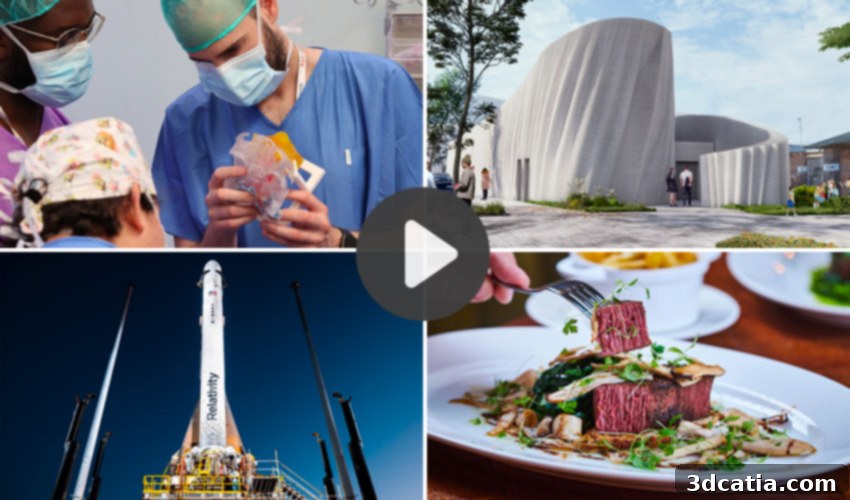
2023’s Most Astounding 3D Printing Innovations: A Collection of Must-Watch Videos
As the monumental year of 2023 gracefully draws to a close, we invite you to celebrate the incredible advancements and groundbreaking innovations that have shaped the world of additive manufacturing. This past year has witnessed a remarkable surge in the capabilities and applications of 3D printing across an astonishing array of sectors. To commemorate these final moments, we have meticulously curated a selection of the most captivating and unmissable 3D printing videos from 2023. These videos showcase a diverse range of projects and technological breakthroughs, highlighting the transformative power of 3D printing in fields spanning automotive engineering, aerospace exploration, environmental sustainability, medical science, cinematic production, innovative construction, competitive sports, gourmet food, and cutting-edge fashion. Prepare to be inspired as you witness monumental achievements, from the maiden flight of the first 3D printed rocket to the intricate contributions of additive manufacturing to the acclaimed Pinocchio film. Furthermore, delve into technological marvels such as the creation of 3D printed vegan meat, the advanced evolution of bioprinting with the reproduction of a human heart, and invaluable insights into some of the best 3D printing solutions available today. Join us in relishing this compilation as we reflect on 2023’s indelible mark on the additive manufacturing landscape and anticipate an even more revolutionary 2024!
Liftoff of the First Fully 3D Printed Rocket: Terran 1’s Historic Ascent
In a truly historic moment for the aerospace industry, our first featured video captures the exhilarating preparations and spectacular launch of Relativity Space’s Terran 1 rocket. Nicknamed “GLHF” (Good Luck, Have Fun), this colossal achievement unfolded in Florida, marking a significant milestone in space exploration. The Terran 1 rocket holds the distinguished title of being the largest 3D printed object ever to attempt orbital space flight, pushing the boundaries of what is possible with additive manufacturing. This two-stage rocket boasts nine powerful 3D-printed Aeon engines on its first stage, and remarkably, all of Relativity’s engines are entirely 3D printed. This innovative approach to rocket manufacturing demonstrates how metal 3D printing can revolutionize production timelines, reduce costs, and enable unprecedented design complexities for space vehicles. The video immerses viewers in the tension and excitement, starting just 28 minutes before lift-off and culminating in the rocket’s awe-inspiring ascent into the clear blue sky. Witnessing this dramatic event underscores the immense potential of large-scale 3D printing in aerospace, paving the way for a new era of more efficient and accessible space travel. This footage is a testament to human ingenuity and the cutting-edge application of additive technologies. To experience this groundbreaking moment for yourself, watch the video below!
Pinocchio – Where Stop-Motion Animation Meets Advanced 3D Printing
For cinema enthusiasts and animation aficionados, our next video offers a compelling reason to revisit or discover Guillermo del Toro’s latest masterpiece, Pinocchio. This enchanting stop-motion animated film owes much of its magical realism to the innovative integration of 3D printing technologies. Specifically, additive manufacturing played a pivotal role in the meticulous creation of the character of Pinocchio himself. The ability to rapidly produce numerous variations of puppet faces and body parts with precise detail allowed animators unprecedented freedom and efficiency, bringing the beloved wooden boy to life with extraordinary nuance and expression. This behind-the-scenes video provides a fascinating glimpse into the intricate process, featuring insights from Georgina Hayns, the “Pinocchio” puppet manufacturing supervisor, and Brian Leif Hansen, the animation supervisor. They explain how 3D printing facilitated intricate designs, consistent replication, and the subtle adjustments necessary for seamless animation. This collaboration between traditional artistry and modern technology showcases how 3D printing is not just for industrial applications but also a powerful tool for artistic expression and storytelling, enabling creators to push the boundaries of visual effects and character development in animated films.
Building Tomorrow: Is 3D Printing the Future of Sustainable Construction?
Our next video highlights a monumental stride in the construction industry, showcasing the erection of Europe’s largest building utilizing state-of-the-art 3D printing technology. This groundbreaking project signals a new era for building practices, demonstrating how additive manufacturing can revolutionize traditional construction methods. The enormous 3D printing machine deployed on site performs work equivalent to that of several human laborers, meticulously laying concrete in successive layers to construct an impressive four square meters of wall every single hour. This remarkable efficiency underscores the transformative potential of 3D construction, not only in terms of speed but also in optimizing resource allocation. In the video, site manager Chikaeze Ugwu articulates his profound satisfaction with the progress and the undeniable advantages that 3D printing brings to the construction sector. He emphasizes that the process is three times faster than conventional building methods, while simultaneously requiring less raw materials and significantly reduced labor, contributing to a much more environmentally friendly and sustainable approach. This innovation offers solutions to pressing challenges such as affordable housing shortages and the carbon footprint of the construction sector, proving that 3D printing is not just a novelty but a powerful tool for creating robust, sustainable, and rapidly deployable structures for the future.
Behind the Scenes: BMW’s Sustainable Automotive Manufacturing with ExOne Binder Jetting
Shifting gears to a different but equally impactful sector, our next video takes us into the intricate world of automotive manufacturing. Here, we delve into the innovative application of ExOne’s Binder Jetting 3D printing technology, a method expertly utilized by BMW to ensure highly efficient and environmentally-friendly production processes. This exclusive video offers an unparalleled look inside BMW’s Landshut plant, which stands as the largest facility for conventional component production within the BMW Group, churning out over 3 million parts annually. This facility is a hub of intelligent design, focusing intently on creating components that enhance both vehicle performance and overall energy efficiency. For over two decades, ExOne has served as a pivotal partner in digital manufacturing for BMW, instrumental in establishing a novel production methodology for these sophisticated components. The video features Eric Bader, Managing Director of ExOne, as he guides us through the facility, elucidating how ExOne’s Binder Jetting 3D printing technology plays an absolutely crucial role in BMW’s operations. This advanced additive manufacturing process allows for the creation of complex geometries with minimal waste, supporting BMW’s commitment to sustainable practices while delivering high-quality, high-performance parts. Discover the secrets to their success and the future of automotive production by watching the video below!
3D Printed Organs: A Beacon of Hope for the Global Organ Shortage?
Let’s now explore the profound advancements in bioprinting, a field offering transformative solutions to one of humanity’s most pressing medical challenges. The global shortage of organs for transplantation remains a grim reality, leading to the tragic loss of 17 lives every single day. However, this video illuminates a powerful glimmer of hope, courtesy of breakthrough research in 3D printing, specifically a revolutionary method developed by ingenious engineers at the Massachusetts Institute of Technology (MIT). These pioneers are utilizing a specialized polymer-based ink to bioprint artificial hearts, meticulously replicating a patient’s unique cardiac appearance and intricate function with unprecedented precision. This monumental discovery holds the immense potential to fundamentally transform organ transplantation practices, moving towards a future of highly personalized medicine where patient-specific organs could be created on demand. The implications for reducing transplant waiting lists, eliminating the risk of organ rejection, and improving patient outcomes are truly profound. But how exactly do these brilliant minds accomplish such a feat? This compelling video thoroughly explains the intricate process of reproducing a heart using sophisticated 3D bioprinting techniques, detailing the layers of innovation and scientific rigor involved in this life-saving research. It’s a compelling look into the future of healthcare and regenerative medicine, powered by additive technologies.
Gastronomy Reimagined: Steakhouse Serves Up 3D Printed Vegan Meat
For discerning meat-lovers who have opted for a vegetarian or vegan lifestyle out of concern for environmental sustainability, a culinary revolution is now underway. Thanks to the marvels of 3D printing, enjoying a succulent steak is no longer a distant dream, even at a high-end establishment like El Santuari steakhouse near Barcelona! This celebrated restaurant, traditionally renowned globally for its exquisite exotic meats such as wagyu, zebra, and crocodile, has now embraced a pioneering approach to plant-based dining. In an inspiring collaboration, bioengineer Giuseppe Scionti, a fervent advocate for planetary preservation, teamed up with Josep Sanitjas to develop a truly extraordinary 3D-printed vegan steak. This innovative steak, meticulously produced with advanced 3D printing techniques, is engineered to emulate the rich taste and complex texture profiles of the restaurant’s traditional carnivorous offerings. It almost flawlessly mirrors a conventional steak in terms of its sensory attributes: crispy exterior, juicy interior, and a satisfying mouthfeel that provides an authentic meat-eating experience without any animal products. This culinary innovation represents a significant leap towards a more sustainable, plant-based future for the food industry, proving that gastronomic excellence and environmental responsibility can beautifully coexist through the power of additive manufacturing.
Sustainable Style: Fashion Company Adopts 3D Printing for Eco-Conscious Clothing
The rapid pace of fast fashion, characterized by its mass production and insatiable consumption, imposes a devastating environmental impact on our planet. Every year, nearly $500 billion worth of clothing is discarded, contributing significantly to global waste. As the world’s third-largest contributor to pollution, the fashion industry is responsible for a staggering 10% of global CO2 emissions. In response to this urgent crisis, innovative initiatives are emerging, with 3D printing leading the charge towards a more sustainable future for apparel. One such trailblazer is Garrett Gerson, the visionary founder of Variant 3D. His company champions a revolutionary approach where consumers can design custom garments using intuitive software, which are then transmitted to local 3D printers for fabrication. This cutting-edge methodology aims to fundamentally transform clothing production by embracing several key sustainability principles: zero waste through on-demand manufacturing, the exclusive use of sustainable fibers, and a commitment to localized production to minimize transportation footprints. Moreover, this process allows for the creation of truly bespoke garments, tailored precisely to individual preferences and measurements, moving away from generic mass-produced items. This paradigm shift, powered by additive manufacturing, not only mitigates environmental damage but also fosters a more personalized, efficient, and ethical fashion ecosystem.
Precision Engineering: 3D Printing Redefines Automotive Performance in Formula 1
In the fiercely competitive arena of Formula 1 racing, where every fraction of a second and every gram of weight can determine victory, additive manufacturing has become an indispensable technology. It is here that 3D printing demonstrates its unparalleled ability to meet the extraordinarily high demands of top-tier motorsport. Our next video highlights the powerful synergy between Jabil and the Alpine F1 Team, who have forged a strategic partnership to innovate relentlessly with 3D printing. This advanced technology enables the creation of highly specialized parts using cutting-edge materials, all while adhering to the rigorous and uncompromising standards of motor racing. By intelligently exploiting the capabilities of 3D printing, the Alpine F1 Team can dramatically accelerate their prototype design cycles, facilitate rapid vehicle development, and optimize the production of critical automotive components. This approach allows them to design intricate, lightweight, and high-performance parts that would be impossible or prohibitively expensive to produce with conventional manufacturing methods. Consequently, additive manufacturing offers the team a crucial competitive advantage in the demanding and dynamic environment of Formula 1 racing, enabling superior aerodynamics, improved structural integrity, and enhanced overall vehicle performance. The associated video provides an exclusive behind-the-scenes look at this transformative collaboration and its profound impact on shaping the future of motorsport engineering.
Eco-Innovation: Surfboards 3D Printed from Recycled Plastic Waste
Embracing the principles of the circular economy and environmental stewardship, the Montpellier-based startup Yuyo is pioneering a remarkable transformation: converting plastic waste into high-performance surfboards. Founded by Romain Paul, a passionate surfer keenly aware of the environmental footprint of traditional surfboard manufacturing, Yuyo was established with a clear mission to make surfboard production inherently more sustainable. This inspiring video showcases how the startup leverages large-format 3D printing technology to fabricate the internal core structures of their surfboards. The material for these cores comes from plastic filaments meticulously sourced and processed from local waste, effectively giving a second life to discarded plastic packaging. Beyond the innovative use of recycled plastics, the surfboards are further enhanced by being laminated with advanced biocomposite materials, further minimizing their ecological impact. This dual approach signifies a significant leap towards truly green manufacturing practices. In addition to the compelling ecological benefits, 3D printing enables unparalleled customization of the boards for each individual customer. This means surfers can enjoy a board perfectly tailored to their unique style and body, all while contributing to a cleaner planet. Yuyo exemplifies how additive manufacturing can be a powerful driver for sustainable product development and waste reduction.
Mastering FDM 3D Printing: A Deep Dive into Common Difficulties and Solutions
For anyone navigating the exciting yet sometimes challenging world of desktop 3D printing, our “3D Explained” series offers invaluable insights. In this particular episode, we delve deeply into the potential complications and common pitfalls associated with Fused Deposition Modeling (FDM) 3D printing. If you’ve ever found yourself frustrated by print failures or less-than-perfect results, you’ve likely encountered some of the prevalent issues that Elliot expertly explains in this video. This comprehensive guide helps you understand not just *what* goes wrong, but *why* it happens, and crucially, *what you can do* to optimize your 3D printing process for consistent success. The video covers a spectrum of common problems, including frustrating print stains, issues related to over-extrusion where too much filament is deposited, and equally problematic under-extrusion where insufficient material leads to weak or incomplete prints. Additionally, topics like stringing, warping, layer shifting, and poor bed adhesion are addressed with practical, actionable advice. Elliot emphasizes that every 3D printing problem, rather than being a setback, is a valuable opportunity to learn, refine your techniques, and ultimately improve your printing skills. This episode is packed with useful tips for calibration, material selection, and slicer settings, empowering you to troubleshoot effectively and achieve superior print quality. So, don’t give up on your additive manufacturing journey; arm yourself with knowledge and keep printing!
The Future of Boxing: Revolutionizing Protection with 3D Printed Boxing Gloves
Attention, sports enthusiasts and athletes! Additive manufacturing is rapidly gaining significant traction within the sports industry, and Hayabusa’s innovative T3D boxing gloves stand as a prime example of this transformative trend. These state-of-the-art gloves leverage the power of 3D printing to deliver a performance advantage that far surpasses their traditional counterparts. At the core of their innovation lies their exceptional ability to effectively absorb shock and offer superior protection, thanks to intelligently designed soft padding. The crucial difference lies in the special 3D-printed internal structure within the gloves. This intricate lattice design provides unparalleled durability and shock dispersion, significantly outperforming conventional knuckle padding materials. By utilizing additive manufacturing, Hayabusa has been able to engineer precise geometries and material distributions that optimize impact absorption while maintaining a lightweight and comfortable fit. This innovation not only enhances the safety of boxers by providing advanced protection but also pushes the boundaries of sports equipment design, offering improved performance, longevity, and a level of customization previously unattainable. The T3D gloves exemplify how additive manufacturing is enabling sports brands to create safer, more effective, and technologically advanced gear for athletes. Discover the cutting-edge design and benefits in the captivating video!
Formnext 2023: The 3Dnatives Team’s Favorite Applications from the Global Hub of Additive Manufacturing
In this insightful video from November, we extend a special invitation for you to immerse yourself in the vibrant heart of the additive manufacturing world: Formnext 2023. As the undisputed must-attend event for 3D printing professionals and enthusiasts, Formnext annually gathers the brightest minds and most groundbreaking innovations. The 3Dnatives team serves as your expert guide, leading you on an exclusive tour as they unveil their carefully selected favorite and most striking applications presented at this year’s monumental event. From whimsical and playful creations that spark imagination to revolutionary industrial innovations poised to disrupt traditional manufacturing, their diverse choices brilliantly highlight the sheer versatility, boundless creativity, and engineering ingenuity inherent in 3D printing technology. This video offers a compelling showcase of the incredible range of applications that left a lasting impression on our team. Witness a meticulously 3D-printed violin, a custom-designed table that blends aesthetics with functionality, an ergonomically advanced car seat engineered for comfort and safety, and an intricately designed bicycle pushing performance limits. Not forgetting the high-octane world of motorsports, you’ll also see elements of a Formula 1 car that leverage additive manufacturing for a competitive edge. These diverse examples powerfully illustrate the breadth of applications that defined our unforgettable experience at Formnext 2023. Don’t delay in discovering these future-forward innovations and the remarkable impact of additive manufacturing across countless industries!
As we conclude this exciting retrospective of 2023, we hope this curated collection of videos has showcased the remarkable progress and diverse applications of 3D printing and additive manufacturing. Which of these groundbreaking innovations or inspiring projects captured your imagination the most? We’d love to hear your thoughts! Share your favorite video of 2023 by leaving a comment below or engaging with us on our vibrant social media platforms, including LinkedIn,Facebook, andTwitter. For those eager to stay at the forefront of this rapidly evolving industry, don’t forget to sign up for our free weekly Newsletter here, delivering the very latest 3D printing news and insights straight to your inbox. You can also explore an even wider range of captivating content by visiting all our videos on our dedicated YouTube channel. Here’s to an even more innovative 2024!