
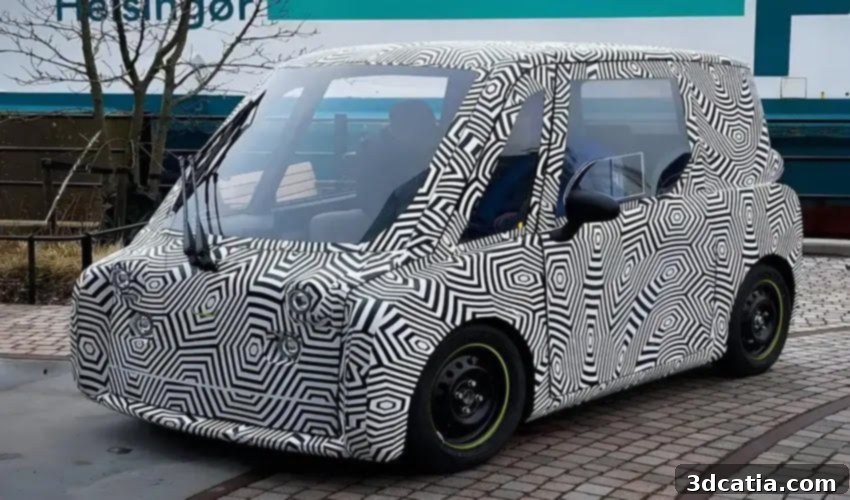
Revolutionizing Urban Mobility: The 3D Printed e-Miles L7e Electric Quadricycle
The automotive industry is undergoing an unprecedented transformation, largely propelled by the disruptive power of 3D printing technology, also known as additive manufacturing. This innovative approach is not merely an incremental improvement; it’s fundamentally reshaping how vehicles are designed, prototyped, and manufactured, particularly within the rapidly expanding electric vehicle (EV) sector. From enabling the rapid creation of highly customized prototypes to fabricating intricate, complex parts with remarkable efficiency and significantly reduced costs, 3D printing is unlocking a new era of automotive innovation. It empowers manufacturers to achieve unparalleled design freedom, optimize material usage, and accelerate product development cycles. This paradigm shift is vividly demonstrated by the recent unveiling of the e-Miles L7e, an electric quadricycle developed through a groundbreaking collaboration between Spanish firms The e-Miles Company and Malena Engineering. This pioneering model stands as a powerful testament to 3D printing’s pivotal role in pushing the boundaries of automotive advancements, boasting an impressive 90% of its components – ranging from structural body elements to various exterior and interior features – crafted through additive manufacturing processes.
The e-Miles L7e: A Vision for Sustainable Urban Transport
The development journey of the e-Miles L7e is a story of innovative partnerships and a shared vision for the future of urban mobility. For a considerable period, the forward-thinking city of Helsingborg in Sweden and the esteemed Lund University have been working in close collaboration with The e-Miles Company. This strategic alliance highlights a commitment to fostering sustainable transportation solutions and positioning cities at the forefront of technological advancement. The project reached a significant milestone with its public unveiling at the inauguration of a state-of-the-art innovation center in Helsingborg, marking it as a hub for future-oriented developments. The e-Miles L7e is more than just a vehicle; it represents a substantial leap forward in addressing critical challenges related to urban congestion, environmental impact, and efficient goods transportation within cityscapes. Its innovative design is meticulously tailored for the unique demands of the urban environment, emphasizing compactness, maneuverability, and a significantly reduced environmental footprint. Beyond its environmental credentials, the e-Miles L7e introduces a revolutionary user interface. Diverging from conventional automotive controls, it is equipped with an intuitive joystick system instead of a traditional steering wheel and pedals. This thoughtful design choice is a game-changer for accessibility, making the vehicle particularly suitable and empowering for individuals with reduced mobility, thereby promoting inclusive urban transport. Looking ahead, the e-Miles L7e is poised to undergo rigorous real-world testing within Helsingborg’s urban landscape. This crucial phase will not only refine the vehicle’s performance but also solidify Helsingborg’s reputation as a trailblazer in European mobility initiatives and intelligent transportation solutions.

(Photo Credits: Helsingborg)
Unpacking the Innovations of the e-Miles L7e
The e-Miles L7e stands out in the evolving automotive landscape through a multitude of innovations, with 3D printing at its core, complemented by intelligent design choices and a focus on user experience and sustainability.
The Additive Manufacturing Advantage: Building with Precision and Purpose
Central to the e-Miles L7e’s groundbreaking design is its ingenious construction, featuring a robust aluminum chassis seamlessly integrated with a sophisticated 3D printed body. The extensive application of additive manufacturing is truly remarkable: an impressive 90% of both interior and exterior components have been meticulously realized through this process. This high percentage of 3D printed parts goes far beyond mere novelty; it yields a cascade of significant advantages. Firstly, it offers unparalleled design flexibility, allowing engineers to create complex geometries and optimize part structures in ways impossible with traditional manufacturing methods. This includes intricate internal lattice structures that reduce weight while maintaining or even enhancing strength. Secondly, the ability to produce parts on demand minimizes waste and significantly streamlines the supply chain, reducing the need for extensive tooling and inventory. This agility facilitates rapid prototyping and iterative design improvements, drastically shortening the development cycle from concept to production. Furthermore, the localized nature of 3D printing can reduce transportation costs and lead times. Perhaps most importantly from an environmental perspective, the strategic use of additive manufacturing contributes significantly to reducing CO2 emissions throughout the entire production lifecycle. By optimizing material use, minimizing scrap, and potentially using recycled or bio-based filaments, 3D printing offers a more sustainable path to vehicle manufacturing. The e-Miles Cargo variant, measuring a compact 2.95 meters in length and weighing approximately 600kg, exemplifies how these manufacturing efficiencies translate into a lightweight yet durable urban vehicle.
Designed for Accessibility and Modern Urban Living
Beyond its innovative use of 3D printing, the e-Miles L7e truly distinguishes itself in the crowded automotive landscape through its pioneering adoption of a joystick interface. This departure from conventional pedals and steering wheel is not just a stylistic choice; it’s a profound commitment to enhancing accessibility and safety. The joystick offers a more intuitive and less physically demanding control mechanism, which is particularly beneficial for individuals with reduced mobility, expanding the pool of potential drivers. Moreover, for all users, it can simplify the driving experience in urban settings, reducing driver fatigue and potentially shortening the learning curve. This thoughtful design, prioritizing both ease of use and inherent safety, has led to the vehicle’s double homologation. This certification signifies that the e-Miles L7e meets stringent regulatory standards across multiple categories, affirming its safety, environmental performance, and overall roadworthiness in diverse operational contexts. Mechanically, the e-Miles L7e is powered by efficient 4 kW batteries, designed for an 8-hour recharge cycle, making overnight charging convenient and practical for urban use. An robust 8 kW motor propels the quadricycle to a maximum speed of 85 km/h, making it perfectly capable of handling urban arterial roads and even light inter-urban travel, offering a flexible solution for daily commuting and local deliveries.
Strategic Collaborations Driving Progress and Practicality
The success and future potential of the e-Miles L7e are deeply rooted in its strategic collaborations. Malena Engineering, the parent company, played a pivotal role not only in the vehicle’s development but also in forging key partnerships. Notably, they collaborated with Inter IKEA to meticulously define the prototype’s requirements. This partnership with a global leader in home furnishings and logistics underscores the e-Miles L7e’s potential for efficient and intelligent logistics solutions, particularly for last-mile delivery services in urban areas where traditional vans might struggle. The insights from IKEA were crucial in refining the vehicle’s practical applications. In pursuit of truly innovative mobility solutions, a distinctive design featuring a front folding door was incorporated. This intelligent design choice serves multiple functions: it significantly facilitates the loading of wheelchairs, making the vehicle truly inclusive, and simultaneously maximizes interior cargo space, rendering it exceptionally versatile for a variety of logistics needs. This unique access method enhances user convenience and operational efficiency, showcasing a holistic approach to vehicle design that considers diverse user requirements.
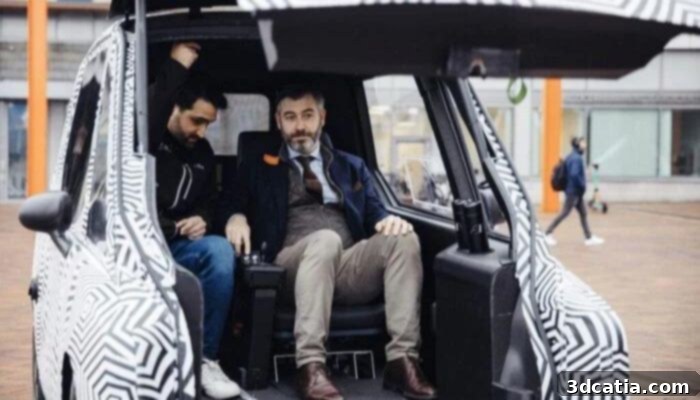
(Photo Credits: 3Dp)
The Road Ahead: Testing, Integration, and Broader Impact
As the e-Miles L7e embarks on its crucial testing phase, the commitment from its partners remains strong and forward-looking. Helsingborg and Lund University have formalized their dedication to this innovative exploration by signing a comprehensive letter of intent with The e-Miles Company. This partnership signifies more than just testing; it’s a strategic alliance aimed at exploring a wide array of applications for the e-Miles L7e within various urban contexts. Helsingborg, with its ambitious smart city initiatives and focus on sustainable urban development, is particularly poised to integrate this revolutionary electric quadricycle into its existing and future logistics networks. This integration could revolutionize everything from municipal services to private delivery companies operating within the city, drastically reducing noise pollution, improving air quality, and easing traffic congestion. The real-world data gathered during this extensive testing period will be invaluable, providing insights into vehicle performance, user acceptance, operational efficiency, and overall environmental impact. This data will inform future design iterations, production scaling, and potential policy recommendations for widespread adoption. Undoubtedly, the e-Miles L7e model stands as a truly revolutionary step forward in the collective global effort to develop and deploy eco-friendly, energy-efficient, and universally accessible mobility solutions, paving the way for smarter, greener, and more inclusive cities.
Conclusion: A Sustainable Vision for Tomorrow’s Mobility
The e-Miles L7e represents a compelling vision for the future of urban transportation, demonstrating how cutting-edge technologies like 3D printing, combined with thoughtful, human-centric design, can create vehicles that are both highly functional and deeply beneficial for society and the environment. Its extensive use of additive manufacturing not only streamlines production and reduces environmental impact but also fosters an unprecedented level of innovation in vehicle design. The vehicle’s accessible joystick control and adaptable cargo capacity underscore a commitment to inclusive and efficient urban logistics. As the e-Miles L7e undergoes its vital testing phase in Helsingborg, it is poised to become a blueprint for sustainable mobility solutions worldwide. This project highlights a powerful synergy between innovative companies, progressive cities, and academic institutions, working collaboratively to address the complex challenges of modern urban living. The implications of this project extend far beyond a single vehicle; it signals a transformative shift in how we conceive, produce, and utilize transportation in our increasingly urbanized world, promising a future of quieter, cleaner, and more accessible cities for everyone.
What are your thoughts on this pioneering 3D printed electric quadricycle? We invite you to share your insights and comments below, or join the conversation on our social media channels: LinkedIn, Facebook, and Twitter. For the latest breaking news and developments in the world of 3D printing, don’t forget to sign up for our complimentary weekly newsletter here, delivered directly to your inbox! Additionally, you can explore all our engaging videos and exclusive content on our official YouTube channel.
*Cover Photo Credits: ABC