
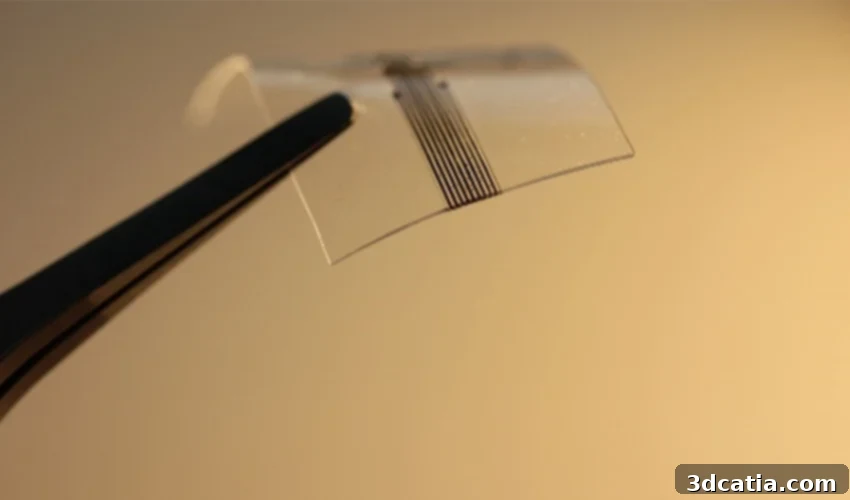
Revolutionizing Neural Interfaces: The Promise of 3D Printed Implants for Neurological Treatment
For decades, the field of neural interfaces has held immense promise, with research tracing its roots back to the 1970s. These advanced systems aim to bridge the gap between biological neural networks and external devices, offering potential solutions for a myriad of neurological disorders. However, the path to innovation has frequently been hampered by significant challenges, primarily the exorbitant costs and protracted development timelines associated with creating functional prototypes. Traditional manufacturing methods often involve intricate processes, specialized tooling, and extensive manual labor, contributing to prohibitive expenses and slow iteration cycles. This often stifles early-stage research and limits the pace at which groundbreaking concepts can be tested and refined. Fortunately, a transformative technology has emerged to counteract these long-standing limitations: additive manufacturing, commonly known as 3D printing. This revolutionary approach has enabled a collaborative research team, comprising engineers and neuroscientists from the prestigious Technical University of Dresden and the State University of St. Petersburg, to achieve a significant milestone: the successful development of a 3D printed neural implant prototype, heralding a new era for neurotechnology.
The Breakthrough: A Synergistic Blend of Biology and Electronics
The innovative 3D printed neural implant represents a remarkable convergence of advanced biology and sophisticated electronics. This pioneering device is meticulously engineered to establish a direct, seamless connection between the intricate pathways of the human brain and external computer systems. Such a profound integration holds the potential to unlock unprecedented capabilities, offering a truly effective and personalized method for managing and treating a wide spectrum of neurological diseases. Conditions like paralysis, for instance, which profoundly impact quality of life, could see transformative advancements through this technology. By creating an interface that can both receive and transmit neural signals, the implant offers a beacon of hope for restoring lost motor functions or improving communication for individuals with severe impairments.
One of the most compelling aspects of this innovation lies in its fabrication process. Leveraging the power of additive manufacturing, the implant is meticulously constructed layer by layer, utilizing specifically formulated biocompatible soft materials. Unlike rigid, traditional implants, these soft materials are designed to closely mimic the mechanical properties of biological tissues, significantly reducing the risk of inflammation, rejection, and long-term damage to delicate neural structures. This method not only drastically cuts down manufacturing costs and accelerates the production timeline, but also introduces an unparalleled level of adaptability and customization. The ability to rapidly prototype, test, and iterate designs based on specific anatomical requirements or clinical needs is a game-changer for neural interface research.
Professor Ivan Minev, a leading expert in Intelligent Health Technologies at the Faculty of Automatic Control and Systems Engineering at the University of Sheffield, eloquently articulates the profound impact of this approach. He states: “The research we have started at TU Dresden and continuing here at Sheffield has demonstrated how 3D printing can be harnessed to produce prototype implants at speed and cost that hasn’t been done before, all whilst maintaining the standards needed to develop a useful device. The power of 3D printing means the prototype implants can be quickly changed and reproduced again as needed to help drive forward research and innovation in neural interfaces.” Professor Minev’s insights underscore the paradigm shift brought about by additive manufacturing. It’s not merely about creating a device; it’s about establishing a flexible, iterative development pipeline that significantly accelerates scientific discovery and technological refinement in a field where speed and precision are paramount. This capability fosters an environment of continuous improvement, allowing researchers to explore novel designs and material compositions with unprecedented efficiency.
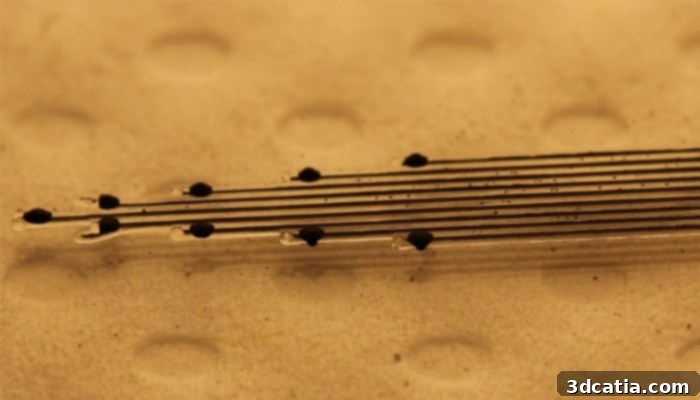
The 3D printed neural implant has been successfully tested in animals with spinal cord injuries and holds significant potential for treating paralysis in humans. (Image credits: Sheffield)
Demonstrating Efficacy and Unparalleled Adaptability
A pivotal aspect of the research involved rigorously testing the implant’s compatibility and functionality within complex biological environments. Through comprehensive studies, the researchers unequivocally proved that the implant possesses an exceptional ability to conform and fit precisely onto various neural surfaces. This remarkable adaptability extends beyond merely the brain, encompassing critical areas such as the spinal cord, intricate peripheral nerves, and even muscle tissues. The capacity for an implant to seamlessly integrate with such diverse anatomical structures is crucial for its broad applicability in treating a wide range of neurological conditions. Unlike rigid, pre-formed devices that might cause localized pressure or discomfort, the flexibility of the 3D printed implant ensures a more natural and less invasive interface, promoting better long-term acceptance and function within the body.
For the 3D printed neural implant to fulfill its promise in paralysis treatments and other human applications, its fundamental capability to perceive and transmit minute electrical impulses is paramount. These impulses are the very language of the nervous system, carrying information about movement, sensation, and thought. The research team meticulously designed and tested the implant to ensure it could accurately detect these subtle bioelectrical signals from target body areas and effectively relay them to the brain or other parts of the nervous system. The studies demonstrated tremendous success in this regard, with the 3D printed neural implant consistently and reliably communicating with the intended biological regions. This breakthrough validation signifies a critical step forward, confirming that the device can indeed act as a functional bridge, potentially enabling individuals to regain control over their movements, process sensory information, or even communicate more effectively through direct neural input.
The Road Ahead: Long-Term Integration and Personalized Neurosurgery
While the initial results are exceptionally promising, the journey towards widespread clinical application involves a series of rigorous evaluations and further research. The immediate next step for the dedicated research team is to delve into the long-term behavior and stability of the 3D printed neural implant within a living system. Permanent implantation requires comprehensive understanding of how the device will interact with biological tissues over extended periods. This includes assessing its biomechanical integrity, potential for degradation, biocompatibility, and the stability of its electronic components within the dynamic environment of the body. Only after meticulous, long-term observation confirms that the device remains unchanged, retains its functionality, and poses no adverse effects over a significant duration, will the actual procedure of implantation in human patients be considered. This cautious and thorough approach is essential to ensure patient safety and the enduring effectiveness of the therapeutic intervention.
This study marks a pivotal first step towards realizing the profound vision of personalized treatments in neurosurgery. Professor Minev further elaborated on this transformative potential, stating, “Patients have different anatomies and the implant has to be adapted to this and their particular clinical need. Maybe in the future the implant will be printed directly in the operating theatre while the patient is being prepared for surgery.” This vision highlights the ultimate goal of additive manufacturing in medicine: to move beyond one-size-fits-all solutions towards highly customized, patient-specific devices. Imagine a future where, instead of selecting from a limited range of standard implants, a neurosurgeon could, on the fly, design and 3D print an implant perfectly tailored to an individual patient’s unique neural architecture and specific clinical requirements. This level of personalization promises not only superior fit and reduced surgical complications but also optimized therapeutic outcomes, maximizing the chances of recovery and improving quality of life. The ability to print implants directly in the operating theatre would dramatically streamline surgical procedures, reduce inventory costs, and provide immediate access to bespoke medical solutions, truly revolutionizing how neurosurgical interventions are planned and executed.
The development of this 3D printed neural implant signifies more than just a technological advancement; it represents a significant leap forward in our quest to understand and interact with the human nervous system. By leveraging the flexibility and precision of additive manufacturing, researchers are now empowered to overcome historical barriers, pushing the boundaries of what’s possible in treating debilitating neurological conditions. This research instills immense hope for millions worldwide who suffer from paralysis, epilepsy, Parkinson’s disease, and other neural disorders, paving the way for a future where highly effective, customized neural interfaces become a standard of care. The ongoing commitment to long-term studies and the visionary pursuit of personalized neurosurgery underscore a future where innovative engineering directly translates into tangible improvements in human health and well-being.
What are your thoughts on this groundbreaking 3D printed neural implant and its potential impact on neurosurgery? We invite you to share your perspectives and comments below, or engage with us on our Facebook and Twitter pages! Don’t forget to sign up for our free weekly Newsletter, ensuring you receive all the latest news and innovations in the world of 3D printing delivered straight to your inbox!