
Revolutionizing Heart Transplants: UTS Pioneers 3D Bioprinting with Patient Stem Cells to Eliminate Rejection
Cardiovascular diseases (CVDs) represent a formidable global health challenge, tragically claiming approximately 17.9 million lives each year, making them the leading cause of death worldwide, according to the World Health Organization. This staggering statistic highlights the urgent and continuous demand for advanced, more effective treatments for conditions like heart failure and coronary artery disease. For patients battling end-stage heart failure, heart transplantation stands as the most effective long-term solution. However, this life-saving procedure is fraught with significant hurdles. The scarcity of donor organs leads to excruciatingly long waiting lists, forcing many patients to endure prolonged suffering while their condition deteriorates. Beyond the logistical challenges, heart transplantation involves highly invasive surgery and necessitates a lifelong regimen of potent immunosuppressive medications. These drugs, while crucial for preventing the patient’s immune system from rejecting the new organ, carry a heavy burden of severe side effects, including heightened susceptibility to infections, kidney damage, and an elevated risk of certain cancers. Moreover, the persistent threat of organ rejection—both acute and chronic—remains a primary concern, capable of leading to graft failure and, ultimately, the patient’s demise. These profound complications underscore the critical need for revolutionary approaches that can circumvent the limitations of conventional transplantation and offer a safer, more sustainable path to recovery.
In a monumental stride towards addressing these challenges, a pioneering team of researchers at the University of Technology Sydney (UTS) has made extraordinary progress in mitigating deaths linked to severe heart disease. Their innovative work centers on leveraging cutting-edge additive manufacturing techniques, more widely known as 3D bioprinting, to engineer functional human heart tissue. What sets this breakthrough apart is the use of a specially formulated, customized bio-ink derived directly from the patient’s own stem cells. This personalized approach is meticulously designed to dramatically minimize the post-transplantation complications that plague traditional methods and, crucially, to virtually eliminate the risk of immune rejection, a major cause of transplant failure. By harnessing the body’s own biological material, UTS researchers are paving the way for a new era of personalized medicine, where the limitations of donor availability and the dangers of immunosuppression could become relics of the past.

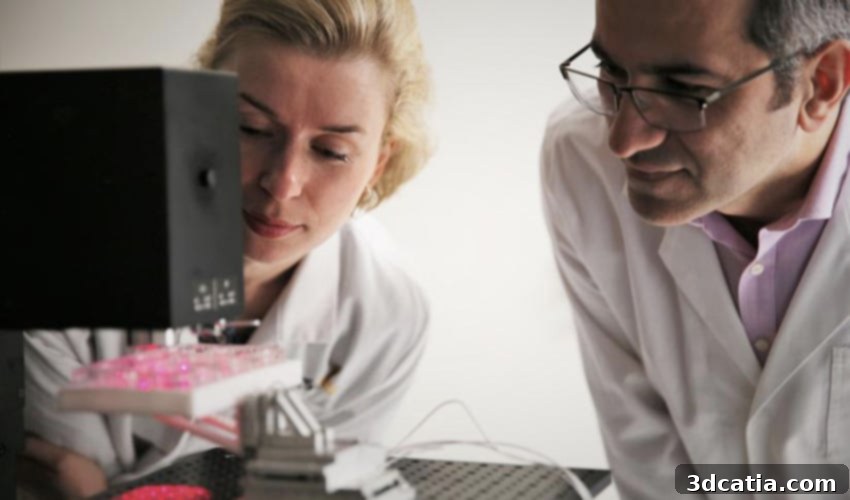
Rejection is avoided by using the body’s own stem cells (photo credits: UTS)
Dr. Carmine Gentile, the distinguished Head of the Cardiovascular Regeneration Group at UTS, elaborated on the profound implications of their novel technology. He explained that their team has successfully developed a groundbreaking methodology that enables them to meticulously 3D model and bioprint personalized heart tissues for transplantation. The cornerstone of this innovation is the ingenious utilization of the patient’s own stem cells. By incorporating these autologous cells into the bio-ink, the resultant bioprinted tissue is inherently recognized by the patient’s immune system as ‘self.’ This critical biological compatibility entirely bypasses the immune response that triggers rejection in conventional allogeneic (donor) transplants, thereby eliminating the need for arduous lifelong immunosuppressive therapy and its associated debilitating side effects. Although the initially bioprinted heart tissue might be relatively small, often described as approximately half the size of a human fingernail, its scientific and clinical potential is truly immense.
The applications of this transformative technology extend far beyond merely replacing damaged cardiac cells. This innovation offers a promising avenue for actively regenerating and repairing heart tissue that has been compromised following severe events such as myocardial infarction (heart attack). In such cases, scar tissue often replaces functional cardiac muscle, leading to impaired heart function. By precisely bioprinting viable, beating heart tissue directly onto these damaged regions, the UTS team aims to restore the heart’s contractile capabilities and significantly improve overall cardiac health. Furthermore, this advancement carries profound ethical and practical implications for medical research. The ability to create human-specific heart tissue in vitro has the potential to dramatically reduce, or even entirely eliminate, the reliance on animal experimentation for studying cardiac diseases, screening drugs, and understanding disease progression. This allows for more accurate, human-relevant research models, leading to more reliable data and potentially faster translation of discoveries into clinical therapies. The sophisticated bioprinting process commences with a detailed 3D scan of the patient’s entire heart, enabling the creation of a highly accurate digital model of the specific damaged area requiring repair. Based on this intricate blueprint, a custom-designed heart patch, perfectly contoured to precisely cover the affected region, is digitally modeled. This comprehensive information is then fed into a specialized bioprinter, which meticulously constructs the beating heart tissue, layer by intricate layer, using the advanced bio-ink enriched with the patient’s powerful stem cells. This entire workflow ensures an unparalleled level of personalization and precision, optimizing the chances of successful integration and functional restoration.
The Genesis and Evolution of 3D Bioprinting Technology at UTS
Dr. Carmine Gentile’s remarkable career in regenerative medicine is underpinned by a profound and enduring interest in the fundamental processes of life and a relentless drive for innovation. His journey began to take shape during his pharmacy training in Pisa, where his intellectual curiosity led him to explore intricate biological phenomena, particularly focusing on `blood vessel mimicry`. This area of study is critically important for tissue engineering, as a robust and functional vascular network is essential for supplying nutrients, oxygen, and removing waste products from any engineered tissue, especially larger constructs like a heart patch or, ultimately, a whole organ. This foundational understanding of vascularization proved instrumental in his subsequent endeavors. He further cultivated his expertise in the rapidly evolving field of bioprinting during his tenure in South Carolina, where he gained invaluable practical experience in manipulating cells and biomaterials to construct complex biological structures. His subsequent relocation to Australia provided a pivotal opportunity to establish and lead his own ambitious research group at UTS, dedicating himself to pushing the frontiers of cardiovascular regeneration science.
Since forming his research group, Dr. Gentile has championed a highly collaborative and interdisciplinary research model. His team actively collaborates with leading surgeons and cardiologists, whose invaluable clinical insights are critical for bridging the gap between laboratory discoveries and practical, patient-focused therapies. Crucially, the group also fosters strong partnerships with experts from the 3D bioprinting and pharmaceutical industries. This collaborative ecosystem is vital, ensuring that the research undertaken is not only scientifically rigorous and innovative but also strategically aligned towards practical application, scalability, and eventual clinical translation. This powerful synergy between academic research, frontline clinical expertise, and industrial innovation is a defining characteristic of successful translational science and accelerates the pace at which breakthroughs can reach patients. Dr. Gentile expressed his profound satisfaction with his team’s progress, stating, “Our studies are driven by our passion, and I am very pleased with the support my team at UTS has received.” This powerful statement not only reflects the significant scientific advancements achieved but also underscores the collective dedication and unwavering commitment of the UTS team to advancing the field of cardiac bioprinting and making this potentially life-changing technology broadly accessible to those who need it most, envisioning a future where regenerative solutions are readily available.
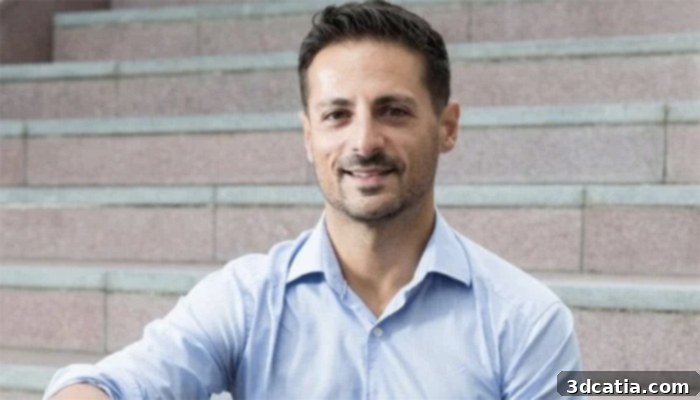
Dr. Carmine Gentile, head of the cardiovascular regeneration group at UTS (photo credits: UTS)
The long-term implications of this pioneering research extend far beyond the immediate application of targeted heart patches. This personalized bioprinting technology heralds a significant leap forward in addressing the critical global shortage of donor organs, potentially transforming the landscape of organ transplantation by reducing or even eliminating the need for immunosuppressive drugs and dramatically enhancing the quality of life for countless heart failure patients. Furthermore, the capacity to create functional human heart tissue in a controlled environment opens exciting new avenues for pharmaceutical research. It enables the development of more accurate and human-relevant drug testing platforms, which can better predict the efficacy and potential toxicity of new medications in human physiology, thereby reducing the reliance on less representative animal models and accelerating drug discovery. This technology also paves the way for advanced disease modeling, empowering scientists to study the intricate progression of cardiovascular conditions in a precise, human-specific context. Such models can lead to a much deeper understanding of cardiac diseases, facilitating the development of highly targeted and effective therapies previously unattainable.
While the promise of 3D bioprinting for heart regeneration is immense, the journey from laboratory breakthrough to widespread clinical application demands rigorous testing, overcoming scalability challenges, and navigating complex regulatory frameworks. Nevertheless, the foundational and groundbreaking work undertaken by Dr. Gentile and his dedicated team at UTS marks a pivotal moment in the history of regenerative medicine. Their pioneering efforts in 3D bioprinting with patient-derived stem cells offer a powerful beacon of hope for millions globally who suffer from debilitating cardiovascular diseases, propelling us closer to a future where true heart regeneration is not merely a scientific aspiration, but a tangible and accessible reality for patient care.
To learn more about the cutting-edge research being conducted by the cardiovascular regeneration group at UTS, we invite you to visit their official page HERE. We highly value your insights and encourage you to share your thoughts on how 3D bioprinting could revolutionize heart transplants and the broader field of regenerative medicine. Please let us know your perspective in a comment below or connect with us on our vibrant social media platforms: LinkedIn, Facebook, and Twitter pages! Don’t miss out on the latest advancements in additive manufacturing—be sure to sign up for our free weekly Newsletter here, delivering the most current 3D printing news directly to your inbox! Additionally, you can find all our compelling and informative videos, offering visual insights into the world of 3D printing, on our dedicated YouTube channel.
*Cover photo credit: University of Technology Sydney