
Revolutionizing Dental Practices: Key Applications of 3D Printing in Dentistry
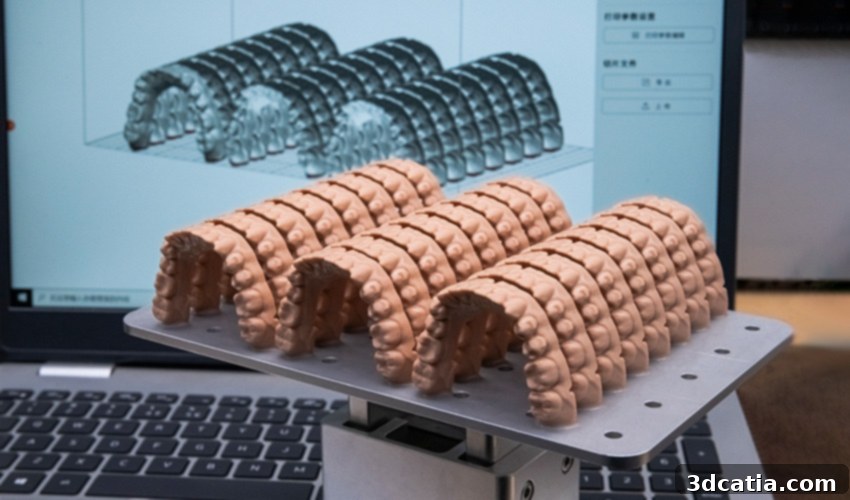
The field of dentistry is undergoing a profound transformation, largely spearheaded by the integration of advanced digital technologies. Among these innovations, 3D printing, also known as additive manufacturing, has emerged as a particularly influential force. This cutting-edge production method empowers dental professionals to fabricate highly customized parts and devices, meticulously tailored to the unique physiological needs and oral morphology of each individual patient. Whether utilizing the precision of resin-based additive manufacturing or the robust capabilities of powder bed fusion, 3D printing has opened up an extensive array of possibilities for dental clinics, laboratories, and patients alike. This digital revolution in dentistry often operates within a cohesive ecosystem, seamlessly integrating with other state-of-the-art solutions. This includes sophisticated CAD (Computer-Aided Design) software for intricate design creation and advanced dental 3D scanners capable of capturing the patient’s exact dental anatomy with unparalleled detail. In essence, this powerful synergy of new technologies delivers a wide spectrum of benefits, significantly enhancing the quality, efficiency, and accessibility of modern dental care. But beyond these overarching advantages, what specific applications are truly making a tangible impact in the dental sector? Which innovative technologies are being adopted, and for what precise purposes? In this comprehensive article, we will explore the principal uses of 3D printing and its allied digital technologies that are actively reshaping the landscape of modern dentistry.
3D Scanning in the Dental Sector: The Digital Foundation
While not a direct 3D printing application in itself, 3D scanning constitutes a critical preliminary step in the digital dental workflow, making it an indispensable component for contemporary additive manufacturing processes in dentistry. The widespread adoption of 3D scanners has become increasingly common, establishing itself as the fundamental gateway for digital impression-taking. These sophisticated devices enable dental healthcare professionals to meticulously digitize the complex structures within a patient’s mouth. This can be accomplished either directly, through the use of an intraoral scanner that captures a detailed digital impression in real-time, or indirectly, by digitizing traditional physical impressions using a dedicated laboratory scanner. Both methods produce a high-resolution digital file, typically exported in standard formats like STL, which is then ready for subsequent CAD manipulation and precise 3D printing. The advantages of integrating 3D dental scanning are numerous and significant. Foremost is the unparalleled precision and accuracy achieved, often far exceeding that of conventional impression techniques. This digital fidelity is paramount for creating perfectly custom-made dental devices that conform precisely to the patient’s unique morphology. Furthermore, the digital nature of these records offers immense practical benefits. For example, if a patient requires an emergency prosthesis or a replacement device, there is no need for uncomfortable, time-consuming new impressions; the digitized data is readily accessible and can be quickly retrieved. This not only significantly saves chair time for the patient but also streamlines the workflow for the dental professional, leading to a more efficient, hygienic, and patient-friendly experience. Moreover, digital archives are easily shareable, facilitating seamless collaboration between clinics and dental laboratories globally.
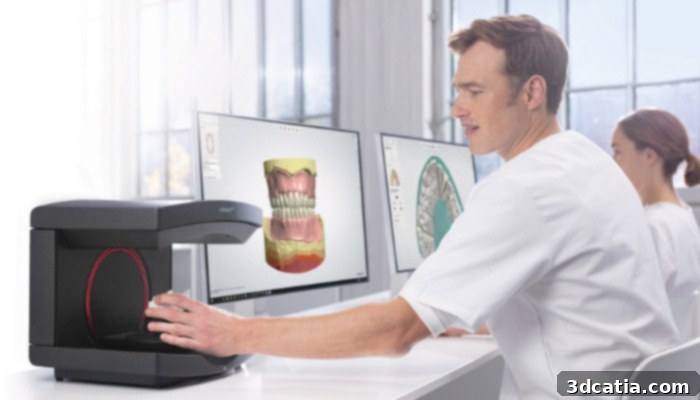
Photo credits: 3Shape
3D Printed Crowns and Bridges: Restoring Smiles with Unmatched Precision
Dental crowns and bridges represent some of the most common and essential restorative treatments in modern dentistry, primarily used to replace missing teeth or to restore severely damaged ones. While both serve to restore functionality and aesthetics, their applications differ in scope: dental crowns are designed to fully cover or “cap” a damaged or decaying tooth, protecting it from further deterioration, or to be placed over a dental implant when a natural tooth is no longer present. Bridges, conversely, are employed to fill the void left by one or more missing teeth, typically consisting of two crowns (known as abutments) on either side of the gap, which serve to anchor artificial teeth (pontics) in between. In this critical domain of restorative dentistry, 3D printing is increasingly playing a pivotal role, offering substantial advantages over traditional manufacturing methods. Resin-based 3D printing technologies, such as Stereolithography (SLA) and Digital Light Processing (DLP), are frequently utilized to produce highly accurate, aesthetically pleasing, and biocompatible temporary crowns and bridges. These interim restorations are crucial during the period while permanent prosthetics are being custom-fabricated. The growing popularity of 3D printing for this application is driven by several compelling benefits: it enables significantly faster production times compared to labor-intensive traditional milling processes, and it often proves to be more cost-effective. Furthermore, the digital design capabilities ensure an exceptionally precise fit and a natural, patient-specific aesthetic. Although the majority of 3D printed crowns and bridges currently function as temporary solutions due to the ongoing development of dental resins to match the long-term durability of materials like zirconia or metal alloys, continuous research and advancements in material science are rapidly improving their mechanical properties and longevity. This persistent innovation suggests that highly durable, permanent 3D printed restorative solutions are on the horizon, poised to further revolutionize the way dental prosthetics are conceived and delivered.
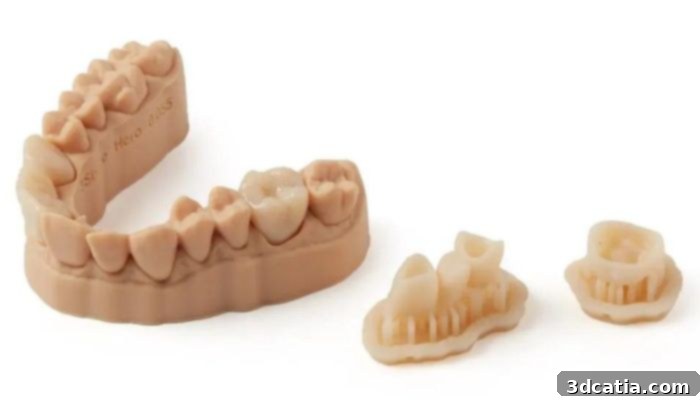
Photo credit: Formlabs
Aligners and Retainers: Advanced Customized Orthodontic Solutions
The production of a growing number of dental devices through additive manufacturing has not only dramatically increased manufacturing speed but has also ushered in an era of unparalleled customization. This aspect is critically important in the dental sector, particularly in orthodontics, where each patient’s oral anatomy is distinctly unique. Clear aligners and retainers are prime examples of this advancement – these innovative devices are utilized to either prevent unwanted tooth movement or to precisely guide teeth into their desired positions, offering a discreet and comfortable alternative to traditional metal braces. The digital workflow for producing these orthodontic aids typically commences with a high-accuracy 3D scan of the patient’s mouth, often captured using an intraoral scanner. This digital impression is then imported into specialized CAD software, where the orthodontist or lab technician meticulously designs the precise series of aligners required to execute the treatment plan. Once the digital file is finalized, it is transmitted to a 3D printer. Resin-based additive manufacturing technologies, such as Stereolithography (SLA), Digital Light Processing (DLP), or Masked Stereolithography (MSLA), are predominantly favored for their capability to produce models with exceptional detail, smooth surface finishes, and biocompatibility. The specific technology chosen often depends on the required precision, desired production speed, and material properties. After the printing phase, the models undergo essential post-processing, which typically includes cleaning, UV curing, and support removal. These highly accurate 3D printed models then serve as precise molds over which biocompatible plastic sheets are thermoformed to create the final, custom-fit aligners or retainers. Industry leaders such as Formlabs, with their advanced Form 3B+ printer, and Stratasys, featuring their powerful J700 Dental 3D printer, are at the forefront of empowering dental professionals to efficiently and effectively produce these cutting-edge customized orthodontic solutions, thereby transforming patient treatment outcomes and experiences.
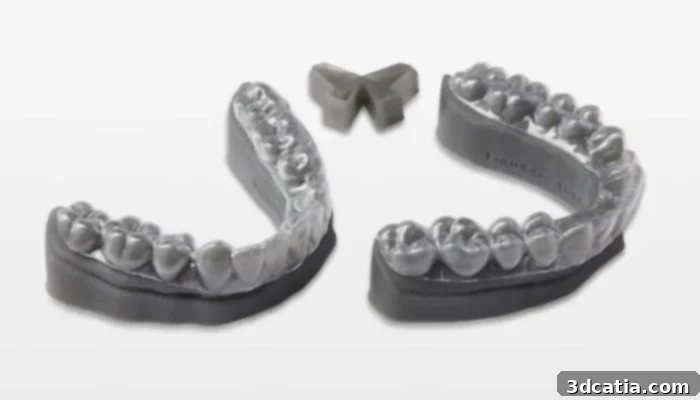
Photo credit: Formlabs
Dental Implants: Revolutionizing Functionality and Aesthetics
The unfortunate loss of a tooth necessitates prompt and effective intervention, frequently requiring a dental implant to prevent the degradation of surrounding bone tissue that would otherwise occur due to insufficient functional stress. Additive manufacturing has dramatically advanced the process of creating dental implants, offering benefits that extend far beyond simple on-demand production. With advanced 3D printing technologies, implants can be fabricated not only with exceptional speed but also with an unparalleled degree of individualization. This customization is of paramount importance in dental healthcare, as each patient’s oral anatomy, bone density, and aesthetic preferences are entirely unique. The precise manufacturing capabilities of 3D printing, particularly for the intricate components utilized in dental implant surgery, ensure that patients retain their natural bite ability and optimal chewing function without any compromise. This technology facilitates the creation of implants with specific geometries, including porous structures that actively promote osseointegration—the direct structural and functional connection between living bone and the surface of a load-bearing artificial implant. Advanced metal 3D printing technologies, such as Selective Laser Melting (SLM) or Electron Beam Melting (EBM), are commonly employed to produce high-strength, biocompatible titanium implants that integrate seamlessly and durably with the patient’s jawbone. Furthermore, 3D printing is increasingly recognized as a more economical and sustainable method of production compared to traditional subtractive manufacturing techniques, which often generate more material waste. Continuous innovation in both materials science and printing technologies is making the fabrication of custom dental implants more accessible, efficient, and reliable. This leads to significantly shorter lead times, reduced material consumption, and ultimately, a more predictable and successful outcome for patients requiring tooth replacement, thereby profoundly enhancing their oral health and overall quality of life.
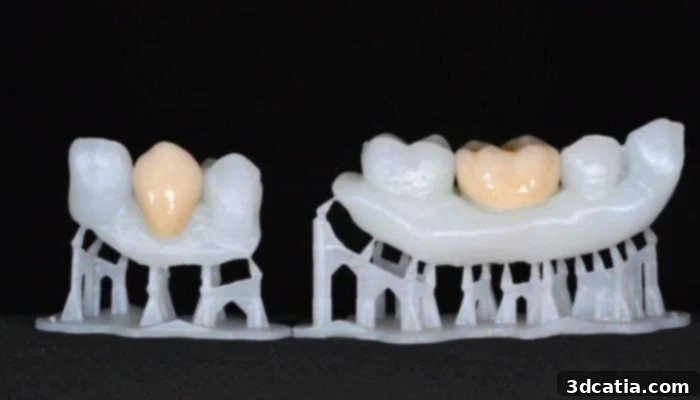
Photo credit: Formlabs
Surgical Guides: Enhancing Precision and Safety in Dental Procedures
One of the most valuable and transformative applications of 3D printing in dentistry is the fabrication of highly accurate surgical guides, particularly for dental implant placement procedures. This advanced technique represents a significant leap forward, not only in dentistry but also in the broader context of precision surgical planning across medical disciplines. For as long as dental implants have existed, achieving consistently accurate placement has presented a considerable challenge for dentists due to the complex anatomical variations, inconvenient access angles, and inherently limited visibility within the oral cavity. These intrinsic difficulties have often resulted in misplaced implants, potentially leading to compromised oral health outcomes, extended recovery periods, and the need for costly corrective procedures. Surgical guides are specifically designed to directly address these critical issues by equipping dentists with an indispensable tool for precise, predictable, and safer implant surgery. Essentially, a surgical guide is a custom-designed, single-use device, typically manufactured from biocompatible resin using 3D printing technologies like SLA or DLP. It is precisely engineered to fit securely and stably over a patient’s existing teeth or alveolar ridge, acting as a rigid template. The guide features meticulously designed holes or sleeves that precisely dictate the optimal position, angle, and depth for drilling during the implant placement procedure. This guided approach dramatically minimizes the potential for human error and significantly enhances the accuracy of the procedure, offering up to three times more precision compared to freehand placement. The digital workflow involves obtaining a high-resolution 3D scan of the patient’s mouth, followed by meticulous digital planning using specialized software to determine the ideal implant position relative to vital anatomical structures. This precise digital plan is then used to 3D print the custom surgical guide. The benefits are profound: improved patient safety, reduced chair time, minimized post-operative complications, and ultimately, more predictable long-term success rates for dental implants. Surgical guides truly exemplify how additive manufacturing elevates the standard of care in modern, digitally-driven dentistry.
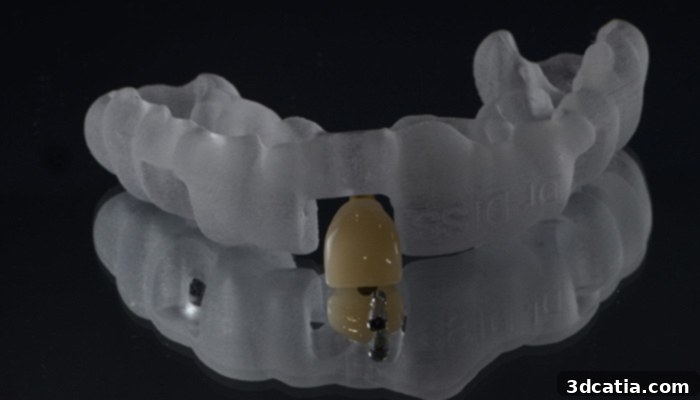
Photo credit: Arenas Dentistes
Anatomical Replicas and Models: Enhanced Visualization and Treatment Planning
Anatomical models, within the context of dentistry, are highly accurate three-dimensional representations of a patient’s oral structures, meticulously crafted based on precise intraoral or laboratory scans of the jaw and mouth. These models serve as invaluable diagnostic and planning tools throughout various stages of dental care, from initial assessment and comprehensive treatment planning to effective patient education and detailed inter-clinician discussions. They provide dentists with a tangible, detailed replica of the specific area of interest, allowing for thorough examination, precise pre-surgical planning, and even practice runs of complex surgical procedures. This tactile interaction significantly reduces the risk of operational errors and markedly enhances overall procedural confidence. Traditionally, dental models were laboriously created using plaster or stone casts derived from physical impressions. This manual process was not only time-consuming and labor-intensive but also involved considerable wait times for the model to properly set and cure. The advent of 3D printing in dentistry has revolutionized this aspect of practice. By directly utilizing intraoral scans as the foundational input, 3D printers can rapidly and efficiently produce exceptionally accurate anatomical models layer by layer. This digital workflow completely eliminates the need for messy, uncomfortable physical impressions and significantly accelerates turnaround times, enabling quicker diagnoses and more timely initiation of treatment. The choice of additive manufacturing technology for these models depends primarily on their intended application. For basic study models or educational tools, FDM (Fused Deposition Modeling) printers with cost-effective filament materials can be sufficient. However, for more intricate, high-detail replicas demanding exceptional accuracy and superior surface finishes—crucial for precise restorative work—SLA (Stereolithography) or DLP (Digital Light Processing) resin printers are the preferred choice. While traditional plaster-based methods still retain some utility, the numerous advantages of 3D printed models—including their inherent precision, speed of production, ease of digital storage and retrieval, and the ability to be duplicated identically—are rendering them increasingly popular and an indispensable component of modern dental practice. They also facilitate a more interactive and comprehensible explanation of complex treatment plans to patients, fostering better understanding, trust, and compliance.
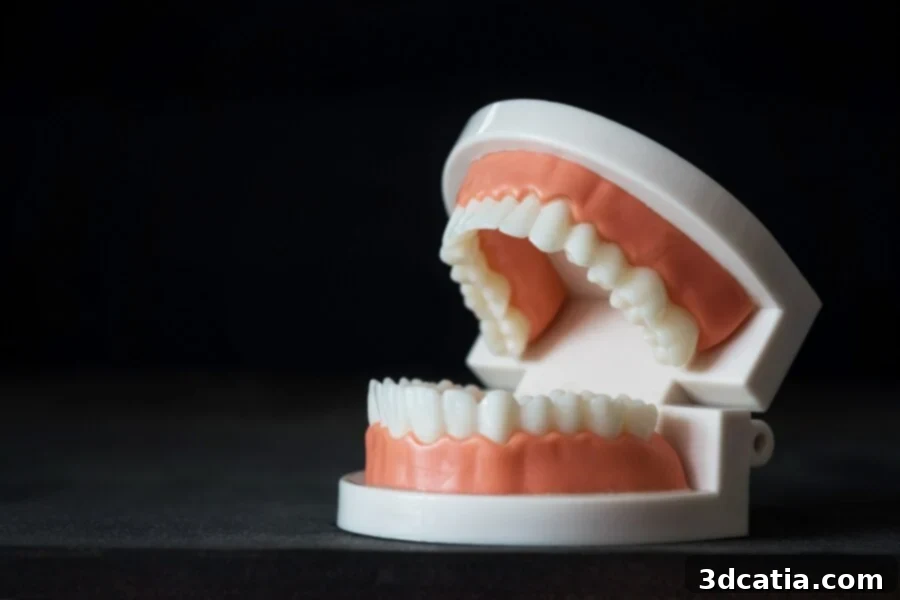
Photo credit: freepik.com
Dentures: Advancing Accessibility and Customization with 3D Printing
The application of 3D printing to produce dentures represents an emerging and extraordinarily promising technology that holds the potential to fundamentally streamline and significantly enhance the entire denture fabrication process. The traditional method of milling dentures from a resin base is notoriously labor-intensive, often necessitating multiple, time-consuming patient visits to the dentist for impressions, try-ins, and subsequent adjustments. In stark contrast, 3D printing offers a revolutionary pathway to producing high-quality, fully customized dentures in a substantially quicker and more cost-effective manner. While the technology is in a state of continuous evolution, initial indications regarding its efficacy and patient acceptance are overwhelmingly positive. Early limitations related to aesthetic fidelity and the resolution capabilities of earlier 3D printers are being rapidly overcome through continuous advancements in material science and sophisticated printer technology. Recent developments have seen new materials specifically formulated for denture production receive the coveted CE mark, officially signifying their safety and suitability for use within the European Economic Area. Furthermore, patient studies have consistently reported high levels of acceptance and satisfaction with 3D printed dentures, frequently citing enhanced comfort and a superior fit as key advantages. Leading dental technology companies such as Formlabs are already at the forefront, offering comprehensive digital denture solutions that promise substantial cost savings – in some cases, reducing expenses by more than half compared to conventionally milled dentures. The socio-economic implications of widely integrating additive manufacturing into denture production are particularly profound. By significantly reducing production costs and accelerating lead times, 3D printing possesses the immense potential to make high-quality, custom dentures far more accessible to a broader segment of the population, including those in underserved communities or with limited financial resources. This democratization of advanced dental care could dramatically improve oral health outcomes and overall quality of life for millions, marking a pivotal and progressive step towards a more inclusive future for prosthetic dentistry worldwide.
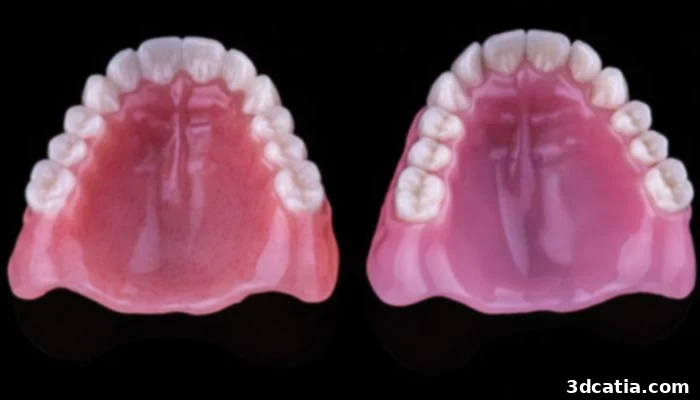
This image shows a 3D printed denture set (left) and a milled set (right). Photo credit: Aegis Dental Network
Casting Patterns: Streamlining Indirect Dental Manufacturing Processes
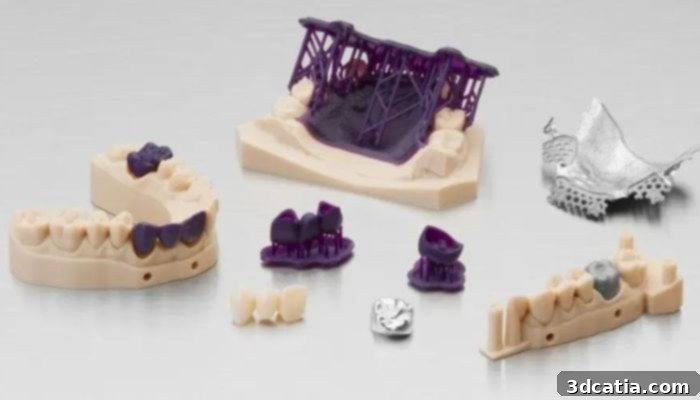
Beyond the direct production of definitive end-use dental components such as crowns, bridges, and aligners, 3D printing also plays an indispensable role in indirect dental manufacturing processes, most notably in the creation of highly precise casting patterns. Dental casting patterns are intricate, three-dimensional replicas that serve as foundational models for the subsequent manufacturing of custom metal or ceramic dental restorations. These patterns are essential for creating a diverse range of components, including fixed bridges, partial dentures, copings, and substructures. Traditionally, the process of creating these patterns involved patients biting down into uncomfortable wax or alginate impression materials to generate a physical mold. This conventional method was often susceptible to inaccuracies, demanded significant manual skill and artistry from dental technicians, and was inherently time-consuming for both the patient and the dental laboratory. With the advent of comprehensive digital dentistry, this entire process has been remarkably streamlined and optimized. The modern workflow typically commences with a high-resolution 3D scan of the patient’s oral cavity or an existing physical impression. This digital data is then meticulously utilized within specialized CAD software to design the precise casting pattern with extreme accuracy. Once designed and verified, the pattern is then 3D printed, typically employing specialized burnout resins that are engineered to evaporate cleanly and completely during the subsequent investment casting process, leaving absolutely no residue. After the printing phase, the pattern undergoes essential post-processing, which includes thorough cleaning, precise UV curing, and careful removal of support structures. This flawless 3D printed pattern is then invested in a refractory material, and once solidified, the resin is burned out in a furnace, creating a perfectly shaped cavity into which molten metal or ceramic slurry is then cast. This innovative digital approach ensures unparalleled accuracy, eliminates the discomfort and variability of traditional impressions for the patient, and significantly accelerates the turnaround time for producing complex, custom dental restorations. The result is a more efficient, precise, and patient-friendly methodology for creating durable and exquisitely well-fitting dental prosthetics, further solidifying 3D printing’s indispensable and transformative role in contemporary dental laboratories and practices.
The profound integration of 3D printing and its associated digital technologies is undeniably transforming the dental industry, ushering in a future where precision, customization, and efficiency are not just aspirations but fundamental realities. From providing detailed diagnostics with advanced 3D scanning to the rapid and accurate fabrication of patient-specific implants, crowns, and orthodontic devices, additive manufacturing is empowering dental professionals to deliver a superior standard of care. We sincerely hope this comprehensive overview has successfully illuminated the myriad ways these groundbreaking innovations are revolutionizing oral healthcare across the globe. What are your thoughts on these remarkable advancements? Are there any other groundbreaking applications of dental 3D printing you believe we should highlight in future discussions? We warmly invite you to share your valuable insights in a comment below or connect with us on ourLinkedIn,Facebook, andTwitter pages! Don’t forget to sign up for our free weeklyNewsletter here to receive the very latest 3D printing news, delivered straight to your inbox! You can also find all our engaging videos and educational content on our dedicatedYouTube channel.