
Exploring the Boundless Canvas: How 3D Printing is Revolutionizing the Art World
3D printing, or additive manufacturing, is redefining the adage “art knows no boundaries,” unequivocally proving the profound compatibility between advanced technologies and creative expression. Far from being at odds, these two realms are converging to empower artists with unprecedented freedom and capabilities. The inherent versatility of additive manufacturing processes allows artists to push beyond traditional constraints, enabling the realization of highly complex geometries and intricate details that were once impossible. This design freedom opens up a myriad of possibilities, from creating flawless replicas of historical artifacts for museums to crafting entirely new forms of contemporary art. Increasingly, the focus is shifting towards the additively manufactured object as a work of art in itself, rather than merely a tool for reproduction. Artists are embracing 3D printing as a versatile medium, a powerful instrument that transforms abstract ideas into tangible realities with virtually no limitations – save for the laws of physics. In this exploration, we delve into a selection of compelling contemporary examples that vividly illustrate the transformative impact and growing significance of 3D printing across diverse artistic disciplines.
Hypnerotomachia Naturae: A Concrete Exploration of Man, Nature, and Technology
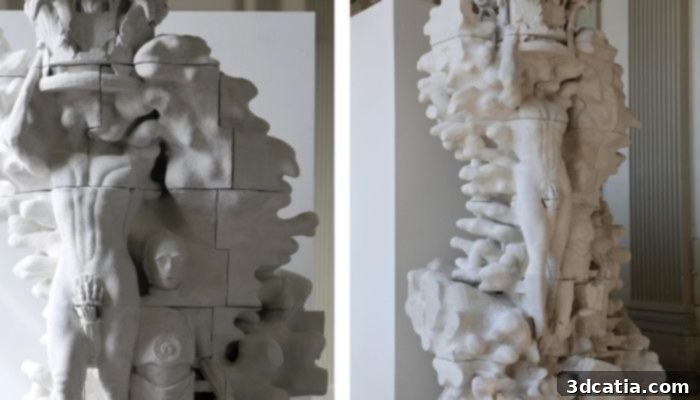
The captivating sculpture titled “Hypnerotomachia Naturae,” a collaborative masterpiece by Stefan Maier and Giacomo Pala, conceived under the expert guidance of Bart Lootsma at the University of Innsbruck’s Institute for Architectural Theory, immediately evokes the impression of an intricate construction kit. This modular design is a deliberate artistic choice, serving as a powerful metaphor for the intricate connections and often paradoxical contradictions that define humanity’s relationship with both nature and technology. This thought-provoking work was meticulously fabricated using concrete 3D printing, a process undertaken in collaboration with concr3de. Its debut was at the acclaimed exhibition ‘Beauty Before Wisdom: The Knowledge of Art and the Art of Science’ held at the Tiroler Landesmuseum in Innsbruck. The installation presents a multitude of distinct individual components, each carefully designed to interlock and form a cohesive, monumental whole. Each individual object within this larger structure is imbued with thematic significance, prompting viewers to contemplate the vast diversity of human utopias, ancient myths, and rich cultural narratives, all unified through the lens of modern fabrication.
Mat Collishaw’s Equinox at the Dubai Expo 2020: A Gigantic 3D Printed Zoetrope
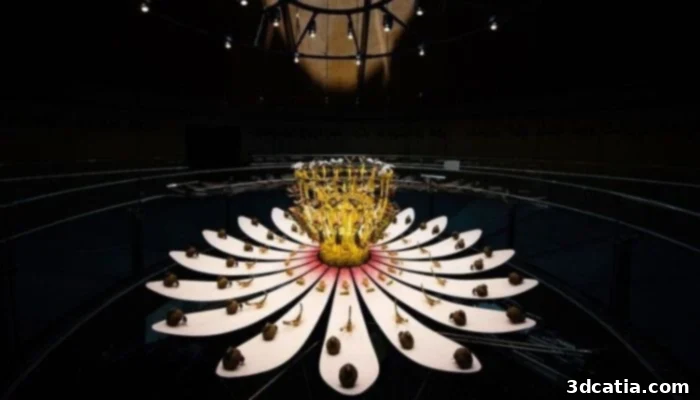
For the highly anticipated World Expo 2020 in Dubai, which commenced on October 1st, 2021, after a pandemic-induced delay, acclaimed artist Mat Collishaw unveiled a truly extraordinary work titled “Equinox.” Housed within the Terra Pavilion, this magnificent creation presents an optical illusion of a gigantic lotus flower that appears to spring to life at its center. The artistic spectacle unfolds as the blossoms gracefully spin, while meticulously crafted insects circle and flutter around the flower, mimicking the delicate act of pollination. To orchestrate this mesmerizing “ecological dance,” the five-meter-high and three-meter-wide zoetrope employs a sophisticated hydraulic system that enables its petals to open and close with fluid precision. A crucial detail in its construction is that all the intricate petals were meticulously produced using 3D printing technology. While the exact additive manufacturing process employed by Collishaw for this particular installation remains undisclosed, it is known that he previously leveraged 3D printing for a similar zoetrope project at the Galleria Borghese in Rome, in collaboration with the Spanish company Sicnova 3D. This project powerfully demonstrates how 3D printing can be integral to creating large-scale, dynamic, and immersive artistic experiences.
A Groundbreaking 3D Printed Replica of Michelangelo’s David
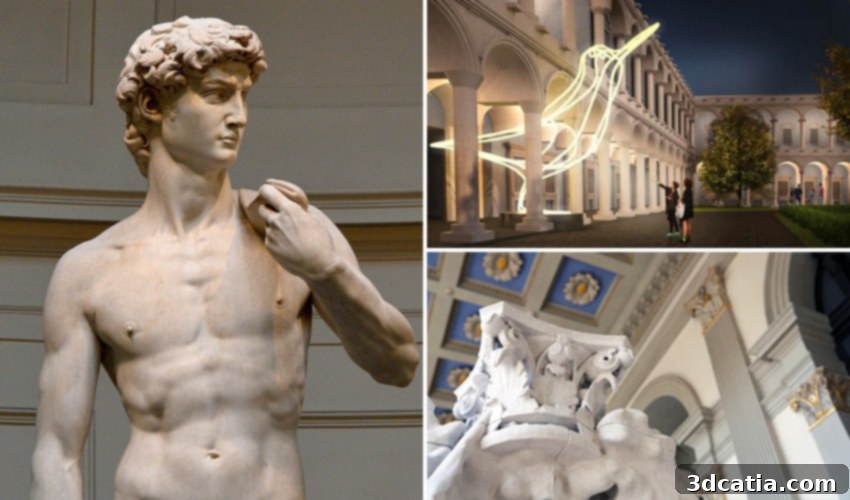
Commissioned specifically for the Italian pavilion at the World Expo 2020 in Dubai, a monumental feat of modern technology brought forth a precise replica of Michelangelo’s iconic David, realized through advanced 3D printing. This ambitious project was a collaborative effort between the engineering department of the University of Florence and the Swedish industrial technology group Hexagon. The resulting 3D printed statue, which faithfully captures the biblical hero David poised before his epic confrontation with the giant Goliath, stands at the exact imposing height of the original, exceeding 5 meters. To ensure unparalleled accuracy and fidelity, the original masterpiece underwent thousands of high-resolution scans, generating a comprehensive digital model. For the actual printing phase, the project organizers strategically decided to segment the digital model into 14 distinct, printable pieces. These components were then meticulously 3D printed from durable acrylic resin. Following the printing, skilled art restorers undertook the delicate task of assembling these pieces, utilizing a combination of specialized glue and fine marble dust to seamlessly blend the sections and achieve a surface finish remarkably similar to the original marble. This project represents a spectacular fusion of art preservation, digital fabrication, and expert craftsmanship, showcasing the potential of 3D printing to safeguard and disseminate cultural heritage on a global scale.
The Silent Orchestra: A Bio-Inspired 3D Printed Acoustic Sculpture
Conceptualized by artist Peter Lang and meticulously developed in collaboration with acoustics experts from the University of Applied Sciences in Rosenheim, The Silent Orchestra stands as a remarkable 3D printed sculpture with a dual purpose. Drawing profound inspiration from the intricate and naturally occurring structures of wasps’ and hornets’ nests, this innovative work functions not only as a visually striking art piece but also as an effective acoustic absorber. The sculpture is composed of numerous tubes of varying sizes and configurations, all precisely fabricated using the FDM (Fused Deposition Modeling) 3D printing process. Peter Lang’s unique workflow involved a fascinating blend of traditional craftsmanship and modern technology: he began by hand-drawing the precise outline of the object for each layer on large 3 x 6 meter sheets of fleece, which were then meticulously scanned. Subsequently, in a groundbreaking partnership with Additive Tectonics, the sound-absorbing structure was 3D printed from Tecnaro’s Arboblend biopolymer, a material celebrated for being 100% bio-based. This unique and sustainable work of art exemplifies how advanced additive manufacturing can bridge the gap between aesthetic beauty and functional design, offering an elegant solution for sound absorption while championing eco-friendly materials and innovative creative processes.
Claude Monet’s Famous Water Lilies, Reimagined through 3D Printing
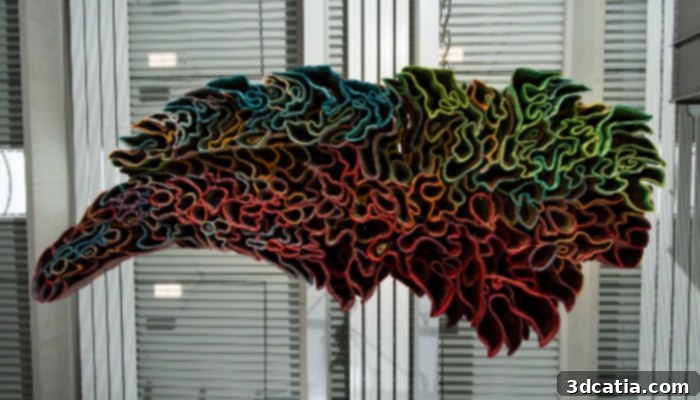
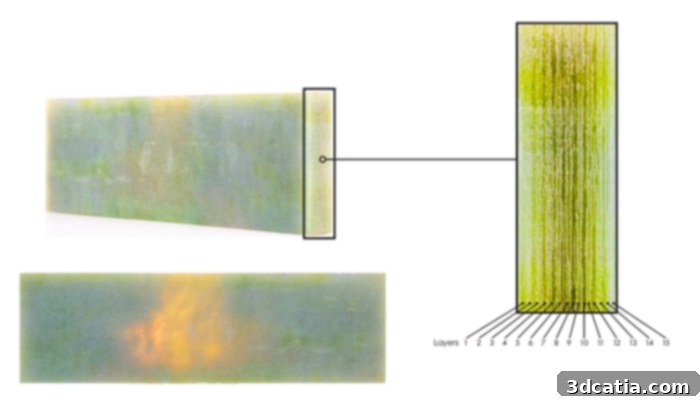
Joseph Coddington, an innovative student at Victoria University of Wellington, embarked on a fascinating project that ingeniously fuses cutting-edge 3D printing technologies with masterpieces of art history. His research specifically investigated the application of voxel additive manufacturing to replicate a panel from Claude Monet’s iconic “Water Lilies” collection, a renowned series of Impressionist paintings created between 1914 and 1926. To achieve this, Coddington first meticulously digitized the chosen painting, translating its subtle nuances of color and texture into a comprehensive digital model. He then utilized a Stratasys J750 3D printer, a state-of-the-art machine capable of multi-material and multi-color printing, to produce the physical replication. This advanced voxel printing method uniquely allowed him to precisely define a specific color for each individual volumetric pixel, or “voxel,” throughout the entire volume of the final 3D printed model. Coddington articulated that his primary objective was to demonstrate the novel applications and artistic qualities that voxel 3D printing can introduce to the art world, particularly in creating tangible, multi-dimensional representations of classical two-dimensional artworks, thereby enriching both art preservation and tactile appreciation.
The Yinyun Art Installation: A Data-Driven Ceramic Landscape
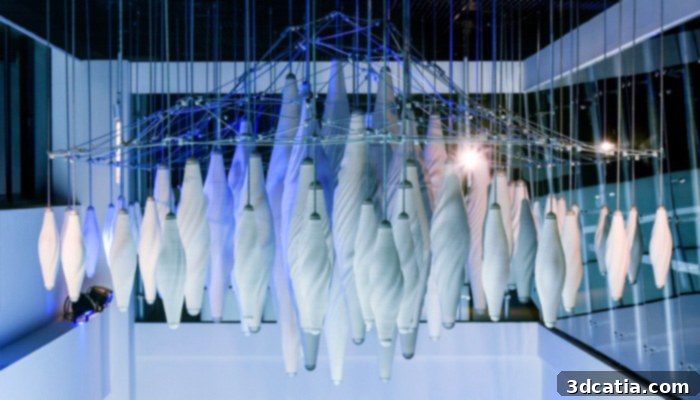
The intriguing “Yinyun” is a dynamic art installation comprising 85 individually unique 3D printed ceramic pieces, prominently displayed in the Taipower D/S ONE showroom in Taipei, Taiwan. The successful realization of this complex project hinged on the innovative application of a generative design algorithm. This algorithm was employed to extract intricate electrical data and subsequently visualize it across each individual ceramic unit, resulting in a captivating gradient effect that visually represents the underlying data streams. Following the digital design phase, advanced additive manufacturing technologies were utilized to precisely fabricate each ceramic component. Notably, the ceramic material itself was specifically formulated from a blend of recycled materials, emphasizing sustainability in its creation. Through this precise technique, the designers were also able to achieve an exquisitely detailed surface relief on each piece, enhancing their tactile and visual complexity. A defining characteristic of the Yinyun installation is the inherent complexity of its forms, ensuring that no two of the 85 units are precisely identical, creating a diverse and interconnected ceramic landscape that reflects the flow of information.
Sebastian Errazuriz and his 3D Printed Sculptures: The Beginning of the End
New York-based designer and artist Sebastian Errazuriz unveiled a provocative collection of statues at New York’s Elizabeth Collective gallery in May 2019. While the project, aptly titled “The Beginning of the End,” is a few years old, its commentary remains incredibly pertinent. Errazuriz took some of the most prominent personalities of our time – figures like Steve Jobs, Donald Trump, Elon Musk, and Jeff Bezos – and transformed them into classical 3D printed busts, reminiscent of ancient Roman mythology. This juxtaposition serves as a potent commentary, aiming to highlight and even critique the profound technological shifts that are rapidly reshaping human society. The artist uses the very technology he critiques as a means to denounce the pervasive impact of modern innovation. For instance, the bust of Facebook’s founder is poignantly named “The New Opium,” reflecting society’s growing addiction to social networks. The creation process was painstakingly thorough: Errazuriz’s team spent several months meticulously collecting and analyzing hundreds of images of these personalities to accurately reconstruct their features in 3D. Although the specific 3D printing technology employed was not disclosed, the resulting sculptures boast an impressive level of detail, bringing these contemporary titans into the realm of timeless, albeit critical, art. The accompanying video offers a comprehensive overview of this compelling project.
Mellifera: The 3D Printed Beehives by Arthur Mamou-Mani
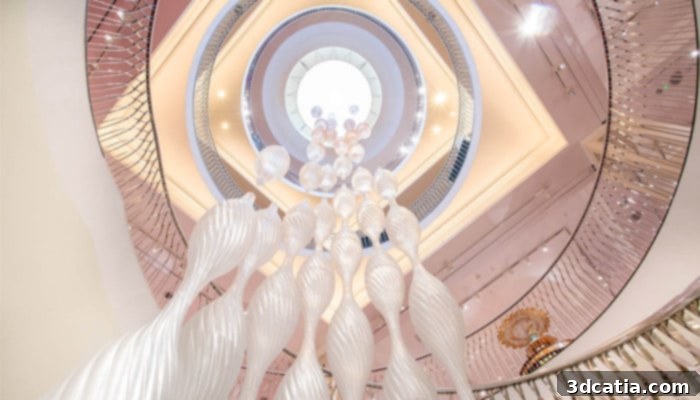
During the celebrated London Design Festival held in September, French architect Arthur Mamou-Mani presented “Mellifera: The Dancing Bee Hives,” an exquisite collection of 3D printed structures that evoke the organic beauty and complexity of natural beehives. These striking installations, fabricated entirely from eco-friendly PLA, were strategically positioned within the elegant spiral staircase of the renowned Fortnum & Mason store in Piccadilly. Mamou-Mani’s artistic and architectural endeavor carried a profound ecological message: to underscore the critical importance of bees within our ecosystem and to highlight the urgent need to re-evaluate and rehabilitate our urban environments to ensure their survival. His deliberate choice of 3D printing, specifically utilizing PLA, was driven by its significantly lower environmental impact. In an interview, Arthur Mamou-Mani emphasized that PLA boasts a carbon footprint up to 80% lower than its petroleum-based equivalents, making it an ideal material for sustainable and impactful public art. This project beautifully merges intricate design, technological innovation, and a powerful call to environmental consciousness.
MAD Architects’ 3D-Printed Furniture at Milan Design Week: The “Meteor” Chairs
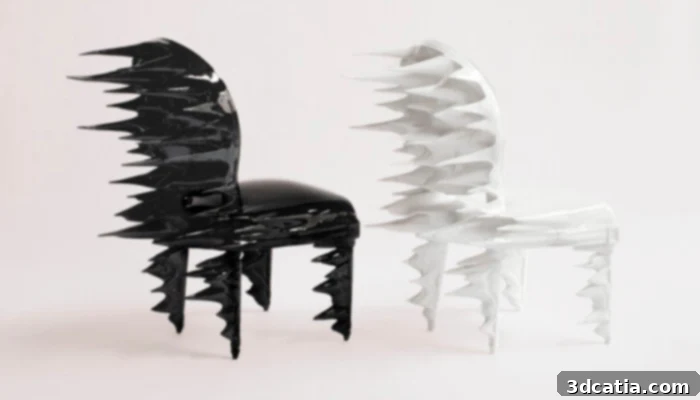
At Milan Design Week, the acclaimed Beijing-headquartered studio MAD Architects unveiled their innovative 3D-printed furniture design project, pushing the boundaries of traditional craftsmanship. For this ambitious endeavor, the studio undertook a bold reinterpretation of Christian Dior’s iconic Medallion Chair, a timeless symbol of elegance and classic design. Leveraging the immense capabilities of 3D printing technology, the design studio masterfully depicted the set of chairs as if caught in a moment of fluid motion, transforming static objects into dynamic forms. According to the designers, these distinctive 3D-printed polyurethane chairs, collectively titled “Meteor,” serve as a profound artistic reflection on the elusive concepts of time and space. The project highlights how additive manufacturing can not only reproduce but also conceptually expand upon historical designs, allowing for a level of artistic abstraction and material manipulation that breathes new life into classic aesthetics and invites deeper philosophical contemplation.
Angela Merkel Equestrian Statue: A Concrete Tribute
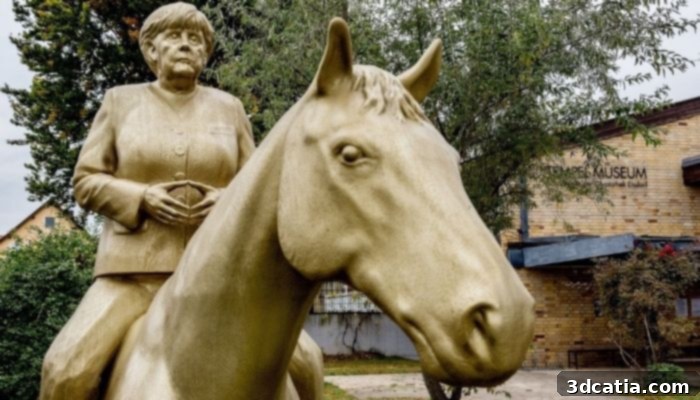
In a testament to artistic freedom and commemorative tribute, a Bavarian artist, Wilhelm Koch, took creative license to depict former German Chancellor Angela Merkel in an equestrian pose, realized as a life-size 3D-printed concrete statue. Standing at an impressive 2.70 meters high, the statue serves to commemorate Merkel’s extensive years of distinguished service as Germany’s first female chancellor. While it remains unconfirmed if Merkel was an equestrian during her tenure, the chosen artistic motif imbues the portrayal with a sense of leadership, strength, and historical significance, traditionally associated with equestrian monuments. Notably, the artist consciously opted to 3D print the statue using recycled concrete. This specific material choice can be interpreted as a subtle yet powerful nod to Merkel’s significant political contributions and her unwavering commitment to climate change policies during her leadership. The project exemplifies how 3D printing can be employed for large-scale public art, merging modern fabrication techniques with symbolic gestures to honor contemporary figures and their legacies.
‘RGB Scone, Hold Your Nose’ by Alan Phelan: A Monument to Emancipation
‘RGB Scone, Hold Your Nose’ by acclaimed artist Alan Phelan is a monumental 3D printed sculpture, standing at an impressive 5.5 meters high, crafted from a combination of eco-plastic and paper. This vibrant artwork is currently on display in Dublin, Ireland, as a key component of an ambitious initiative by the Dublin City Council to commission six new public sculptures for various parks and communal spaces throughout the city. Phelan’s ‘RGB Scone, Hold Your Nose’ holds the distinction of being the first commission in this series. The sculpture was specifically designed to occupy a historical plinth that had remained vacant in Dublin since the original statue it once held was removed in the 1860s. Described as an ‘exuberant’ sculpture, its creation involved a meticulous process: it began as a readymade, small-scale physical model, which was then precisely 3D scanned and subsequently 3D printed to its imposing scale before final assembly. The artist drew profound inspiration from diverse forms of emancipation associated with the area, including the struggle for Irish independence, the significance of EU Presidencies, the findings of tribunals of inquiry, and pivotal civic events such as marriage equality and reproductive choice. This work brilliantly merges advanced fabrication with deep historical and social commentary.
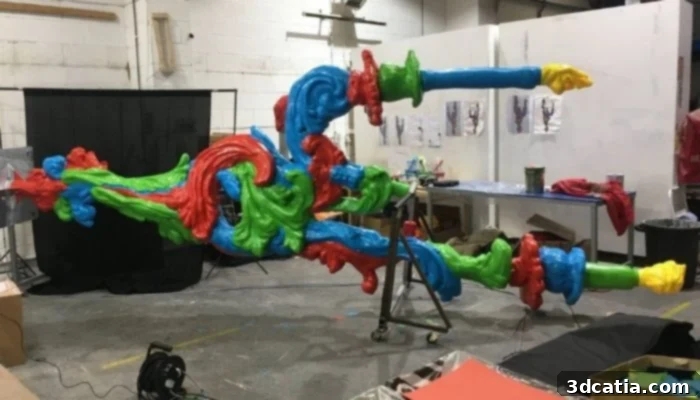
The sculpture after printing and papering and before installation (photo credits: Alan Phelan)
Magic Queen: A Living, 3D Printed Biodegradable Landscape
Among the most innovative applications of additive manufacturing in art, pushing the boundaries of what is conventionally considered art, is “Magic Queen.” This groundbreaking project was unveiled at the prestigious 2021 Venice Architecture Biennale. Magic Queen is an intricately designed 3D printed biodegradable structure, uniquely fabricated from local soil, specifically engineered to serve as a living landscape for a diverse array of plants and mushrooms. What makes this installation truly extraordinary is its dynamic interaction with technology: it is diligently tended to by a sophisticated robotic gardener. This autonomous robot not only provides essential watering for the thriving landscape but also continuously senses and responds to subtle changes in surface texture and the growth patterns of the flora across the structure, ensuring its sustained vitality. The project was conceived and brought to life by MAEIN, a visionary practice led by Daniela Mitterberger and Tiziano Derme. “Magic Queen” was designed to compellingly showcase the seamless fusion between organic materials and advanced robotics, eloquently demonstrating the profound possibility of empathy and harmonious co-existence between the natural world and mechanical intelligence. By utilizing 3D printing with soil, the designers were able to craft an unparalleled, complex structure perfectly tailored to sustain and nurture life in an ecologically sensitive manner. More insights into this visionary project can be found in the video below.
The examples highlighted above offer a compelling glimpse into the diverse and ever-expanding role of 3D printing within the art sector. From preserving historical masterpieces and crafting grand public installations to creating living, interactive sculptures and offering critiques on contemporary society, additive manufacturing has proven itself to be a truly transformative force. It empowers artists with unprecedented design freedom, enabling the realization of complex geometries, intricate details, and innovative material combinations that were once confined to the realm of imagination. Whether through the precise replication of ancient wonders, the construction of sustainable bio-structures, or the satirical reimagining of modern icons, 3D printing demonstrates its capacity to redefine artistic expression, technical possibilities, and even our relationship with the environment. As technology continues to advance, the synergy between art and additive manufacturing is only set to deepen, promising a future where creativity truly knows no bounds, pushing the very definition of art into exciting new dimensions.
What are your thoughts on these innovative applications of 3D printing in the art world? Did any of these projects particularly resonate with you or introduce you to new possibilities? We invite you to share your insights and comments below, or connect with us on our Facebook and Twitter pages. Don’t forget to sign up for our free weekly newsletter to receive all the latest news and advancements in 3D printing delivered directly to your inbox!