
Redwire’s Ceramic Manufacturing Module Achieves Historic In-Space 3D Printing Milestone
Redwire, a rapidly emerging leader in advanced, mission-critical space solutions, has announced a groundbreaking achievement in additive manufacturing beyond Earth’s atmosphere. Their innovative Ceramic Manufacturing Module (CMM), a technology initially pioneered by Made in Space, has successfully fabricated a ceramic component in the unique environment of space. This remarkable feat leverages stereolithography (SLA), a sophisticated 3D printing process, utilizing specialized pre-ceramic resins. During its mission, the CMM precisely manufactured a single-piece ceramic turbine blisk – a critical and complex component vital for high-performance engines – alongside a comprehensive series of material test samples. These invaluable ceramic components, including the blisk and test coupons, are now carefully stowed and en route back to Earth for meticulous analysis. They are scheduled to return aboard the SpaceX Dragon CRS-21 spacecraft, where scientists and engineers will assess their properties and performance. Redwire itself began operations on June 1, 2020, following the strategic merger of several key aerospace entities. Shortly thereafter, the acquisition of Made in Space by Redwire further solidified the company’s position at the forefront of in-space manufacturing capabilities, integrating pioneering expertise in off-world production.
This successful demonstration of fabricating advanced ceramic parts and test samples in the microgravity environment represents a monumental stride forward. It unequivocally validates the CMM’s profound potential to produce ceramic components that not only rival but potentially surpass the quality, durability, and performance characteristics of turbine parts manufactured through conventional methods on Earth. The implications for critical engineering applications are vast. Tom Campbell, President of Made in Space, emphasized the transformative nature of this achievement, stating, “This is an incredibly exciting milestone for space-enabled manufacturing and unequivocally signals the immense potential for entirely new commercial markets. These markets, driven by unique in-space production capabilities, are poised to significantly spur commercial activity within low Earth orbit (LEO), transforming LEO into a bustling industrial zone.” He continued, “By leveraging our deep-seated expertise in in-space manufacturing and our invaluable, long-standing partnership with NASA, Redwire is actively developing advanced manufacturing processes in orbit. These processes hold the promise of generating sustainable demand from terrestrial markets seeking superior materials and components. Crucially, we are simultaneously creating the fundamental capabilities that will empower humanity to sustainably live, work, and thrive beyond our home planet.” This vision underscores the dual benefit of in-space manufacturing: advancing Earth-based industries while enabling future space exploration and settlement.
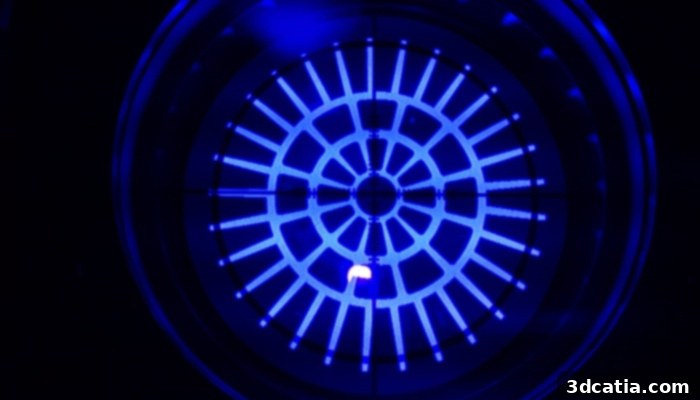
The 3D printed ceramic blisk and test coupons will be stowed and returned to Earth for analysis | Image via Redwire
At its core, Made in Space was founded with the ambitious primary mission of integrating in-space manufacturing as a foundational pillar of the global space economy. While the company is now a vital part of Redwire, its pioneering mission to harness the cosmos for manufacturing innovation continues with renewed vigor. The Ceramic Manufacturing Module stands as a compelling testament to this ongoing objective, powerfully demonstrating that ceramic additive manufacturing in the unique conditions of microgravity offers distinct advantages. Specifically, manufacturing in space can enable the production of highly temperature-resistant and reinforced ceramic parts exhibiting vastly superior performance characteristics. These benefits include significantly higher strength, crucial for components under extreme stress, and remarkably lower residual stress, which enhances the longevity and reliability of the finished product. The absence of gravity during the solidification process minimizes imperfections and structural weaknesses that are often inherent in Earth-based manufacturing, allowing for a more uniform and robust material microstructure.
The potential applications for this advanced additive manufacturing technology are immense and span several critical industrial sectors on Earth. Imagine components for high-performance turbines, robust parts for nuclear power plants, or more efficient internal combustion engines – all benefiting from the unparalleled properties of space-fabricated ceramics. Even marginal improvements in material strength, durability, and temperature resistance for these components can translate into revolutionary advancements, yielding years, if not decades, of superior service life and operational efficiency. This extended lifespan reduces maintenance costs, minimizes downtime, and enhances safety across industries. Redwire’s Chief Technology Officer, Michael Snyder, elaborated on the broader economic implications, stating, “The space manufacturing capabilities so vividly demonstrated by the CMM hold transformative potential. They are poised to stimulate robust and sustained demand in low Earth orbit from various terrestrial markets, creating a powerful economic pull. This demand, in turn, will serve as a pivotal and indispensable driver for the accelerating pace of space industrialization, transforming LEO into a vibrant economic frontier.” This vision highlights a symbiotic relationship: advanced space manufacturing serving Earth’s needs, while simultaneously establishing the infrastructure for future space economies.
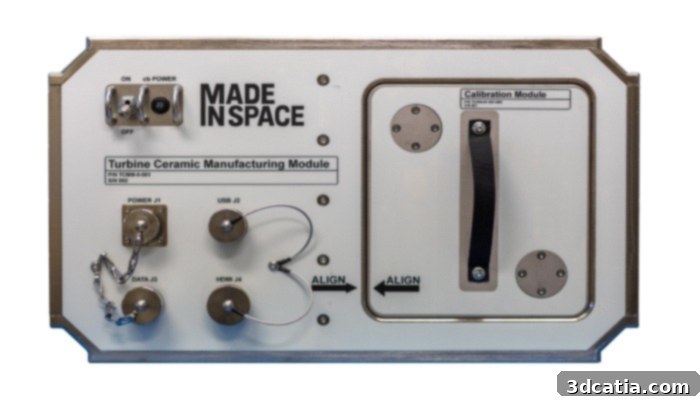
The Ceramic Manufacturing Module | Image via Made in Space
The successful deployment and operation of the CMM is a testament to extensive collaboration and foresight. The module’s development was a concerted effort, forged in partnership with the esteemed ISS Research Integration Office at NASA’s Johnson Space Center, underscoring NASA’s commitment to advancing in-space capabilities. Prior to its orbital mission, Made In Space meticulously demonstrated the fundamental stereolithography (SLA) printing technology integral to the CMM. This crucial preliminary work was conducted through a series of specialized parabolic flights in 2016, generously funded by NASA’s visionary Flight Opportunities program. These flights provided critical microgravity test environments, allowing engineers to validate the technology’s performance under conditions mimicking space. Further bolstering the CMM mission, additional technical expertise was provided by key partners, including HRL Laboratories, renowned for its materials science innovations, and Sierra Turbines, specialists in advanced turbine design. This latest success significantly enriches Redwire’s already impressive flight heritage in additive manufacturing. The company proudly leverages the experience gained from four other pioneering additive manufacturing facilities, all developed by the ingenious Made In Space team, which have successfully operated on the International Space Station. This cumulative experience positions Redwire as a frontrunner in developing and deploying advanced manufacturing solutions for the space environment, continually pushing the boundaries of what is possible off-world. For those interested in delving deeper into Redwire’s extensive portfolio and future initiatives, comprehensive information is available directly on their official website, accessible HERE.
This achievement extends far beyond the production of a single blisk or test coupon; it represents a paradigm shift in how we envision manufacturing for both Earth and space applications. The ability to precisely control material formation in microgravity opens doors to creating super-materials with unique properties unattainable on Earth due to gravitational forces. Imagine not just stronger turbine blades, but entirely new classes of ceramics with enhanced thermal stability, improved wear resistance, and novel functionalities, tailored for extreme environments. These advanced materials could revolutionize industries from aerospace and defense to energy and biomedical applications, driving innovation and efficiency across the board. The strategic importance of establishing robust in-space manufacturing capabilities also addresses critical logistical challenges for future space missions. Instead of launching every single component from Earth, which is both costly and complex, astronauts could eventually print parts on demand, whether for repairs, upgrades, or even for constructing larger structures in orbit or on celestial bodies. This modular, on-demand approach dramatically reduces launch mass, increases mission flexibility, and empowers a more self-sufficient presence in space.
The economic ramifications of this breakthrough are equally significant. As Redwire’s CTO, Michael Snyder, indicated, stimulating demand from terrestrial markets for space-produced materials is a cornerstone of space industrialization. This doesn’t merely refer to the direct sales of ceramic parts; it encompasses the entire value chain that will develop around in-space production. This includes the development of new space platforms, specialized robotics for orbital manufacturing, advanced material transport systems, and a skilled workforce trained for extraterrestrial production. The growth of a robust LEO economy, fueled by manufacturing, will create jobs, foster technological innovation, and attract substantial investment. Ultimately, this paves the way for a future where space is not just a destination for scientific exploration but a thriving domain for commercial enterprise and industrial output, fostering a truly multi-planetary civilization. The CMM’s success provides tangible evidence that this ambitious future is rapidly approaching, moving from theoretical possibility to demonstrated reality.
This monumental achievement by Redwire and Made in Space signifies a new era for advanced manufacturing, bridging Earth’s industrial needs with the limitless potential of space. The successful 3D printing of ceramic components in orbit is a powerful demonstration of how cutting-edge technology and visionary partnerships can push the boundaries of human ingenuity. It brings us closer to a future where superior materials are not just conceived but created in space, profoundly impacting various sectors and enabling humanity’s sustained presence beyond our planet. We invite our readers to share their thoughts on these transformative advances in 3D printing applications within the exciting realm of space. Please feel free to let us know your opinions in a comment below or engage with us on our vibrant Facebook and Twitter pages. For those eager to stay abreast of all the latest news and breakthroughs in the dynamic world of 3D printing, we encourage you to sign up for our free weekly Newsletter, delivering the most pertinent updates straight to your inbox.