
Mastering 3D Printing Post-Processing: Trends, Challenges, and Automation in 2022
The journey from a digital 3D model to a functional physical part in additive manufacturing is rarely complete with just the printing phase. An often-underestimated, yet critically important, stage is post-processing. Each year, leading post-processing solution manufacturer PostProcess Technologies sheds light on this vital segment of the industry with an extensive study. Their 4th annual report for 2022, building on insights from previous years, consistently underscores key themes: post-processing remains a significant bottleneck, demanding considerable time and a higher degree of automation, all while maintaining the stringent quality standards required for end-use parts. This year’s findings also reveal a heightened awareness among users regarding Environment, Health, and Safety (EH&S) issues. Depending on the specific 3D printing process employed, personal safety is emerging as a paramount concern, particularly when handling fine powders. Furthermore, the extensive manual labor typically associated with post-processing is a growing pain point, with a strong desire from users to reallocate human resources to more value-added tasks. This perceived need for process automation is a pervasive trend observed across the entire additive manufacturing landscape, signaling a maturation of the industry towards industrial-scale production.
For the fourth consecutive year, PostProcess Technologies conducted a global survey involving numerous additive manufacturing users. The objective was to gain a comprehensive understanding of their post-processing practices and challenges throughout 2022, recognizing its indispensable role in the overall 3D printing value chain. The latest study reveals that a significant majority—more than half of the respondents—utilize at least two different 3D printing processes. Consistent with prior years, three technologies dominate the landscape in terms of adoption: extrusion (54%), photopolymerization (48%), and powder bed fusion (37%). Unsurprisingly, the most prevalent post-processing methods directly correlate with these popular printing technologies: support removal for extrusion and photopolymerization, resin removal for photopolymerization, and de-powdering for powder bed fusion processes. These operations are reported by 54%, 42%, and 35% of users respectively, highlighting their widespread necessity and the critical areas ripe for innovation and improvement. The demand for streamlined workflows and enhanced efficiency in these core operations is driving the quest for advanced post-processing solutions.
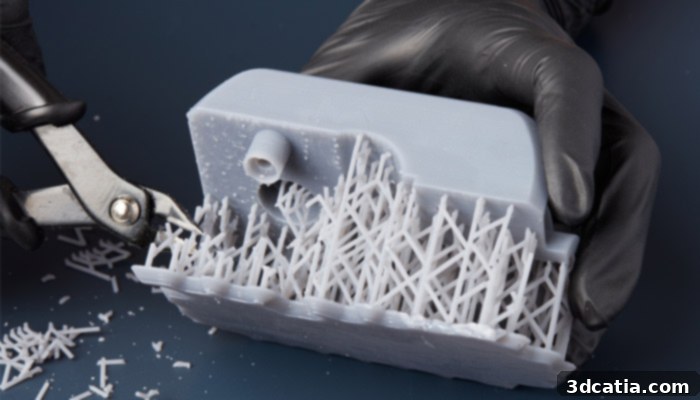
Removal of 3D resin printing supports (photo credits: Formlabs)
Identifying the Most Demanding Post-Processing Processes by Technology
Every 3D printing technology comes with a unique set of advantages and inherent limitations, which extend not only to the printing process itself and compatible materials but also significantly to the subsequent post-processing requirements. The PostProcess Technologies study delves into these specific limitations, categorized by the 3D printing technology employed. For instance, in the realm of vat photopolymerization (including SLA, DLP, and LCD technologies), a majority of respondents indicated that while current post-processing techniques are generally acceptable, they anticipate these methods becoming problematic in the future. This concern is notably higher for photopolymerization compared to other additive manufacturing technologies. The primary reason cited is the removal of excess uncured resin, which users consistently describe as both laborious and messy. The sticky nature of liquid resins and the need for thorough cleaning and subsequent curing often involve multiple manual steps, increasing labor time, consuming solvents, and raising the potential for inconsistencies in the final part quality. This makes automation and more efficient cleaning solutions particularly appealing for this segment.
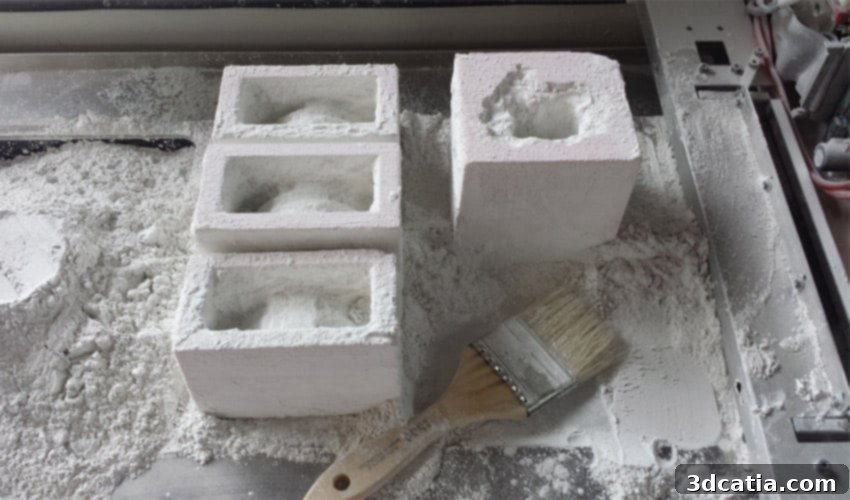
Conversely, for powder-based 3D printing processes, such as Selective Laser Sintering (SLS), Direct Metal Laser Sintering (DMLS), and Multi Jet Fusion (MJF), the most pressing challenges revolve around hygiene, operator safety, and environmental considerations. More than 50% of survey participants expressed concerns about a significant health risk to users due to the airborne powder particles released during various post-processing stages, particularly during de-powdering and part breakout. These fine particles, depending on the material (e.g., polymer, metal), can pose respiratory hazards, skin irritation, and even flammability risks, necessitating strict personal protective equipment (PPE). This underscores why the mandatory wearing of masks, gloves, and often specialized respirators and protective clothing is crucial in these environments. The need for enclosed workstations, advanced ventilation systems, inert atmospheres for reactive powders, and careful powder recovery protocols is paramount to mitigate these risks effectively and ensure a safe working environment for operators, while also maximizing material reuse and reducing waste.
Among the surveyed technologies, extrusion (FDM/FFF) and material jetting are generally considered the two least demanding processes in terms of their overall post-processing burden. These technologies often require support removal and some surface finishing. However, the study provides an important nuance: for 40% of FFF users, achieving consistent post-processing quality remains a significant hurdle, especially concerning surface uniformity. While FDM parts are known for their distinct layer lines, achieving a smooth and consistent finish often requires extensive manual sanding, polishing, or vapor smoothing, which can be time-consuming, labor-intensive, and difficult to standardize across batches. Another recurring challenge cited is the time required to achieve a satisfactory finished part. Despite being less “messy” than resin or powder-based processes, the duration of manual post-processing steps, particularly meticulous support removal and detailed surface treatment, is still considered excessively long, hindering faster production cycles and increased throughput for high-volume applications.
Finally, the study specifically examines HP’s Multi Jet Fusion (MJF) technology, identifying it as the most widely used process for production purposes, with 37% of respondents leveraging it for final parts. Users of MJF generally consider the currently available post-processing methods to be sufficient for their present needs, particularly for batch production. However, there’s a strong sentiment that these methods could pose a substantial challenge in the future if manufacturing volumes scale up significantly, moving towards true mass production. The current process, which often involves depowdering and bead blasting, while efficient for many applications, might require further optimization for even higher throughput. While HP continues to advance and integrate increasingly automated solutions, such as its Jet Fusion 3D Processing Station, to address these evolving demands, the concern highlights a broader industry trend: the need for post-processing to keep pace with the increasing capacity and speed of 3D printers themselves. As production shifts from prototyping to mass customization and serial production, seamless, efficient, and integrated post-processing becomes non-negotiable for maintaining competitive edge.
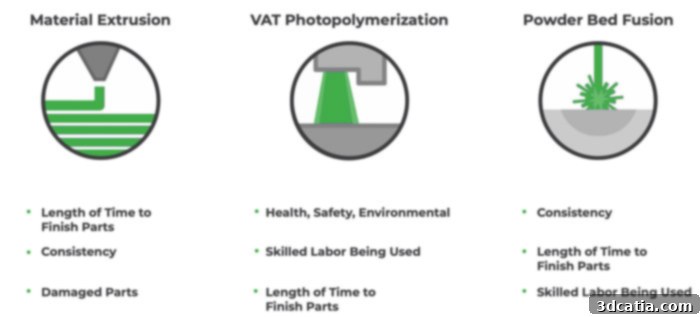
Photo Credits: PostProcess Technologies
The Evolving Expectations and Requirements of the Post-Processing Market
A comprehensive look at the past four years reveals a remarkable consistency in the fundamental challenges and expectations of post-processing users. The primary concerns remain centered around excessively long delays, cited by 55% of respondents, and the critical issue of consistency in finished parts, highlighted by 47%. These figures are a clear indication that despite advancements in printing speeds, the subsequent steps often create bottlenecks, impeding faster market entry and greater agility for manufacturers. The lack of consistent quality across batches, especially for geometrically complex parts, can also lead to higher rejection rates and increased costs. Consequently, it is unsurprising that a vast majority of respondents—approximately 76%—express a strong desire for solutions that would significantly improve the quality of finished parts, ensuring they meet rigorous industrial standards. Similarly, 49% are actively seeking methods to drastically reduce overall cycle times, from print to final part. These demands reflect an industry pushing towards greater efficiency and higher standards, mirroring the expectations set by conventional manufacturing processes, and are crucial for additive manufacturing to expand its footprint in high-volume production.
However, a notable and accelerating shift observed in this year’s study pertains to the strategic allocation of manpower in managing post-processing steps. A significant 47% of respondents believe it is imperative to assign human resources currently engaged in manual post-processing tasks to activities that offer higher added value. This strong sentiment inherently drives a heightened need for automation across the post-processing workflow. While this trend was already evident in the previous year’s study, its accelerated growth underscores its critical importance as the leading evolving expectation in the market. Automation promises not only to reduce labor costs and human error but also to enhance repeatability, improve safety, and free up skilled technicians for more complex design, engineering, quality control, and strategic planning functions. This re-allocation of human capital allows businesses to maximize their contribution to innovation and overall operational efficiency, transforming post-processing from a cost center into a more integrated and optimized part of the manufacturing process.
Another compelling insight from the study emphasizes the particular sensitivity of material jetting users towards waste management. As this technology often involves liquid resins and support materials, there’s a growing expectation for future solutions that optimize the processing of these materials, focusing on reduction, recycling, and reuse. This aligns with broader sustainability goals and the industry’s drive towards more environmentally responsible manufacturing practices. Implementing closed-loop systems for material handling and developing bio-degradable or easily recyclable support structures are key areas of focus. Finally, for 38% of respondents, there is an urgent need for more effective solutions to ensure employee safety and health, along with addressing current environmental issues more comprehensively. Although this percentage is lower than in 2021 (when it stood at 60%), it still firmly places EH&S among the top five critical areas requiring significant development and innovation. This sustained focus on safety and environmental responsibility indicates a maturing industry that prioritizes not just efficiency and quality, but also the well-being of its workforce and its ecological footprint, recognizing these as integral to sustainable growth. For those interested in a deeper dive into these market requirements and comprehensive study findings, the full report can be downloaded HERE.
The landscape of 3D printing post-processing in 2022 is clearly defined by a powerful push for automation, a heightened focus on achieving consistent quality and unparalleled efficiency, and an unwavering commitment to Environment, Health, and Safety standards. Addressing these persistent challenges is not merely an option but a paramount necessity for the continued growth, industrial adoption, and widespread integration of additive manufacturing across various sectors. The valuable insights gleaned from PostProcess Technologies’ comprehensive study provide a crucial roadmap for both current users seeking to optimize their existing workflows and innovative solution providers developing the next generation of advanced post-processing technologies. The future of 3D printing hinges on transforming post-processing from a laborious bottleneck into a seamless, automated, and integral part of the digital manufacturing thread.
What are your thoughts on these evolving post-processing trends in 3D printing for 2022 and beyond? Do you perceive automation as the ultimate solution for these challenges, or do you believe there are other critical areas that need more immediate attention and innovative breakthroughs? Share your valuable insights and experiences by leaving a comment below or engaging with us on our vibrant social media platforms: Linkedin, Facebook, and Twitter! Don’t forget to sign up for our free weekly Newsletter here to receive the very latest 3D printing news, industry updates, and exclusive content straight to your inbox! You can also find all our compelling videos, in-depth tutorials, and expert interviews on our YouTube channel for more comprehensive and visual content on the world of additive manufacturing.
*Cover Photo Credits: Pilchuck Glass School