
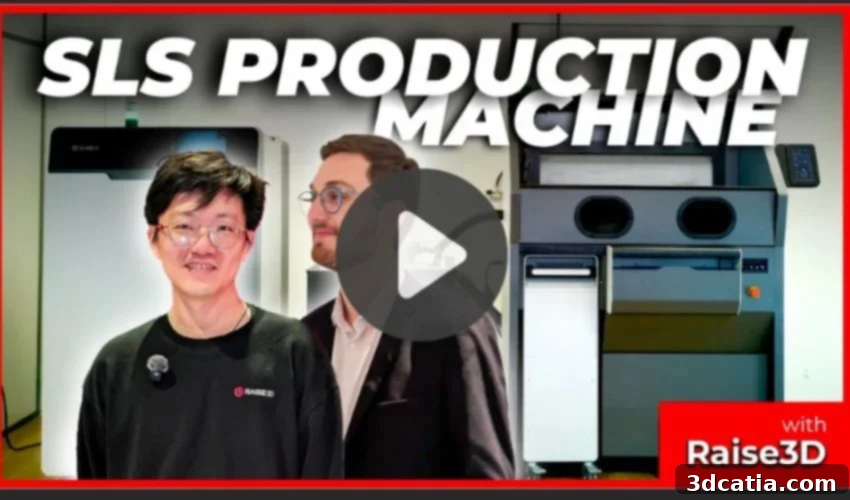
Raise3D RMS220: Revolutionizing SLS 3D Printing for Enhanced Productivity
At the recent TCT Asia trade show, we had the distinct pleasure of connecting with Raise3D, a veteran and respected manufacturer in the dynamic 3D printing landscape. Renowned for its success in fused deposition modeling (FDM) solutions, which have garnered a significant and loyal user base, Raise3D has strategically expanded its portfolio to include resin printing technologies. More recently, they have made a notable foray into selective laser sintering (SLS) technology. Their RMS220 system stands out by offering a comprehensive and integrated workflow designed to make SLS technology both accessible and cost-effective for a wider range of users.
To delve deeper into the intricacies of Raise3D’s SLS solutions and understand their impact on the 3D printing industry, Elliot engaged in an insightful conversation with Zhewen Ma, the SLS Product Manager at Raise3D. Their discussion centered on the core features of the RMS220 system and how Raise3D has successfully addressed key challenges in SLS productivity. This article will explore the materials compatible with the RMS220, material management strategies, essential post-processing steps, and the printer’s potential for mass production applications.
Raise3D’s RMS220 system is strategically designed to overcome several critical challenges associated with SLS 3D printing. By providing a complete solution encompassing the 3D printer itself and necessary post-processing equipment, Raise3D is poised to make a significant impact on the rapidly expanding SLS market. The company has clear intentions to continue innovating and expanding its presence in this high-growth sector.
The RMS220 represents a significant step forward in making SLS technology more accessible and user-friendly. Let’s explore the key features and benefits that set this system apart:
Key Features of the Raise3D RMS220 SLS 3D Printer
The Raise3D RMS220 boasts a range of features designed to optimize the SLS printing process and deliver high-quality results. These features address common challenges in SLS, such as material management, temperature control, and post-processing.
- Open Material System: The RMS220’s open material system allows users to experiment with a wide range of materials, including polyamides (PA11, PA12), thermoplastic polyurethane (TPU), and other specialty powders. This flexibility is crucial for applications requiring specific material properties.
- Precise Temperature Control: Maintaining consistent temperature throughout the build chamber is essential for achieving accurate and uniform parts. The RMS220 incorporates advanced temperature control systems to minimize warping and ensure optimal sintering.
- User-Friendly Software: Raise3D’s slicing software, ideaMaker, is known for its intuitive interface and powerful features. It allows users to easily prepare models for printing, optimize printing parameters, and monitor the printing process.
- Integrated Post-Processing: The RMS220 workflow includes post-processing solutions for powder removal and part finishing, streamlining the entire production process.
- Compact Footprint: Compared to some industrial SLS systems, the RMS220 has a relatively compact footprint, making it suitable for smaller workshops and offices.
Improving SLS Productivity with the RMS220
Raise3D has focused on improving SLS productivity by addressing several key areas:
- Faster Print Speeds: The RMS220 is engineered to achieve faster print speeds without compromising part quality. This increased speed translates to reduced production times and lower costs.
- Simplified Workflow: By integrating the printer, software, and post-processing solutions, Raise3D has streamlined the SLS workflow, making it easier for users to manage the entire process.
- Reliable Performance: The RMS220 is designed for reliable and consistent performance, minimizing downtime and ensuring predictable results.
- Remote Monitoring: The ability to remotely monitor the printing process allows users to stay informed about the progress of their prints and make adjustments as needed.
Material Compatibility and Management
The RMS220’s open material system is a significant advantage for users seeking to explore a variety of materials. Effective material management is crucial for maintaining material quality and ensuring consistent printing results.
- Material Handling: Proper material handling procedures are essential for preventing contamination and maintaining the integrity of the powder.
- Storage Conditions: Storing materials in a dry and controlled environment is crucial for preventing moisture absorption, which can negatively impact print quality.
- Material Recycling: SLS processes often involve recycling unsintered powder. The RMS220 system includes features to facilitate efficient powder recycling.
Post-Processing for SLS 3D Printed Parts
Post-processing is an integral part of the SLS process. It involves removing unsintered powder from the printed parts and finishing them to achieve the desired surface quality and dimensional accuracy.
- Powder Removal: Removing the unsintered powder can be a messy and time-consuming process. Raise3D offers solutions to automate and streamline powder removal.
- Surface Finishing: Depending on the application, SLS parts may require surface finishing to improve their appearance and functionality. Common finishing techniques include sanding, polishing, and coating.
- Dyeing and Coloring: SLS parts can be dyed or colored to achieve specific aesthetic requirements.
SLS for Mass Production
While SLS is often used for prototyping and small-batch production, the RMS220 has the potential to be used for mass production applications. The key to unlocking SLS’s potential for mass production lies in:
- Automation: Automating the entire SLS workflow, from material handling to post-processing, is crucial for achieving the high throughput required for mass production.
- Scalability: Scaling up SLS production involves adding more printers and optimizing the entire production process.
- Cost Reduction: Reducing the cost of SLS materials and equipment is essential for making SLS competitive with traditional manufacturing processes.
Raise3D’s commitment to innovation and its focus on addressing the challenges of SLS technology make the RMS220 a compelling option for users seeking a versatile and productive SLS 3D printer. The company’s comprehensive approach, encompassing the printer, software, and post-processing solutions, positions it as a key player in the rapidly evolving 3D printing market.
Find more detailed specifications and information on the Raise3D website HERE.
What are your thoughts on the Raise3D RMS220 and its potential to advance SLS 3D printing? Share your opinions in the comments below. Connect with us on LinkedIn or Facebook to join the conversation. Stay informed about the latest 3D printing news by subscribing to our free weekly Newsletter.