
Test Your 3D Printing Expertise: The Ultimate Additive Manufacturing Quiz
Do you consider yourself a true aficionado of the rapidly evolving world of 3D printing? Are you up-to-date with the latest advancements, technologies, and applications that are revolutionizing industries globally? It’s time to put your knowledge to the ultimate test! Our comprehensive 3D printing quiz is designed to challenge enthusiasts and professionals alike, providing a fun and engaging way to assess just how much you really know about additive manufacturing.
From the foundational principles of FDM to the intricacies of metal 3D printing, and from the diverse range of materials to groundbreaking real-world applications, this quiz covers a broad spectrum of topics essential to understanding modern 3D printing. Whether you’re a hobbyist who tinkers with a desktop printer, an engineer leveraging additive manufacturing for complex prototypes, or simply curious about this transformative technology, our quiz offers a unique opportunity to gauge your understanding and perhaps even learn something new along the way.
3D printing, also known as additive manufacturing, is a groundbreaking process that creates three-dimensional objects from a digital design. Unlike traditional subtractive manufacturing methods that remove material to create a shape, 3D printing builds an object layer by successive layer, adding material only where it’s needed. This innovative approach has opened up unprecedented possibilities in design, production, and customization, making it a cornerstone of Industry 4.0. The journey from a digital blueprint on a computer screen to a tangible object in your hand is nothing short of fascinating, encompassing a vast array of technologies, materials, and applications.
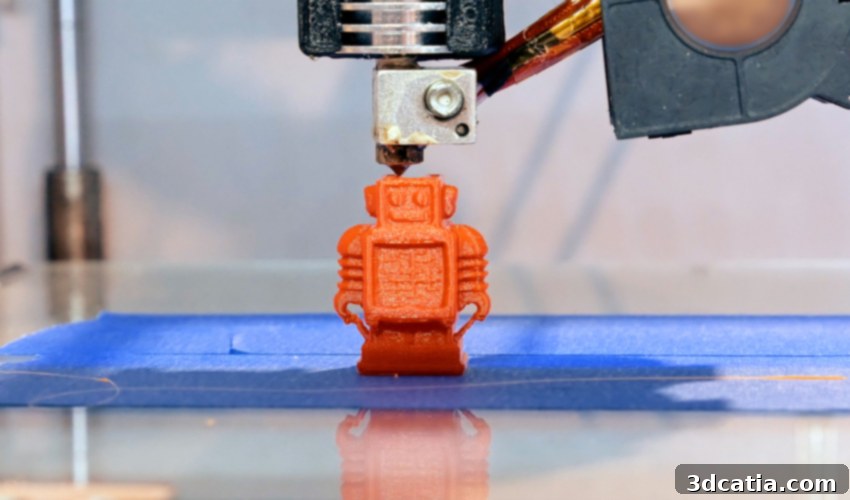
The landscape of 3D printing technologies is incredibly diverse, each with its unique strengths and ideal use cases. Fused Deposition Modeling (FDM) remains one of the most popular and accessible methods, particularly for consumer-grade desktop printers. FDM printers work by extruding a thermoplastic filament, heating it, and depositing it layer by layer onto a build plate to form the desired object. This method is renowned for its ease of use, affordability, and a wide range of available materials, making it a favorite for rapid prototyping, educational purposes, and creating custom fixtures.
For those seeking higher resolution and finer details, Stereolithography (SLA) and Digital Light Processing (DLP) offer excellent alternatives. These technologies utilize a photosensitive liquid resin that is selectively cured by a light source – a UV laser for SLA or a projector for DLP – to solidify each layer. SLA and DLP printers are capable of producing incredibly smooth surfaces and intricate geometries, making them ideal for detailed prototypes, jewelry, dental models, and precise functional parts. The quality of prints achieved with resin-based systems often surpasses that of FDM, albeit usually at a higher material cost and with more intensive post-processing.
When it comes to strength and durability, Selective Laser Sintering (SLS) is a leading contender. SLS technology uses a high-power laser to selectively fuse small particles of polymer powder into a solid structure. Unfused powder supports the object during printing, eliminating the need for support structures and allowing for highly complex, interlocking designs. Parts produced with SLS are typically robust, functional, and suitable for end-use applications in various industries, from automotive to aerospace. Materials like nylon are commonly used, offering excellent mechanical properties.
Beyond polymers, metal 3D printing has emerged as a transformative force, enabling the creation of intricate and high-performance metal components. Technologies such as Direct Metal Laser Sintering (DMLS) and Electron Beam Melting (EBM) use powerful lasers or electron beams to melt and fuse metal powders, layer by layer. These processes are employed to produce aerospace components, medical implants, and industrial tooling where strength, heat resistance, and complex internal geometries are paramount. The ability to manufacture lightweight, topology-optimized metal parts opens up new frontiers for innovation in critical applications.
The applications of 3D printing are virtually limitless and continue to expand at an astonishing pace. In the medical field, 3D printing is revolutionizing patient care, enabling the creation of custom prosthetics, surgical guides, dental aligners, and even bioprinted tissues. Manufacturers use it for rapid prototyping, allowing them to iterate designs quickly and cost-effectively, significantly shortening product development cycles. It’s also vital for producing jigs, fixtures, and tooling on demand, improving efficiency on the factory floor.
Aerospace and automotive industries leverage 3D printing for lightweight, high-performance parts, optimizing fuel efficiency and performance. Customization is a key benefit, allowing for personalized products ranging from footwear to consumer electronics. Artists and designers explore new forms and aesthetics, while educators use 3D printers to bring abstract concepts to life in classrooms. The flexibility and versatility of additive manufacturing mean that almost every sector can find a way to integrate this technology to their advantage.
The benefits of embracing 3D printing are profound. One of the most significant advantages is the unprecedented level of customization and personalization it offers. Products can be tailored precisely to individual needs or specifications, a feat often impossible or prohibitively expensive with traditional manufacturing. This leads to better-fitting medical devices, unique consumer goods, and highly specialized industrial components.
Another major benefit is rapid prototyping. The ability to quickly translate a digital design into a physical object allows for faster design iteration, reducing time-to-market and fostering innovation. Design freedom is also greatly enhanced; 3D printing can create geometries that are impossible to achieve with conventional methods, opening up new possibilities for lightweighting, part consolidation, and intricate internal structures. Furthermore, additive manufacturing often leads to reduced material waste, as objects are built up layer by layer, only using the material that becomes part of the final product. This makes it a more sustainable manufacturing option in many cases.
While the advantages are clear, 3D printing also faces challenges. These include limitations in material properties (though rapidly improving), the need for post-processing steps (like curing, cleaning, or surface finishing), and the current scalability issues for very high-volume mass production. However, ongoing research and development are constantly addressing these hurdles, pushing the boundaries of what’s possible.
The future of 3D printing is incredibly bright, promising even faster print speeds, larger build volumes, multi-material capabilities, and tighter integration with AI and automation. As the technology matures, it will continue to become more accessible, cost-effective, and capable, further embedding itself into every aspect of our lives and industries. Understanding these trends and technologies is crucial for anyone involved in modern manufacturing or design.
Ready to prove your mastery of 3D printing, or perhaps identify areas where you can deepen your knowledge? Take our interactive quiz now!
[os-widget path=”/3dnatives/are-you-a-3d-printing-expert”]
After you’ve tackled the questions and discovered your score, we’d love to hear your thoughts! Do you agree with the answers? Were there any questions that stumped you? Let us know in a comment below. You can also join the conversation and share your insights on our Facebook and Twitter pages. Stay ahead of the curve with the very latest 3D printing news, insights, and market trends by signing up for our free weekly Newsletter here, delivered straight to your inbox every week!
Looking to delve deeper into the fascinating world of additive manufacturing? Explore our extensive collection of other 3D technologies articles here, covering everything from specific printer reviews to in-depth analyses of industry developments and emerging trends. Expand your expertise with 3Dnatives!