
Project PLA: Revolutionizing 3D Printing Plastic Waste Recycling for a Sustainable Future
In an era increasingly defined by technological innovation and environmental consciousness, the world of 3D printing stands at a critical juncture. While often hailed as a revolutionary technology capable of localized production and waste reduction in manufacturing, the additive manufacturing industry faces its own unique set of environmental challenges, particularly concerning plastic waste. Addressing this pressing issue is Project PLA, an ingenious initiative spearheaded by William Sloth, a visionary high school student from New York. Project PLA’s core mission is to establish a streamlined and accessible system for recycling all Polylactic Acid (PLA) plastic waste generated from 3D printing, offering a much-needed environmentally friendly alternative in the growing additive manufacturing landscape.
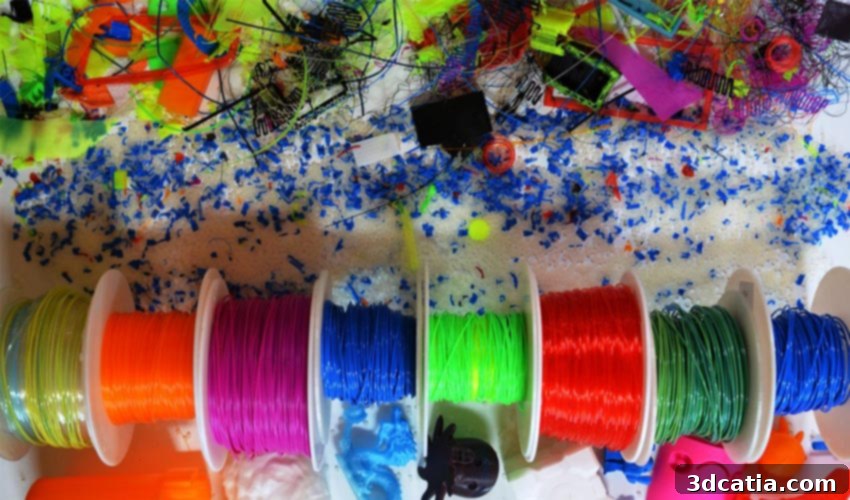
The concept behind Project PLA is elegantly simple yet profoundly impactful. This innovative startup bridges the gap between 3D printing enthusiasts and industrial recycling facilities. The process begins with convenience: users receive easy-to-assemble recycling boxes of various sizes directly at their homes. These boxes are specifically designed to be filled with 3D printing plastic waste, ranging from failed prints and unwanted prototypes to support structures and even empty filament spools. Once filled, users simply send the boxes back to Project PLA. From there, the startup takes full responsibility, ensuring that the collected plastic waste is diligently sorted and delivered to the appropriate industrial composting or recycling channels. Through this user-friendly and efficient system, William Sloth and his team aim to dismantle widespread misconceptions about the sustainability of 3D printing and the complexities of plastic recycling, paving the way for a truly greener future for the industry.
The Unseen Challenge: Debunking 3D Printing’s Green Image
The narrative surrounding additive manufacturing frequently promotes it as an inherently sustainable and “green” process. While 3D printing undeniably offers significant advantages in certain areas, such as optimizing material usage and enabling on-demand production to reduce inventory waste, the reality of its environmental footprint is far more nuanced. It is true that 3D printing can add substantial value to specific types of waste materials; for instance, commendable initiatives like the Zero-Waste Future programme ingeniously recycle plastic waste to create functional furniture for urban environments. However, these examples often represent targeted solutions rather than a universal standard across the entire industry. The broader 3D printing sector still consumes vast quantities of plastic, and a significant portion of this material is neither readily biodegradable nor easily recyclable through conventional means.
One of the most popular and frequently misunderstood 3D printing plastics is PLA, or Polylactic Acid. Many users are under the impression that PLA is universally biodegradable and therefore inherently eco-friendly. However, as studies on PLA have highlighted, experts confirm that this material can only truly biodegrade under very specific and controlled industrial composting conditions. These conditions typically involve sustained high temperatures, specific moisture levels, and the presence of specialized microbial communities that facilitate its breakdown. Crucially, not all composting plants, particularly municipal facilities, are equipped to offer these precise industrial composting conditions. Furthermore, when it comes to waste specifically generated from 3D printing – often comprising small, irregularly shaped pieces or solid objects – the processing requirements can be even more challenging. This disparity between common perception and scientific reality regarding PLA’s biodegradability became a critical observation for William Sloth, directly inspiring the creation of Project PLA as a necessary intervention to bridge this gap.

Project PLA offers recycling boxes that come in various convenient sizes
Project PLA: A Vital Intermediary for Responsible Recycling
At its core, Project PLA functions as an essential intermediary, connecting individual 3D printing users with specialized industrial composting and recycling facilities. Its fundamental purpose is to simplify and facilitate the often complex and inaccessible steps required for the proper disposal and recycling of 3D printing plastic waste. The startup’s service is designed to be comprehensive and user-friendly, allowing participants to send virtually any type of 3D printing waste. This includes a wide array of items: parts that are no longer needed, prototypes that didn’t quite work out, failed prints, and even the empty spools that accumulate rapidly in any active 3D printing workshop. This broad acceptance of waste types significantly reduces the burden on individual users, who often struggle to find appropriate recycling solutions for these specific materials.
It is important to note, however, that while Project PLA accepts a broad range of plastic waste, there are specific exclusions. For safety and logistical reasons, users cannot send components from the 3D printer itself, such as electronic parts, motors, or metal structures. The focus remains strictly on the plastic materials used in the printing process. Currently, Project PLA exclusively accepts PLA plastic, given its prevalence in the hobbyist and educational 3D printing sectors and the specific environmental challenge it presents. Nevertheless, the team behind Project PLA is actively engaged in research and development to expand its capabilities. Excitingly, they are diligently working towards accepting other widely used 3D printing plastics, including ABS (Acrylonitrile Butadiene Styrene) and PETG (Polyethylene Terephthalate Glycol), which would further broaden the impact and utility of their service across the additive manufacturing community. This commitment to expansion underscores Project PLA’s long-term vision for comprehensive 3D printing waste management.
William Sloth’s Vision: Cultivating a Sustainable Future for 3D Printing
The driving force behind Project PLA is William Sloth’s profound personal commitment to environmental stewardship. As William himself explains, “I am passionate about the issues related to our environment and I try to make choices every day to be more respectful of our planet. I believe that Project PLA is the ideal solution to make the 3D printing industry more sustainable and to take full advantage of the biodegradable potential of PLA.” This statement encapsulates the core philosophy of the initiative: to transform a perceived environmental burden into an opportunity for sustainable practice. William’s passion is not merely theoretical; it is a practical, actionable commitment to fostering a circular economy within the 3D printing space. He recognizes that while PLA has the *potential* for biodegradability, this potential is often unrealized due to inadequate infrastructure and knowledge among users. Project PLA aims to unlock this potential, ensuring that PLA waste is treated in a manner that truly aligns with its supposed eco-friendly characteristics.
This youth-led initiative serves as a powerful reminder that innovative solutions to complex environmental problems can emerge from unexpected places. William’s foresight in identifying this specific gap in the 3D printing ecosystem – the disconnect between PLA’s properties and its actual end-of-life management – highlights a proactive approach to sustainability. By offering a concrete service that directly addresses this issue, Project PLA not only provides a practical solution but also raises awareness about the broader implications of material choices in additive manufacturing. It encourages users to think beyond the creation of an object and consider its entire lifecycle, from raw material to eventual disposal or recycling. This focus on responsible consumption and disposal is critical for the long-term viability and public perception of 3D printing as a truly sustainable technology.
Flexible Solutions and Future Horizons: Making a Difference with Project PLA
Project PLA understands that convenience and affordability are key to widespread adoption. To cater to diverse needs and volumes of waste, the initiative offers several flexible pricing options. The smallest recycling box, ideal for hobbyists or those with lighter printing activity, is priced at an accessible $14.99 and can safely contain up to 450 grams of plastic waste. For more prolific users or educational institutions, the largest box offers a substantial capacity of 8.9 kilograms and costs $134.99. Crucially, in both these options, Project PLA manages all the intricate logistics, from sending the empty box to processing the collected waste and coordinating its transport to the appropriate recycling channels. This all-inclusive service significantly simplifies the recycling process for the end-user, removing the common barriers of finding suitable facilities or arranging specialized shipping.
For users who prefer to manage some aspects of the logistics themselves, Project PLA also provides a more cost-effective alternative. For just $4 per 450 grams, plus applicable shipping costs, users can send their pre-packaged PLA waste to Project PLA. This option empowers users with more control while still ensuring their plastic waste reaches the correct industrial recycling streams. Currently, Project PLA is primarily focused on serving the United States, consolidating its efforts to build a robust and efficient network within a defined geographic area. However, the success of this model undoubtedly holds the potential for future expansion into other regions and a broader range of materials, as previously mentioned with ABS and PETG. This strategic growth would significantly amplify Project PLA’s environmental impact, transforming waste management practices across the global 3D printing community. Detailed information about the services, pricing, and how to participate can be found by visiting the official Project PLA website HERE.
Join the Movement: Contributing to a Greener Additive Manufacturing Landscape
Project PLA represents more than just a recycling service; it is a vital step towards fostering a truly circular economy within the 3D printing industry. By providing an accessible and efficient solution for PLA plastic waste, William Sloth’s initiative not only mitigates environmental harm but also educates the community on responsible material management. It encourages every 3D printing enthusiast, from hobbyists to industrial professionals, to actively participate in building a more sustainable future. This initiative empowers individuals to make a tangible difference, turning potential waste into valuable resources and challenging the conventional linear model of production and disposal.
What are your thoughts on this innovative and impactful initiative? We encourage you to share your perspectives and engage with the community. Let us know your opinions in a comment below or join the conversation on our Facebook and Twitter pages! Don’t forget to sign up for our free weekly Newsletter to receive all the latest news, updates, and insights about 3D printing directly in your inbox, ensuring you stay informed about pioneering efforts like Project PLA that are shaping the future of additive manufacturing.