
Revolutionizing Filmmaking: The Transformative Impact of 3D Printing in Cinema
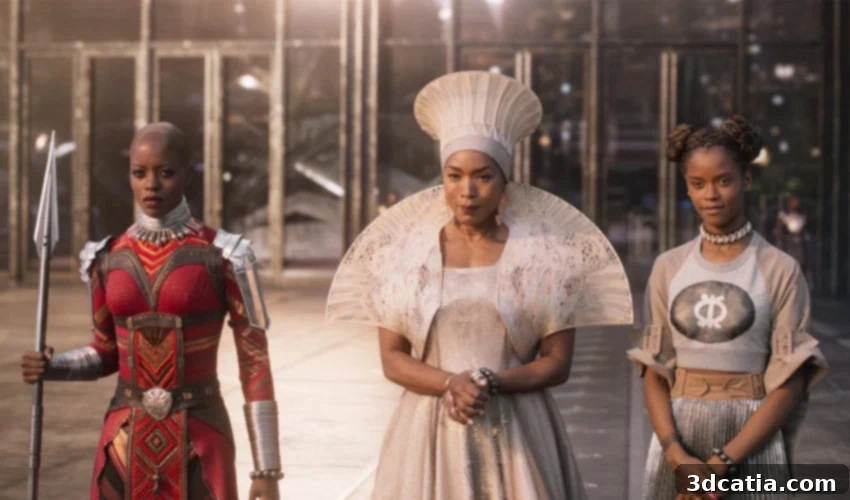
The applications of 3D printing are remarkably diverse, touching nearly every industry imaginable, from culinary arts to sophisticated aerospace engineering. This groundbreaking technology allows for the creation of intricate shapes and complex geometries from a vast array of materials. Among its most captivating frontiers is the world of filmmaking, where additive manufacturing is unleashing its full creative potential. Acclaimed and highly successful films like Avatar, Iron Man, Star Wars: The Force Awakens, and Black Panther have extensively leveraged 3D printing to design and produce everything from elaborate props and detailed set pieces to specialized costume components and practical effects. The film industry is increasingly recognizing and embracing the unparalleled design freedom and manufacturing flexibility that 3D technologies offer, bringing unprecedented visual spectacle to the big screen.
To delve deeper into this exciting convergence of technology and art, we consulted with a range of experts, including experienced filmmakers, innovative designers, and key players in the additive manufacturing sector. Our aim was to understand the profound impact of 3D printing on cinematic production: Can it effectively replace or significantly augment existing filmmaking techniques? What tangible advantages does it bring to the table, and what limitations or challenges must the industry still overcome to fully integrate this transformative technology?
The cinematic landscape is a realm of perpetual evolution. Merely comparing a film from four decades ago with a contemporary blockbuster reveals a staggering difference, particularly in the realm of special effects. Modern filmmaking strives to fully immerse the audience in a narrative world that feels as authentic as possible—or, in the case of genres like science fiction, as convincingly real as its abstract concepts allow. Consequently, the meticulous design and execution of sets, props, and costumes have become pivotal elements across numerous film genres. To meet these rising expectations, the world of cinema must continually adapt, eagerly adopting the latest technological innovations to exploit their advantages. This journey of evolution began as early as the 18th century with the concept of sequential images creating an illusion of movement. The year 1895 is widely celebrated as the birth of modern cinema, marked by the Lumière brothers’ pioneering work in developing cinematic technology, which included a device for projecting silent, black-and-white films. Just thirty-two years later, the United States heralded the era of sound film, swiftly followed by the advent of color cinema. While the incorporation of sound and color represented monumental shifts, the industry’s advancements are far from over. Today, the integration of 3D printing into filmmaking stands as another monumental development, fundamentally reshaping how movies are made and perceived.
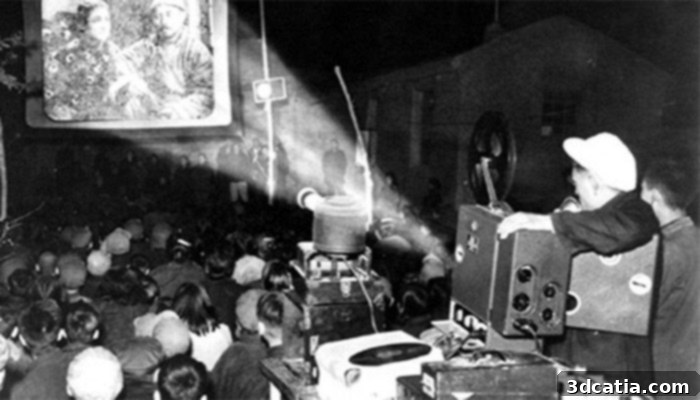
The film industry has consistently been reshaped by technological advancements.
The Unrivaled Advantages of 3D Printing in Cinematic Production
Today’s audiences are more discerning than ever, demanding increasingly high levels of quality, detail, and precision from filmmakers. This necessitates an extreme attention to the minutest details during a film’s creation, not only in terms of narrative and performance but also in design aesthetics and tangible elements. Even the smallest component of a prop, an accessory, or a costume can play an essential role in establishing character, mood, or a fictional world’s authenticity. Julia Körner, an acclaimed designer renowned for her 3D-printed fashion collections and, notably, for creating the distinctive 3D-printed costumes for Marvel’s American blockbuster “Black Panther,” articulates the nuanced distinction between 3D-printed fashion and film costumes: “For fashion in general, the primary considerations are wearability and aesthetic appeal. In contrast, costume design for cinema must also meticulously account for the overarching narrative, the specific requirements and movements of the actors, the dynamics of the set, and the demands of post-production processes, among many other factors. Each element must serve the story.”
Achieving the desired level of intricate detail for props, costumes, and set pieces can traditionally consume days, weeks, or even months of painstaking labor. Conventional production techniques often rely heavily on manual craftsmanship, which, while offering unique artistic touches, is inherently time-consuming and labor-intensive. This challenge is particularly amplified when a film requires costumes or accessories for a large ensemble of characters, such as historical epics depicting entire army legions or expansive sci-fi battle scenes. In such scenarios, 3D printing offers an invaluable advantage: inherent reproducibility and scalability. A designer can meticulously develop a digital model and then, with remarkable speed and consistency, 3D print numerous identical or slightly varied copies. Filmmaker Gilles-Alexandre Deschaud, a 3D designer with over a decade of experience, widely recognized for his short film “Chase Me”—where every character and prop was 3D printed—underscores these benefits: “3D printing enables two primary advantages: a significant reduction in the time required for element production, which translates directly into substantial financial savings, and a notable enhancement in quality. The models produced via 3D printing can achieve exceptional precision and intricate detail. Furthermore, the technology facilitates easy iteration, allowing for rapid improvements or corrections to parts throughout the design and production cycle.”
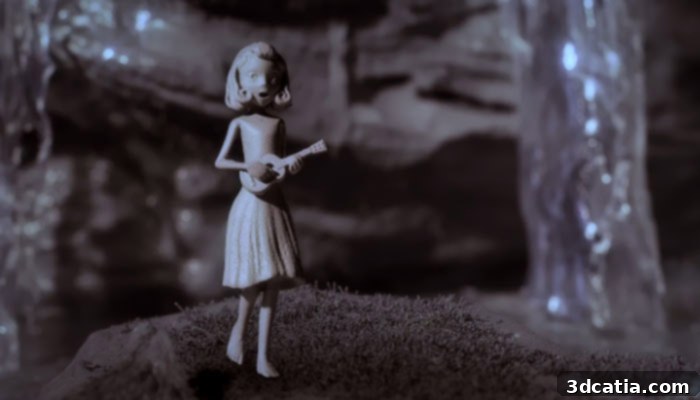
For his critically acclaimed short film “Chase Me,” Gilles-Alexandre Deschaud painstakingly created over 2,500 distinct figures using advanced 3D printing techniques.
The application of 3D printing in cinematic production significantly enhances creative flexibility, enabling filmmakers to swiftly produce prototypes or multiple variations of a design for direct comparison. This iterative design process allows for a dynamic and adaptive approach to prop and costume development. Should a critical prop or costume piece suffer damage during a demanding filming sequence, a replacement can be printed with impressive speed, minimizing costly production delays. Moreover, the digital nature of 3D design means that a part can be custom-designed and modified with simple digital adjustments before ever being physically produced, negating the need for extensive physical adjustments after an actor has tried it on. This reduces waste and ensures a perfect fit or desired aesthetic from the outset. Furthermore, the portability of certain 3D printing technologies allows for on-site manufacturing, eliminating the logistical complexities, lengthy shipping times, and considerable costs associated with transporting bulky or fragile props from distant workshops to remote filming locations. This localized production capability can be a game-changer for independent productions and large-scale blockbusters alike.
Beyond these substantial gains in time and cost efficiency, 3D printing offers an unparalleled degree of design freedom. It empowers artists and technicians to conceptualize and produce parts with geometries and complexities that would be utterly impossible or prohibitively expensive to achieve with traditional manufacturing methods. Victor Marin, a distinguished conceptual artist and filmmaker, shared an insightful example: “In one of my most recent and ambitious projects, I crafted the digital sculpture for the Falla de Valencia for Pichiavo. This magnificent artwork, a towering 26-meter-high structure made from an incredibly intricate wooden design, culminates in its ceremonial burning at the festival’s close. It was a truly magical experience, made possible by the ability to digitally sculpt and then fabricate such a complex piece.” This highlights how 3D printing facilitates the realization of grand, imaginative concepts that push the boundaries of traditional artistry.
This extraordinary design freedom is fundamentally supported by the vast and continuously expanding variety of materials available for 3D printing. Filmmakers can choose from a spectrum of plastics, resins, metals, and composites, each offering distinct aesthetic properties, mechanical strengths, and tactile finishes. In addition to aesthetic versatility, these materials offer significant practical advantages during filming. For instance, by utilizing lightweight materials and strategically designing internal cavities or lattice structures, it’s possible to create costumes and props that are significantly lighter than their traditionally manufactured counterparts. This not only enhances actor comfort and mobility but also improves safety for stunt work, while still appearing incredibly solid and substantial on screen. This clever combination of material science and design ingenuity allows for visually stunning elements without compromising on practicality or performance.

This elaborate cap, meticulously designed by Julia Körner, exemplifies intricate geometries and structures that would be virtually impossible to fabricate without the precision of 3D printing.
From Digital Model to On-Screen Reality: The 3D Printing Workflow in Film
Essential 3D Software for the Film Industry
The journey of any 3D-printed object begins in the digital realm. Before physical production can commence, a detailed 3D model must be developed, either through imaginative creation from scratch or by leveraging existing physical objects via 3D scanning. Jason Lopes, who has spent years collaborating with the esteemed Legacy Effects studio, a pioneer in practical effects, highlights the extensive toolkit used, mentioning industry-standard software such as Autodesk Maya (known for animation and modeling), Inventor (for mechanical design), Fusion 360 (a versatile CAD/CAM tool), Modo (for modeling, sculpting, and rendering), and Solidworks (a robust engineering design suite). This diverse selection underscores the wide array of specialized software tailored for various aspects of film production. Julia Körner further corroborates this, explaining that a broad spectrum of software, including those traditionally used in architecture, can be adapted for film design, with development times ranging from several days to many weeks depending on the complexity. For her more avant-garde and unusual designs, she often leverages her own proprietary algorithms to achieve unique forms and textures.
Beyond individual design capabilities, these sophisticated software solutions significantly streamline and enhance collaborative efforts within a production team. Victor Marin elaborates on this: “Nowadays, it’s considerably easier for the director and other creative stakeholders to clearly visualize designs digitally, and sometimes even to produce physical 3D prints and paint them for an even better, tangible representation. This capability is invaluable not only for the director but also for cinematographers, who can assess how light interacts with and affects a physical prop or set piece before it’s finalized. Investing time and resources in this pre-production visualization phase is far more efficient and cost-effective than attempting to rectify issues during the actual, high-stakes production phase, where mistakes can lead to monumental costs and delays.” This digital foresight reduces risks and optimizes creative outcomes.
The Indispensable Role of 3D Scanners
The role of 3D scanners in modern film production, particularly for custom-fitted elements, cannot be overstated. Jason Lopes, who was instrumental in designing and producing the iconic Iron Man costume through a combination of traditional and 3D printing techniques, provided a detailed account: “Digitization plays a paramount role, especially when you are tasked with designing a suit or an intricate accessory for a specific actor. A precise 3D scan of the actor’s body and head is typically performed. This high-fidelity data then serves as the foundational blueprint, allowing designers to sculpt and tailor components precisely around the actor’s real proportions and unique physique. This scanned data can also be utilized to produce low-resolution 3D prints or even milled foam prototypes. These physical mock-ups are invaluable for conducting preliminary fit checks of the printed components, ensuring that adjustments can be made digitally before committing to the final, high-quality prints. This workflow significantly reduces the time and material waste associated with iterative physical fittings, leading to a much more efficient and accurate final product.” 3D scanning thus epitomizes how 3D printing enables an unprecedented level of customization and detail, far surpassing the reliability and precision of manual measurement methods.
Choosing the Right 3D Printing Technology for Film Production
Selecting the optimal 3D printing technology for a specific film production task is a complex decision, given the abundance of choices available in today’s additive manufacturing market. As James Reeves, Managing Director of voxeljet UK, aptly notes, the film industry is often described as “a very secret industry,” implying proprietary techniques and careful resource allocation. One of the most significant factors influencing this choice is invariably the production budget. For instance, filmmaker Gilles-Alexandre Deschaud initially leaned towards using a more cost-effective FDM (Fused Deposition Modeling) printer for his projects. However, a crucial intervention and support from Formlabs allowed him to transition to their Form 1 stereolithography (SLA) printer, which, as he confirmed, delivered superior quality and finer detail, even on the smallest components, justifying the investment for his artistic vision.
For applications demanding the highest level of visual fidelity and realism, multi-color and multi-material 3D printing technologies are gaining significant traction in the film industry. These advanced processes offer a dramatically higher level of realism compared to single-color methods, allowing for the direct creation of objects with complex color gradients and material properties. A prime example is the stop-motion animated film “Mr. Link” (also known as “Missing Link”), which garnered a Golden Globe nomination. This film utilized Stratasys’ J750, a machine built upon PolyJet technology, renowned for its ability to print with an extensive palette of colors and material textures. The latest iteration, the Stratasys J750 Digital Anatomy Printer, takes this capability even further. Designer Julia Körner utilizes a similar machine, which offers the groundbreaking possibility to 3D print directly onto existing fabric, rather than the traditional method of sewing pre-printed pieces onto a garment. Körner enthusiastically explains: “This innovative capability opens up entirely new design paradigms in terms of wearability, functional integration, and the nuanced aesthetics of color and texture directly embedded into textiles. It blurs the lines between printed and woven elements.”
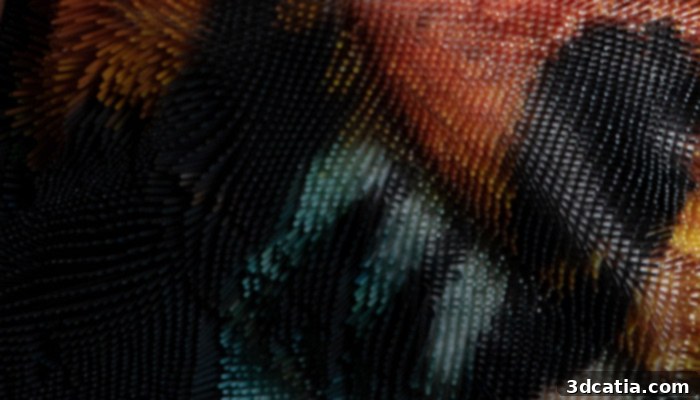
The ability to 3D print directly onto textiles, as demonstrated in Julia Körner’s work, unlocks innovative design possibilities for costumes and accessories.
The Crucial Phase of Post-Processing
In the vast majority of cases, 3D printed parts require a significant amount of post-processing to achieve the desired final aesthetic and functional quality for film. This necessitates budgeting for a more or less extensive post-processing timeline, which varies considerably depending on the project’s specific requirements, the chosen 3D printing technology, and the material. Victor Marin elaborates on the necessity of this stage: “You must meticulously prepare the mesh of the 3D model before sending it to print. Then, depending on the specific 3D printer technology employed (be it FDM, resin-based, etc.), the printed part will invariably require subsequent rework. Sometimes, traditional methods are still necessary to rectify or refine certain parts, or even the underlying model itself. While 3D printer manufacturers continually strive to improve their machines and produce cleaner prints, thereby minimizing the need for extensive cleaning and finishing, this manual phase remains integral to achieving film-quality results.” Jason Lopes even highlights the extreme nature of this phase, explaining that post-processing steps can sometimes account for up to 99% of the total manufacturing time. This extensive process typically includes the precise removal of support structures, thorough cleaning of residual materials, smoothing the surface to eliminate layer lines or imperfections, and often, intricate manual painting to add hyper-realistic details, weathering, or textural effects. This labor-intensive finishing work is crucial for transforming a raw 3D print into a convincing cinematic element.
Navigating the Challenges of 3D Printing in the World of Cinema
The extensive post-processing time, as discussed, represents a particularly significant challenge for filmmakers seeking to integrate 3D printing into their workflows. Beyond the sheer time factor, which is always a critical constraint in film production schedules, this manual labor translates directly into high personnel costs. Often, a large volume of intricate costumes and props must be produced within tight deadlines, making manual post-processing a significant bottleneck. Gilles-Alexandre Deschaud’s experience with his short film “Chase Me” perfectly illustrates this: he required approximately 20 minutes of post-production work for *each individual character* model, accumulating to a staggering total of over 800 hours for the entire project. This highlights that while printing itself can be fast, the finishing touches can still demand considerable resources.
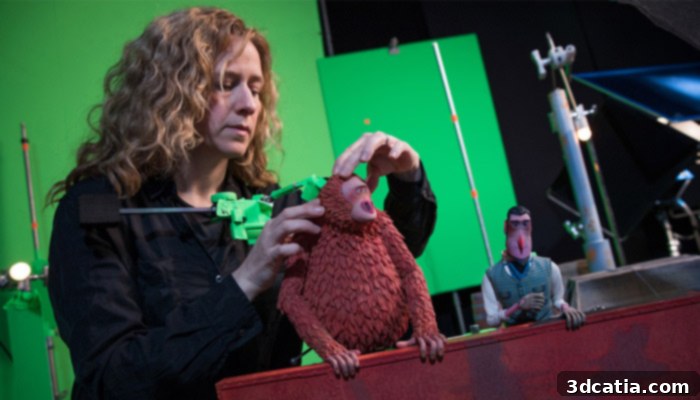
Mister Link, a stop-motion animated film, masterfully utilized 3D printing to create its expressive characters and detailed environments. (Image credits: LAIKA)
Another significant hurdle for the widespread adoption of 3D printing in the film world is the fundamental understanding of the technology itself—how it operates, its specific capabilities, and its inherent limitations. As Jason Lopes observes from his experience, “Most entertainment companies do not yet fully utilize dedicated additive manufacturing software or have integrated workflows. This creates a disconnect between designing digital assets for digital displays and media, and then properly preparing and implementing those designs for additive manufacturing. It can be a very complex and time-consuming process to bridge this gap, but ultimately, there is no more effective way to achieve a highly optimized workflow that seamlessly transitions from an initial concept to a tangible, physical reality.” This highlights the need for specialized training, integrated software solutions, and a shift in mindset to fully harness the power of additive manufacturing within established film production pipelines. Furthermore, the inherent secrecy within the film industry can sometimes hinder the sharing of best practices and innovations, making it challenging for smaller studios or independent filmmakers to quickly adopt new methodologies.
The Dynamic Future of 3D Printing in Filmmaking
3D printing has already made indelible contributions to a multitude of exciting and award-winning film projects, and its trajectory suggests that its influence is only set to expand. While the industry remains notoriously secretive about upcoming projects—a characteristic that often fuels innovation—we have nevertheless been able to clearly gauge the transformative impact of additive manufacturing on cinematic production. The pressing question remains: Will 3D printing become an indispensable, integral part of costume design, prop development, and even full-scale set construction, potentially replacing or significantly augmenting traditional processes? Historically, the world of cinema has always been shaped and propelled forward by technological changes. From the introduction of sound and color to the advent of digital effects, each innovation has redefined the boundaries of storytelling and visual spectacle. 3D printing is poised to be the next such catalyst, pushing creative and technical envelopes further than ever before.
For Gilles-Alexandre Deschaud, the integration of 3D printing into cinema is not a question of ‘if,’ but ‘how deeply.’ He firmly believes that 3D printing has secured its permanent place in the industry: “We can already observe the widespread adoption of 3D printing across various facets of the film world. This ranges from intricate stop-motion films and monumental American blockbusters to agile advertising campaigns. 3D printing is frequently employed for the direct production of props and set elements. However, its utility extends far beyond mere fabrication; it is also profoundly valuable in the initial design phases, enabling the rapid validation of custom designs, concept models, and character prototypes. Clearly, the future trajectory of 3D printing within cinema is not just mapped out—it is already unfolding before our eyes.”
Victor Marin echoes this sentiment, projecting that 3D technologies will play an increasingly pivotal role in the future of filmmaking. The inherent speed and precision of digital creation and 3D scanning for models far outpace the labor-intensive nature of manual creation. However, Marin strongly advocates for a harmonious coexistence of methodologies, cautioning against the wholesale abandonment of traditional methods: “For example, when crafting a statue, it is undeniably simpler to resize it with a few clicks or even alter its proportions or pose digitally. The synergy with 3D scanning is also incredibly powerful, as it allows for the creation of exceptionally accurate digital models from physical scans. While we are experiencing tremendous success with 3D technology, we must never lose sight of the invaluable artistic and technical merits of traditional craftsmanship. A blend of both approaches often yields the most compelling results.”
Julia Körner similarly champions the thoughtful integration of both worlds. She views 3D printing as an invaluable additional design possibility, an enabling technology that facilitates the creation of extraordinarily complex and elaborate structures—forms that simply cannot be achieved with conventional manufacturing techniques. Through her innovative works, she consistently endeavors to bridge the gap between tradition and progress, synthesizing both methodologies in her unique artistic expression. The future of film will likely not be solely 3D printed, but rather a brilliant tapestry woven from the threads of cutting-edge technology and time-honored artistic skill, creating a cinematic experience that is richer and more imaginative than ever before.
One thing is certain: we will continue to keep you informed about the upcoming feature films, captivating short films, and innovative commercials that ingeniously incorporate additive manufacturing. What are your thoughts on the expanding role of 3D printing in cinema? We invite you to share your perspectives in the comments section below or engage with us on our Facebook and Twitter pages! Don’t forget to sign up for our free weekly Newsletter to receive all the latest news and insights in the world of 3D printing straight to your inbox!