
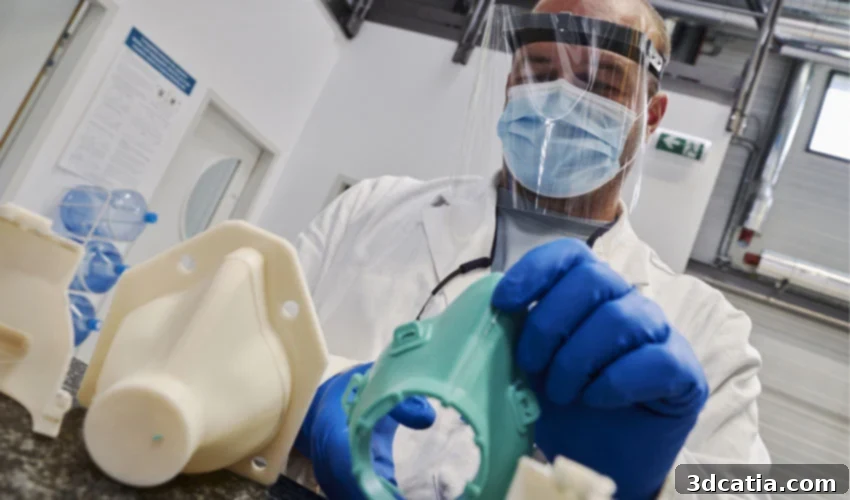
3D Printing’s Pivotal Role in the COVID-19 Pandemic: Innovations That Transformed Healthcare and Public Safety
The year 2020 will forever be etched in history as a period of unprecedented global change, marked by the devastating impact and tragic loss of life brought forth by the COVID-19 pandemic. Amidst this global crisis, the 3D printing sector emerged as a remarkable force, demonstrating unparalleled agility and ingenuity. Initially adapting to new realities, the additive manufacturing industry quickly pivoted to become a vital ally in the worldwide struggle against COVID-19. From sprawling industrial corporations leveraging their advanced facilities to dedicated individuals within the vibrant maker community, a diverse coalition across the entire sector united in a collective effort to mitigate the health crisis. The versatility and rapid deployment capabilities of 3D printing technology proved profoundly significant in this critical battle. As that challenging year concluded, it became imperative to reflect upon and highlight some of the most exceptional responses and groundbreaking innovations that the additive manufacturing industry delivered. These remarkable contributions can be broadly categorized into applications designed to bolster the medical sector and innovative solutions aimed at preventing contagion within society, showcasing 3D printing’s indispensable impact during a time of urgent need.
3D Printing Innovations for Hospitals and Health Centers
Rapidly Constructed Isolation Rooms Using Concrete 3D Printing
One of the very first documented applications of 3D printing in the global fight against the COVID-19 pandemic surfaced in late February 2020. Facing an urgent need for additional medical infrastructure, the Chinese company Winsun pioneered the creation of isolation rooms using advanced concrete extrusion technology. This innovative initiative was designed to provide dedicated spaces for isolating individuals exhibiting symptoms or who had tested positive for coronavirus, thereby curbing the virus’s rapid spread. As existing hospitals in China struggled with overwhelming patient numbers and a severe shortage of beds, additive manufacturing offered an incredibly fast and efficient method to deploy necessary facilities. Each isolation room, spanning an area of 10 square meters with a height of 2.8 meters, was constructed with astonishing speed. Utilizing a robotic arm mounted on rails, successive layers of concrete were precisely deposited around the construction site, ensuring structural stability and completing each unit in under two hours. This demonstrated the immense potential of large-scale 3D printing to provide critical infrastructure in emergency situations.
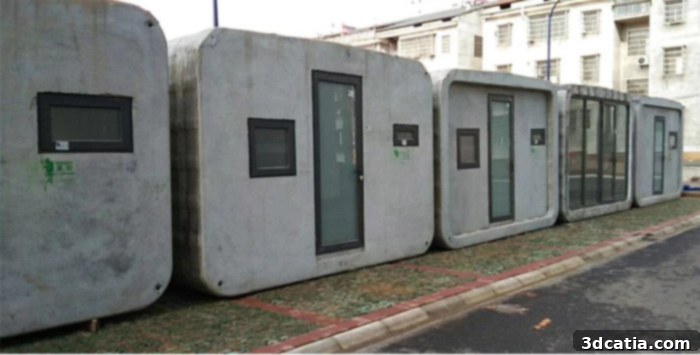
Concrete isolation rooms rapidly constructed in Xianning, China, demonstrating 3D printing’s speed.
Essential 3D Printed Respirator Valves
As the coronavirus crisis escalated and reached Europe, Italy quickly became one of the most severely affected nations. Hospitals across the country were overwhelmed, facing critical shortages of life-saving medical equipment, particularly the specialized valves essential for ventilator operation in severe COVID-19 cases. When a hospital in Chiari urgently reported a shortage of these crucial ventilator valves, the innovative Italian company Issinova stepped in. Recognizing the unparalleled efficiency and speed of 3D printing, Issinova rapidly began additively manufacturing the necessary valves, providing a lifeline to health centers in desperate need. Their swift action demonstrated how 3D printing could bypass traditional supply chain delays during a crisis. Following this initial success, the manufacturer Photocentric also scaled up, launching mass production of respiratory valves for numerous countries. Leveraging their high-speed resin 3D printing machines, Photocentric was able to develop and produce more than 40,000 valves per week, significantly alleviating the global shortage and showcasing the scalability of additive manufacturing in urgent medical supply chains. These efforts saved countless lives by ensuring patients had access to critical respiratory support.
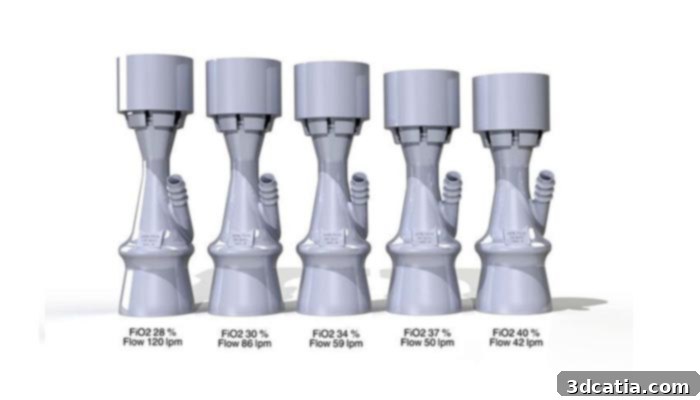
Open-source 3D models facilitated the production of different respiratory valves for ventilators.
Mass Production of Swabs for Coronavirus Tests
By early April, news began to circulate about innovative applications of additive manufacturing to produce crucial swabs for PCR (Polymerase Chain Reaction) tests. These specialized swabs are indispensable instruments used to safely and effectively collect samples of nasal mucosa from individuals. Once collected, these samples are then analyzed in laboratories to detect the presence of the virus. The unprecedented rapidity with which COVID-19 spread globally created an immediate and severe mass shortage of these diagnostic swabs, hindering testing efforts worldwide. In response to this critical bottleneck, leading companies like Carbon and Formlabs rapidly mobilized their 3D resin printing capabilities. They began manufacturing approximately 150,000 nasal swabs per day, an extraordinary output that significantly scaled up testing capacity. These 3D printed swabs were absolutely essential for accelerating the detection of positive cases, which in turn played a crucial role in contact tracing, isolation strategies, and ultimately, slowing the relentless spread of the virus across communities and countries.
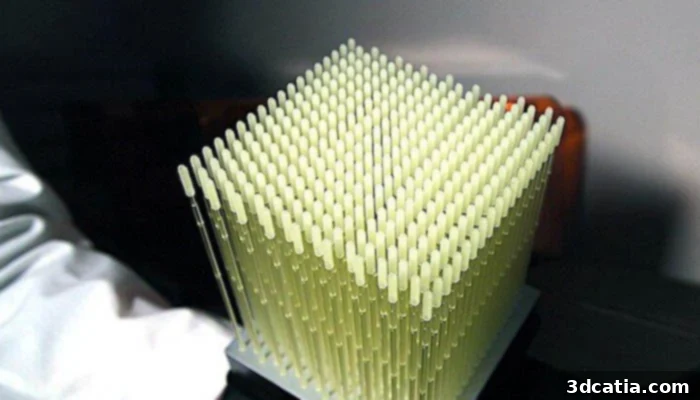
Efficient production of swabs using 3D resin printers addressed a critical testing supply gap.
Face Shields for Frontline Healthcare Workers
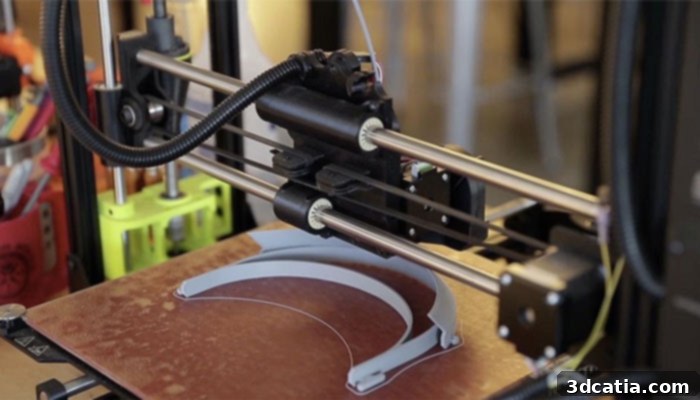
One of the most immediate and impactful applications of 3D printing in combating COVID-19 was the widespread production of face shields. This initiative arose directly from a severe and dangerous lack of Personal Protective Equipment (PPE) for healthcare professionals working tirelessly in hospitals and health centers globally. Recognising this urgent need, Prusa, a renowned manufacturer of consumer 3D printers, demonstrated exceptional leadership by designing and releasing an open-source 3D model for face shields. This crucial step empowered anyone with a 3D printer, from large-scale professional additive manufacturing companies to individual enthusiasts in the burgeoning maker community, to contribute to the production effort. This collaborative model allowed for the rapid development and distribution of a massive number of facial protectors in the shortest possible time. These face shields provided an essential layer of protection for frontline workers, significantly reducing their risk of exposure to the virus and allowing them to continue their life-saving work more safely.
Emergency Ventilators for Critical Care
In mid-March, a pivotal moment arrived with the creation of the first 3D printed emergency respirator designed for hospitals in Spain. This groundbreaking project was the result of an extraordinary collaboration between a consortium of entities including the Consorci de la Zona Franca (CZFB), HP, Leitat, SEAT, the Consorci Sanitari de Terrassa (CST), and the Taulí Hospital in Sabadell. The primary objective was to leverage the speed and flexibility of 3D printing to support overwhelmed hospitals and intensive care units by rapidly producing ventilators for severely ill COVID-19 patients. The prototype was developed with incredible speed, utilizing the diverse 3D printing capabilities of the various project partners, ensuring it met all necessary functional and safety requirements. This collaborative effort enabled the production of up to 100 units per day, a crucial output during the peak of the crisis. The success of this model inspired and was subsequently adopted by other companies and initiatives across the industry, contributing to the global effort to provide essential respiratory support to hospitals worldwide.
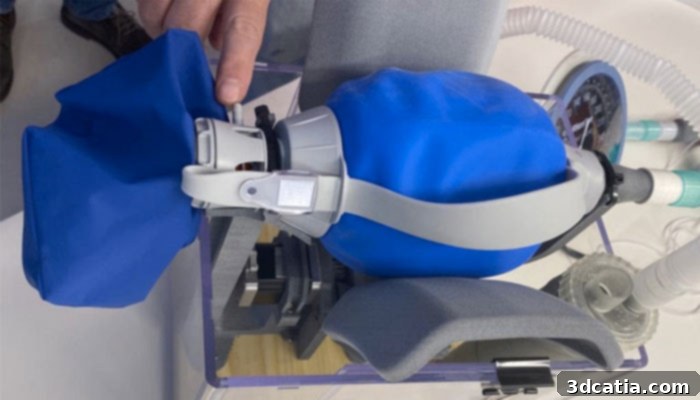
The inaugural 3D printed respirator, a testament to rapid medical innovation.
Transforming Decathlon Snorkeling Masks into Respirators
Echoing the ingenuity seen with the initial 3D printed valves in Italy, Issinnova once again played a pivotal role in another remarkable initiative. The innovative idea was to repurpose widely available Decathlon snorkeling masks, transforming them into emergency respirators for patients battling the coronavirus. This ingenious solution addressed a severe shortage of conventional medical-grade respirators. The critical link that made this transformation possible was a specific connecting piece that allowed the snorkeling mask to interface with standard hospital medical equipment. This vital component, named the “Charlotte Valve,” was rapidly designed using 3D modeling software, and hundreds were quickly manufactured using FDM (Fused Deposition Modeling) 3D printing technology. This initiative galvanized the entire maker community, with many individuals not only printing the valves but also donating their own snorkeling masks to hospitals, illustrating the immense power of collective action and additive manufacturing in a crisis. This project highlighted the potential for adaptive re-use and the swift customization capabilities of 3D printing.
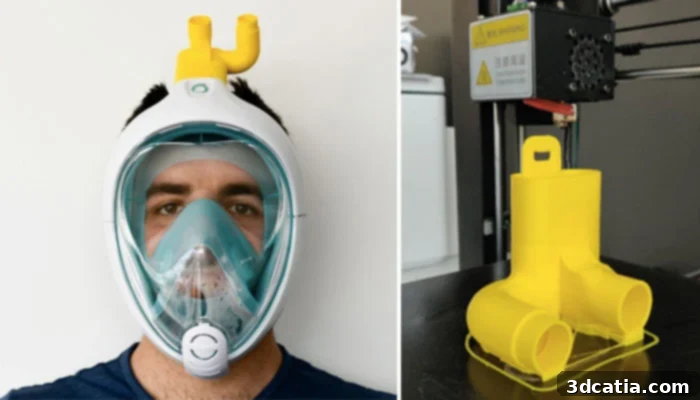
The custom 3D printed part enabled diving masks to function as emergency respirators.
3D Printing Solutions to Prevent Virus Spread in Society
A Convenient Custom 3D Printed Soap Ring
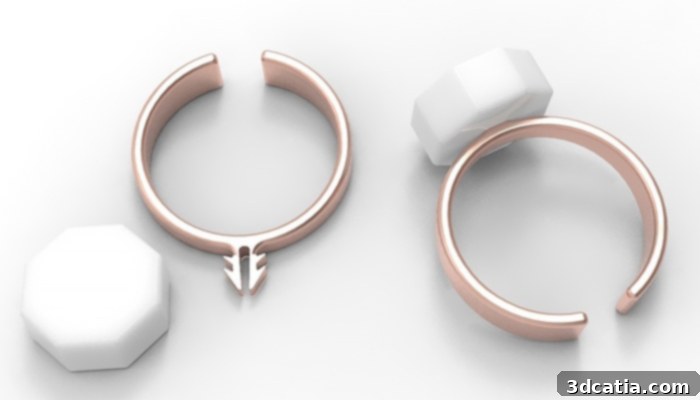
Maintaining regular hand hygiene through thorough washing is universally recognized as a crucial measure in preventing the transmission of coronavirus. However, a common challenge arises when individuals are away from home and lack immediate access to a washroom or a bar of soap. The innovative 3D printed soap ring offers a clever and practical solution to this very problem. To create one, all that is required is an FDM 3D printer capable of handling simple thermoplastics. For enhanced virucidal properties, the use of virucidal copper plastic, combined with a soap tablet, is recommended. Depending on the specific 3D printer and the material chosen, this soap ring provides an economical and highly accessible method to bolster containment efforts against the virus. Its design prioritizes ease of use, allowing individuals to wash their hands virtually anywhere and at any time, provided they have a small amount of water. This simple yet effective innovation empowers individuals to maintain critical hygiene standards on the go, significantly reducing the risk of transmission through contaminated hands.
Additively Manufactured Virucidal Copper Surfaces
Conventionally, creating complex copper parts can be a challenging and resource-intensive process. However, additive manufacturing presents a significantly faster, more time-efficient, and cost-effective alternative. The relevance of this technology to the pandemic is profound: numerous studies have conclusively shown that copper possesses inherent properties that enable it to effectively eradicate bacteria, fungi, and viruses from surfaces. Specifically concerning COVID-19, rigorous laboratory tests have demonstrated that copper-treated surfaces can neutralize an astonishing 96% of the virus within just two hours of contact. Recognizing this powerful virucidal capability, the company SPEE3D innovatively modified its industrial printers to enable them to precisely coat existing metal parts with a layer of copper. This remarkable initiative provided a rapid and scalable method to transform high-touch surfaces in public and healthcare settings into self-sanitizing zones, offering a proactive and highly effective measure to prevent the persistent spread of coronavirus through surface contact.
The Air-Purifying AMS Mini Device
The AMS mini represents a cutting-edge, compact air sterilization device, skillfully 3D printed from nylon using HP Multi Jet Fusion technology. Its core functionality lies in its ability to effectively sterilize ambient air. The AMS mini integrates a meticulously designed cyclic, labyrinth-like internal system through which air is drawn. Within this intricate pathway, the air is exposed to precisely calibrated ultraviolet (UV) light, a well-established method for eradicating a wide spectrum of viruses and bacteria. According to the manufacturer’s rigorous testing, this innovative device is capable of eliminating approximately 95% of airborne bacteria and viruses in its immediate environment, crucially including COVID-19 aerosols. The highly complex and precise shape of the device’s internal structure is absolutely critical to its efficient functionality, making additive manufacturing the ideal, and arguably only, viable production method for creating such sophisticated internal geometries. The AMS mini thus offers a powerful localized solution for enhancing air quality and reducing viral transmission risks in various indoor settings.
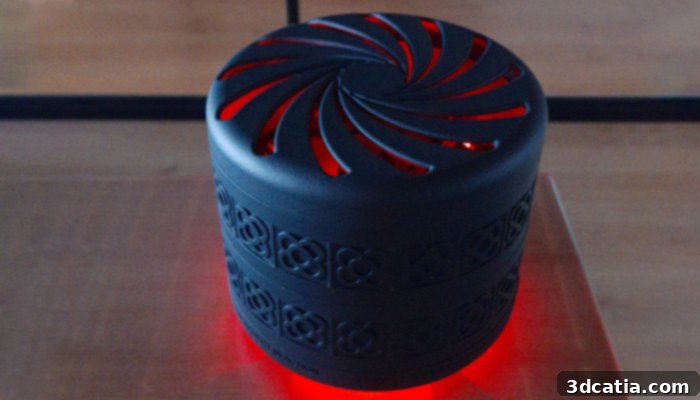
The compact AMS mini air sterilizer, utilizing advanced 3D printing for complex design.
A Wearable Necklace to Prevent Face Touching
A fundamental recommendation for curbing the spread of the pandemic has been to avoid touching one’s face, especially after contact with public surfaces. This habit, often unconscious, poses a significant risk for virus transmission. Addressing this challenge, a team of NASA researchers developed “PULSE,” an ingeniously simple yet effective 3D printed necklace. This innovative wearable device integrates a small vibratory motor and an infrared sensor. When a user’s hands approach their face, the infrared sensor detects the proximity, triggering the vibratory motor to gently alert the wearer. This subtle feedback serves as a constant, non-intrusive reminder to break the unconscious habit of face-touching. The beauty of PULSE lies in its accessibility: it can be readily produced using an FDM 3D printer with common PLA filament and a few electronic components easily found in any electronics store. As an open-source model, PULSE can be freely downloaded, enabling widespread adoption and contributing to a collective effort to reduce infection rates through behavioral modification.
Smart Fibers for Mask Leak Detection
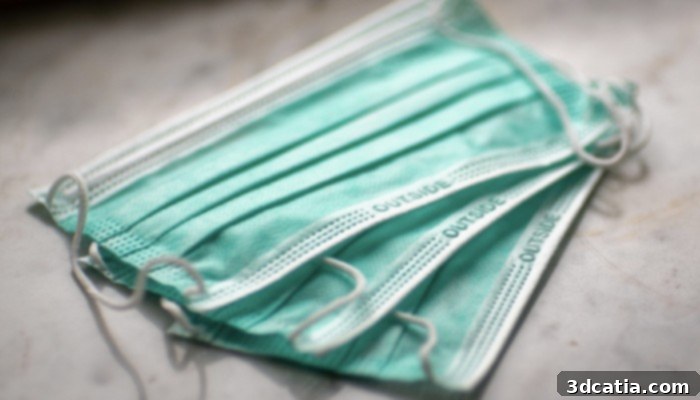
With masks becoming an indispensable part of daily life and a crucial barrier against coronavirus transmission, ensuring their effective functionality is paramount. However, not all masks are created equal, and some may have subtle flaws or poor fits that compromise their protective capabilities. To address this, a pioneering research team developed 3D printed sensory fibers specifically designed to detect leaks in masks. These innovative fibers function similarly to miniature electric cables, consisting of a conductive silver core enveloped by a protective polymer cover. When integrated into a mask, these fibers are capable of detecting minute defects or gaps in the seal when the wearer breathes, as changes in airflow generate movement and corresponding electrical signals within the cells. Given their straightforward application, ease of manufacture, and cost-effectiveness, these smart sensors are highly suitable for domestic use. This empowers individuals to independently verify that their masks are fitting correctly and providing optimal protection, adding an extra layer of security to personal and public health efforts.
Contactless 3D Printed Door Openers
Door handles represent a significant vector for virus transmission, as they are frequently touched by numerous individuals throughout the day. To drastically reduce this potential risk of infection, Materialise, a leader in additive manufacturing software and services, conceived and rapidly developed an innovative solution: a contactless door opener. In an astonishingly short span of just 24 hours, they managed to design, rigorously test, and validate an additively manufactured prototype. This ingenious device is designed to attach securely to a standard door handle, allowing users to open doors without any direct skin contact. A diverse range of door opener models were quickly made available, compatible with various 3D printing technologies such as FDM, SLS, and MJF, ensuring adaptability to virtually any door type and setting. In a commendable act of public service, Materialise released the 3D models for these door openers free of charge on its website, encouraging widespread manufacturing and distribution globally, thereby making a tangible contribution to containing the spread of coronavirus.
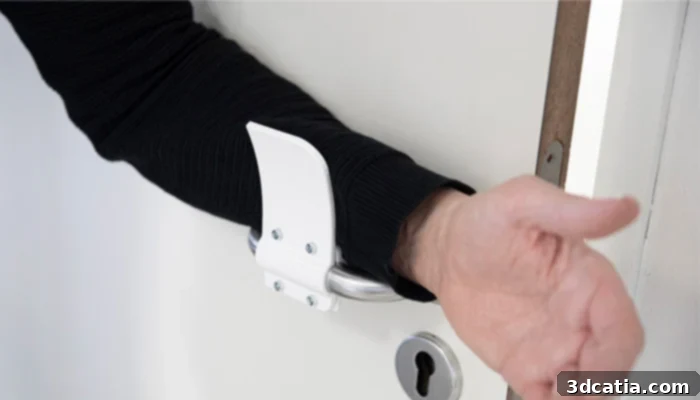
These 3D printed door openers effectively prevent direct hand contact with high-touch surfaces.
Nanovia’s Virucidal 3D Printing Filament
Innovation in additive manufacturing extended beyond physical objects to the very materials themselves. Nanovia, a prominent manufacturer of 3D printing filaments, developed a revolutionary new range of thermoplastics under the NANOVIA XV series. These groundbreaking materials are certified to comply with ISO 21702, an international standard for measuring antiviral activity on non-porous surfaces. This critical certification means that the NANOVIA XV filament actively reduces or entirely prevents the infectivity of viruses on its surface. According to the manufacturer’s stringent tests, the NANOVIA XV series can eliminate an impressive 98.9% of viruses within two hours of contact, and an even more remarkable 99.9% within four hours. Given that PLA (Polylactic Acid) remains one of the easiest and most widely used thermoplastics for 3D printing, Nanovia anticipates that its virucidal filament can be easily adopted to quickly design and produce everyday objects that come into frequent contact with multiple people. This material holds immense potential for both general public use and especially promising applications within the medical sector, offering a new frontier in passive virus mitigation.
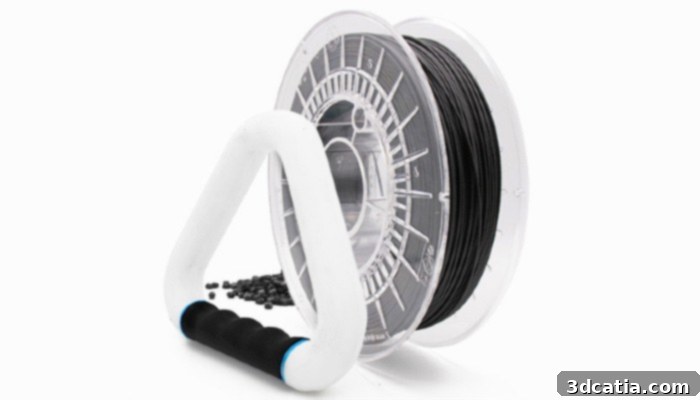
Nanovia’s innovative virucidal filament offers enhanced safety for 3D printed objects.
The COVID-19 pandemic unequivocally demonstrated the transformative power and indispensable agility of the 3D printing industry. From the urgent demand for medical supplies to ingenious solutions for public safety, additive manufacturing rose to the challenge, proving itself an unsung hero in a global crisis. The innovations highlighted above are merely a glimpse into the countless ways this technology adapted, improvised, and delivered critical solutions when traditional supply chains faltered. The legacy of 3D printing’s response to COVID-19 will undoubtedly influence future disaster preparedness, healthcare manufacturing, and technological development for years to come. What are your thoughts on these remarkable 3D printing applications in the battle against COVID-19? Share your perspectives in the comments section below or join the conversation on our Facebook and Twitter pages! For the latest news and updates in the world of 3D printing, remember to sign up for our free weekly Newsletter here, delivered directly to your inbox!