
Revolutionizing Pharmaceuticals: FabRx and the Dawn of Personalized 3D Printed Medicine
The medical sector stands at the precipice of a transformative era, largely propelled by the incredible advancements in 3D printing technologies. These innovations promise profound benefits, particularly in the realm of personalized medicine. We’ve already witnessed groundbreaking achievements, such as the bioprinting of functional tissues derived directly from a patient’s own stem cells. This ingenious application of additive manufacturing has paved the way for numerous bioprinting projects, consistently yielding results that inspire hope and push the boundaries of medical science. Beyond tissues and organs, the potential for the medical sector to deliver highly customized solutions extends to the very core of patient treatment: pharmaceuticals. The concept of 3D printing drugs tailored to individual needs is actively being explored by pioneering companies. Among these innovators is FabRx, a UK-based company dedicated to developing pharmaceutical solutions that enable patients to receive on-demand, precisely customized medication. To delve deeper into this exciting and innovative technology, we had the privilege of interviewing a leading expert from FabRx.
3DN: Can you introduce yourself and FabRx?
My name is Patricija Januskaite, and I am a Senior Formulation Scientist at FabRx. Established in 2014 as a pharmaceutical biotechnology spin-out from University College London (UCL), FabRx has rapidly positioned itself at the forefront of personalized medicine. Our core specialization lies in the 3D printing of oral dosage forms – essentially, creating tailor-made tablets and capsules. Our mission is to transform the pharmaceutical landscape by moving away from the conventional ‘one-size-fits-all’ approach to drug manufacturing. We envision a future where medication is precisely formulated for each individual, addressing specific patient needs related to dosage, release profiles, size, shape, and even taste. By leveraging advanced 3D printing technologies, we aim to overcome significant challenges in drug delivery and ultimately enhance therapeutic outcomes and patient adherence.

Patricija Januskaite, Senior Formulation Scientist at FabRx
3DN: What 3D printing technologies does FabRx utilize in its work?
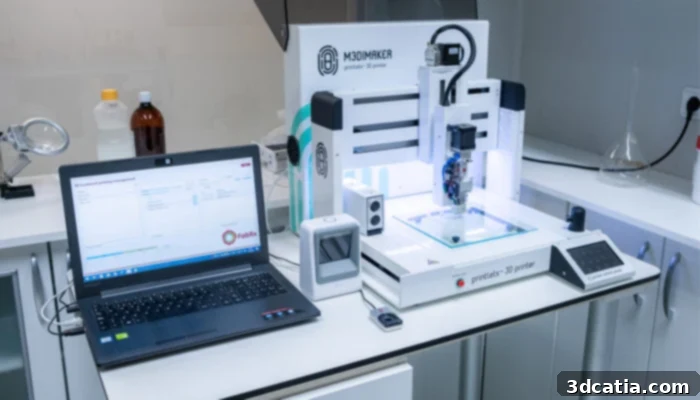
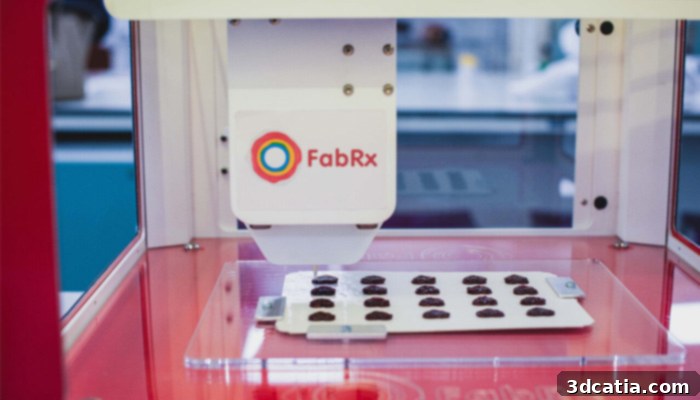
At FabRx, our commitment to innovation is reflected in the diverse range of 3D printing technologies we employ, particularly focusing on our proprietary pharmaceutical 3D printer, M3DIMAKER™. This advanced system primarily utilizes multiple extrusion-based techniques, which are ideal for the precise manufacture of personalized medicines. The M3DIMAKER™ is designed with a sleek hardware system that offers a selection of different printing nozzles, allowing pharmacists and researchers to adapt the manufacturing process to their specific requirements. This versatility is crucial for creating varied drug formulations. Furthermore, the printer integrates sophisticated in-line quality control procedures, coupled with a fitted camera, to meticulously monitor the entire manufacturing process in real-time. This ensures consistent product quality and allows for immediate identification and correction of any potential faults during printing, ensuring the highest standards for pharmaceutical production.
Beyond our novel M3DIMAKER™ system, we possess extensive experience and expertise in several other additive manufacturing processes. These include fused deposition modeling (FDM), direct powder extrusion (DPE), selective laser sintering (SLS), and stereolithography (SLA). FDM and DPE are both extrusion-based technologies particularly well-suited for manufacturing multiple-drug combinations, often referred to as ‘polypills.’ These techniques also enable the creation of tablets with sustained or delayed release profiles, which are vital for optimizing drug efficacy and minimizing dosing frequency. Selective laser sintering (SLS), on the other hand, utilizes a laser to fuse powdered drug compounds and excipients, allowing us to create intricate drug-loaded ‘printlets™’ (our term for 3D printed tablets). SLS offers exceptional control over porosity and density, enabling the production of printlets™ with a wide range of characteristics, from rapidly orodispersible forms that dissolve quickly in the mouth to controlled-release dosage forms that deliver medication over an extended period. For manufacturing sustained-release medical devices and complex drug-loaded printlets™, we leverage SLA 3D printing. This technology uses a light source to photopolymerize liquid resins into solid, highly precise parts, providing excellent resolution and surface finish, which is crucial for sophisticated drug delivery systems and implantable devices. Each of these technologies brings unique advantages to our pharmaceutical development pipeline, allowing us to select the optimal method for each specific drug formulation and patient requirement.
3DN: Who are FabRx’s clients and what challenges do you address?
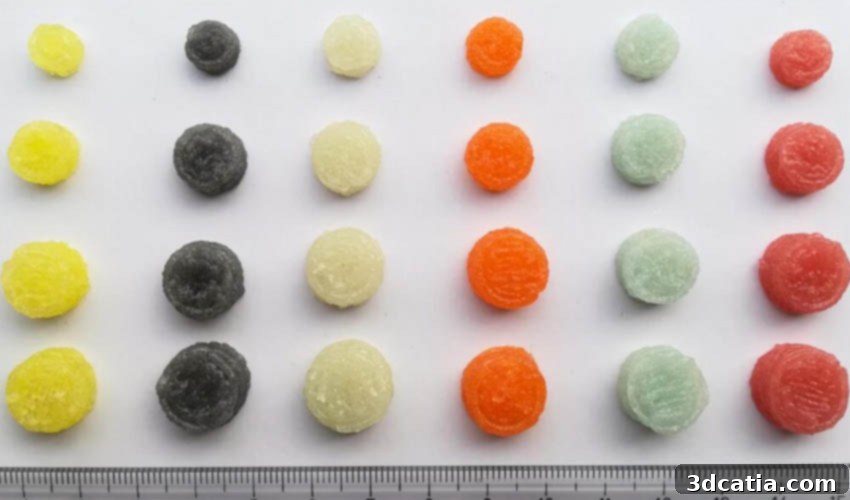
The M3DIMAKER™ and our broader portfolio of 3D printing technologies offer a vast array of applications within the drug development sector, catering to a diverse client base ranging from pharmaceutical companies to healthcare providers. Initially, our systems are invaluable for the preparation of small, highly customized batches required for critical clinical and pre-clinical studies, where precision and flexibility are paramount. Ultimately, our vision is to extend this capability to the routine production of fully personalized pharmaceutical products for widespread patient use. One of the most significant challenges we address, which is a common burden in the traditional pharmaceutical industry, is the inability of large numbers of patients, particularly children and the elderly, to easily swallow conventional tablets. This issue often leads to medication non-adherence, ineffective treatment, and increased healthcare costs. With our innovative technologies, FabRx is uniquely capable of producing drug-loaded chewable formulations that can be precisely tailored in terms of dose, size, shape, and even taste profiles. This customization allows us to overcome these underlying issues, making medication more palatable and manageable for vulnerable patient populations, thereby significantly improving treatment compliance and therapeutic outcomes. Beyond this, our solutions also cater to patients with specific allergies, rare diseases requiring bespoke dosages, or those needing combination therapies in a single, convenient dosage form, making medication accessible and effective for previously underserved groups.
3DN: What is the importance of personalized medicine, and what are your predictions for its future?
The importance of personalized medicine cannot be overstated in today’s healthcare landscape. Currently, the pharmaceutical industry relies on capitally intensive processes to mass-produce vast volumes of identical tablets, characterized by uniform dosage, shape, and size. While efficient for large-scale distribution, this ‘one-size-fits-all’ approach to treating patients is often suboptimal and, in many cases, entirely unsuitable for diverse patient populations. Children and the elderly, for example, frequently require different dosages than adults, and their physiological differences can impact drug metabolism and efficacy. This mismatch often results in undesirable side effects, a lack of desired treatment effect, or even adverse reactions. Personalized medicine fundamentally shifts this paradigm by focusing on the individual. It recognizes that each patient is unique, with distinct genetic profiles, metabolic rates, co-morbidities, and lifestyle factors that influence drug response. By tailoring medication to these individual characteristics, personalized medicine has the profound capability of overcoming the major issues inherent in the mass manufacture of generic medicines for niche patient groups. We firmly believe that 3D printing is not just a method but the optimal and most flexible technology for achieving this ultimate goal. Its ability to create bespoke dosages, combination drugs, and customized release profiles on demand is unparalleled. In the not-so-distant future, we foresee personalized medicine transitioning from an innovative concept to the global everyday norm of pharmaceutical manufacture. In this future, the patient will unequivocally be the priority, and medication will be as unique as the individual receiving it, leading to vastly improved public health outcomes, reduced side effects, and more effective treatments across the board.
3DN: What are the future projects and aspirations of FabRx?
FabRx is at a pivotal point in its journey, and our future projects are centered around solidifying our leadership in personalized medicine manufacturing. Currently, no other instrument on the market offers the unique combination of small-batch production, high flexibility, and rapid manufacturing capabilities for pharmaceutical products of this type that the M3DIMAKER™ provides. This proprietary development places FabRx Ltd. unequivocally at the forefront of the personalized medicine manufacturing revolution. However, pioneering a new manufacturing method in the highly regulated pharmaceutical industry comes with its own set of significant challenges. As a result of this innovation, there are currently no established regulatory guidelines specifically pertaining to 3D printing as a pharmaceutical manufacturing method from global health authorities. Recognizing the critical importance of regulatory approval, we are actively and continuously engaged with several key regulatory bodies around the world. Our primary objective in these discussions and collaborations is to establish the necessary frameworks and demonstrate the safety, efficacy, and quality control capabilities of our technology. We are diligently working through this rigorous process with the ultimate goal of making the M3DIMAKER™ the first and only approved pharmaceutical manufacturing 3D printer on the market. Achieving this milestone will not only validate our technology but also pave the way for broader adoption of 3D printing in personalized drug production, enabling a new era of patient-centric pharmaceutical care globally.
3DN: Do you have any final words for our readers?
At FabRx, we are immensely proud to be taking monumental strides towards transforming the landscape of medicine and making personalized medicine a tangible reality for patients and the pharmaceutical industry worldwide. Our dedication to innovation and our pioneering work with the M3DIMAKER™ are set to redefine how drugs are conceived, manufactured, and delivered. We believe that by tailoring treatments to the individual, we can unlock unprecedented levels of efficacy, safety, and patient satisfaction. If you are intrigued by our work, wish to explore the potential of the M3DIMAKER™ for your own research or pharmaceutical needs, or simply want to learn more about the future of personalized drug manufacturing, we invite you to visit our comprehensive official website. There, you will find detailed information about our technologies, research, and how we are shaping the future of pharmaceuticals.
We’d love to hear your thoughts on FabRx’s innovative work and the exciting prospects of 3D printed personalized medicine. Please feel free to share your insights and comments below, or engage with us on our Facebook and Twitter pages! For all the latest news and developments in the dynamic world of 3D printing, don’t forget to sign up for our free weekly Newsletter, delivered straight to your inbox!