
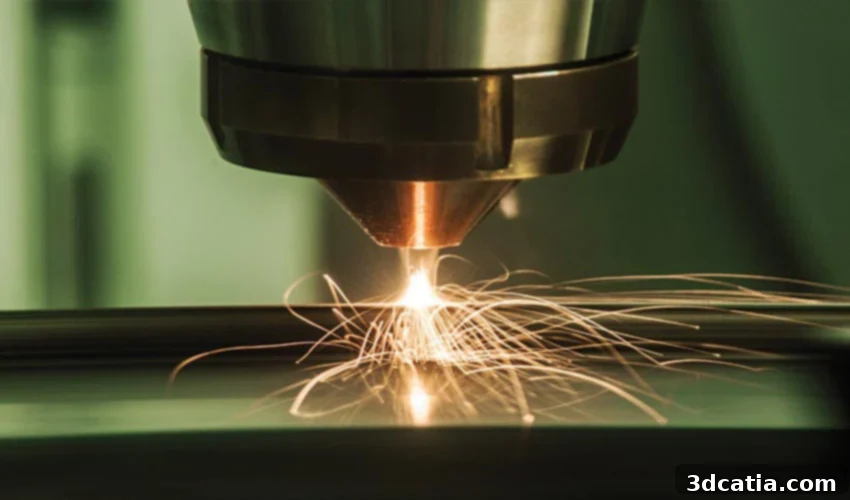
Directed Energy Deposition (DED): A Comprehensive Guide to Advanced Metal 3D Printing and Repair
Directed Energy Deposition (DED) stands as a sophisticated and highly versatile additive manufacturing process within the realm of 3D printing. Distinct from many other techniques, DED is particularly renowned for its ability to repair and augment existing components, breathing new life into damaged parts. While fully capable of fabricating parts from scratch, its strength often lies in critical industrial applications, such as restoring expensive turbine blades, propellers, or molds that have suffered wear and tear, thereby offering significant cost and time savings compared to manufacturing new replacements.
This innovative technology occupies a unique space within the additive manufacturing landscape. Much like certain Powder Bed Fusion (PBF) technologies—such as Laser Powder Bed Fusion (LPBF) or Electron Beam Melting (EBM)—Directed Energy Deposition employs a concentrated high-energy source to melt materials. However, a key differentiator is that DED melts the material precisely at the moment it is being deposited by a nozzle. In essence, this positions DED at the fascinating intersection of material extrusion and powder bed fusion, combining aspects of both to achieve remarkable results.
It is worth noting that Directed Energy Deposition is frequently known by a variety of other names depending on the specific method or application. These include, but are not limited to, Laser Engineered Net Shaping (LENS), Direct Metal Deposition (DMD), Electron Beam Additive Manufacturing (EBAM), Wire Arc Additive Manufacturing (WAAM), and even Laser Cladding. This nomenclature variation reflects the diverse range of energy sources and material feedstocks that can be utilized within the overarching DED framework, each tailored for optimal performance in specific scenarios.
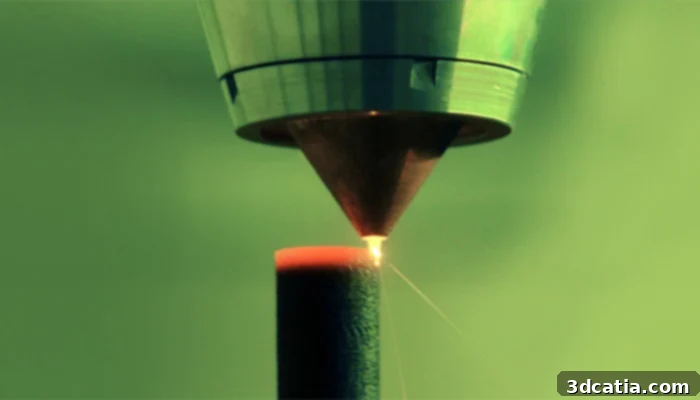
Image via BeAM
How Directed Energy Deposition (DED) Technology Works
The fundamental workflow for DED, much like other 3D printing techniques, commences with digital design. Engineers and designers create a precise 3D model of the desired part, or the area to be repaired, using sophisticated CAD (Computer-Aided Design) software. This digital blueprint is then processed by specialized slicer software, which virtually dissects the 3D model into a series of ultra-thin, two-dimensional layers. These layers serve as instructions for the DED machine, guiding it on where and how to deposit material to accurately construct or repair the object layer by layer.
The DED Process Flow: Deposition and Melting
At the heart of the DED process is a multi-axis arm, typically featuring four or five degrees of freedom, which provides exceptional flexibility and precision. This arm is equipped with a deposition nozzle that delivers the raw material, either in powder or wire form, onto a substrate or the existing component undergoing repair. Simultaneously, a highly concentrated heat source, which can be a laser, an electron beam, or a plasma arc, precisely melts the material as it emerges from the nozzle. This localized melting creates a molten pool where the new material fuses with the underlying layer or base component.
The process is iterative: once a layer of material is deposited and solidified, the system either moves the build platform or repositions the deposition head to begin the next layer. This continuous cycle of material deposition, melting, and solidification allows for the sequential build-up of material, progressively forming the desired complex geometry or meticulously repairing a damaged section. The multi-axis capability is particularly crucial for repairing intricate parts, allowing the nozzle to approach the repair area from various angles, ensuring optimal material adhesion and structural integrity.
Energy Sources Explained: Laser, Electron Beam, and Plasma Arc
The choice of energy source is a critical factor in DED, influencing material compatibility, process speed, and environmental requirements:
- Laser-Based Systems: These are among the most common. Lasers offer high precision and can be used with a wide range of metals. When working with highly reactive metals like titanium or aluminum, an inert atmosphere (e.g., argon gas) within a sealed chamber is often required to prevent oxidation and contamination. Achieving the desired oxygen levels can consume significant amounts of gas and time. However, for less reactive materials, a localized shroud of shielding gas around the melt pool can be sufficient to protect the deposited metal, making the process more adaptable for open-air environments with appropriate gas management.
- Electron Beam (EBAM) Systems: Electron beam-based DED systems operate by focusing a high-energy electron beam onto the material. A distinct characteristic of these systems is the absolute necessity for a vacuum environment. This is because electrons would otherwise interact with and be deflected by air molecules, leading to an unstable and inefficient process. The vacuum chamber adds to the complexity and cost but allows for very pure builds and the processing of highly reactive metals without the extensive use of inert gases.
- Plasma Arc Systems (WAAM): Wire Arc Additive Manufacturing (WAAM) typically utilizes a plasma arc or gas metal arc welding (GMAW) process as its energy source. These systems often use wire as feedstock and are known for their high deposition rates and ability to produce very large metal parts. While generally less precise than laser or electron beam DED, WAAM offers significant advantages in terms of speed and cost-effectiveness for fabricating substantial structures.
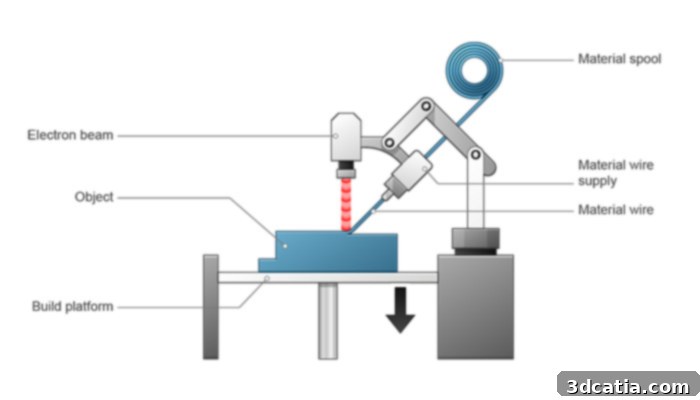
The DED additive manufacturing process, in this case using an electron beam | Figure from Dassault Systèmes
Materials Versatility in DED
While Directed Energy Deposition is predominantly associated with metals, its material capabilities extend further, encompassing polymers and even ceramics. This broad material compatibility significantly enhances its utility across various industrial sectors.
Metals: The Core of DED
For metal applications, DED offers impressive flexibility. Essentially, almost any metal that is considered weldable can be processed using DED. This includes high-performance alloys critical to aerospace and medical industries such as titanium and its alloys, inconel (nickel-based superalloys), tantalum, tungsten, and niobium. More common industrial metals like stainless steel and aluminium are also readily printed. The versatility in material selection is further enhanced by the two primary feedstock forms:
- Metal Powder: When using powder, the particles typically range in size from 50 to 150 microns, similar to those employed in traditional powder metallurgy processes. The powder is fed from a hopper, often coaxially with the energy source, allowing for precise control over the melt pool.
- Metal Wire: Wire feedstock usually ranges from 1 to 3 mm in diameter. Wire-fed DED systems, particularly those using plasma arc or laser energy, are often favored for their higher material utilization efficiency and the ability to achieve very high deposition rates, making them suitable for larger parts and rapid fabrication.
The ability to use a wide array of metals and their alloys allows DED to produce components with specific mechanical properties, corrosion resistance, or high-temperature performance tailored to demanding applications.
Beyond Metals: Polymers and Ceramics
While less common than metal DED, the technology can also be adapted for other material classes. For instance, companies like AREVO have pioneered Polymer DED, utilizing carbon fiber-reinforced thermoplastic filaments. In this approach, the filament is melted by a heat source and then compacted by a roller as it is deposited, generating strong, lightweight composite parts for end-use applications, particularly where strength-to-weight ratio is paramount. The potential for DED with ceramics is also being explored, opening doors for high-temperature and wear-resistant applications, although this area is still largely within research and development phases.
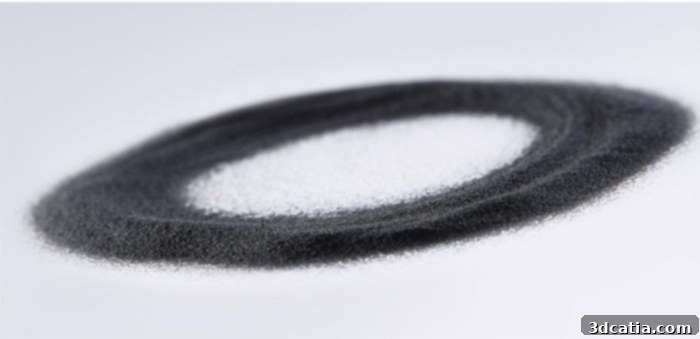
Metal powder | Image via Trumpf
Key Applications and Advantages of Directed Energy Deposition
The unique capabilities of DED translate into a diverse range of applications, many of which provide substantial economic and operational benefits, particularly in high-value industries.
Repair and Restoration: Extending Component Lifespans
As highlighted earlier, one of the most distinctive and economically impactful applications of DED is the repair and restoration of high-value metal parts. Components like aerospace turbine blades, impellers, marine propellers, dies, molds, and heavy industrial machinery often suffer localized damage or wear. Rather than scrapping and replacing these expensive parts, DED can precisely deposit new material onto the damaged areas, restoring them to their original specifications or even improving their properties. This significantly reduces lead times, material waste, and overall operational costs, making it an incredibly sustainable manufacturing solution for critical components.
Fabricating Large and Complex Parts
Beyond repair, DED is highly adept at fabricating new components, especially those with considerable size. According to ASTM International, “DED has the ability to produce relatively large parts (build volume > 1000 mm³) requiring minimal tooling and relatively little secondary processing.” This capacity to create large, functional components with intricate internal structures and geometries that are impossible or cost-prohibitive with traditional manufacturing methods is a major advantage. Industries such as aerospace, oil & gas, and defense leverage DED for structural components, prototypes, and customized parts.
Multi-Material and Functionally Graded Structures
A truly groundbreaking capability of DED is its ability to create components with composition gradients or hybrid structures consisting of multiple materials. This means that properties can be varied within a single component, for example, making one section harder for wear resistance and another tougher for impact absorption. Engineers can design parts where the material composition transitions smoothly from one metal to another, optimizing different regions for specific functional requirements. This opens up new possibilities for advanced material science and engineering, leading to improved performance, extended lifespan, and reduced weight for complex systems.
Other Industrial Uses
- Aerospace: Beyond turbine blade repair, DED is used for fabricating engine components, structural frames, and landing gear parts, capitalizing on its ability to work with high-performance alloys and produce lightweight, strong structures.
- Automotive: Used for prototyping specialized components, manufacturing custom tools and dies, and potentially for direct part production in high-end or performance vehicles.
- Oil & Gas: Ideal for repairing critical infrastructure like pipelines, valves, and drilling components, which often operate in harsh environments and are subject to extreme wear and corrosion.
- Medical: DED can produce custom implants, surgical instruments, and prosthetic components with tailored material properties and complex geometries, meeting stringent biomedical standards.
Advantages and Limitations of DED Technology
Key Benefits of DED
- Superior Repair Capabilities: As extensively discussed, DED excels at repairing and refurbishing damaged metal components, significantly extending their service life and reducing replacement costs.
- Large Build Volume: DED systems are often designed to produce much larger parts compared to many other additive manufacturing processes, making them suitable for industrial-scale applications.
- Multi-Material Processing: The ability to combine different materials within a single part allows for the creation of functionally graded materials and hybrid structures with optimized properties.
- High Deposition Rates: Especially with wire-fed systems (WAAM), DED can achieve very high material deposition rates, leading to faster production of large components.
- Reduced Tooling Costs: By directly building or repairing parts from digital designs, the need for expensive and time-consuming molds or specialized tooling is often eliminated or minimized.
- Material Efficiency for Repair: For repair operations, DED can be highly material-efficient, as it only adds material where needed, minimizing waste.
Challenges and Considerations of DED
- Surface Finish: Parts produced via DED typically have a rougher surface finish compared to those from powder bed fusion, often requiring significant post-processing (e.g., machining, grinding) to achieve desired tolerances and aesthetic quality.
- Post-Processing Requirements: Beyond surface finishing, parts may require heat treatment to relieve residual stresses and achieve optimal mechanical properties.
- Equipment Cost and Complexity: DED systems, particularly those utilizing electron beams or inert gas chambers, can be very expensive and require specialized operators due to the intricate nature of the process.
- Geometric Limitations: While capable of complex geometries, DED might have limitations with very fine features, thin walls, or unsupported overhangs compared to some other 3D printing technologies.
- Material Waste for Full Fabrication: While efficient for repair, full fabrication with powder-based DED can still generate some material waste if not carefully managed, although generally less than some PBF processes due to the localized melting.
Leading Market Players in DED Technology
The DED market features a growing number of manufacturers, each offering unique systems tailored to specific industrial needs and energy sources. This competitive landscape drives innovation and expands the capabilities of the technology.
Laser-Based DED Systems
Companies specializing in laser-based DED machines are prominent in the market. BeAM is recognized as a major player, offering a range of solutions such as the Magic 80 and the Modulo series (250 and 450), all employing lasers as their primary heat source. These machines are often utilized in aerospace and defense for repairing high-value components. Other significant manufacturers in this segment include:
- Trumpf: A global leader in machine tools and laser technology, Trumpf offers a portfolio of DED solutions that integrate seamlessly with their broader manufacturing ecosystem.
- Optomec: Known for its LENS (Laser Engineered Net Shaping) technology, Optomec is a pioneer in DED, providing systems for both repair and fabrication.
- FormAlloy: This company focuses on high-performance DED systems, often with multi-material capabilities, pushing the boundaries of material science in additive manufacturing.
- DMG Mori: A leading machine tool manufacturer, DMG Mori integrates DED capabilities into its hybrid machine tools, combining additive and subtractive manufacturing in one platform.
- InssTek: A Korean company specializing in DED systems, offering a range of machines for various industrial applications.
- Relativity Space: While primarily a rocket company, Relativity leverages its Stargate DED system to 3D print entire rocket structures from scratch, demonstrating the technology’s scalability.
Electron Beam (EBAM) DED Systems
For applications requiring high purity and the processing of reactive metals, electron beam-based DED systems are preferred. Sciaky Inc. is a dominant force in this niche, having commercialized its Electron Beam Additive Manufacturing (EBAM) technology. Sciaky offers a robust portfolio of five distinct machines and also provides the flexibility for custom system development, catering to unique industrial requirements. Another notable manufacturer in this field is Evobeam GmbH, contributing to the advancement of electron beam solutions.
Plasma Arc DED Systems (WAAM)
Wire Arc Additive Manufacturing (WAAM), which typically uses plasma arc or similar welding processes, is gaining traction for its high deposition rates and ability to produce very large parts efficiently. Key manufacturers in this area include:
- Norsk Titanium: A leader in industrial-scale WAAM for aerospace applications, Norsk Titanium focuses on producing large, complex titanium components.
- GEFERTEC: This German company specializes in 3DMP® technology, a form of WAAM, offering robust solutions for manufacturing large metal parts.
- Prodways: While known for various additive manufacturing technologies, Prodways also offers DED solutions, including those utilizing arc-based methods.
- Lincoln Electric: A global leader in welding technology, Lincoln Electric has naturally extended its expertise into WAAM, providing comprehensive solutions for large-scale metal additive manufacturing.
Conclusion: The Future of DED in Additive Manufacturing
Directed Energy Deposition represents a powerful and indispensable segment of the additive manufacturing industry. Its unique blend of material versatility, large-scale fabrication capabilities, and unparalleled ability to repair and enhance high-value components makes it crucial for demanding sectors such as aerospace, defense, energy, and heavy industries. As materials science and process control continue to advance, DED systems will likely become even more precise, efficient, and cost-effective, further expanding their application scope and reinforcing their position as a cornerstone technology for sustainable and advanced manufacturing.
The ongoing development of multi-material printing, sophisticated process monitoring, and integration with traditional manufacturing workflows will unlock even greater potential for DED. It stands as a testament to the innovation driving 3D printing, enabling us to not only create new possibilities but also to preserve and improve what already exists.
Was this comprehensive guide on Directed Energy Deposition helpful? We’d love to hear your thoughts! Let us know in a comment below or connect with us on our Facebook and Twitter pages. Don’t miss out on the latest advancements in 3D printing—sign up for our free weekly Newsletter and get all the essential news delivered straight to your inbox!