
Exploring the Frontiers of Additive Manufacturing: Top 3D Printing Innovations Driving the Future
As we navigate beyond the initial buzz of 3D printing, it’s clear that additive manufacturing continues to evolve at an astonishing pace, pushing the boundaries of what’s possible across a multitude of industries. From the depths of space to the core of nuclear reactors, and from intricate artistic expressions to the DIY workshops of famous personalities, 3D printing technologies are unlocking unprecedented levels of innovation. This year promises even more groundbreaking advancements, demonstrating how versatile and indispensable this technology has become. We are witnessing a revolution in design, production, and repair that is fundamentally changing how we approach engineering, manufacturing, and even artistic creation. Join us as we explore five compelling stories that highlight the diverse and impactful applications of 3D printing today, offering a glimpse into the future of this transformative technology. Get ready to be inspired by the ingenuity and potential of additive manufacturing.
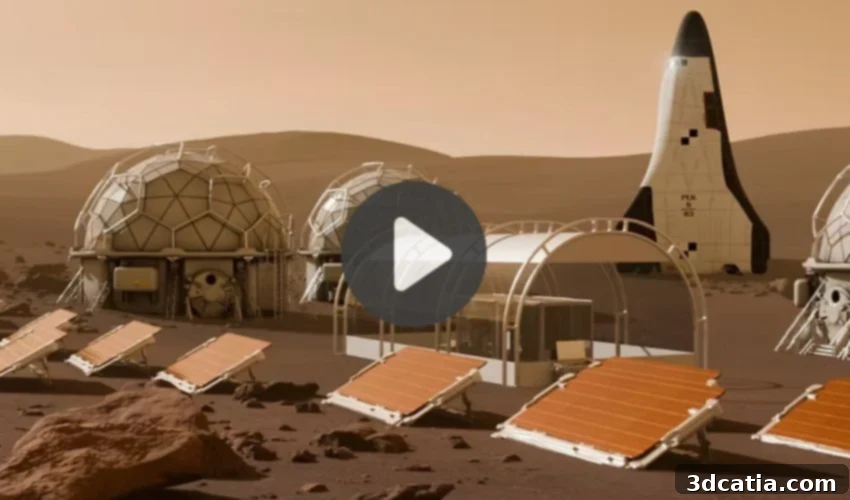
Top 1: Madison Feehan’s Space Copy Aims for Lunar 3D Printing with NASA
The concept of 3D printing in space has long captured the imagination of scientists and engineers, promising a future where humanity can build and sustain outposts beyond Earth without the prohibitive costs and logistical challenges of launching materials from our home planet. Companies like Luyten 3D have already made significant strides in exploring extraterrestrial construction using additive manufacturing. Adding to this pioneering spirit is Madison Feehan, a remarkable twenty-one-year-old visionary with a lifelong passion for space. Having dedicated five years to working with NASA, Feehan has now channeled her expertise and ambition into her own company, Space Copy. Her ambitious goal? To deploy a functional 3D printer on the moon by 2031.
Space Copy’s mission addresses one of the most critical challenges of lunar exploration: the ability to utilize in-situ resources. Feehan’s team is focused on designing robust 3D printers capable of withstanding the harsh lunar environment, including extreme temperature fluctuations, vacuum conditions, and radiation exposure. More impressively, these printers are engineered to utilize lunar soil stimulant – commonly known as regolith – as a primary building material. This breakthrough could revolutionize lunar base construction, equipment repair, and even manufacturing spare parts on demand, significantly reducing dependence on Earth-based supply chains and making long-term lunar habitation a more feasible reality. Feehan’s inspiring journey and the innovative spirit behind Space Copy represent a monumental leap towards a self-sustaining presence on the moon, paving the way for future space exploration and colonization. Watch the newsreel below to hear more about her groundbreaking work.
Top 2: ORNL Pioneers 3D Printing for Advanced Nuclear Components
The nuclear energy sector, a cornerstone of sustainable power generation, is constantly seeking innovative methods to enhance safety, efficiency, and material performance. Researchers at the Idaho National Laboratory and Oak Ridge National Laboratory (ORNL) are at the forefront of this evolution, leveraging the transformative power of 3D printing to revolutionize nuclear research and development. This collaboration marks a significant stride in the advancement of nuclear reactor technology and fuel design, offering solutions that were once deemed impossible with traditional manufacturing methods.
At the heart of their breakthrough is ORNL’s innovative Simurgh algorithm. This sophisticated computational tool is specifically designed to optimize the additive manufacturing process for complex nuclear components. By utilizing Simurgh, the laboratories are dramatically cutting down inspection times, a critical factor in the stringent safety protocols of nuclear applications. The algorithm helps identify potential flaws and optimize material deposition, ensuring the integrity and reliability of 3D-printed parts. Furthermore, this approach significantly improves overall safety by allowing for more intricate designs that can withstand extreme conditions and by enabling the rapid prototyping of new component geometries for testing.
The implications of 3D printing nuclear components and fuels are profound. It opens doors for the creation of next-generation reactor designs with enhanced thermal efficiency, reduced waste, and longer operational lifespans. Additive manufacturing facilitates the use of novel materials that can better resist radiation damage and extreme temperatures, pushing the boundaries of reactor performance. This innovative technology is not just about making existing parts more efficiently; it’s about reimagining the very architecture of advanced nuclear reactors, making them safer, more economical, and more powerful contributors to a clean energy future. Discover how this breakthrough technology is shaping the future of advanced nuclear reactors by watching the video below.
Top 3: Bambu Lab’s Expert Guide to Improving 3D Print Surface Quality
Achieving a flawless surface finish is often the ultimate goal for any 3D printing enthusiast or professional. While 3D printing offers immense freedom in design and rapid prototyping capabilities, common issues like visible seams, layer lines, or blemishes can detract significantly from the aesthetic and functional quality of the final print. Among these, seams – the points where print layers begin and end – are a particularly common challenge, often appearing as noticeable lines or bumps on the exterior of a model. Fortunately, advancements in slicing software and printer technology, as demonstrated by leading innovators like Bambu Lab, provide powerful tools to mitigate these imperfections.
Bambu Lab, known for its high-performance 3D printers and intuitive software, offers an invaluable tutorial specifically focused on enhancing surface quality by effectively hiding or strategically placing seams. This video delves into practical techniques within the slicer software, guiding users on how to manipulate seam settings. Whether it’s through automatic optimization modes that smartly distribute seams across less visible areas or by offering manual control to place seams precisely where they will have minimal visual impact – perhaps along sharp corners or on the underside of a model – Bambu Lab empowers users to achieve significantly cleaner and more professional-looking prints.
Understanding and applying these techniques can elevate your 3D printing projects to the next level. By meticulously adjusting parameters such as seam position, corner preference, and even wipe and coast settings, you can virtually eliminate unsightly blemishes, making your prints appear as if they were molded rather than layered. This not only improves the visual appeal but can also enhance the structural integrity and functionality of parts where a smooth, uniform surface is crucial. Dive into Bambu Lab’s comprehensive tutorial and unlock the secrets to achieving impeccable surface finishes, transforming your prints from good to outstanding.
Top 4: Anycubic Creator Unveils an Inspiring “Underwater” Art Piece
3D printing is not just for engineering and manufacturing; it’s also a powerful medium for artistic expression, allowing creators to bring highly intricate and imaginative concepts to life with stunning precision. In a captivating demonstration of this artistic potential, the Anycubic creator known as wAw Creator has unveiled a breathtaking miniature “underwater” scene that transcends the boundaries of traditional art forms. This piece is more than just a model; it’s a narrative brought to life, depicting a poignant confrontation between man and nature, with a human figure gracefully swimming near an ethereal, mystical sea creature.
The immersive quality of this artwork is largely due to the advanced technology employed by wAw Creator. The entire miniature scene, set in the vastness of the Pacific Ocean, was meticulously printed using the Anycubic Photon Mono M7 Max. This formidable resin 3D printer is renowned for its ultra-large print volume of 298mm x 164mm x 300mm, a crucial feature that allowed the artist to create a complex scene with multiple elements without compromising scale or detail. The printer’s high-resolution capabilities ensured that every minute detail, from the ripples in the “water” to the intricate textures of the sea creature, was captured with exceptional clarity.
Further enhancing the realism and visual impact, the piece was printed with Anycubic’s Texture Resin. This specialized resin provided the true-to-life precision necessary to convey the subtle nuances of an underwater environment, creating a sense of depth and fluidity. The combination of the M7 Max’s robust build volume and the fine detail achievable with Texture Resin allowed wAw Creator to craft an inspiring art piece that blurs the line between miniature modeling and evocative storytelling. It stands as a testament to how accessible and versatile 3D printing has become for artists looking to push creative boundaries and immerse viewers in entirely new worlds.
Top 5: Adam Savage Elevates His 3D Printing Lab with SLS Technology
Adam Savage, the former co-host of the beloved and iconic TV show Mythbusters, is widely known for his insatiable curiosity, meticulous craftsmanship, and dedication to exploring the limits of science and technology. Beyond his public persona, Savage is a fervent and highly skilled 3D printing enthusiast, constantly pushing the boundaries of what he can create in his personal workshop, affectionately dubbed “the cave.” His journey into additive manufacturing began with FDM (Fused Deposition Modeling) printers, known for their versatility and accessibility, which he used extensively for various builds and prototypes. Later, he expanded his capabilities by incorporating SLA (Stereolithography) printing, embracing the high detail and smooth finishes offered by resin-based systems.
Always eager to learn and experiment with cutting-edge tools, Savage recently embarked on a significant upgrade to his 3D printing arsenal: venturing into SLS (Selective Laser Sintering) Nylon printing. This advanced additive manufacturing technique is celebrated for producing incredibly strong, durable, and functional parts with complex geometries, without the need for traditional support structures. SLS technology utilizes a laser to fuse powdered material, typically nylon, layer by layer, resulting in isotropic parts with excellent mechanical properties that are suitable for demanding applications. To achieve this, Adam chose the Formlabs Fuse, a compact yet powerful SLS system that has made professional-grade nylon printing more accessible to a wider range of users.
The video provides an exclusive, inside look into the intricate process of setting up and calibrating this new SLS system within Savage’s “cave.” Viewers witness the meticulous steps involved in preparing the machine, from loading the nylon powder to configuring the print parameters, all guided by Savage’s characteristic blend of scientific rigor and infectious enthusiasm. The excitement culminates as Adam attempts his very first prints with sintered nylon, showcasing the superior strength and finish that SLS technology offers. This upgrade not only signifies a major leap in Savage’s personal fabrication capabilities but also highlights the increasing democratization of advanced 3D printing technologies, allowing even enthusiasts to access industrial-grade manufacturing processes for their creative endeavors.
From pioneering lunar colonization efforts with 3D printers that use moon dust, to revolutionizing nuclear energy with advanced additive manufacturing techniques, and from enhancing the aesthetic quality of everyday prints to inspiring artists with unprecedented detail, 3D printing continues to redefine what’s possible. Even the most dedicated makers, like Adam Savage, are continuously upgrading their labs to harness the latest in additive manufacturing, demonstrating its pervasive influence. These diverse applications underscore the versatility and continuous evolution of 3D printing, promising an even more innovative future. We’ve seen how critical this technology is becoming for sustainability, exploration, efficiency, and pure artistic expression.
What are your thoughts on these incredible advancements in 3D printing, especially the bold ventures into space? We’d love to hear your perspective! Share your insights in a comment below or connect with us on ourLinkedIn,Facebook, andTwitter pages. Don’t miss out on the latest developments – sign up for our free weeklyNewsletter here to get the freshest 3D printing news delivered straight to your inbox! You can also find all our compelling videos and more inspiring content on our dedicatedYouTube channel.
*Cover Photo Credit: Space Copy