
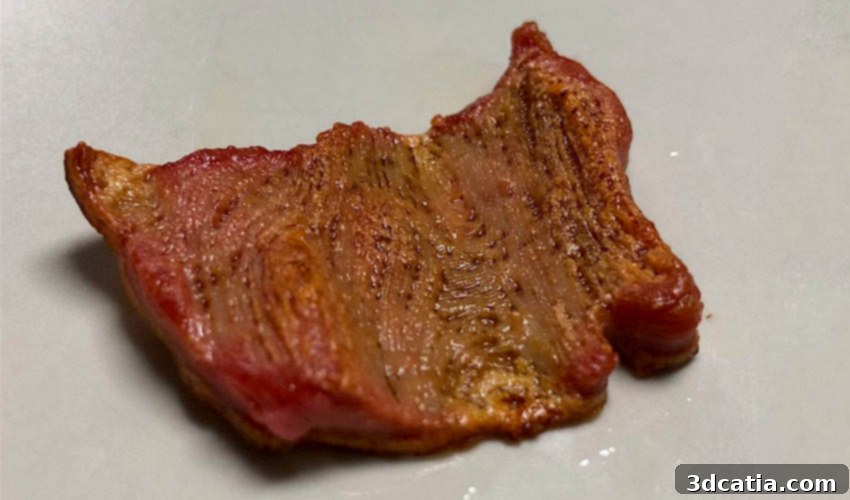
NovaMeat Unveils Revolutionary 3D Printed Plant-Based Steak 2.0: Savoring the Future of Sustainable Food
In a significant stride towards a more sustainable and ethical global food system, NovaMeat, a pioneering startup based in Barcelona, has proudly introduced the highly anticipated version 2.0 of its plant-based 3D printed steak. This innovative offering builds upon the success of its initial product, which captivated the public last year, demonstrating NovaMeat’s unwavering commitment to continuous development and refinement in the realm of vegan meat alternatives. The company’s vision extends beyond mere innovation; it aims to fundamentally reshape our dietary landscape, providing consumers with a delicious, environmentally friendly, and cruelty-free alternative to traditional meat.
Giuseppe Scionti, the visionary founder of NovaMeat, articulates the formidable challenge inherent in crafting plant-based meat that truly competes with its animal counterpart. He highlights four critical parameters that collectively determine the success of any meat alternative: texture, taste, appearance, and nutritional value. Achieving all four simultaneously, especially for structured whole-cut meats like steak, has historically been an uphill battle. For instance, while plant-based ground meat has achieved remarkable success in mimicking the look and flavor of traditional mince, replicating the complex fibrous texture of real muscle tissue has remained largely elusive. This textural fidelity is precisely where NovaMeat distinguishes itself. The startup holds a groundbreaking patent on a unique microstrain technology designed to precisely imitate the natural, intricate texture of animal meat tissue. Through this proprietary process, NovaMeat’s cutting-edge technology meticulously reorganizes the nanofibers derived from vegetable proteins, restructuring them to create an experience remarkably similar to consuming animal proteins. This scientific breakthrough is at the core of their ability to offer a truly convincing meat alternative that satisfies not just the palate but also the tactile experience associated with eating meat.
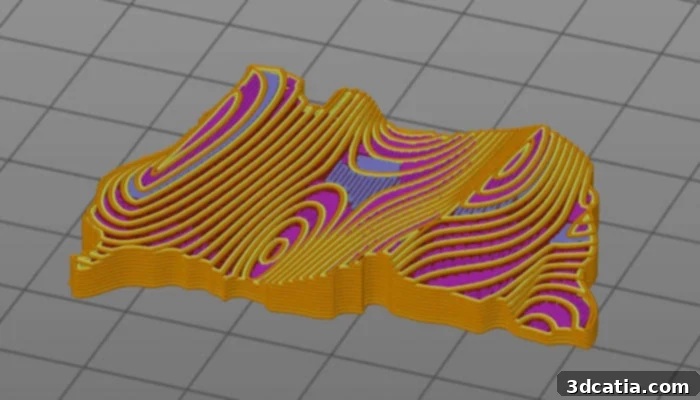
The plant-based meat is meticulously modeled on CAD software and later brought to life through advanced 3D printing technology | Credits: NovaMeat
The burgeoning market for meat alternatives has seen a proliferation of companies vying for consumer attention. However, a distinctive aspect that sets NovaMeat apart is its innovative embrace of 3D printing technologies to achieve its product’s unique characteristics. While many competitors focus on ground meat or simpler processed forms, NovaMeat leverages additive manufacturing to create complex, whole-cut structures. The recent unveiling of NovaMeat’s 3D printed steak version 2.0 showcased remarkable advancements, particularly in enhancing texture and visual appeal, bringing it even closer to the sensory experience of conventional steak. Beyond these qualitative improvements, the startup also revealed significant progress in cost reduction, with production expenses now estimated at an impressive US$1.5 for a 50-gram portion. This makes the product more accessible and commercially viable, a crucial step for wider adoption. The ingredients list reflects a commitment to both sustainability and nutrition: the primary plant-based proteins are carefully extracted from a blend of rice, peas, and algae fibers, chosen for their excellent nutritional profiles and minimal environmental footprint. To achieve an authentic appearance, NovaMeat incorporates natural plant-based colorants, such as those derived from paella, giving the steak its appealing, meat-like hue. Furthermore, the food paste formulation includes a thoughtful combination of fats—olive, canola, and coconut oil—which are essential for developing a rich mouthfeel, contributing to flavor, and improving the overall nutritional composition. While texture and appearance have seen significant strides, NovaMeat’s ongoing research and development efforts are now intensely focused on further enhancing the taste profile and boosting the nutritional value, aiming to offer a truly competitive and irresistible alternative to traditional animal meat.
The genesis of NovaMeat’s reliance on 3D printing for its ambitious mission stems from a profound and pivotal realization by its founder. Giuseppe Scionti, with his extensive background in bioprinting, understood that if it were possible to recreate the complex, layered texture of human tissue using additive manufacturing, then the same fundamental principles and advanced techniques could logically be applied to replicate the intricate structure of animal meat. This intellectual leap became the cornerstone of NovaMeat. Prior to founding the company in 2018, Scionti dedicated many years to pioneering research at the Polytechnic University of Catalonia (UPC) in Barcelona, where his work notably included the prototyping of a human ear using bioprinting techniques. This invaluable experience in tissue engineering, combined with his deep expertise in 3D printing, provided him with a unique skill set and a clear vision. He recognized the immense potential of converging these advanced technologies to address the pressing need for sustainable meat alternatives. This synergy of knowledge and purpose enabled him to transform a groundbreaking scientific concept into a tangible, edible reality, laying the foundation for NovaMeat’s innovative approach to food technology. His journey from biomedical research to plant-based food innovation exemplifies the interdisciplinary nature of modern technological breakthroughs and their capacity to solve global challenges.
NovaMeat, while a leader in its field, is not the sole innovator exploring the exciting frontier of 3D printed plant-based meat. The global landscape of food technology is vibrant and competitive, with several other companies making significant advancements. For instance, we have closely monitored the impressive developments at Redefine Meat, an Israeli-based company that has also been diligently working on crafting sophisticated 3D printed meat alternatives. Their commitment to innovation was dramatically showcased when they successfully 3D printed slaughter-free meat on board the International Space Station (ISS), an extraordinary feat that not only demonstrated the robustness of their technology but also hinted at the vast possibilities this space holds for future food production, including extraterrestrial dining. While these companies have made remarkable progress, significant milestones still lie ahead for both NovaMeat and its contemporaries. Paramount among these challenges are issues of scaling up production to meet commercial demand and achieving widespread market penetration. Moving from laboratory prototypes to industrial-scale manufacturing requires overcoming complex hurdles related to efficiency, cost-effectiveness, and consistency. NovaMeat, with a strategic vision, initially aims to engage the restaurant sector, recognizing its potential as an ideal testbed for new culinary innovations and a powerful platform for public exposure and acceptance. By building strong partnerships with leading culinary establishments and eventually licensing their cutting-edge technology to sustainable food manufacturers, NovaMeat intends to systematically expand its reach and cement its position as a key player in the transformation of the global food industry. The long-term objective remains to make their revolutionary plant-based steaks accessible to a broad consumer base, thus contributing significantly to a more sustainable, ethical, and healthy future for food worldwide. You can explore more detailed information about NovaMeat’s mission and technology by visiting their official website HERE.
The advancements in 3D printed meat, as exemplified by companies like NovaMeat and Redefine Meat, represent a pivotal moment in the evolution of our food systems. These innovations offer a compelling answer to the growing global demand for protein, while simultaneously addressing critical concerns related to environmental sustainability, animal welfare, and public health. The ability to precisely control the texture, composition, and nutritional profile of food through 3D printing opens up unprecedented possibilities for creating customized and highly functional dietary options. This technological leap allows for the creation of plant-based products that not only mimic the sensory experience of traditional meat but can also be engineered to provide enhanced nutritional benefits, potentially offering solutions to dietary deficiencies and promoting healthier eating habits. Furthermore, the reduced ecological footprint associated with plant-based alternatives, particularly those produced with efficient 3D printing methods, offers a scalable solution to the environmental impact of conventional animal agriculture, including greenhouse gas emissions, land use, and water consumption. As these technologies mature and become more integrated into commercial food production, they are poised to revolutionize how we think about and consume food, making high-quality, sustainable protein accessible to a wider population. This shift holds the promise of a future where food production is more efficient, ethical, and resilient in the face of global challenges.
What are your thoughts on these incredible advancements in 3D printed meat and their potential to redefine our culinary landscape? We invite you to share your insights, opinions, and predictions in a comment below, or engage with us on our vibrant social media platforms. Join the conversation on our Facebook page and our Twitter feed, where you can connect with a community passionate about the cutting edge of additive manufacturing. Don’t miss out on the latest groundbreaking news and developments in the world of 3D printing; sign up for our free weekly Newsletter, delivering all the essential updates straight to your inbox!