
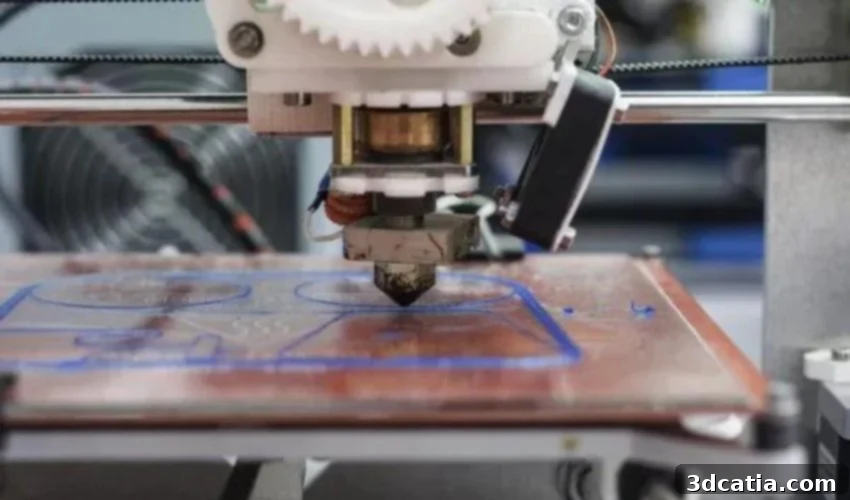
Ensuring 3D Printing Safety: Comprehensive NIOSH Guidelines for Non-Industrial Environments
The rapid advancement and accessibility of 3D printing technology have profoundly reshaped numerous industries, opening up unprecedented avenues for innovation, rapid prototyping, and product development. What was once confined to industrial laboratories and large manufacturing facilities has now seamlessly integrated into a myriad of non-industrial settings. Today, you’ll find 3D printers actively utilized in educational institutions like schools, community hubs such as libraries, entrepreneurial ventures of small businesses, and increasingly, even in private homes. This widespread adoption, while incredibly beneficial for fostering creativity and technical skills, simultaneously necessitates a critical focus on the potential health and safety concerns inherently linked to the 3D printing process. As these technologies become more commonplace, understanding and mitigating these risks becomes paramount for all users.
Recognizing this critical and expanding need for safety protocols, the National Institute for Occupational Safety and Health (NIOSH) undertook an extensive evaluation. Their objective was to thoroughly investigate the health and safety risks specifically associated with 3D printing operations within these non-industrial environments. The comprehensive findings and actionable recommendations from their research have been compiled into a crucial investigatory report titled, “Approaches to 3D Printing: A Guide for Makerspace Users, Schools, Libraries, and Small Businesses.” This invaluable resource aims to empower a diverse range of users, providing them with essential insights and practical guidance to effectively identify, assess, and ultimately reduce potential health hazards and safety risks associated with additive manufacturing.
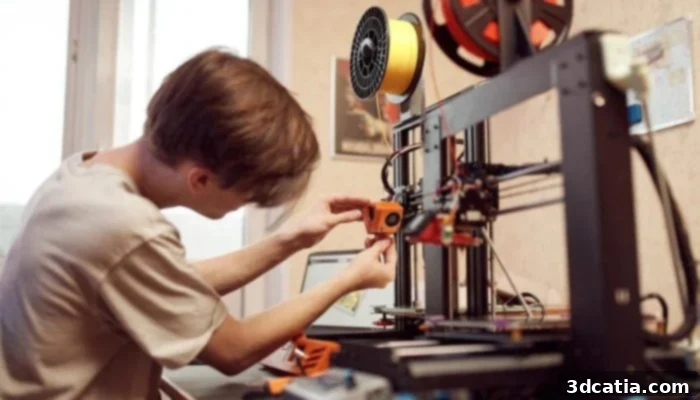
As 3D printing makes its way into more environments, including jobs and homes, it is important to develop robust safety guidelines.
The NIOSH report meticulously breaks down the 3D printing workflow, emphasizing that each distinct stage presents its own set of potential hazards. The process is not simply about pressing a button; it involves a series of tasks, each requiring careful attention to safety. From the meticulous pre-printing preparations, which include printer maintenance, cleaning the build platform, and handling raw materials like filaments or resins, to the actual printing phase where materials are fused, and finally to post-printing activities such as removing support structures, washing and curing resin prints, and applying finishing touches, individuals involved can be exposed to a diverse array of materials and conditions that may potentially pose health risks. This holistic view of the entire workflow is crucial for developing effective safety strategies, ensuring that no potential hazard is overlooked from start to finish.
Key Hazards and Emissions in 3D Printing Identified by NIOSH
A cornerstone of the NIOSH report is its comprehensive identification of hazards stemming from exposure to materials and byproducts emitted during the 3D printing process. Extensive research consistently indicates that operational 3D printers, regardless of their specific technology, tend to emit ultrafine particles (UFPs) and volatile organic compounds (VOCs). These airborne contaminants, especially when inhaled over prolonged periods or in poorly ventilated spaces, can be detrimental to both the respiratory and cardiovascular health of individuals in close proximity to the printers. UFPs are microscopic particles, small enough to penetrate deep into the lungs and potentially enter the bloodstream, while VOCs are gaseous chemicals that can cause irritation, headaches, and have longer-term health implications.
The report further underscores the critical importance of understanding the specific emission characteristics of various 3D printing materials and technologies. For instance, different filament types (like ABS versus PLA in FDM printers) or resin types (in SLA/DLP printers) will produce varying levels and types of UFPs and VOCs. Similarly, the printing temperature, print speed, and even the design of the printer itself can influence emission rates. By detailing these specific hazards for each type of printer and material, NIOSH provides users with the knowledge necessary to effectively manage these exposure risks, implement appropriate ventilation, and select safer materials where possible. This detailed approach moves beyond general advice, offering specific guidance tailored to the diverse landscape of additive manufacturing.
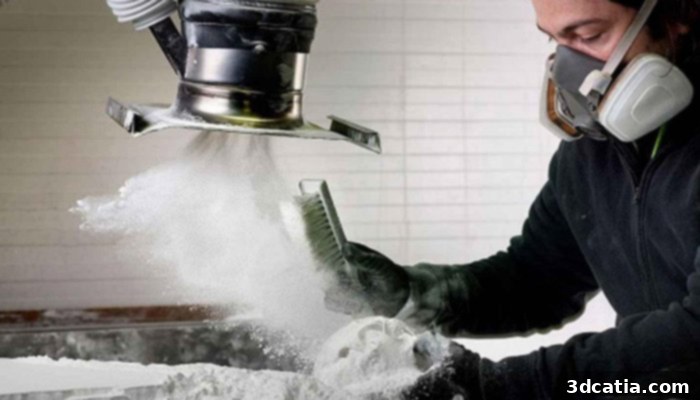
Personal protective equipment, such as respirators, gloves, and eye protection, should be worn during post-processing, especially when handling powders or uncured resins, as contaminants can be dispersed into the air (photo credits: Protolabs).
Beyond Emissions: A Holistic View of 3D Printing Risks
While emissions are a primary concern, the NIOSH report also delves deeply into a spectrum of other risks generated by 3D printing operations. This comprehensive analysis ensures that users consider all potential dangers in their workspace. The report covers crucial topics such as:
- Solvents and Resins: Often used in post-processing for technologies like SLA (Stereolithography) to wash away uncured resin. These chemicals can pose inhalation hazards, skin irritation, and flammability risks. Proper handling, storage, and disposal are essential.
- Heat: 3D printers operate at high temperatures, particularly the print bed and extrusion nozzle. This presents a burn risk, especially in FDM (Fused Deposition Modeling) printers. Lasers in SLS (Selective Laser Sintering) and SLA printers also generate heat.
- Moving Parts: Many 3D printers feature exposed moving components (print heads, build platforms, belts). These can create pinch points or entanglement hazards, particularly for users with long hair, loose clothing, or jewelry.
- Lasers and UV Light: Critical components in SLA, DLP (Digital Light Processing), and SLS printers. Direct exposure to these can cause severe eye damage and skin irritation. Adequate shielding and interlocks are vital.
- Noise: While often overlooked, the continuous operation of multiple 3D printers, especially industrial-grade units, can generate significant noise levels. Prolonged exposure to excessive noise can lead to hearing fatigue or even permanent hearing damage in shared environments like makerspaces or classrooms.
- Material Handling and Storage: Beyond emissions, the safe handling and storage of raw materials (filaments, resins, powders) are critical to prevent spills, contamination, or exposure to hazardous substances before, during, and after printing.
Developing a Tailored Risk Management Plan: NIOSH’s Four Pillars
To better navigate the multifaceted potential dangers associated with 3D printing in non-industrial settings, the NIOSH report strongly advocates for the development and implementation of a tailor-made risk management plan. This isn’t a one-size-fits-all solution; instead, the plan should be meticulously customized to each specific workspace environment, taking into account its unique needs, the types of printers and materials used, the frequency of use, and the user demographic (e.g., children in a school versus adults in a small business). Ideally, according to NIOSH, a robust 3D printing safety plan should encompass a detailed approach covering four fundamental goals:
Firstly, the most crucial step is the **identification of potential hazards**. Risks can manifest at every stage of the 3D printing process, from the initial preparation (e.g., material loading, printer calibration) and the active printing phase (e.g., emissions) to post-processing activities (e.g., support removal, resin curing, material cleanup). This requires a thorough assessment of the workspace, reviewing Material Safety Data Sheets (MSDS/SDS) for all materials, understanding printer specifications and potential mechanical risks, and considering the overall ventilation and environmental factors. Hazard identification is an ongoing process that should be revisited regularly as equipment or materials change.
Next, once potential risks are identified, the report encourages the **implementation of effective control measures** to minimize or eliminate these risks. This hierarchical approach to controls prioritizes the most effective methods:
- Engineering Controls: These are physical changes to the workspace or equipment to reduce exposure. Examples include local exhaust ventilation (fume hoods, enclosures with filtered exhaust), general dilution ventilation, dedicated printer enclosures, and using materials known to have lower emissions.
- Administrative Controls: These involve establishing safe work procedures, training, and policies. This includes developing Standard Operating Procedures (SOPs), restricting access to printing areas, scheduling maintenance, and implementing clear signage.
- Personal Protective Equipment (PPE): While last in the hierarchy, PPE is vital when engineering and administrative controls cannot fully eliminate risks. This includes appropriate respirators (e.g., N95 for particulate, activated charcoal for VOCs), safety glasses or goggles, chemical-resistant gloves, and lab coats to protect against skin contact and splashes.
After establishing control measures, NIOSH highly recommends the **provision of comprehensive training and awareness programs**. This is essential for spreading knowledge about potential risks, ensuring all users understand safe practices and procedures, and know how to respond to emergencies. Training should cover proper material handling, equipment operation, emergency shutdown procedures, first aid for chemical exposure or burns, and correct use and maintenance of PPE. Regular refreshers are also vital to reinforce best practices and introduce any updates to safety protocols.
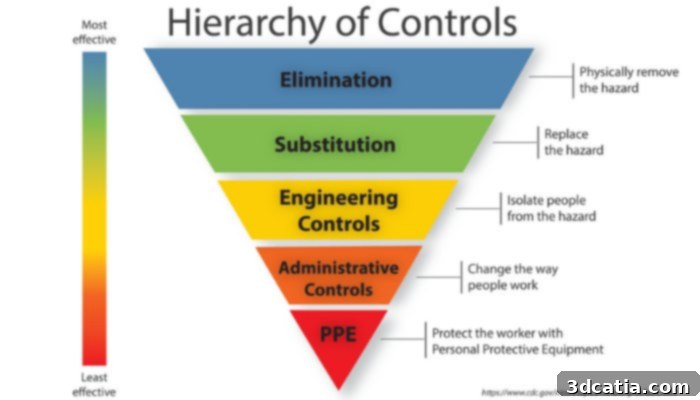
Photo Credits: The National Institute for Occupational Safety and Health, illustrating key safety considerations for 3D printing environments.
Lastly, and equally important for ongoing safety, is the **regular monitoring and evaluation** of the effectiveness of implemented procedures and control measures. Safety is not a static state; it requires continuous assessment. This involves periodic air quality testing, regular inspection of ventilation systems and PPE, reviewing incident reports (even near-misses), and collecting feedback from users. This iterative process ensures ongoing safety, helps identify areas for improvement, and allows for adaptation as 3D printing technologies and materials continue to evolve. By adhering to these four pillars, non-industrial environments can create significantly safer spaces for 3D printing activities.
Conclusion: A Call for Proactive 3D Printing Safety
As 3D printing continues its pervasive adoption across a diverse range of sectors, from educational settings to creative makerspaces and home workshops, the NIOSH report stands as a critical and foundational guide for establishing proactive safety measures. By meticulously identifying potential safety gaps and offering actionable recommendations, NIOSH has provided an indispensable framework that helps to ensure the health and well-being of workers, students, hobbyists, businesses, and ultimately, all consumers interacting with this transformative technology. This report underscores that the benefits of additive manufacturing can only be fully realized when underpinned by a strong commitment to safety and health.
Implementing these guidelines is not just about compliance; it’s about fostering a culture of safety that allows individuals to explore the vast potential of 3D printing without compromising their health. Whether you are setting up a new 3D printing station in a school, upgrading equipment in a small business, or simply enjoying the hobby at home, understanding and applying these principles is crucial. To delve deeper into the comprehensive recommendations and insights provided by this essential document, you can access the full NIOSH report by clicking here.
What are your thoughts on the recommendations presented in this vital report released by NIOSH? We invite you to share your perspectives and experiences in a comment below, or engage with us on our LinkedIn, Facebook, and Twitter pages! Don’t forget to sign up for our free weekly newsletter here to get the latest 3D printing news delivered straight to your inbox! You can also find all our engaging videos and tutorials on our dedicated YouTube channel.