
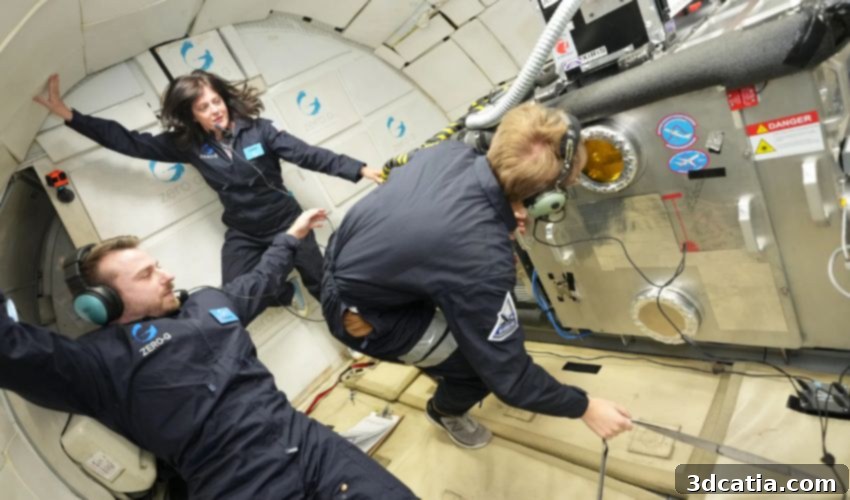
Revolutionizing Space Construction: NASA Pioneers In-Space Laser Beam Welding for Lunar and Deep Space Missions
Since the late 1990s, NASA has been at the forefront of exploring and harnessing the power of additive manufacturing, a revolutionary technology often referred to as 3D printing. This journey began with foundational experiments involving plastics, paving the way for rapid prototyping and the creation of complex geometries not easily achievable through traditional manufacturing methods. By the early 2000s, NASA’s ambitions grew, leading them to transition from plastics to metals for more robust prototypes essential for aerospace applications. This progression marked a significant leap, demonstrating the potential for creating strong, lightweight components. The transformative power of 3D printing truly became evident in the 2010s when NASA successfully began 3D printing entire rocket engines. This achievement underscored additive manufacturing’s capacity to produce critical, high-performance components, dramatically reducing lead times and costs while enabling innovative designs for advanced propulsion systems. Today, NASA is pushing the boundaries even further, actively testing the viability of utilizing laser beam welding—a highly precise and versatile technology that enables advanced additive manufacturing processes—directly in the challenging environment of space. This bold initiative aims to unlock new possibilities for in-space construction, maintenance, and repair, fundamentally changing how we envision future space missions and habitats.
Welding in space is not an entirely new concept for NASA. The agency previously conducted welding experiments during the landmark Skylab mission in 1973, demonstrating the feasibility of joining materials in orbit. However, significant technological advancements and a growing demand for robust in-space manufacturing capabilities have prompted NASA to revisit this critical area. This time, the focus is squarely on modern laser beam welding, a technique far more precise and adaptable than its predecessors. Leading this pioneering effort is NASA’s Marshall Space Flight Center in Huntsville, Alabama, collaborating closely with The Ohio State University in Columbus. Their joint mission is to meticulously simulate and understand the intricacies of in-space manufacturing using laser beam welding. This vital collaboration, partially funded by Marshall, has already spanned over two years, bringing together a diverse team of dedicated students and esteemed professors from Ohio State, alongside experienced engineers from various NASA centers. This partnership exemplifies a concerted effort to develop the foundational technologies necessary for sustained human presence beyond Earth.
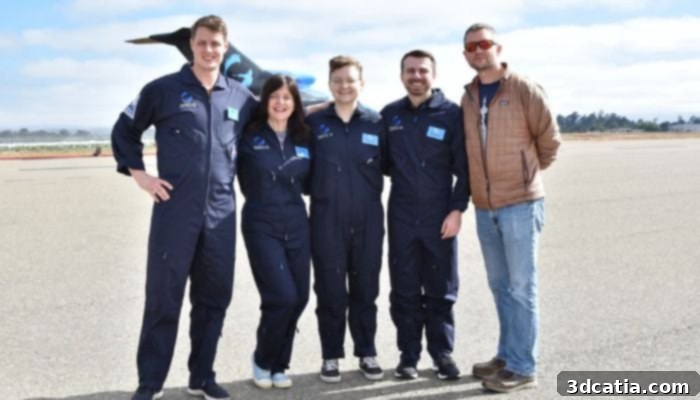
Scientists and engineers from NASA’s Marshall Space Flight Center, participating in the laser beam welding study in August, stand in front of the parabolic plane used for testing. From left, Will Evans, Louise Littles, Emma Jaynes, Andrew O’Connor, and Jeffrey Sowards. Not pictured: Zachary Courtright. (Photo credits: NASA, Casey Coughlin)
Laser beam welding is a sophisticated form of directed energy deposition (DED), a class of additive manufacturing processes renowned for its ability to repair high-value components or build new parts from scratch. The fundamental process involves a focused laser beam melting material, typically metal powder or wire, as it is precisely deposited by a nozzle. This controlled melting and solidification create robust metallurgical bonds, resulting in highly durable structures. For the nascent field of space manufacturing, laser beam welding and its allied DED processes offer transformative potential. Beyond critical repairs for existing spacecraft and equipment, this technology could enable the construction of structures too large, complex, or heavy to be launched from Earth within current payload volumes. Imagine expansive habitats in low Earth orbit, advanced propulsion stages, or even lunar base infrastructure assembled directly in space. The ability to weld large structural components on-site could drastically accelerate the development of sophisticated deep-space habitats for future Mars missions, enhance the safety and resilience of spacecraft structures for astronaut protection, and facilitate the assembly of vast scientific instruments, ultimately expanding the horizons of human and robotic space exploration. This precision welding capability is crucial for creating strong, reliable joints that can withstand the extreme conditions of space, unlike temporary fastening methods.
According to a recent article published by NASA, the joint project between Marshall Space Flight Center and Ohio State University is specifically focused on understanding the complex physical processes of welding in the unique environment of the lunar surface. This ambitious research includes a deep dive into the effects of laser beam welding when subjected to a combined vacuum and significantly reduced gravity, conditions starkly different from those on Earth. The lunar environment presents numerous challenges, including extreme temperature fluctuations, radiation exposure, and the absence of a substantial atmosphere, all of which can profoundly impact material behavior and welding quality. By meticulously investigating how laser beam welding performs under such arduous circumstances, the dedicated team hopes to dramatically increase manufacturing capabilities in space. This vital understanding is not merely academic; it has profound implications for future lunar exploration and settlement. It lays the groundwork for the potential to assemble vast structures, construct robust habitats, or perform crucial repairs directly on the Moon, utilizing potentially in-situ resources. Such capabilities are essential for establishing sustainable lunar outposts and serving as staging points for even more ambitious deep-space missions, such as those to Mars.
Andrew O’Connor, a distinguished materials scientist at Marshall Space Flight Center, serves as NASA’s technical lead for this groundbreaking project. His expertise is crucial in coordinating the intricate efforts between NASA and The Ohio State University. O’Connor eloquently articulated the strategic rationale behind turning towards in-space welding, explaining, “For a long time, we’ve used fasteners, rivets, or other mechanical means to keep structures that we assemble together in space. But we’re starting to realize that if we really want strong joints and if we want structures to stay together when assembled on the lunar surface, we may need in-space welding.” This perspective highlights a fundamental shift in design philosophy for long-duration space missions. While fasteners and rivets have served adequately for temporary or smaller structures, the demands of permanent lunar bases, large orbital platforms, or deep-space vehicles require a more robust and permanent joining solution. Welding provides superior structural integrity, fatigue resistance, and hermetic sealing, all critical for maintaining habitable environments and enduring the harsh, unforgiving conditions beyond Earth’s protective atmosphere for extended periods. The ability to create seamless, monolithic structures in space represents a significant leap forward in ensuring the longevity and safety of future space infrastructure.
To address these complex challenges, researchers meticulously tested welding under simulated space conditions, replicating the extreme environmental factors found on the Moon and in orbit. Key parameters investigated included temperature profiles and the unique characteristics of heat transfer in a vacuum environment, where convection is absent. They also focused on understanding the size and shape of the molten pool formed under a laser beam, as its behavior can differ significantly without atmospheric pressure. Furthermore, post-welding analysis concentrated on the metallurgical structure and integrity of the weld cross-section after solidification, assessing how various environmental conditions, particularly those mimicking the lunar surface, impact the mechanical properties of the welded material. This included tensile strength, ductility, and fatigue resistance, all vital for structural reliability. According to O’Connor, the project utilizes a powerful combination of rigorous experimental testing and advanced computer modeling. This integrated approach allows the team to accurately predict the outcomes of welding in space, even while all research and development are conducted safely on the ground. These sophisticated models provide invaluable insights, optimize experimental designs, and accelerate the development cycle, ensuring that when humans venture to weld in space, they do so with unparalleled knowledge and confidence.
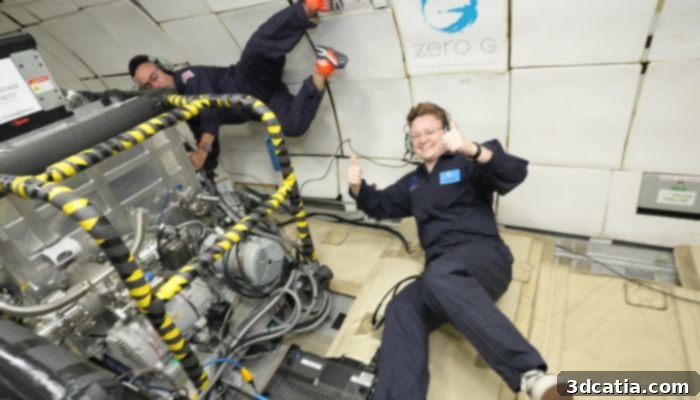
The research team in the zero-gravity aircraft (Photo credits: Tasha Dixon)
A critical phase of this research involved actual experiments conducted in a simulated microgravity environment. In August 2024, engineers and students from Ohio State’s Welding Engineering and Multidisciplinary Capstone Programs, alongside specialists from Marshall’s Materials and Processes Laboratory, performed high-powered fiber laser beam welding aboard a commercial aircraft specially modified to simulate reduced gravity. This unique platform achieved temporary conditions mimicking space by executing parabolic flight maneuvers. During these intense flights, the aircraft created approximately 20 seconds of reduced gravity—a sensation often referred to as “zero-g” or microgravity—allowing the team to conduct rapid, focused welding experiments. These tests were carefully designed to simulate gravitational conditions found in both low Earth orbit (LEO) and on the lunar surface, providing crucial comparative data. Throughout these flights, a sophisticated network of sensors meticulously collected vast amounts of data, including thermal profiles, melt pool dynamics, and the energy consumption of the laser. Analyzing this comprehensive dataset is paramount to understanding the precise effects of various space environments—such as vacuum, microgravity, and unique heat transfer mechanisms—on both the welding process itself and the resulting mechanical and metallurgical properties of the welded material. These real-world, albeit simulated, experiments are vital for validating ground-based models and developing robust welding protocols for future in-space missions.
The success of these intricate parabolic flight missions was a testament to the dedication and meticulous planning of the entire team. Will McAuley, an accomplished welding engineering student from Ohio State, shared an enthusiastic update on the mission’s remarkable achievement. He reported, “During the flights we successfully completed 69 out of 70 welds in microgravity and lunar gravity conditions, realizing a fully successful flight campaign.” This near-perfect success rate is highly significant, validating the feasibility and control of laser beam welding in simulated space environments. It provides strong evidence that the technology is maturing rapidly and holds immense promise for practical application in future space endeavors. Such a successful campaign underscores the rigorous preparation, precise execution, and robust experimental design employed by the NASA and Ohio State University team. The high success rate of these welds under challenging conditions is a critical milestone, moving the vision of advanced in-space manufacturing closer to reality and setting a positive precedent for subsequent development phases.
The implications of this pioneering research extend far beyond the realm of space exploration. While the immediate goal is to develop an advanced in-space economy and facilitate off-Earth construction, the profound insights gained from the researcher’s work on laser beam welding will also prove invaluable for understanding and significantly improving the technology here on Earth. The pursuit of precision, reliability, and automation required for welding in extreme space environments naturally translates into advancements for terrestrial industries. This research can lead to more efficient, higher-quality, and more durable welding processes for a vast array of manufactured goods, from automotive components and aerospace structures to medical devices and heavy industrial equipment. Innovations in real-time monitoring, adaptive control systems, and material characterization developed for space applications can directly enhance production lines on Earth, reducing waste, improving product performance, and lowering manufacturing costs. This synergistic relationship highlights how investments in ambitious space research often yield unforeseen, yet substantial, benefits for everyday life, driving technological progress across multiple sectors. To delve deeper and learn more about Marshall’s transformative project with Ohio State, you can access additional information by clicking here, directly from NASA’s official resources.
*Cover: the team monitors laser beam welding in a vacuum chamber during a Boeing 727 parabolic flight. From left, Andrew O’Connor, Marshall materials scientist and NASA technical lead for the project; Louise Littles, Marshall materials scientist; and Aaron Brimmer, OSU graduate student. Photo Credits: Tasha Dixon