
Unlocking Sustainable 3D Printing: MIT’s Autonomous System Adapts to Unknown Materials
The global demand for more environmentally responsible production processes has intensified the search for innovative solutions in manufacturing. Within the realm of additive manufacturing, or 3D printing, this translates into a relentless quest to develop and utilize greener materials. However, a significant hurdle persists: successfully printing with these novel, often eco-friendly materials can be notoriously challenging. Recognizing this critical barrier, a collaborative effort involving leading research institutions – MIT’s Center for Bits and Atoms (CBA), the US National Institute of Standards and Technology (NIST), and Greece’s National Center for Scientific Research (Demokritos) – has led to a groundbreaking invention: a specialized 3D printer capable of autonomously determining the necessary printing parameters for materials it has never encountered before. This transformative innovation is paramount for accelerating the adoption of renewable and recyclable materials in 3D printing, whose diverse and often unpredictable properties typically make them difficult to characterize and integrate into existing workflows. By enabling a more efficient and adaptive utilization of a broader spectrum of materials, this intelligent 3D printer marks a pivotal step towards truly sustainable additive manufacturing.
While 3D printing is widely lauded for its potential to reduce waste and optimize material usage, positioning it as a more environmentally-friendly process compared to traditional subtractive manufacturing, the reality is often more complex. A primary environmental concern within the industry revolves around the difficulty manufacturers face in recycling the vast quantities of plastic polymers used. Furthermore, the introduction of novel, sustainable materials – such as bio-based polymers, recycled plastics, or composites – presents a substantial operational challenge. Each new material possesses unique thermal, rheological, and mechanical properties, necessitating individual adjustment of numerous print parameters. This calibration process, which dictates factors like extrusion temperature, print speed, nozzle diameter, layer height, and cooling rates, is often carried out manually. When preparing to print with an unfamiliar material, engineers or technicians may need to manually configure up to 100 different parameters within the 3D printer’s software, an exhaustive and time-consuming endeavor crucial for ensuring correct material extrusion and optimal print quality.
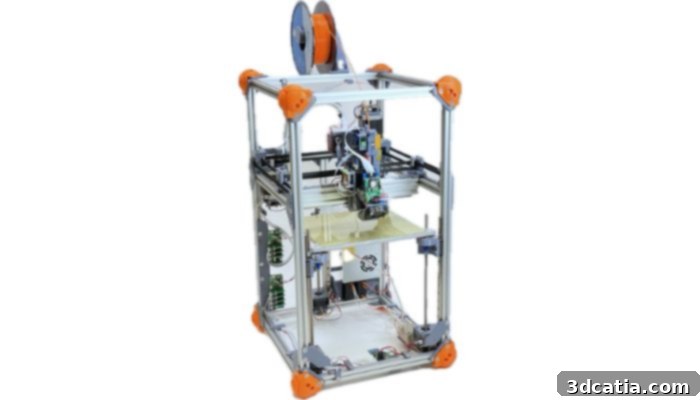
Photo Credits: MIT
Even for conventional, standardized 3D printing materials, the established parameters available today are the culmination of extensive, iterative testing conducted over long periods. This arduous process is simply not scalable for the rapidly expanding universe of sustainable materials. The core challenge with renewable and recyclable materials lies in their inherent variability; their properties can differ significantly based on source, processing methods, and even batch. This intrinsic variability renders it virtually impossible to establish universally standardized parameters, as a setting optimized for one batch of recycled PET might be entirely unsuitable for another. Consequently, users are currently compelled to meticulously configure parameters for each new material or even each new batch individually. This daunting requirement inevitably discourages the adoption of more eco-friendly material choices, perpetuating reliance on well-understood but often less sustainable options simply due to ease of use and predictability.
Developing a Game-Changing 3D Printer for Sustainable Materials
To directly address the pervasive and critical issue of manual parameter configuration, the research consortium has successfully engineered a sophisticated 3D printer boasting an unprecedented capability: the automatic determination of optimal printing parameters for materials with completely unknown characteristics. This revolutionary functionality is achieved through an ingeniously adapted extruder system. Unlike conventional extruders, this modified component is equipped with advanced sensors that meticulously measure both forces and material flow dynamics throughout the entire extrusion process. These real-time measurements provide a rich dataset on how a given material behaves under various conditions. Following a concise 20-minute test run, the wealth of data collected is rigorously analyzed using sophisticated mathematical models and algorithms. This intelligent processing enables the system to rapidly and accurately generate the precise printing parameters required for successful deposition and solidification of the material.
Once generated, these newly defined parameters can be seamlessly transferred into the 3D printing software, effectively streamlining and simplifying the process of printing with any unknown material. This innovative methodology significantly reduces the manual workload, replacing approximately half of the parameters that would traditionally demand manual configuration by an operator. To validate the efficacy and reliability of this groundbreaking approach, the researchers conducted extensive printing tests using a diverse array of materials, crucially including a variety of renewable and bio-based substances. Across all trials, the results were consistently positive, yielding high-quality prints and unequivocally demonstrating the robustness and effectiveness of this automated parameter generation system. This level of automation not only saves significant time and resources but also dramatically lowers the barrier to entry for utilizing a wider range of novel and sustainable materials.
The implications of this breakthrough extend far beyond mere operational convenience; they promise a profound positive impact on the environmental footprint of additive manufacturing. The 3D printing industry has long faced criticism for its heavy reliance on non-recyclable polymers and resins, many of which are derived from finite fossil fuels. By empowering printers to autonomously adapt to diverse and previously untestable materials, this technology facilitates a paradigm shift towards greener alternatives. Neil Gershenfeld, the esteemed Director of MIT’s Center for Bits and Atoms (CBA), eloquently underscores the monumental significance of this research for the future trajectory of 3D printing. He states, “In this paper, we demonstrate a method that can take all these interesting materials that are bio-based and made from various sustainable sources and show that the printer can figure out by itself how to print those materials. The goal is to make 3D printing more sustainable.” His words encapsulate the core mission and the transformative potential of this self-calibrating 3D printer, envisioning a future where environmental responsibility is intrinsically woven into the fabric of additive manufacturing.
Looking ahead, the next crucial step involves fully integrating this automated parameter generation capability directly into standard 3D printing software platforms. Such integration would further simplify and democratize printing with novel materials, making the technology accessible to a broader user base, from industrial manufacturers to hobbyists. Future developments also aim to enhance the system’s intelligence by incorporating advanced thermodynamic models. These models will allow for an even deeper understanding of material behavior under varying thermal conditions, promising to further improve the accuracy and adaptability of parameter generation. This continuous refinement will ensure that the system can handle an ever-wider spectrum of complex materials with unparalleled precision. For those interested in a more detailed exploration of this cutting-edge research, comprehensive information can be found in the official MIT report available HERE.
What are your thoughts on this revolutionary 3D printer, capable of automatically detecting parameters for a vast array of unknown materials? We invite you to share your insights and comments below, or engage with us on our LinkedIn, Facebook, and Twitter pages! For the very latest advancements and news in the dynamic world of 3D printing delivered directly to your inbox, don’t forget to sign up for our free weekly newsletter here. You can also explore our extensive library of videos on our YouTube channel for visual insights and demonstrations of additive manufacturing innovations.
*Cover Photo Credits: Pixabay