
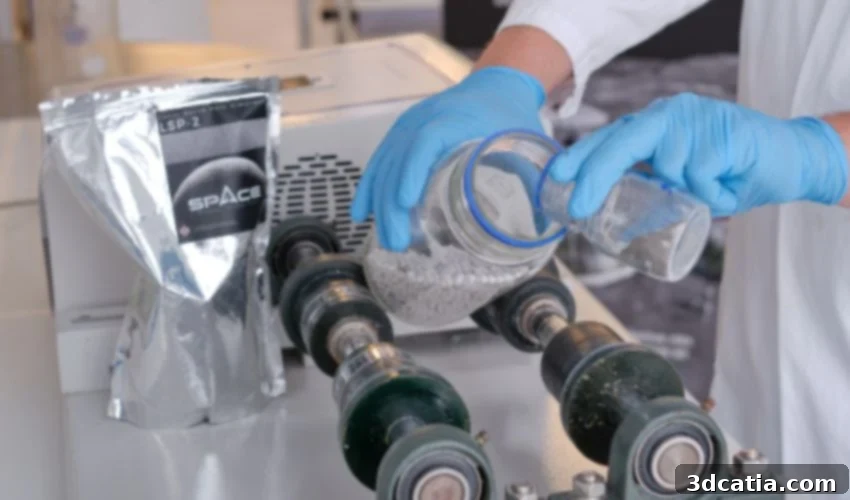
Turning Lunar Dust into Electronics: 3D Printing on the Moon
Lunar regolith, the blanket of dust and fragmented rock covering the Moon’s surface, presents a wealth of untapped potential that extends far beyond mere “dirt.” Composed of roughly 40-45% oxygen, it holds the key to unlocking sustainable space exploration. Since 2019, Metalysis has been at the forefront of this endeavor, collaborating with both the UK and European Space Agencies to pioneer methods for extracting this crucial oxygen. Oxygen, of course, is a vital resource for rocket propulsion and life support systems.
However, the versatility of regolith extends beyond simple oxygen production. Once the precious oxygen is extracted, a valuable mixture of conductive metal alloys remains. While innovative companies like Space Copy and Luyten are actively exploring the use of regolith in construction-grade 3D printing, a groundbreaking new initiative aims to push the boundaries even further. This initiative focuses on transforming these metal-rich residues into functional inks for printing intricate electronic circuits, as well as specialized powders suitable for manufacturing larger, more robust objects directly on the lunar surface.
Metalysis stands as a leader in the field of reducing regolith to its constituent elements. Their proprietary method, known as molten salt electrolysis, is a game-changer in resource utilization. The process involves heating a calcium chloride electrolyte to extremely high temperatures, typically between 800 and 1000°C. Once the electrolyte reaches the desired temperature, a voltage is applied between strategically placed electrodes. This application of voltage triggers the release of oxygen from the regolith material, leaving behind a valuable deposit of metal alloys.

Researchers are leveraging the magnetic properties inherent in lunar regolith.
Dr. Ian Mellor, MD and chief scientist at Metalysis, emphasizes the broad applicability of their technology. “The technology is applicable to nearly 50 elements in the periodic table, and it is feedstock agnostic – so it can process lunar regolith,” he explains. “Our immediate focus terrestrially is upon high charge tantalum powders and aluminium scandium alloys for the electronics sector.” This terrestrial focus allows them to refine their processes and develop valuable materials applicable both on Earth and in space.
Transforming Waste into Printable Technology
The conductive residue that remains after the oxygen extraction process isn’t discarded; instead, it’s carefully shipped to the Danish Technological Institute (DTI), which spearheads this transformative project. DTI leverages its extensive expertise in synthesizing conductive materials to convert this seemingly useless lunar soil byproduct into digitally printable materials. These materials include specialized inks optimized for printed electronics and powders perfectly suited for conductive 3D printing applications.
Christian Dalsgaard, a Senior Consultant at DTI, underscores the revolutionary potential of this innovation. He points out that it opens “completely new opportunities for off-earth manufacturing of electronics for future space missions.” The project’s core objective is to definitively prove that de-oxygenated simulated regolith can be effectively utilized to manufacture essential components, such as antennas and conductive wires, directly on the lunar surface. This would eliminate the need to transport these items from Earth, drastically reducing mission costs and logistical complexities.
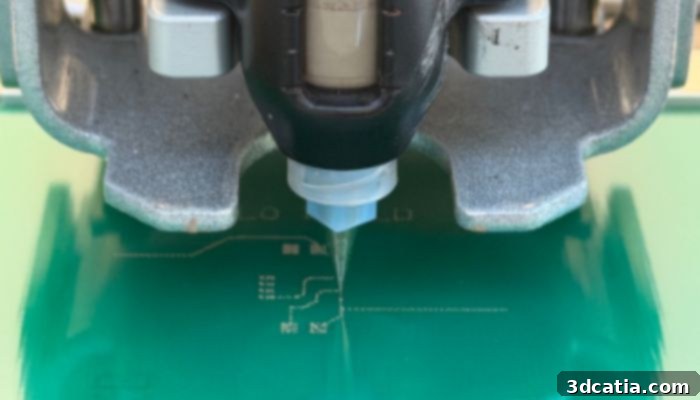
Lunar regolith can be transformed and used to 3D print functional electronics.
Overcoming Logistical Challenges in Space
The primary driving force behind this pioneering initiative is the exorbitant cost and inherent complexity associated with transporting materials into space. As Dalsgaard aptly points out, transporting even a single kilogram of payload into space requires a staggering 15 kilograms of fuel. This unsustainable ratio highlights the urgent need for alternative solutions. In-Situ Resource Utilization (ISRU), which involves utilizing materials found locally on celestial bodies like the Moon or Mars, offers a compelling and economically viable solution to this challenge. ISRU promises to drastically reduce reliance on Earth-based resources and enable more ambitious and sustainable space missions.
By establishing the capability to manufacture essential components directly on-site, future missions can significantly reduce their dependence on long and costly Earth-based supply lines. This enhanced autonomy is critical for a wide range of applications, including:
- Maintaining planetary robots and ensuring their continued operation.
- Repairing critical electrical installations within lunar or Martian habitats.
- Building robust and reliable communication networks to facilitate data transmission and communication between crew members and Earth.
- Adapting and customizing scientific instruments on-site to meet the specific needs of each mission and optimize data collection.
These applications demonstrate the transformative potential of ISRU and its ability to revolutionize space exploration.
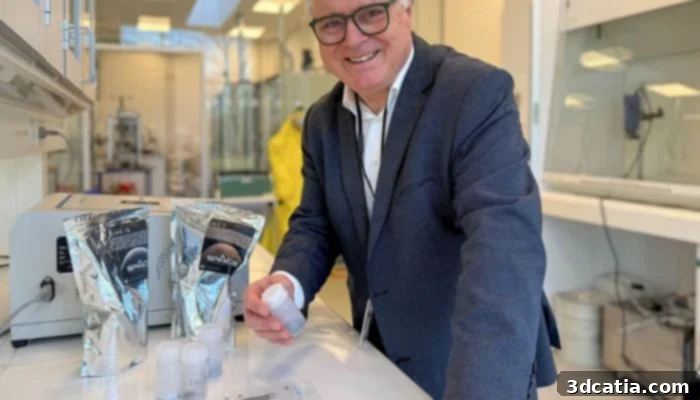
Senior Consultant Christian Dalsgaard from the Danish Technological Institute, leading the charge in lunar resource utilization.
Toward Sustainable Space Exploration and Lunar Habitats
This €155,000 proof-of-concept project, backed by leading aerospace and defense producers, signifies a crucial and transformative step towards more resilient and sustainable space exploration. By effectively demonstrating that lunar regolith can serve as a versatile raw material for producing both life-sustaining oxygen and functional electronic systems, researchers are laying the foundational groundwork for establishing long-term, sustainable lunar and Martian outposts. This innovative technology suggests that future explorers will not merely survive on the Moon; they will be empowered to build, repair, and innovate, utilizing the very ground beneath their feet to create a thriving and self-sufficient presence. The implications for future space exploration are profound, paving the way for more ambitious and sustainable missions to the Moon, Mars, and beyond. This move makes lunar habitats more economically viable and drives space exploration further. To explore this topic further, click HERE.
What are your thoughts on this groundbreaking project? We encourage you to share your insights and opinions in the comments section below. You can also connect with us on our LinkedIn or Facebook pages. Stay up-to-date with the latest advancements in 3D printing and related technologies by subscribing to our free weekly Newsletter, delivering the most relevant news directly to your inbox. Explore our extensive video library on our YouTube channel. For in-depth coverage of 3D printing applications within the aerospace and defense sectors, please visit our dedicated page HERE.
*All Photo Credits: Danish Technological Institute