

Boston Micro Fabrication (BMF) Unleashes MicroArch Technology: Revolutionizing Global Precision Micro 3D Printing
Boston Micro Fabrication (BMF), a pioneering manufacturer at the forefront of micro 3D printing solutions, is making a significant global impact with the official launch of its groundbreaking microArch technology. Following a highly successful 18-month expansion across the Asian market, where it established a strong foothold and garnered substantial industry adoption, BMF is now poised to redefine precision manufacturing worldwide. The microArch platform represents a leap forward in additive manufacturing, boasting the capability to 3D print intricate polymer and composite micro parts with unparalleled accuracy. With a remarkable print accuracy of just 2 microns and a tight tolerance of 10 microns, BMF confidently asserts that its technology can rival, and in many cases surpass, the quality standards typically achieved by high-resolution injection molding and advanced CNC processing methods. This positions microArch as a transformative solution for industries demanding the utmost precision in miniaturized components.
While a substantial segment of the additive manufacturing industry continues to focus on large-format additive manufacturing, primarily aimed at producing sizable parts and streamlining complex assembly processes, a parallel and equally vital innovation frontier is emerging in the realm of micro 3D printing. This specialized domain is dedicated to providing cutting-edge solutions for the design and production of exceptionally small, intricate components. Leading innovators in this niche include companies such as MicroLight3D, renowned for its development of a sophisticated sub-micron-scale 3D printing platform, and the innovative startup Nanofabrica. For these pioneering manufacturers, the core challenge lies in delivering manufacturing capabilities that can produce micro, and even nano-scale parts, with the highest possible precision and resolution. The significance of this capability is particularly pronounced across critical sectors such as the medical and electronics industries, where miniaturization, complexity, and performance are paramount for next-generation devices and innovations. The ability to create parts with such fine detail and accuracy opens up new avenues for product development that were previously unachievable with conventional methods.

The P140 machine offers a print resolution of 10 microns, showcasing BMF’s commitment to high-definition microfabrication.
BMF’s strategic entry into the global market was carefully orchestrated, beginning with an intensive focus on the vibrant and demanding Asian market. This initial phase proved immensely successful, with the company deploying over 40 micro 3D printing solutions across a diverse range of industries. This extensive market penetration allowed BMF to refine its technology, gather crucial feedback, and validate its capabilities on a large scale. John Kawola, CEO of BMF, articulated the company’s vision and the broader industry shift, stating, “When it comes to additive manufacturing, the next frontier of innovation is not large parts but small, high-precision parts. We are seeing a convergence of major trends as the boundaries between additive manufacturing and miniaturization begin to dissolve. There is no doubt that additive manufacturing is beginning to lose its appeal as parts become smaller. The challenges of precision and accuracy have hampered innovation for engineers and manufacturers seeking to develop small, high-resolution parts. All that is about to change with the introduction of microArch.” Kawola’s statement underscores a fundamental paradigm shift, highlighting that the true potential of additive manufacturing for advanced product development increasingly lies in its ability to master the microscopic realm, overcoming traditional hurdles that have long constrained designers and engineers.
At the heart of BMF’s groundbreaking microArch technology is a proprietary and patented process known as Projection Micro-Stereolithography (PµSL). This innovative technique leverages a powerful light source to meticulously cure liquid photopolymer material layer by precise layer, a methodology that shares fundamental principles with the established stereolithography process, yet is optimized for an unprecedented level of miniaturization and precision. The microArch product line encompasses a versatile array of machines, each engineered to offer distinct resolutions, ranging from 25 microns to an astonishing 2 microns. These systems are designed to be compatible with a diverse palette of over a dozen specialized photopolymers, enabling a wide spectrum of material properties for various applications. BMF proudly asserts that microArch is capable of producing prints with a level of precision and accuracy that is more than 100 times smaller than the average diameter of a human hair, pushing the boundaries of what is conventionally achievable in manufacturing. The accessibility of this advanced technology is reflected in its pricing, with models ranging from $125,000 to $250,000, depending on the specific resolution and capabilities chosen. John Kawola further elaborated on the significance of this development, stating, “As devices and parts get smaller, the need for precision and accuracy becomes more and more important and, so far, more difficult to achieve. Before microArch, there were a number of economic and technological limitations that made it virtually impossible for manufacturers to take advantage of the benefits of 3D printing for small parts. We are overcoming these challenges with a new approach that is expected to have a great impact.” This new approach not only addresses critical technical hurdles but also opens up economically viable pathways for micro-part fabrication, democratizing access to ultra-precision additive manufacturing.
The unique capabilities of Projection Micro-Stereolithography (PµSL) are central to microArch’s success. Unlike conventional SLA, which might use a laser to trace each layer, PµSL utilizes an entire image of a layer projected simultaneously onto the photopolymer resin. This “flash” curing method significantly enhances printing speed for micro-scale features while maintaining exceptional detail. The finely controlled light source, combined with advanced optical systems and specialized resins, allows for the creation of geometries with astonishingly smooth surfaces and complex internal structures, which are critical for optimal performance in micro-devices. The 2-micron accuracy translates to incredibly fine feature resolution, enabling the creation of intricate details, sharp edges, and precise holes that are simply not feasible with other methods. The 10-micron tolerance signifies a high degree of repeatability and reliability in part dimensions, crucial for functional components in sensitive applications. Furthermore, the development of specialized photopolymers capable of being cured by these precise light sources is key. These materials are often tailored for specific mechanical, thermal, or even biocompatible properties, expanding the range of applications for microArch beyond mere prototyping into functional end-use parts. The synergy between the hardware’s optical precision and the material science behind the photopolymers is what truly distinguishes BMF’s offering in the competitive landscape of micro-manufacturing.
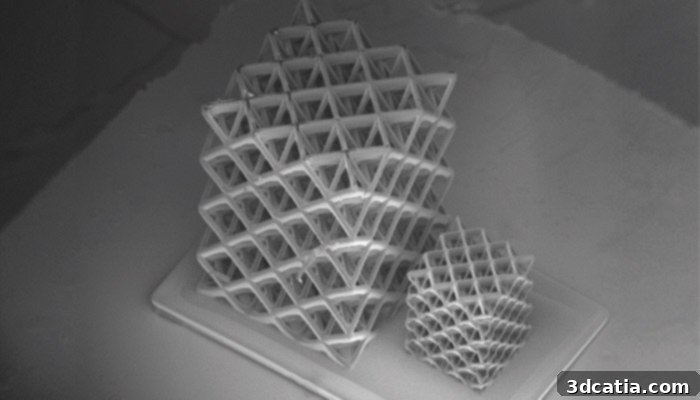
Boston Micro Fabrication’s microArch technology is specifically engineered to address the unmet needs of several high-growth, high-demand sectors. The primary application areas where BMF focuses its expertise include micro-electromechanical systems (MEMS), advanced microfluidics, critical medical devices, and sophisticated filtration solutions. These industries are characterized by their stringent requirements for miniaturization, complex geometries, and unwavering precision – challenges that conventional manufacturing processes have often struggled to adequately resolve. Traditional stereolithography, while capable, frequently falls short in delivering the ultra-fine resolutions and tolerances required for true micro-scale components in these fields. Moreover, the alternative of machining, especially for intricate micro-parts, often entails prohibitively high costs, extended lead times, and inherent limitations in design complexity. The microArch process, with its unparalleled accuracy and efficiency, is poised to fundamentally transform these sectors. For instance, in the medical field, it enables the creation of highly customized micro-implants, intricate surgical instruments, and advanced drug delivery systems. In electronics, it can fabricate micro-connectors, sensors, and components for advanced packaging that are smaller and more complex than ever before. Microfluidics benefits from the ability to rapidly prototype and produce complex lab-on-a-chip devices with precise internal channels. Filtration solutions can leverage microArch to design novel filter media with optimized pore structures for specific separation tasks. The ability to rapidly iterate and produce functional prototypes, followed by efficient small-batch production, provides a competitive edge, fostering innovation and accelerating product development in these crucial technological domains. The economic and technological barriers that previously hindered progress in these areas are now systematically being dismantled by BMF’s innovative approach.
The potential impact of BMF’s microArch technology extends beyond just individual product development. It promises to catalyze a broader shift in manufacturing paradigms, empowering engineers and researchers to explore previously impossible designs. By offering a cost-effective and precise method for creating highly miniaturized components, BMF is effectively lowering the barrier to entry for innovation in micro-scale applications. This could lead to a surge in compact, high-performance devices across consumer electronics, aerospace, and defense, in addition to the core sectors. The ability to produce prototypes quickly with production-level accuracy means faster development cycles and reduced time-to-market. Furthermore, the capacity for on-demand manufacturing of custom micro-parts addresses the growing need for personalized products, particularly in the medical and specialized electronics sectors. For more comprehensive information on this revolutionary technology and its extensive applications, interested parties are encouraged to visit the manufacturer’s official website, where detailed specifications, case studies, and contact information are readily available. BMF continues to push the boundaries of what is possible in additive manufacturing, cementing its position as a leader in the micro-precision space.
What are your thoughts on Boston Micro Fabrication’s groundbreaking microArch technology and its potential to reshape the landscape of precision manufacturing? We invite you to share your insights and opinions in a comment below, or engage with our community on our vibrant Facebook and Twitter pages! Don’t miss out on the latest advancements and news in the world of 3D printing; sign up for our complimentary weekly Newsletter to receive all the crucial updates directly in your inbox! Additionally, for those looking to deepen their understanding of various 3D printing materials, you can explore more insightful guides on ABS, PLA, and PETG for 3D printing, all meticulously compiled and available on 3Dnatives!