
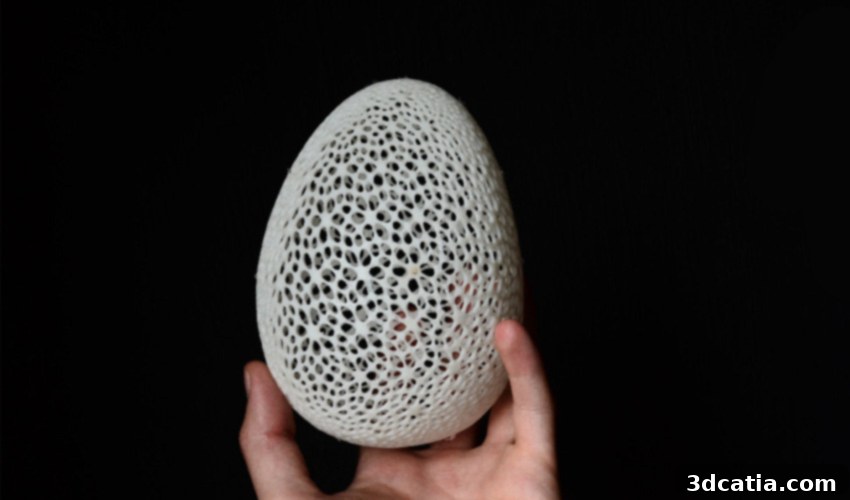
Revolutionizing Post-Mastectomy Recovery: The Cali Project’s 3D Printed Breast Prostheses Offer Comfort and Customization
Breast cancer remains a formidable health challenge globally, profoundly impacting millions of lives each year. In the United States alone, over 266,000 women are diagnosed with this disease annually, often leading to the necessity of a mastectomy. While life-saving, a mastectomy can be a physically and emotionally challenging procedure, leaving many women seeking effective and comfortable solutions for their post-operative recovery. The journey of coping with such a significant change requires comprehensive support, extending beyond medical treatment to include emotional well-being and practical aids that help restore a sense of normalcy. It is precisely in this critical area that a groundbreaking initiative emerged from the University of Guadalajara in Mexico: the Cali Project, which has pioneered the development of custom-fit 3D printed breast prostheses.
The innovative application of 3D printing technology in healthcare is not a new concept, but its potential continues to expand at an astonishing pace. Additive manufacturing has already demonstrated remarkable utility in addressing various medical challenges, from creating surgical guides to producing complex anatomical models for training. In the context of breast cancer specifically, 3D printing has been instrumental in advancing early detection methods. Research teams, like those at the University of Colorado in Boulder working with NASA, have even utilized bioprinting techniques to create cancer cell structures. This allows scientists to better understand the disease’s mechanisms and accelerate the development of targeted treatments. These advancements underscore the transformative power of 3D printing, paving the way for personalized medical solutions that were once unimaginable.
In Mexico, thousands of women face the daily reality of waiting for breast prostheses that genuinely meet their individual needs. Traditional prosthetics often come with limitations in terms of fit, comfort, and aesthetics, leading to a less than ideal experience for many patients. Recognizing this pressing need, Erick Muñoz Arellano, a visionary chemical engineering student at the University Center of Exact Sciences and Engineering of the University of Guadalajara, took the initiative to address this gap. His dedication led to the conceptualization and development of 3D printed breast prostheses, meticulously designed to be adapted to the unique contours and requirements of each patient. This project, known as the Cali Project, represents a significant leap forward in personalized post-mastectomy care, promising to enhance the quality of life for countless women.
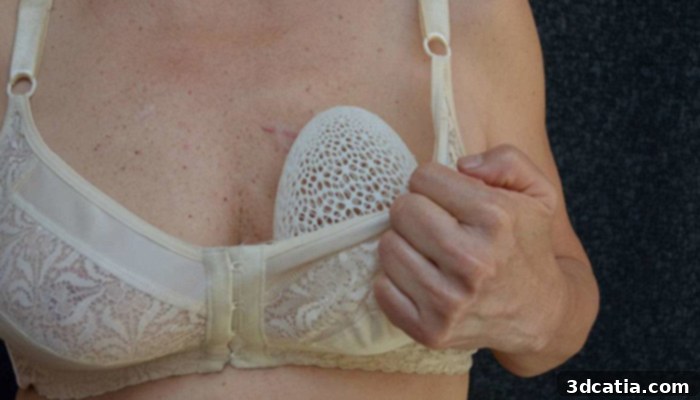
Patient prosthesis. Credits: Conacyt
The Meticulous Development of Personalized 3D Breast Prostheses
The creation of a 3D breast prosthesis through the Cali Project is a testament to the power of personalized medicine and advanced manufacturing. The process begins with a highly individualized approach to ensure optimal fit and comfort. A crucial first step involves performing a precise 3D scan of the patient’s chest area. This digital capture allows for the creation of an exact anatomical map, providing the foundational data necessary for custom design. Following this, the healthy breast is meticulously measured and weighed. This information is vital for achieving symmetry, balance, and a natural appearance, ensuring that the prosthesis perfectly complements the patient’s unique body shape. These detailed measurements and the 3D scan are then used to inform the digital modeling phase, where a virtual prototype of the prosthesis is crafted with exceptional precision.
Once the digital model is finalized, it is translated into a physical object through state-of-the-art 3D printing. The choice of printing materials is paramount to the functionality and durability of the prostheses. The Cali Project utilizes advanced materials that provide several critical benefits. For instance, thanks to the specific polymer compounds employed, the prostheses are inherently water-resistant. This means they can be used in water, such as during swimming or showering, without any fear of degradation or damage, significantly enhancing the user’s freedom and confidence. Unlike traditional prosthetics that might absorb liquids or become uncomfortable when wet, these 3D printed versions do not retain water inside, ensuring hygiene and longevity. This feature alone marks a significant improvement over many conventional alternatives, which often require careful handling and limited exposure to moisture.
A unique and highly innovative feature of these 3D printed prostheses is the integration of an internal gel chamber. This specialized chamber is designed to achieve an ideal weight and feel, closely mimicking the natural density and movement of breast tissue. Erick Muñoz Arellano elaborated on the meticulous design process, stating, “We carried out a thorough diagnosis to evaluate the scars caused by the mastectomies, understanding the unique anatomical challenges each patient presents.” He further explained, “We also precisely measure and weigh the healthy breast to obtain crucial biometric data. This information is then used to develop a design with the necessary characteristics – not just aesthetic appeal, but also functional integrity – which can then be accurately printed.” This iterative and patient-focused design philosophy ensures that each prosthesis is not only a functional device but also a comfortable and natural-feeling extension of the patient’s body.
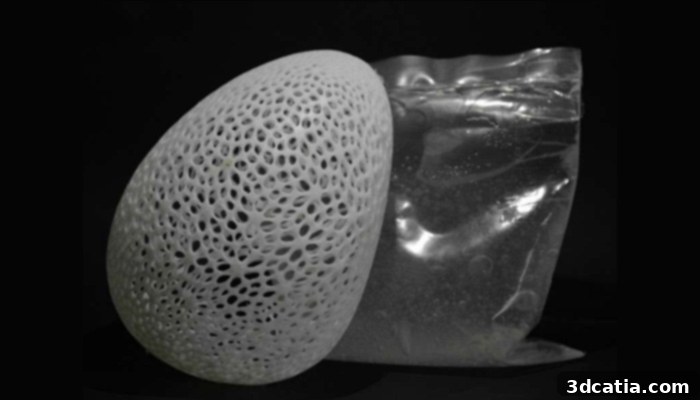
Prosthesis and gel chamber that is placed inside. Credits: Conacyt
Unparalleled Benefits: Comfort, Durability, and Affordability
The Cali Project’s 3D printed breast prostheses offer a trifecta of benefits that significantly surpass those of traditional alternatives: enhanced comfort, superior durability, and remarkable affordability. To validate their designs and gather crucial feedback, approximately 300 women generously volunteered for the initial pilot tests. During these trials, valuable insights were collected regarding the desired improvements in existing prostheses, directly informing the refinement of the 3D printed models. This participatory approach ensured that the final designs were genuinely patient-centric and addressed real-world needs.
Following this comprehensive investigation, the team developed five distinct 3D breast prostheses, each meticulously designed for a different patient, reflecting the project’s commitment to personalized care. The overarching conclusion drawn from these extensive studies was overwhelmingly positive. Patients reported significantly greater comfort compared to their conventional prostheses. This enhanced comfort stems from the bespoke fit, the lightweight nature of the materials, and the natural feel provided by the internal gel chamber. Unlike off-the-shelf options that can cause pressure points or feel unnatural, the 3D printed versions conform perfectly to the individual’s anatomy, drastically improving daily wearability and overall satisfaction.
Beyond comfort, these innovative prostheses boast a significantly greater durability, with an estimated lifespan of up to five years. This extended longevity represents a substantial advantage over many traditional prosthetics, which often require more frequent replacement due to wear and tear. The robust materials and advanced manufacturing techniques contribute to their resilience, ensuring that women can rely on their prostheses for an extended period without concerns about deterioration. This durability not only offers peace of mind but also translates into long-term cost savings, further enhancing the accessibility of quality post-mastectomy care.
Perhaps one of the most impactful benefits is the approximate price point. At around $4,500 Mexican pesos (roughly $221 US dollars), these 3D printed prostheses are significantly more affordable than many traditional prosthetics available on the market. This drastic reduction in cost makes high-quality, custom-fit prostheses accessible to a much broader population, including women in underserved communities who might otherwise struggle to afford conventional options. The affordability factor is particularly crucial in healthcare, where financial burdens often add to the already immense challenges faced by patients. By making superior products available at a fraction of the cost, the Cali Project is truly democratizing access to essential post-mastectomy care, empowering more women to regain confidence and live fuller lives.
The Future of the Cali Project and Personalized Post-Mastectomy Care
The Cali Project currently remains in the patent phase, a crucial step in protecting its innovative intellectual property and preparing for broader implementation. The team is diligently working through the necessary legal and regulatory processes, with the exciting expectation that the commercialization of these custom 3D printed breast prostheses will commence soon. This commercial launch is poised to significantly increase the quality of life for a vast number of women, providing a superior product at a dramatically lower price point compared to traditional prosthetics.
The widespread availability of these affordable, custom-fit prostheses has the potential to transform post-mastectomy recovery, offering comfort, confidence, and dignity to countless individuals. Beyond the immediate impact, the Cali Project serves as an inspiring example of how academic innovation, driven by student ingenuity, can directly address critical societal needs. It highlights the growing synergy between advanced manufacturing technologies like 3D printing and the evolving field of personalized medicine. As 3D printing continues to mature, we can anticipate even more tailored and accessible medical solutions, making healthcare more effective and equitable for everyone. This pioneering effort from the University of Guadalajara is not just about a product; it’s about fostering hope and redefining what’s possible in patient care.
What are your thoughts on the development of these revolutionary 3D printed breast prostheses? We invite you to share your insights and comments below, or join the conversation on our Facebook and Twitter pages! Stay informed about all the latest advancements in additive manufacturing by signing up for our free weekly Newsletter, delivered straight to your inbox.