
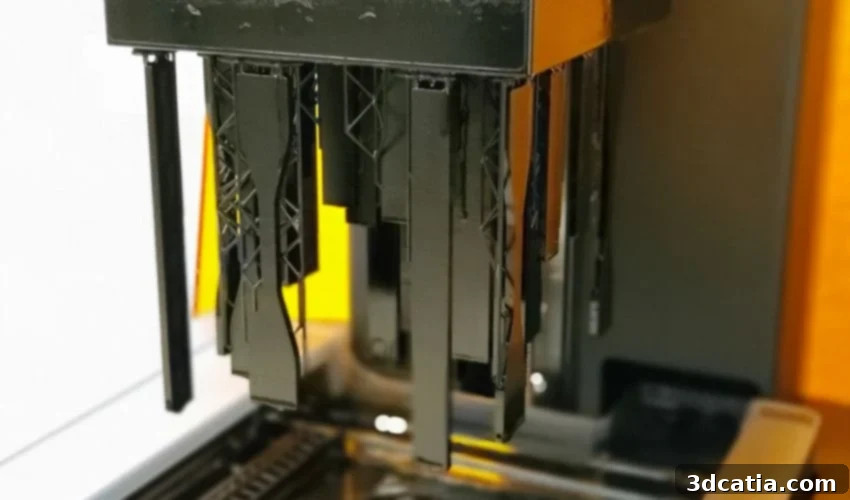
Mechnano’s Innovation: Unlocking Advanced Properties in 3D Printing with Nano-Uniform ESD Resins and Carbon Nanotubes
While significant attention in additive manufacturing (AM) often centers on the diverse processes and machinery involved, the critical role of materials in determining a part’s final properties and performance cannot be overstated. The choice of material fundamentally dictates characteristics such as strength, durability, weight, and functionality. This growing understanding has spurred a concentrated surge in research and development, specifically aimed at engineering novel materials for 3D printing. These innovations span a wide spectrum, encompassing advanced composites, high-performance metals, and specialized plastics, each tailored to meet the exacting demands of various industrial applications. Among the pioneering companies at the forefront of this material revolution is Arizona-based Mechnano. This innovative firm distinguishes itself as the first to successfully integrate discrete carbon nanotubes (CNTs) into photopolymer resins, substantially enhancing their mechanical properties, such as tensile strength and impact resistance, and crucially, enabling consistent Electrostatic Discharge (ESD) ratings. To delve deeper into their groundbreaking work, the unique properties of their resins, and the overarching importance of anti-static materials in modern manufacturing, we recently engaged in a insightful conversation with the Mechnano team.
Meet Dr. O: Driving Innovation in Additive Manufacturing and Nanomaterials at Mechnano
“Absolutely. My name is Olga Ivanova, though many in the industry affectionately refer to me as Dr. O,” she began. “I serve as the Director of Applications and Technology at Mechnano. My academic journey culminated in a Ph.D. in Chemistry, with a specialized focus on nanomaterials. Following my doctoral studies, I was eager to explore new technological frontiers and scientific domains, aiming to make a meaningful contribution to a dynamic team. It was during this quest that I encountered an intriguing job opening at Virginia Tech, which centered on the development of nanocomposites specifically for 3D printing applications.”

Olga “Dr. O” Ivanova, a key figure in Mechnano’s material innovation.
Dr. Ivanova candidly shared her initial unfamiliarity with the burgeoning field of 3D printing. “At that time, I possessed no prior knowledge about 3D printing,” she recalled. “However, my inherent curiosity and drive led me to dedicate myself fully to understanding this complex technology. I immersed myself in extensive research, meticulously reading countless articles, performing comprehensive web searches, and diligently watching explanatory videos of the various additive manufacturing processes. It didn’t take long for me to develop a profound affection and fascination for this transformative technology. Recognizing the immense potential, I seized the opportunity and successfully secured the position, marking the definitive start of my exciting journey within the additive manufacturing industry.” Her expertise in nanomaterials proved to be a perfect synergy for the evolving demands of 3D printing materials.
The Genesis of Mechnano: From Vision to Market Leader in ESD Resins
The inception of Mechnano stemmed from an ambitious initial vision held by its co-founders, Steven Lowder and Scott Gillette. Their core idea revolved around the sophisticated integration of discrete carbon nanotubes (CNTs) into additive manufacturing materials. The aim was not just to incorporate CNTs, but to ensure they were uniformly dispersed and functionalized, thereby unlocking significantly enhanced material properties far beyond what conventional methods could achieve. Through extensive engagement with the additive manufacturing community and rigorous market research, these foundational ideas underwent substantial refinement and evolution. Mechnano quickly garnered robust support from key stakeholders across various industries, who unequivocally affirmed that if discrete CNTs could indeed deliver the anticipated material property enhancements, this innovative technology would empower AM to effectively compete with, and in many cases surpass, traditional manufacturing methods. The promise of superior performance and new functionalities was a compelling driver.
During the crucial phase of functionalizing CNTs specifically for AM applications and meticulously validating their initial material formulations, Mechnano successfully navigated the inherent challenges of introducing disruptive new technology as a startup. It was during this intensive process that the team began to truly comprehend the immense scale of a specific market gap: the urgent need for nano-uniform ESD resins. Traditional ESD materials often exhibit variable ESD performance, leading to inconsistencies and significant difficulties, particularly in the highly sensitive electronics manufacturing sector. Mechnano’s discovery revealed that consistently achieving a precise and uniform ESD rating in 3D printed parts was a game-changer. This insight led to a strategic refinement of their business plan and go-to-market strategy, aligning it perfectly with these profound market needs and technological capabilities.

Mechnano is renowned for its distinct resins, significantly enhanced by the integration of CNTs.
Consequently, Mechnano’s primary strategic focus has decisively shifted towards developing and commercializing advanced ESD products. To achieve broad market penetration and foster innovation, they offer specialized Masterbatches to their formulator partners. These Masterbatches serve as a robust, solid foundation, enabling partners to develop an array of innovative materials tailored for diverse applications. This unique “Collaborator via Masterbatch” approach has been instrumental in successfully introducing a comprehensive range of ESD products to the market. Their portfolio now includes a remarkably tough ESD resin, alongside three rigid ESD resins meticulously engineered to meet the stringent temperature requirements of critical processes in electronics manufacturing, such as room temperature handling, high-temperature bake-out, and interconnect processes. All these materials deliver nano-uniform ESD performance, a characteristic of escalating importance in the highly demanding Semiconductor, Packaging, and Microelectronics industries, where component protection and consistent performance are paramount.
Demystifying Mechnano’s ESD Materials: The Science of Static Dissipation
To fully appreciate the innovations Mechnano brings to additive manufacturing, it’s essential to first understand Electrostatic Discharge (ESD). ESD is defined as the abrupt, uncontrolled flow of electricity that occurs when two objects with differing electrical charges come into close proximity or direct contact. While a familiar example might be a mild static shock, ESD can manifest in far more dangerous forms, including potentially lethal Arc Flashes in industrial settings. Even at seemingly low voltages, such as 20 volts, ESD poses a significant threat to sensitive micro-electronic parts, often originating from personnel during handling, manufacturing, and assembly processes. The consequences can be severe, leading to impaired performance, irreversible damage to components, costly equipment downtime, and expensive repairs or complete part replacements. Beyond electronics, ESD also presents a considerable safety hazard in environments where flammable substances are present, as sparks can ignite explosive atmospheres.
Effective prevention and management of electrostatic discharge rely on a precise understanding and application of three primary categories of materials. Firstly, **conductive materials** are characterized by their very low electrical resistance, which allows electrons to travel through them with ease. This property enables them to rapidly transfer electricity safely to the ground or to other conductive objects, effectively neutralizing charges. Secondly, **dissipative materials** occupy a middle ground. They exhibit a higher resistance than conductive materials but still allow for a controlled, much slower flow of electrical charges towards the ground. This deliberate, gradual discharge prevents rapid static buildup and sudden shocks, making them ideal for protecting sensitive components. Finally, **anti-static materials** are engineered specifically to inhibit the initial buildup of static electricity on their surfaces and to reduce any existing static charges. Unlike conductive or dissipative materials, their primary function is to prevent charge generation rather than to conduct or dissipate existing charges.
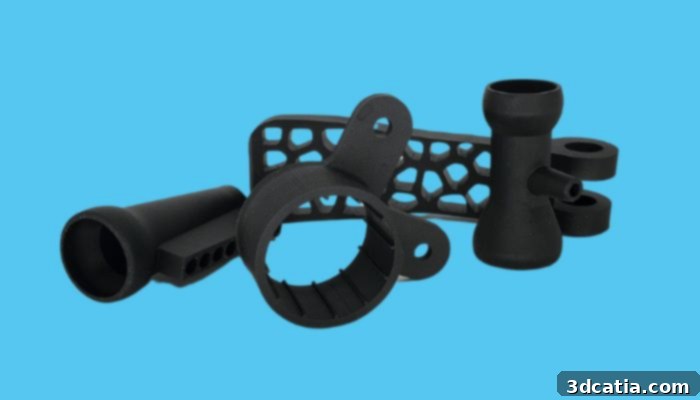
Mechnano’s resins are finding widespread utility across numerous industrial applications.
Mechnano leverages its highly proprietary and innovative technology, known as D’Func™ (Discrete, Dispersed, and Functionalized Carbon Nanotubes), to imbue additive manufacturing parts with exceptional static dissipative properties. Crucially, this is achieved without compromising the fundamental mechanical performance of the base material. The core challenge in utilizing CNTs for such applications historically has been their natural tendency to agglomerate into large, ineffective bundles, which hinders uniform electrical conductivity and often degrades mechanical integrity. Mechnano’s D’Func™ technology precisely overcomes this by achieving a truly discrete state for the CNTs and subsequently functionalizing their sidewalls. This meticulous functionalization process prevents their re-agglomeration, ensuring they remain individually dispersed within the resin matrix. Mechnano’s engineers precisely control the CNT loading levels to achieve specific, desired surface resistance characteristics. When D’Func™ is incorporated into fabricated components, it guarantees nano-uniform ESD performance. This enables a safe and gradual movement of electrical charges to the ground, a feature that is absolutely critical for the protection of highly sensitive electronics and systems, especially those representing substantial monetary value and strategic importance in industries like aerospace, defense, and advanced computing.
Real-World Impact: High-Temperature ESD Materials in Electronics Manufacturing
The need for components with reliable static dissipation performance is pervasive across countless industries and applications. Until very recently, the fabrication of ESD-safe components using advanced additive manufacturing techniques was largely restricted to parts with simpler, larger geometries that lacked intricate features. For components demanding a smooth surface finish or complex, fine features, traditional methods such as machining and mold tooling remained the sole viable options. Mechnano has fundamentally altered this landscape with its groundbreaking ability to produce stable, high-performance ESD-safe vat photopolymerization resins. These innovative resins now enable the direct substitution of traditionally machined or molded parts with those created via additive manufacturing. This not only significantly simplifies and accelerates VAT printing for new product development (NPD) and the creation of low-volume surface mount technology (SMT) nozzles, JEDEC trays, grippers, circular connectors, dispensing tips, and various other crucial components, but also, critically, paves the way for safely handling high-heat processes. This particular capability introduces an entirely new realm of excitement and possibility for AM applications.
Consider a compelling, specific example involving a high-temperature application: the rapid, quick-turn fabrication of a carrier designed to transport a delicate circuit board through a reflow soldering process, which operates at an extreme temperature of 245°C. Historically, to accomplish this task, our customer would first design the carrier using CAD software. The design would then be sent to a traditional machine shop, where an aluminum carrier would be precisely machined and delivered back, typically within a two-week timeframe. Subsequently, a rigorous verification process was conducted to assess the carrier’s exact fit to the circuit board. In the unfortunate event of a mismatch, obtaining a replacement or a revised part would necessitate an additional two-week delay. Regrettably, such significant delays often resulted in the complete loss of the project due to missed deadlines or budget overruns. To mitigate this pervasive risk, an intentional “fudge factor” was often reluctantly introduced during the carrier’s initial design phase, slightly enlarging the pocket size. While this ensured successful functioning during the first attempt, it invariably resulted in suboptimal performance due to the imprecise, loose fit, compromising the quality and reliability of the final product.
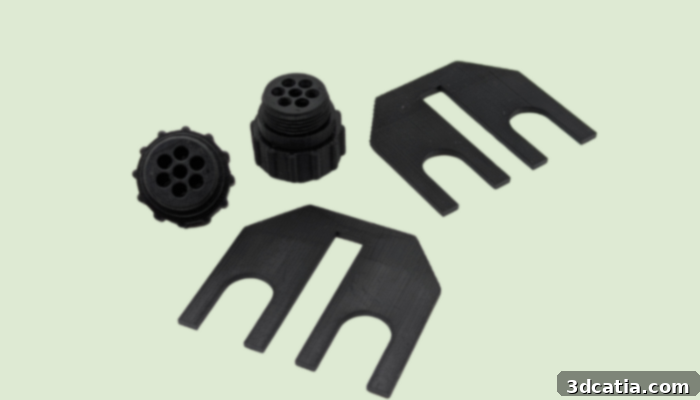
Mechnano has recently introduced a high-temperature resistant ESD material, expanding application possibilities.
Leveraging Mechnano’s innovative high-temperature ESD resin, this entire process is dramatically transformed. Our customer can now design, build, and meticulously cure the carrier to its precise, exact dimensions even before the circuit board is physically delivered. This proactive approach significantly reduces lead times and enhances precision. Should any unexpected design modifications become necessary once the circuit board is available, those adjustments can be made with unprecedented speed. The updated version can then be rapidly printed, often within hours, allowing for the immediate deployment of a perfectly fitting, heat-resistant carrier directly on the production floor. This capability not only saves critical time and costs but also ensures superior performance and consistency, eliminating the compromises associated with traditional manufacturing methods.
Mechnano’s Future: Expanding the Horizon of Functionalized AM Materials
Looking ahead, Mechnano is actively pursuing several exciting and ambitious projects, driven largely by the expressed interests of our valued formulator partners. There is significant demand for further functionalizing CNTs to integrate additional critical properties into AM resins, including enhanced electrical conductivity, superior Electromagnetic Interference (EMI) Shielding, and robust Radiation Hardening (Rad Hardening). While these advancements in resins for vat photopolymerization are undoubtedly thrilling and open doors to new high-performance applications, the largest projects by sheer volume are poised to focus on our innovative laser sintering powders and pellets. We have already achieved considerable success in coating Polyketone, Polyamide, and PEEK—materials traditionally known for their insulative properties—with our D’Func™ technology. This groundbreaking process successfully transforms these originally insulative powders into highly effective static dissipative materials, critically achieving this with minimal impact on their excellent mechanical properties. This breakthrough significantly expands the utility of these workhorse engineering polymers in new industrial sectors.
Furthermore, Mechnano has successfully integrated D’Func™ into Polycarbonate pellets, enabling them to attain precise electrostatic discharge capabilities. This extends our reach into different manufacturing processes beyond vat photopolymerization and laser sintering, offering a broader range of solutions. Our dedicated team of scientists and engineers is also intensely focused on developing two additional, highly anticipated products. These forthcoming innovations are currently under wraps, but we are immensely excited about their potential to further disrupt and advance the additive manufacturing landscape. We eagerly look forward to officially sharing these exciting new developments with the industry in due course. Stay tuned for more updates from Mechnano as we continue to push the boundaries of material science in 3D printing.
Final Thoughts: Embrace Additive Manufacturing for Superior ESD Performance
For businesses and engineers who currently depend on conventionally machined aluminum, complex composite parts, or traditional injection molding techniques to meet their stringent ESD requirements, it is now more imperative than ever to critically consider additive manufacturing. This is especially true for applications demanding rapid turnaround times, necessitating exceptionally precise and consistent ESD ranges, or requiring components to endure extremely high temperatures. The capabilities of modern AM, particularly when coupled with Mechnano’s advanced materials, offer compelling advantages. It is highly probable that you can now fabricate nano-uniform ESD components through additive manufacturing that will not only effortlessly meet but quite likely surpass your current performance expectations in terms of precision, durability, and cost-effectiveness. We invite you to explore the full spectrum of Mechnano’s innovative solutions by visiting our official website HERE. Discover how our cutting-edge materials can transform your manufacturing processes and elevate your product performance.
What are your thoughts on Mechnano’s pioneering work and the future of advanced materials in 3D printing? Let us know your insights and comments below, or engage with us on our LinkedIn, Facebook, and Twitter pages! Don’t forget to sign up for our free weekly newsletter here to receive the latest 3D printing news directly in your inbox! You can also find all our engaging videos and content on our dedicated YouTube channel.
*All Photo Credits: Mechnano